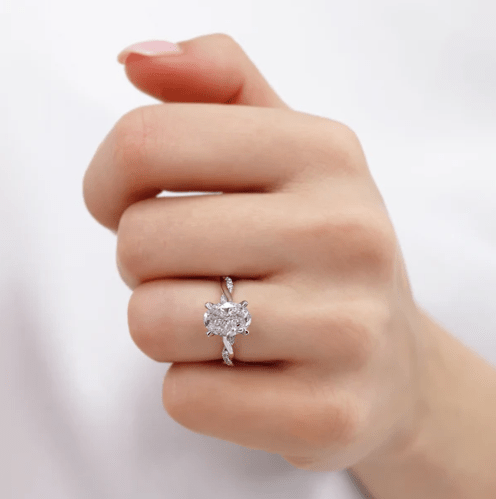
Engagement rings are among the few objects chosen with the expectation that they will last forever. They are worn daily, photographed repeatedly and eventually folded into personal history. In the UK, where engagement rings are often passed down or redesigned across generations, longevity is not a theoretical concern. It is emotional, practical and deeply personal. The styles that endure are rarely those that chase fashion. Instead, they are designs that allow meaning to accumulate over time.
Timelessness in engagement rings is often mistaken for predictability. In reality, enduring appeal has little to do with playing it safe and everything to do with emotional neutrality. Rings that last are not visually loud. They do not insist on being noticed. They sit comfortably within a life, adapting to different phases, environments and identities without feeling out of place.
Fashion editors at Vogue UK have repeatedly observed that jewellery which becomes part of someone’s daily identity rather than a seasonal statement is far more likely to endure. Engagement rings, by their nature, must function this way. They are not worn for effect, but for continuity.
One of the most consistent indicators of emotional longevity is simplicity. Rings with a clear focal point, balanced proportions and minimal visual noise tend to age more gracefully than complex designs. This is why the solitaire, in its many forms, continues to dominate the UK engagement ring market.
The solitaire’s enduring appeal lies in its openness. With nothing competing for attention, the ring becomes a canvas for memory rather than a snapshot of taste. Over time, the stone becomes associated not with the moment it was bought, but with everything that followed. This emotional layering is central to why solitaires remain relevant across decades.
Cultural familiarity reinforces this effect. In the UK, the solitaire has become synonymous with engagement itself. This shared understanding gives the style a sense of permanence. Jewellery historians writing for The British Museum have noted that objects tied to shared cultural meaning tend to outlast purely decorative pieces. The solitaire is not just a design; it is a symbol that has been socially reinforced for generations.
Stone shape plays a crucial role in how this symbolism is perceived over time. Round brilliant diamonds, in particular, benefit from near-universal recognition. Their proportions have remained consistent for over a century, giving them a visual stability that newer or more stylised cuts often lack.
While trends periodically elevate fancy cuts, these shapes tend to be associated with specific eras. By contrast, the round brilliant has transcended fashion cycles. Its appeal is less about novelty and more about visual balance. For many UK couples, this balance feels emotionally safe. It does not demand explanation or justification.
That said, emotional longevity does not require conformity. Certain alternative cuts have also demonstrated lasting appeal, particularly when their origins are historical rather than trend-driven. Emerald cuts, for example, have remained consistently relevant despite never dominating the mainstream.
Their appeal is intellectual rather than decorative. Step-cut facets emphasise clarity, proportion and restraint. Editorial coverage in Harper’s Bazaar UK has often positioned emerald-cut engagement rings as expressions of confidence and discernment rather than fashion awareness. This positioning contributes to their endurance.
Oval and cushion cuts occupy a similar space. Both shapes predate modern marketing cycles and carry associations with antique jewellery. When set simply, they feel referential rather than reactive. This historical grounding allows them to feel timeless even as they rise and fall in trend visibility.
Metal choice further influences emotional longevity. In the UK, platinum remains the most enduring option, prized for its durability and neutrality. Its cool tone does not compete with the stone, allowing the ring’s appearance to remain consistent over time. Importantly, platinum ages quietly. It develops character rather than visible wear, reinforcing its suitability for lifelong jewellery.
Yellow gold’s lasting appeal is rooted in memory as much as aesthetics. For many UK buyers, yellow gold evokes family jewellery, heirlooms and tradition. Coverage in The Telegraph has highlighted how yellow gold’s emotional resonance has driven its return, not as a trend, but as a reconnection with heritage. Its warmth often deepens with age, making it feel more personal rather than dated.
White gold and rose gold tend to be more era-specific. While both can be beautiful, they are often tied to particular moments in design history. This does not make them poor choices, but it does mean their longevity depends heavily on personal attachment rather than cultural reinforcement.
Vintage-inspired engagement rings present another path to timelessness, provided they are chosen with restraint. Rings that reference Edwardian or Art Deco design often endure because they already belong to an established aesthetic lineage. They do not pretend to be modern, which frees them from the risk of becoming outdated.
Experts interviewed by BBC Culture have noted that objects grounded in clearly defined historical styles often feel timeless precisely because they are not trying to anticipate the future. They exist confidently within their own narrative.
However, not all vintage-inspired rings age equally. Designs that rely heavily on ornate detailing can become visually overwhelming over time. In contrast, subtle milgrain, delicate engraving or architectural symmetry tend to age more gracefully. UK jewellers frequently advise that moderation is key when choosing historically influenced styles.
Halo settings are often misunderstood in discussions of longevity. While halos are sometimes dismissed as trend-led, this overlooks their long history. The halo itself is not the issue. Its execution is. Thin, understated halos that enhance the centre stone tend to remain appealing, while oversized or highly embellished versions are more likely to date.
Fashion commentary in Elle UK has emphasised that scale determines whether a halo feels classic or contemporary. When proportion is respected, the halo functions as a frame rather than a statement, supporting longevity.
Band design is another critical but often overlooked factor. Straight, gently contoured bands integrate more seamlessly into daily life and future jewellery additions. Highly sculptural bands may feel striking initially, but they can limit flexibility over time, particularly when paired with wedding or anniversary rings.
Comfort also plays a role in emotional attachment. Rings that feel intrusive or impractical often lose favour regardless of aesthetics. Longevity is not only visual, but physical. A ring worn daily must support the wearer’s lifestyle, or it risks becoming symbolic rather than lived-in.
Ethical considerations increasingly influence how long a ring remains emotionally relevant. UK consumers are placing greater value on sustainability, transparency and responsible sourcing. Reporting by The Guardian suggests that luxury items chosen in alignment with personal values are more likely to retain emotional significance over time.
This shift has implications for lab-grown diamonds and recycled metals. While relatively new to the engagement ring market, their long-term appeal depends less on origin and more on design integrity. A classically proportioned ring with a lab-grown diamond is likely to age just as well aesthetically as one with a mined stone.
Heirloom potential is another dimension of timelessness. Rings chosen with future generations in mind often prioritise adaptability. Simple settings, neutral metals and recognisable cuts are easier to resize, reset or reinterpret. This flexibility increases the likelihood that a ring will be worn again rather than stored away.
Curators at The Victoria and Albert Museum have noted that jewellery which survives generational transfer often does so because it invites reinterpretation rather than enforcing a fixed identity. Engagement rings that hold their appeal over time tend to share this quality.
Ultimately, the engagement ring styles that endure are those that allow meaning to grow. They do not rely on trend validation or novelty. They feel stable as life evolves, accommodating changes in fashion, identity and circumstance.
In the UK, where engagement rings are often woven into family narratives, this stability matters deeply. A timeless ring is not one that looks unchanged over time, but one that continues to feel relevant as its meaning deepens.
Trends will continue to shift. Preferences will evolve. But engagement rings chosen for emotional neutrality, proportion and personal relevance will remain compelling not because they resist time, but because they are designed to move through it.
 Diamonds are a girls best friend
Leave a comment