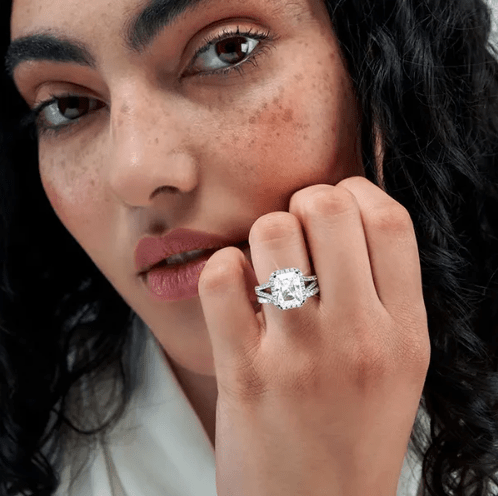
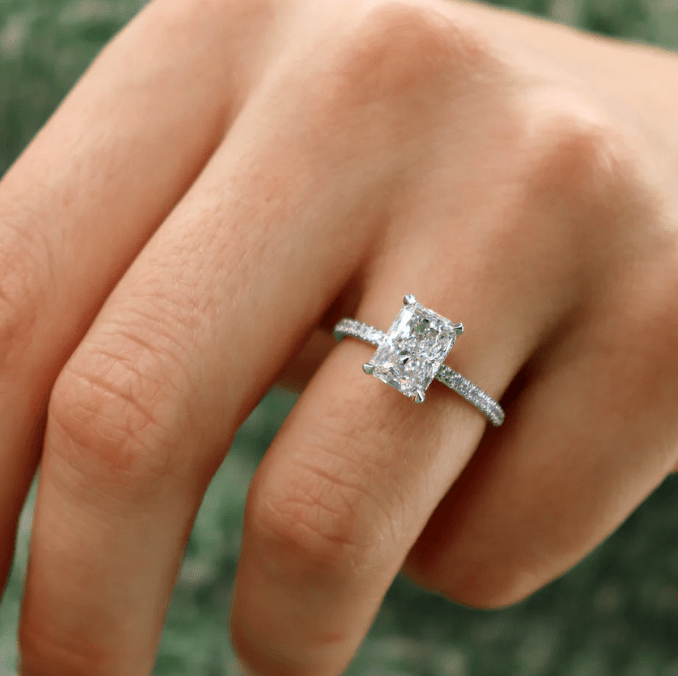
Tag: diamonds

  • Why Pale Fancy Diamonds Are Becoming the Ultimate Insider Choice

    For much of the last century, engagement ring shopping followed a fairly predictable path. Buyers were encouraged to compare the Four Cs, aim for the highest colour grade they could afford and treat the absence of colour as the ultimate measure of quality. The closer a diamond came to appearing perfectly white, the more desirable it was considered to be. That philosophy shaped generations of buying decisions and became so firmly established that few people questioned it.

    Today, however, the conversation is beginning to sound very different.

    Modern buyers still value exceptional craftsmanship and beautifully cut diamonds, but they are becoming increasingly comfortable challenging the idea that perfection always looks the same. Rather than searching for complete uniformity, many are actively seeking diamonds with individuality, warmth and subtle character. It is within this changing landscape that pale fancy diamonds have quietly emerged as one of the most interesting developments in contemporary fine jewellery.

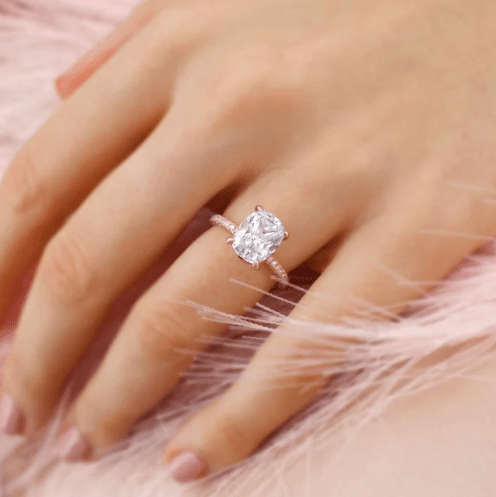
    The wider appreciation for coloured diamonds has undoubtedly helped drive this shift. As explored in our guide to fancy coloured lab grown diamonds⁠ more buyers than ever are discovering that colour can enhance a diamond’s appeal rather than detract from it. Whilst vivid yellows, blues and pinks continue to capture attention, it is often the palest fancy diamonds that are attracting those looking for something elegant, understated and genuinely distinctive.

    One of the reasons these diamonds feel so contemporary is that they reject the notion that luxury should always be immediately obvious. Across fashion, architecture and interior design, subtlety has become increasingly desirable. Consumers are becoming more interested in quality that reveals itself over time rather than making an instant impression. Jewellery is following exactly the same trajectory.

    A pale champagne diamond, for example, does not announce itself from across a room. Its colour is often noticed only after closer observation, revealing soft golden undertones that shift gently depending on the surrounding light. A pale yellow diamond behaves in much the same way, introducing warmth without overwhelming the overall design. The result is jewellery that rewards attention rather than demanding it.

    This gradual appreciation is one of the qualities that makes pale fancy diamonds so compelling. Unlike more intensely coloured gemstones, whose beauty is immediately apparent, these stones reveal their personality slowly. Morning daylight, evening sunlight and interior lighting all bring out different characteristics, meaning the ring never appears exactly the same twice.

    For many buyers, that sense of discovery becomes part of the ownership experience. A ring should not simply impress on the day it is received. It should continue to reveal new qualities throughout years of everyday wear.

    There is also a practical reason why softly coloured diamonds have become increasingly popular among designers. Their versatility allows them to work across an extraordinary range of styles. Whether paired with yellow gold, platinum or rose gold, pale fancy diamonds complement rather than dominate the design. They allow the architecture of the ring, the craftsmanship of the setting and the proportions of the stone to remain equally important.

    This is particularly valuable in bespoke jewellery, where the objective is rarely to recreate an existing design. Clients commissioning custom rings are often looking for subtle ways to make their jewellery unique without abandoning timeless design principles. Pale fancy diamonds provide exactly that opportunity. They introduce individuality without sacrificing elegance.

    Another factor contributing to their growing popularity is the changing profile of today’s jewellery buyer. Consumers are arriving far better informed than they were even a decade ago. They have researched diamond grading, explored different settings and compared countless designs before entering a showroom. This greater level of knowledge often leads to more nuanced preferences.

    Rather than asking for the highest colour grade available, buyers increasingly ask to compare stones side by side. They want to understand how different shades interact with different metals, how certain colours complement particular skin tones and how subtle variations affect the overall appearance of a finished ring. These are conversations that simply were not happening as frequently twenty years ago.

    The increasing popularity of laboratory-grown diamonds has also broadened consumer confidence. As buyers become more familiar with the extraordinary variety of colours available, they naturally become more willing to explore options beyond traditional white diamonds. Soft champagne tones and delicate yellows no longer feel unusual. They feel intentional.

    According to Vogue UK⁠ contemporary luxury consumers are increasingly drawn towards products that express personality rather than conformity, favouring craftsmanship and individuality over obvious status symbols. Jewellery reflects this change particularly clearly because every design decision, from metal choice to gemstone colour, contributes to the overall character of the finished piece.

    Perhaps this explains why pale fancy diamonds appeal so strongly to buyers who describe themselves as wanting something “classic, but different”. They are not searching for novelty. They simply want a ring that feels distinctive without relying on dramatic styling or unconventional design.

    This balance between familiarity and originality is surprisingly difficult to achieve. A vividly coloured diamond immediately transforms the identity of a ring. A pale fancy diamond creates a much gentler shift, preserving the timeless appeal of a traditional engagement ring whilst introducing a level of individuality that becomes increasingly noticeable over time.

    Education has also played an important role in changing perceptions. Organisations such as the Gemological Institute of America (GIA)⁠ have helped consumers understand that naturally coloured diamonds exist across a remarkable spectrum and that colour should be appreciated for its beauty rather than judged solely against the absence of it. This broader understanding has encouraged buyers to think less in terms of hierarchy and more in terms of personal preference.

    Interestingly, jewellers often find that pale fancy diamonds appeal to clients who had never previously considered coloured stones. Once they begin comparing diamonds in person, many discover that a softly coloured stone feels warmer, more individual and often more flattering than the colourless diamond they initially intended to purchase. What begins as curiosity frequently develops into genuine preference.

    There is also something reassuringly timeless about these diamonds. They do not rely on fashion to justify their appeal. Soft colour has existed within natural diamonds for millions of years. The difference today is that buyers are choosing to celebrate those characteristics rather than overlook them. Instead of treating colour as something to minimise, they are recognising it as part of each diamond’s identity.

    As jewellery trends continue to evolve, it seems increasingly likely that pale fancy diamonds will become less of an insider secret and more of a mainstream choice. They reflect many of the values shaping today’s luxury market: authenticity, individuality, craftsmanship and quiet confidence. They also encourage buyers to move beyond rigid definitions of perfection and instead ask a far more interesting question. Not which diamond is considered the best, but which diamond feels most like their own.

    That change in perspective may prove to be the most significant trend of all. It suggests that the future of fine jewellery will be defined less by following established rules and more by celebrating the subtle differences that make every gemstone, and every engagement ring, genuinely unique.

  • The Psychology Behind the Single Girl Engagement Ring Trend

    For decades, engagement rings represented one thing above all else: a commitment between two people. They were a public symbol of a future together and one of the most recognisable pieces of jewellery in the world. Yet in recent years, a growing number of women have begun wearing engagement-style rings without a proposal, without a wedding date and without any intention of replacing traditional romance.

    The rise of the single girl engagement ring has become one of the most fascinating shifts within the jewellery industry. While the trend first gained significant traction in the United States, it has increasingly found an audience in the UK, where changing attitudes towards relationships, success and personal fulfilment are reshaping how jewellery is viewed.

    What makes this movement particularly interesting is that it is not really about jewellery at all. At its core, it is about psychology.

    As discussed in Why Are Single Women Buying Themselves Engagement Rings?, many women purchasing these rings are not making a statement about being single. Instead, they are making a statement about recognising their own achievements and placing value on their own journey.

    The distinction matters.

    Historically, engagement rings symbolised external validation. Someone else chose the ring. Someone else proposed. Someone else determined the moment. The wearer became part of a story that was traditionally centred around partnership.

    Today, many women are writing different stories.

    The average age of marriage has risen significantly across the UK over the past several decades. At the same time, women are spending longer pursuing education, building careers, travelling, buying homes and establishing financial independence. Life milestones have become more diverse, and as a result, the symbols used to celebrate those milestones are evolving too.

    Psychologists have long recognised the importance of rituals and markers of achievement. Humans naturally seek ways to acknowledge significant moments. Graduation ceremonies, retirement parties and birthday celebrations all exist because people need visible ways to recognise progress.

    According to research discussed by Psychology Today recognising personal achievements can reinforce confidence, strengthen identity and improve overall wellbeing. It helps create a sense of progress and accomplishment.

    The single girl engagement ring fits naturally into this framework.

    Rather than waiting for a socially approved milestone, women are creating their own.

    For some, the purchase marks the launch of a business. For others, it celebrates career advancement, financial freedom, home ownership or overcoming personal challenges. The ring becomes less about relationship status and more about recognising growth.

    This shift reflects a broader cultural movement away from external validation and towards internal fulfilment.

    Previous generations often viewed success through a relatively narrow lens. Marriage, family and home ownership were considered universal goals. While those aspirations remain important to many people, younger generations increasingly recognise that fulfilment can come from multiple sources.

    As a result, symbols evolve.

    The engagement ring is particularly suited to this evolution because it already carries powerful emotional associations. Unlike many forms of jewellery, engagement rings have traditionally represented permanence, commitment and significance.

    When purchased for oneself, those meanings do not disappear. They simply change direction.

    The commitment becomes personal rather than romantic.

    The symbolism becomes inward rather than outward.

    This helps explain why engagement-style rings, rather than other types of jewellery, have become central to the trend. A bracelet or necklace may mark an occasion, but a ring has a unique psychological presence. It is visible every day. It serves as a constant reminder of whatever achievement or milestone it represents.

    There is also a fascinating element of self-perception involved.

    Research in behavioural psychology suggests that physical objects often become linked to personal identity. The items people wear regularly can influence how they see themselves and how they interpret their achievements.

    A ring purchased to celebrate a promotion, business success or personal milestone becomes more than an accessory. It becomes a tangible reminder of capability.

    This is particularly relevant in an era where many traditional markers of success have become less straightforward.

    Home ownership is increasingly delayed. Careers are less linear than previous generations experienced. Relationships often develop at different paces. Against this backdrop, self-defined milestones become increasingly important.

    The jewellery industry has noticed.

    What was once viewed as a niche trend has become an established category of consumer behaviour. Retailers across both the US and UK have reported growing demand from women purchasing significant jewellery for themselves rather than waiting for gifts from partners.

    The trend also aligns with changing attitudes towards luxury spending.

    Research highlighted by Forbes suggests that younger consumers increasingly prioritise meaningful purchases over status-driven consumption. They want products that reflect their values and personal narratives rather than simply demonstrating wealth.

    A self-purchased engagement ring fits perfectly within this shift.

    It combines emotional significance with long-term wearability. It feels both aspirational and personal.

    Social media has accelerated this movement dramatically.

    Platforms such as TikTok and Instagram have given women opportunities to share the stories behind their purchases. Rather than posting ring photographs accompanied by proposal announcements, many are sharing stories of career breakthroughs, educational achievements and personal transformations.

    These stories resonate because they feel relatable.

    Not everyone is planning a wedding.

    Almost everyone has something worth celebrating.

    Interestingly, the trend does not appear to be replacing traditional engagement rings. Instead, it exists alongside them.

    Many women who buy themselves engagement-style rings still hope to marry one day. Others are already married and choose to commemorate separate life achievements. The movement is not about rejecting relationships. It is about recognising that relationships are not the only source of meaning in life.

    This distinction helps explain why the trend has continued to grow rather than fade.

    It taps into a broader cultural conversation around autonomy, self-worth and personal agency. It reflects a generation increasingly comfortable defining success according to individual circumstances rather than inherited expectations.

    The rise of lab-grown diamonds and alternative gemstones has also contributed to accessibility. Consumers can now purchase significant, high-quality pieces of jewellery at a wider range of price points, making self-purchase more attainable than ever before.

    As a result, engagement-style rings have become available to a much broader audience.

    Looking ahead, it seems likely that the boundaries between engagement jewellery and celebration jewellery will continue to blur. Consumers are increasingly assigning their own meanings to jewellery rather than accepting traditional definitions.

    The single girl engagement ring may have started as a trend, but its continued growth suggests something more substantial.

    It reflects a changing understanding of success.

    It reflects a changing understanding of commitment.

    Most importantly, it reflects a changing understanding of what deserves to be celebrated.

    At its heart, the movement is remarkably simple. It recognises that people do not need permission to celebrate their achievements. They do not need to wait for a proposal, a wedding or societal approval before marking an important moment.

    Sometimes the most meaningful commitment a person can make is to their own goals, ambitions and future.

    For a growing number of women across the UK, the ring on their finger serves as a daily reminder of exactly that.

  • Why Engagement Ring Shopping Feels So Difficult Today

    There was a time when buying an engagement ring was relatively straightforward. Choices were more limited, trends moved more slowly and most people followed a fairly traditional path. Today, the experience is entirely different. Engagement ring shopping in 2026 is no longer a simple jewellery purchase. For many people, it feels closer to navigating a luxury market, a fashion industry and a major life decision all at once.

    The result is that what should feel exciting often becomes emotionally exhausting.

    Many buyers enter the process expecting to make a quick, confident decision, only to find themselves weeks later comparing diamond ratios at midnight, questioning every style they save online and feeling less certain than when they started.

    This feeling is incredibly common.

    One reason engagement ring shopping feels so overwhelming is because the market has fundamentally changed. Buyers are no longer choosing between a few traditional styles displayed in a showroom window. They are now presented with an almost endless number of combinations. Every decision branches into another decision. Once you choose a shape, you must choose a setting. Once you choose a setting, you must choose metal colour, band width, stone size, hidden details, side stones and finishing style.

    Then come the technical decisions. Natural or lab-grown. Clarity grade. Fluorescence. Certification. Proportions. Polish. Symmetry.

    For someone with no jewellery background, the learning curve can feel intense.

    The modern engagement ring industry also places enormous emphasis on optimisation. Buyers are constantly encouraged to maximise value, maximise size, maximise sparkle and maximise quality simultaneously. This creates the feeling that there is always a “better” option somewhere else if you search long enough.

    That mindset can make it almost impossible to feel settled with a decision.

    Psychological research around consumer behaviour has repeatedly shown that excessive options increase anxiety rather than satisfaction.  The New York TimesAttachment.tiff has explored how decision overload affects confidence and emotional wellbeing, particularly when purchases feel important or permanent. Engagement rings fit both categories perfectly.

    The emotional pressure attached to engagement rings is another major factor.

    An engagement ring is not treated like ordinary jewellery. It is expected to carry symbolism around love, commitment and future identity. Buyers are not simply choosing a product. They are choosing something that is supposed to represent a relationship itself.

    That expectation changes the emotional stakes dramatically.

    People worry whether the ring will still feel timeless decades later. They worry whether their partner will truly love it. They worry about whether they are spending too much or too little. Even practical decisions begin to feel emotionally loaded because the purchase is tied so closely to the meaning of the proposal itself.

    Social media has intensified this pressure significantly.

    Before platforms like Instagram and TikTok, engagement rings were primarily seen in real life, often briefly and casually. Today, they are consumed through curated close-up videos, luxury proposal content and perfectly edited imagery designed to attract attention online.

    This changes perception.

    Rings begin to feel less like personal objects and more like visual performances. Buyers become increasingly aware of how the ring might appear publicly rather than simply privately. Will it look current? Will it seem impressive enough? Will it compare well to what others are posting online?

    The danger is that people slowly stop shopping for their partner and start shopping for an audience.

    Trend cycles make this even more complicated. Engagement ring trends now move faster than ever before. One year hidden halos dominate. The next year chunky gold bands take over. Then east-west settings appear everywhere. Because buyers are exposed to constant trend rotation, it becomes difficult to distinguish genuine preference from temporary influence.

    This creates fear around longevity. Many people worry about choosing something that feels fashionable now but may feel dated later.

    At the same time, there is pressure from the opposite direction. Classic styles are often marketed as the “safe” choice, leading some buyers to fear choosing anything too individual or unconventional.

    This leaves people trapped between wanting something timeless and wanting something personal.

    Budget is another major source of stress. Despite growing criticism of outdated engagement ring spending rules, cultural expectations around cost remain strong. Financial publications such as  InvestopediaAttachment.tiff continue to discuss how engagement ring spending has become increasingly personal rather than rule-based, yet many buyers still feel uncertain about what is socially expected.

    The rise of lab-grown diamonds has complicated this further. Buyers now face additional questions around ethics, pricing and perceived value. According to the Gemological Institute of America, lab-grown diamonds are chemically and visually the same as natural diamonds, but conversations around them remain emotionally charged online. Buyers often feel pressure to justify whichever route they choose.

    One of the most effective ways to simplify engagement ring shopping is to stop approaching it as a search for the objectively “best” ring.

    There is no universally perfect engagement ring.

    There are only rings that are right for specific people.

    This shift in perspective immediately reduces pressure because it reframes the goal. Instead of trying to optimise every technical detail, buyers can focus on understanding the wearer themselves.

    Personal style is usually a far better guide than internet trends. Someone who wears minimalist jewellery daily is unlikely to suddenly want an extremely ornate ring. Someone who gravitates towards bold fashion choices may prefer something more distinctive and unconventional.

    Lifestyle matters just as much. A ring worn every day should work practically alongside someone’s routine, not just look impressive in photographs.

    Simplifying the process also means accepting that not every detail matters equally. Many buyers become overwhelmed because they treat every specification as equally important. In reality, most people naturally care about one or two things most, whether that is shape, overall look, ethical sourcing or budget.

    Starting there creates clarity.

    Restricting options can also help significantly. Endless browsing tends to increase confusion rather than confidence. Narrowing inspiration down to a handful of saved designs often reveals consistent patterns in preference much faster.

    Importantly, buyers should also give themselves permission to trust instinct. Engagement rings are emotional purchases as much as technical ones. Often, people know when a design feels right long before they can logically explain why.

    The modern engagement ring market encourages over-analysis because it benefits from extended comparison and endless optimisation. But real confidence usually comes from simplification, not more information.

    Ultimately, engagement ring shopping feels overwhelming because modern buyers are carrying too many expectations simultaneously. They are trying to satisfy emotional meaning, financial logic, social perception, trend awareness and long-term practicality all at once.

    The process becomes easier when those expectations are stripped back.

    The goal is not to find the ring that impresses the internet most. It is to choose something that feels authentic to the relationship and natural for the person wearing it every day.

    Once buyers focus on that instead, the noise surrounding engagement ring shopping becomes much easier to ignore.

  • The Engagement Ring Design Mistakes Buyers Wish They’d Avoided and the Bespoke Trends That Don’t Age Well

    The Engagement Ring Design Mistakes Buyers Wish They’d Avoided and the Bespoke Trends That Don’t Age Well

    Buying an engagement ring is often treated as a once in a lifetime creative moment. Couples are encouraged to personalise, customise and push design boundaries in the name of individuality. Yet many of the most common regrets in the engagement ring market have nothing to do with taste and everything to do with structure. In 2026, buyers are increasingly realising that an engagement ring is not just an aesthetic object but a piece of wearable engineering that must perform every single day.

    Bespoke design can be incredibly rewarding when done well, but without an understanding of durability, proportion and wear patterns, it can also introduce weaknesses that only become apparent months or years later. Knowing which design features to avoid is not about playing it safe. It is about ensuring that creativity is supported by longevity.

    One of the most widespread mistakes is choosing a band that is simply too thin for everyday wear. Ultra-delicate bands have dominated social media imagery for years, but they are rarely designed with long-term structural integrity in mind. Technical guidance from the Gemological Institute of America explains that thin bands are far more susceptible to bending, twisting and permanent distortion, especially when paired with a centre stone of noticeable size.

    Bands under approximately 1.8mm may feel refined initially, but daily pressure from gripping objects, resting hands on surfaces or even minor knocks can gradually alter the ring’s shape. Once a band begins to oval, the setting is placed under uneven tension, increasing the risk of prong movement and stone loosening. Over time, repeated repairs only weaken the metal further.

    High-set engagement rings are another design choice that frequently leads to regret. While elevated centre stones can look striking, they introduce practical issues that are often underestimated. Consumer research discussed by Which? highlights snagging as one of the most common complaints among ring wearers. The higher the stone sits, the more likely it is to catch on clothing, hair and everyday surfaces.

    Beyond inconvenience, high settings increase impact risk. A stone positioned further from the finger absorbs more force when knocked. Over time, this repeated stress transfers directly to the prongs. Even well-made prongs can weaken under constant impact, eventually compromising stone security.

    Fancy-shaped diamonds present their own challenges when not correctly protected. Shapes such as pear, marquise and heart cuts feature pointed tips that are structurally vulnerable. Leaving these points exposed for aesthetic reasons is a common bespoke error. Research from the American Gem Society confirms that exposed points are significantly more prone to chipping than rounded edges.

    Protective V-prongs or full bezel settings are essential for these shapes. Without them, even light contact with hard surfaces can cause damage. Chips may begin invisibly but can spread over time, permanently affecting the stone’s appearance and integrity.

    Hidden halos are another feature that often underperforms when poorly executed. In theory, a hidden halo or support rail can strengthen prongs and add stability. In practice, many bespoke designs position the halo too low to offer any real reinforcement. Structural explanations from the Gemological Institute of America show that support must sit at the prong junction to be effective.

    When a hidden halo is placed beneath this critical point, it becomes purely decorative. The prongs remain unsupported where stress is highest, increasing the likelihood of loosening over time. This can be particularly misleading, as buyers often believe the halo adds security when it does not.

    Pavé detailing is another area where enthusiasm frequently outweighs practicality. Rings covered in small pavé stones can appear intricate and luxurious, but small stones are inherently more vulnerable to loss. Reporting by The Guardian on jewellery wear has noted that pavé settings account for a disproportionate number of repair requests due to stone loss.

    When pavé stones are set too shallowly or with minimal metal, everyday wear can loosen them. Replacing lost stones repeatedly can weaken the band itself, particularly if metal has already been reduced to achieve a delicate look.

    Flush-fit compatibility is another detail often overlooked in bespoke engagement ring design. Rings that prevent a wedding band from sitting flush may look distinctive on their own, but they often create long-term discomfort. Gaps between rings trap debris, wear unevenly and can feel awkward when worn together.

    Guidance from the National Association of Jewellers suggests that flush-fit designs generally offer better comfort and longevity. Non-flush designs frequently require custom wedding bands later, adding cost and complexity that buyers did not anticipate.

    Material selection is equally critical. Some gemstones are simply not suitable for daily wear. Opal, moonstone and pearl all have relatively low hardness ratings and are highly sensitive to impact, moisture and temperature changes. Educational material from the Gemological Institute of America makes clear that these stones are best reserved for occasional jewellery rather than engagement rings.

    Despite this, bespoke designs sometimes prioritise uniqueness over practicality. Over time, these softer stones are prone to scratching, cracking or surface deterioration, leading to disappointment and costly replacements.

    Metal choice can also introduce problems. While gold is a popular option, very thin or soft alloy compositions wear down faster. Research from the World Gold Council explains how metal density and alloy choice directly affect durability. Lightweight bands may feel comfortable initially but can thin further with wear, particularly along the base of the ring.

    Protruding or sharp design elements are another frequent issue. Intricate or sculptural designs with exposed edges often snag on clothing and scratch surfaces. Consumer behaviour analysis from the Financial Times shows that physical inconvenience is one of the fastest ways for a luxury item to lose its appeal, even if it was initially loved.

    Prong design itself is often underestimated. Bulky, uneven or poorly finished prongs not only look unrefined but also increase snagging and dirt accumulation. Precision finishing ensures prongs are smooth, proportionate and secure, enhancing both comfort and longevity.

    Halo designs can also suffer from poor execution. When a halo does not sit tightly against the centre stone, visible gaps appear. These gaps trap debris and visually reduce the size and brilliance of the centre stone. Technical guidance from the Gemological Institute of America stresses the importance of tight tolerances in halo construction.

    Many of these issues arise when bespoke design prioritises novelty over wearability. True custom design should enhance performance, not undermine it. The most successful bespoke rings are those where creativity is guided by an understanding of how jewellery behaves over time.

    Jewellers who specialise in engagement rings designed for daily wear increasingly steer clients away from fragile design choices. Brands such as Lily Arkwright focus on proportion, setting security and material performance alongside aesthetics, helping buyers avoid regrets before they happen.

    In 2026, engagement ring buyers are becoming more informed and more realistic. A ring is no longer judged solely on how it looks in a proposal photo, but on how it feels years later.

    Avoiding these common design mistakes does not mean sacrificing individuality. It means choosing a ring that balances expression with endurance, artistry with engineering and beauty with practicality.

    An engagement ring should support a lifetime of wear, not require constant repair. When bespoke design is approached with both creativity and structural intelligence, the result is a ring that remains meaningful, secure and beautiful long after the moment it is given.

  • Is Rose Gold Right for an Engagement Ring? History, Meaning and the Ethics Behind the Metal

    Is Rose Gold Right for an Engagement Ring? History, Meaning and the Ethics Behind the Metal

    Rose gold has an emotional pull that feels markedly different from other precious metals. Softer than yellow gold and less clinical than white gold, it carries warmth that many people instinctively associate with intimacy and romance. In engagement rings, that warmth has made rose gold increasingly appealing. Yet the choice still prompts questions. Does rose gold truly stand the test of time? Is it suitable for everyday wear? And in an era where sourcing matters, does how rose gold is made change how it should be valued?

    In 2026, rose gold is not a trend-led compromise. It is a deliberate material choice shaped by history, metallurgy and evolving expectations around ethical jewellery.

    Rose gold does not exist naturally in the earth. Unlike yellow gold, which can be found in its pure state, rose gold is an alloy created by combining gold with copper. This process reflects centuries of experimentation rather than modern invention. Human cultures have long altered gold’s composition to improve durability and expand aesthetic possibilities.

    Historical research presented by the British Museum shows that ancient goldsmiths regularly blended gold with other metals to strengthen it and vary its appearance. These early alloying techniques laid the groundwork for the metalworking principles still used in jewellery today.

    The specific pink-toned alloy we now call rose gold became particularly prominent in nineteenth-century Europe. According to design historians referenced by the Victoria and Albert Museum, Russian jewellers developed gold alloys with higher copper content, producing a warm reddish hue that became known as Russian gold. This material gained popularity in decorative arts and fine jewellery, particularly during periods that favoured ornate craftsmanship and expressive colour.

    From Russia, rose gold spread across Europe and later into wider jewellery traditions. Its popularity has risen and fallen over time, often resurfacing during moments when jewellery design prioritised emotion, individuality and craftsmanship. This cyclical return suggests endurance rather than novelty.

    For engagement rings, rose gold offers a balance between sentiment and strength. The copper added to gold does more than change its colour. It also increases hardness. Educational guidance from the Gemological Institute of America explains that rose gold alloys are generally more durable than higher-purity yellow gold, making them well suited to rings worn daily.

    This durability matters in modern engagement rings. Unlike earlier eras when rings were removed frequently, contemporary engagement rings are typically worn continuously. Rose gold’s strength allows it to maintain its shape and setting integrity over long periods of wear.

    Visually, rose gold behaves differently from other metals. Its warm undertone interacts subtly with skin, often appearing softer and more organic than white gold. Fashion analysis from Harper’s Bazaar has highlighted rose gold’s ability to feel personal rather than performative, a quality that resonates strongly in engagement jewellery.

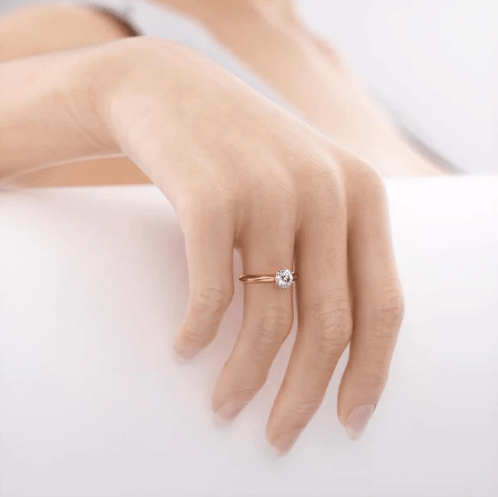
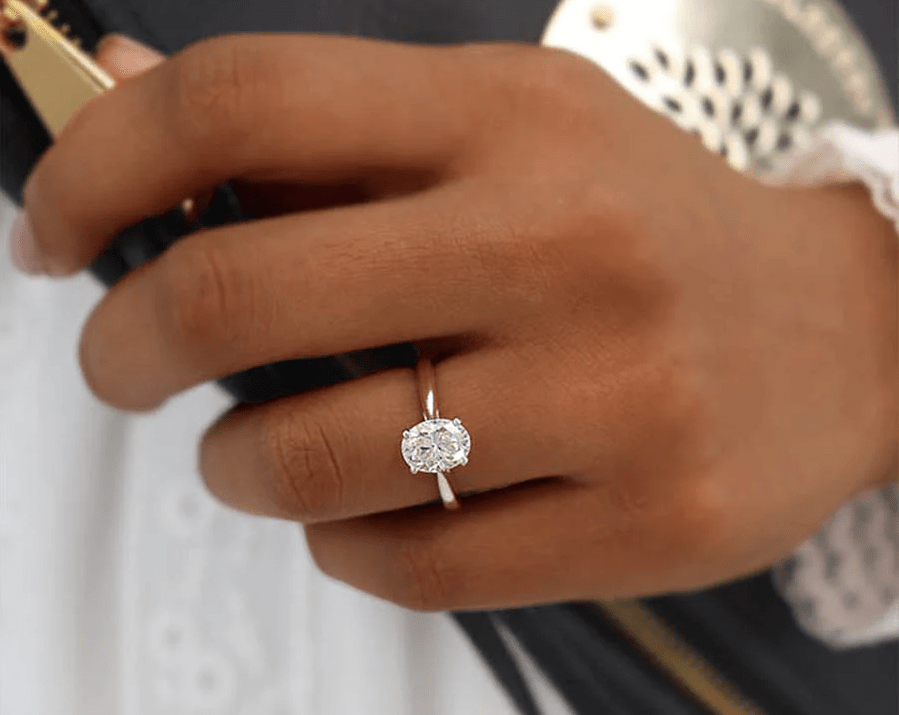
    Rose gold also affects how gemstones are perceived. Diamonds set in rose gold often appear slightly warmer, while coloured gemstones can look richer and more saturated. This makes rose gold especially versatile, supporting everything from classic diamond solitaires to more expressive, non-traditional designs.

    Despite these qualities, some buyers worry that rose gold may feel dated over time. This concern is usually rooted in fashion cycles rather than material reality. Cultural commentary from the Financial Times has noted that materials often labelled as trends tend to cycle in and out of favour, reflecting cultural mood rather than inherent limitations. Rose gold’s repeated re-emergence suggests long-term relevance rather than fleeting appeal.

    Another common concern is colour stability. Rose gold does not fade. Because its hue is created through alloy composition rather than surface treatment, the colour remains consistent throughout the life of the ring. Normal wear may soften surface finish over time, but this affects all gold alloys equally and does not alter rose gold’s underlying tone.

    As awareness around material sourcing has increased, ethical considerations have become central to discussions about all gold alloys, including rose gold.

    Gold mining has historically been associated with environmental and social challenges. Investigative reporting by Reuters has explored how gold extraction can affect landscapes and communities when not properly regulated. These realities have pushed both consumers and the jewellery industry to demand higher standards.

    Modern ethical gold sourcing focuses on reducing environmental impact, improving labour conditions and increasing transparency. One of the most widely recognised bodies in this space is the Responsible Jewellery Council, which sets global standards for responsible mining, refining and manufacturing. Certification under such frameworks helps introduce accountability into a traditionally opaque supply chain.

    Alongside responsible mining, recycled gold has become increasingly important. Recycled gold is recovered from existing jewellery, electronic components and industrial materials, then refined for reuse. According to technical information from the World Gold Council, recycled gold is chemically identical to newly mined gold and can be reused indefinitely without loss of quality.

    For rose gold, this is particularly relevant. Recycled gold can be alloyed with copper to create rose gold with the same colour, durability and performance as newly mined material. Environmental reporting by The Guardian has shown that recycled gold uses significantly less energy and water than primary mining, dramatically reducing environmental impact.

    Modern refining technology has made recycled rose gold viable at scale. Research covered by MIT Technology Review explains how advances in metallurgical processes allow gold to be purified to extremely high standards regardless of its original source. This ensures consistency and reliability across all gold alloys.

    Traceability has also improved. While gold supply chains were once difficult to follow, digital tracking systems are increasingly being explored. Reporting by Bloomberg has examined how blockchain technology is being tested to trace precious metals from source to finished product, increasing transparency and consumer confidence.

    For engagement rings, ethical sourcing carries emotional weight. Jewellery often symbolises shared values and long-term commitment. Cultural research published by the British Academy suggests that modern consumers increasingly want symbolic purchases to reflect their ethical outlook. Choosing responsibly sourced rose gold can therefore deepen the meaning of an engagement ring.

    Another misconception is that rose gold lacks tradition compared to yellow or white gold. In reality, rose gold’s use spans more than a century in Western jewellery and much longer in alloy experimentation. Its current popularity reflects renewed appreciation rather than novelty.

    Contemporary jewellery design reinforces this perspective. Designers are increasingly using rose gold as a primary structural metal rather than a decorative accent. Design analysis from Dezeen highlights how modern jewellery embraces warmth and material honesty, values that align naturally with rose gold.

    The growing acceptance of lab grown diamonds has further shifted perceptions. As buyers become more comfortable with innovation and intentional material choices, rose gold feels less like a deviation and more like a thoughtful decision. Jewellery is no longer about rigid rules, but about understanding materials and choosing what resonates.

    Many modern engagement ring collections reflect this integrated approach to design and sourcing, including those offered by Lily Arkwright, where metal choice, gemstone selection and ethical considerations are aligned to support long-term wear.

    From a practical standpoint, rose gold requires no special maintenance beyond that of other gold alloys. Routine cleaning and periodic professional checks are recommended. Guidance from the Gemological Institute of America advises avoiding prolonged exposure to harsh chemicals, which can affect all gold alloys over time.

    Looking ahead, rose gold appears well positioned to endure. Market analysis from McKinsey & Company suggests that consumers increasingly favour materials that balance emotional appeal with responsible sourcing. Rose gold meets both criteria.

    Ultimately, whether rose gold is right for an engagement ring is a personal decision. It suits those drawn to warmth over starkness, individuality over uniformity and intention over tradition for tradition’s sake.

    Rose gold’s story is one of human ingenuity, from early alloy experimentation to modern ethical refinement. Its lasting appeal lies not in trend cycles, but in its ability to evolve while remaining emotionally resonant. In 2026, rose gold is less about fashion and more about meaning.

  • Why Lab Diamonds Are Becoming the Foundation of Future Fine Jewellery

    Why Lab Diamonds Are Becoming the Foundation of Future Fine Jewellery

    Fine jewellery has always been a mirror of its time. The materials chosen, the way pieces are worn and the stories attached to them all reflect wider cultural values. In 2026, fine jewellery is undergoing one of its most significant shifts in decades. Lab diamonds are no longer positioned as alternatives or substitutes. They are increasingly shaping how fine jewellery is designed, valued and integrated into everyday life.

    This evolution is not about rejecting heritage. It is about reinterpreting it for a generation that values knowledge, transparency and longevity as much as beauty. Lab diamonds are becoming foundational to fine jewellery because they align with how modern luxury is understood and lived.

    To appreciate why this shift feels so decisive, it is important to understand how diamonds came to define fine jewellery in the first place.

    Diamonds have been known to humanity for millennia, yet their dominance in fine jewellery is relatively recent. Geological research from The Geological Society of London explains that early diamonds were valued primarily for their hardness and resistance to wear, not for brilliance or perfection. Their appeal was rooted in durability and permanence.

    The association between diamonds and fine jewellery accelerated in the late nineteenth and early twentieth centuries, driven by industrial mining, global trade networks and cultural messaging. Media history explored by The British Library shows how diamonds became embedded in narratives of romance, success and permanence through advertising and popular culture.

    During this period, natural origin became tightly linked to value. This link was rarely questioned, largely because scientific understanding of diamond growth was limited outside specialist circles.

    That limitation no longer exists.

    Material science has transformed how diamonds are understood. Peer reviewed research published by Nature Materials confirms that lab grown diamonds are chemically, physically and optically identical to mined diamonds. They share the same crystal lattice, hardness and optical performance. From a materials perspective, they are indistinguishable.

    This scientific clarity has allowed lab diamonds to move beyond comparison and into confidence. They are not approximations of fine materials. They are fine materials.

    As a result, fine jewellery design has begun to shift in subtle but meaningful ways.

    Historically, fine jewellery design was often constrained by cost and availability. Designers had to balance ambition with limitation, particularly when working with larger stones or complex compositions. Lab diamonds have relaxed these constraints.

    Design analysis from Dezeen highlights how contemporary jewellery increasingly prioritises proportion, balance and architectural clarity over excess. Lab diamonds support this approach by allowing designers to choose stones for harmony rather than compromise.

    This freedom is especially visible in fine jewellery beyond engagement rings. Earrings, bracelets and necklaces are now designed with cohesion in mind, focusing on how pieces move, sit and age rather than how much they cost to produce.

    The growing prominence of lab diamond fine jewellery reflects a broader redefinition of luxury. Luxury is no longer about scarcity alone. It is about intention.

    Market commentary from The Economist has observed that modern luxury consumers increasingly prioritise longevity, versatility and relevance over traditional status symbols. Jewellery that can be worn regularly without anxiety is often perceived as more luxurious than jewellery that feels untouchable.

    Lab diamonds align naturally with this perspective. They offer durability and visual refinement without the psychological weight of extreme rarity.

    Ethical transparency has also become central to the future of fine jewellery. Buyers today are far more aware of where materials come from and how they are produced. This awareness extends beyond environmental concerns to include labour practices and supply chain clarity.

    Reporting from National Geographic has examined how increased scrutiny of mining practices has reshaped consumer attitudes towards jewellery sourcing. While responsible mining initiatives exist, lab diamonds offer a level of traceability that is straightforward and verifiable.

    For many buyers, this clarity enhances emotional confidence. Jewellery chosen with understanding tends to be worn with greater ease and pride.

    This does not strip jewellery of romance. It reframes it. Meaning is no longer tied solely to geological rarity. It is tied to conscious choice.

    Cultural research from The British Academy suggests that value in modern culture is increasingly associated with intention rather than inheritance. Lab diamonds fit comfortably within this framework.

    Another factor shaping the future of fine jewellery is how pieces are worn. Jewellery is no longer reserved for formal moments. It is part of daily life.

    Workplace culture research from Harvard Business Review shows that personal expression increasingly overlaps with professional identity. Jewellery that is refined, durable and understated fits more naturally into this blended environment.

    Lab diamond fine jewellery supports this shift by enabling designs that prioritise comfort and resilience without sacrificing elegance.

    Longevity also plays a critical role. Fine jewellery is increasingly viewed as something that should age gracefully with the wearer. Pieces are expected to adapt to changing lifestyles rather than remain frozen in time.

    Psychological research discussed by Psychology Today suggests that emotional attachment strengthens when objects integrate seamlessly into everyday routines. Jewellery that feels too precious to wear can lose emotional relevance over time.

    Lab diamonds encourage use rather than preservation. Fine jewellery becomes something lived with rather than stored away.

    Education has accelerated this shift. Consumers today are more informed about materials than ever before.

    Public education initiatives from The Gemological Institute of America have made gem science accessible beyond the trade. As understanding grows, simplistic hierarchies around origin lose influence.

    This has led to a more balanced conversation between natural and lab grown diamonds. Rather than asking which is better, buyers are asking which aligns with their values and how they intend to wear their jewellery.

    Fine jewellery collections that embrace this mindset tend to present lab diamonds as integral rather than alternative.

    Exploring modern collections such as those found under lab diamond fine jewellery reflects this evolution. These pieces are crafted with the same attention to detail, setting quality and finish traditionally associated with fine jewellery, while offering modern clarity around sourcing.

    Importantly, lab diamonds have not diminished the importance of craftsmanship. In many cases, they have heightened it.

    When designers are freed from material constraints, craftsmanship becomes more visible. Metalwork, proportions and finishing details take centre stage.

    Museum commentary from The Victoria and Albert Museum has long emphasised that fine jewellery derives value from skill as much as from material. Lab diamonds allow this balance to be reasserted.

    The future of fine jewellery is also shaped by how pieces are passed down. Heirlooms are increasingly defined by emotional resonance rather than origin story alone.

    Cultural research from The British Museum highlights how objects gain meaning through use, memory and association. A piece worn consistently and loved deeply becomes an heirloom regardless of how its materials were formed.

    Lab diamond jewellery participates fully in this tradition. Its durability ensures it can be worn, adapted and cherished across generations.

    Looking ahead, flexibility will define the next chapter of fine jewellery. Pieces will be designed to layer, adapt and evolve alongside the wearer.

    Lab diamonds support this adaptability by removing unnecessary limitations. Designers can focus on harmony, scale and longevity rather than compromise.

    Industry insight from Deloitte Insights suggests that future facing luxury brands will be those that prioritise transparency, adaptability and consumer education. Fine jewellery made with lab diamonds aligns naturally with this direction.

    The future of fine jewellery being made with lab diamonds is not a departure from luxury. It is a refinement of it.

    It reflects a world where knowledge is accessible, values are diverse and confidence comes from understanding rather than assumption.

    In 2026, fine jewellery is no longer defined solely by where a diamond comes from. It is defined by how thoughtfully it is designed, how responsibly it is created and how confidently it is worn.

    Lab diamonds are shaping the future of fine jewellery not because they replace the past, but because they allow luxury to evolve in step with the lives people actually lead.

  • Why Knowledge Has Replaced Advice as the Most Powerful Tool in Jewellery Buying

    Why Knowledge Has Replaced Advice as the Most Powerful Tool in Jewellery Buying

    For much of modern history, buying fine jewellery followed a familiar pattern. You sought out an expert, listened carefully and trusted that their advice would lead you to the right choice. Being well advised was seen as the safest, most responsible approach. In 2026, that logic has quietly but decisively shifted. The most confident jewellery buyers today are not those who receive the most advice, but those who are genuinely well informed.

    This shift is not rooted in scepticism or a lack of respect for expertise. Instead, it reflects a profound change in access to knowledge. Information that was once restricted to trade professionals is now widely available, independently published and grounded in science. As a result, consumers are no longer dependent on a single authority to interpret quality, value or suitability. They can build their own understanding and use advice as context rather than instruction.

    Being well informed has become a form of empowerment. It allows buyers to recognise bias, question inherited assumptions and make choices that align with their values rather than defaulting to tradition.

    To understand why this change matters so deeply, it helps to return to the origins of gemstones themselves.

    Long before jewellery retail existed, gemstones were discovered, assessed and valued through direct interaction with the natural world. Archaeological research published by The University of Tübingen shows that early societies prized stones that resisted wear, retained colour and felt substantial in the hand. Their value was intuitive rather than explained.

    Diamonds entered human awareness in a similar way. Geological studies from The Indian Institute of Science explain that diamonds were first encountered in India and valued for their exceptional hardness. Long before sparkle or romance became part of the narrative, diamonds were admired for their durability and resistance to damage.

    In these early contexts, being informed meant understanding material behaviour through experience. Advice existed, but it was secondary to observation.

    As gemstone trade expanded across Europe and Asia, jewellery began to take on greater symbolic weight. Rings and stones signalled power, permanence and alliance. Knowledge became increasingly concentrated among merchants and court jewellers, and advice gained authority as access to independent information narrowed.

    Historical research from The Herzog August Library documents how gemstone symbolism and valuation systems became formalised in early modern Europe. Expertise was codified, and advice replaced individual assessment.

    This dynamic intensified dramatically in the twentieth century. As diamonds and gemstones entered mass consumer markets, advice became institutionalised through retail training, marketing narratives and brand authority. Consumers were encouraged to trust expertise rather than question it.

    Economic sociology research from The University of Chicago shows how information asymmetry allowed industries to shape consumer behaviour by controlling what was considered credible knowledge. Jewellery retail followed this pattern closely.

    For decades, advice filled a real gap. Independent verification was difficult, and buyers relied on professionals to interpret quality and value.

    That gap no longer exists.

    In 2026, information about diamonds and gemstones is global, accessible and transparent. Buyers can learn about crystal formation, durability, grading systems and sourcing from independent institutions rather than relying on a single recommendation.

    Open access education initiatives from the American Museum of Natural History have played a significant role in this shift by making earth science and mineralogy accessible to the public.

    This democratisation of knowledge has transformed the role of advice. When consumers understand the fundamentals, advice becomes collaborative rather than directive.

    This shift is particularly visible in conversations around natural and lab grown diamonds and gemstones.

    For much of the twentieth century, advice around diamonds was framed in absolutes. Natural stones were positioned as inherently superior, while lab grown stones were often dismissed without scientific explanation.

    Modern materials science has dismantled this hierarchy. Research published by Science Advances confirms that lab grown diamonds share the same atomic structure, hardness and optical properties as natural diamonds.

    From a performance standpoint, there is no functional difference. The distinction lies in origin and narrative, not quality.

    A well advised buyer may still be guided towards a particular option based on tradition or perceived prestige. A well informed buyer understands the full context and chooses according to personal priorities, whether that is geological history, sustainability or transparency.

    The same principle applies to coloured gemstones. Historically, rarity defined prestige. Stones such as emeralds, sapphires and alexandrite were prized because they were difficult to obtain.

    Mineralogical research from The Natural History Museum Vienna shows that many coloured gemstones possess excellent durability and optical performance regardless of whether they are mined or laboratory grown. Suitability for jewellery depends on structure, not scarcity.

    Laboratory growth has expanded access to these stones without compromising their material integrity. Being well informed allows buyers to separate quality from tradition and performance from narrative.

    This has changed how advice is perceived. Advice that ignores informed choice can now feel limiting rather than reassuring.

    Consumer psychology research from The University of Groningen demonstrates that people experience greater satisfaction when decisions feel autonomous rather than authority driven. Jewellery purchases, which carry emotional weight, are particularly sensitive to this dynamic.

    Design choices further illustrate the shift. For decades, jewellery advice reinforced rigid rules around acceptable styles, proportions and materials.

    Design history research from The Museum für Gestaltung Zürich highlights how modern design prioritises function, comfort and user experience over tradition. Jewellery buyers increasingly apply this thinking to rings and everyday pieces.

    Being well informed allows buyers to question advice that prioritises visual impact over wearability or convention over lifestyle.

    This matters because jewellery is worn differently today. Engagement rings and fine jewellery are no longer reserved for special occasions. They are worn daily, across work, travel and informal life.

    Workplace culture research from The European Foundation for the Improvement of Living and Working Conditions shows how personal expression increasingly overlaps with professional identity. Jewellery that fails to adapt to this reality often loses emotional relevance.

    Ethics further complicate the advice versus information divide. Many buyers now prioritise sourcing transparency, environmental impact and long term responsibility.

    Environmental research from The International Resource Panel explores how trust increasingly depends on transparency rather than authority. Advice that dismisses ethical concerns risks undermining confidence.

    Being well informed allows buyers to evaluate claims independently rather than accepting them at face value.

    This does not render advice obsolete. Expertise still matters, particularly when it responds to informed questions rather than replacing understanding. The difference is that advice now supports decision making instead of directing it.

    Market analysis from The European Commission’s Joint Research Centre suggests that industries which prioritise consumer education build stronger long term trust.

    Jewellery buying is no exception.

    Being well informed also supports emotional longevity. Jewellery chosen with understanding tends to age better emotionally because it reflects identity rather than obligation.

    Psychological studies from The University of Helsinki show that autonomous choices retain emotional relevance longer than those shaped primarily by social pressure.

    In twenty years, advice given today may feel outdated. Information empowers choices that can evolve alongside the wearer.

    Natural diamonds and gemstones will continue to appeal to those drawn to geological history and rarity. Lab grown diamonds and gemstones will continue to appeal to those drawn to innovation and intention. Neither choice is inherently superior.

    What matters is understanding the difference.

    Being well informed allows buyers to move beyond simplistic narratives and false hierarchies.

    The future of jewellery buying is not about rejecting advice. It is about redefining its role.

    In 2026, confidence comes from comprehension.

    The most enduring jewellery choices are not those most heavily advised, but those most deeply understood.

    Being well informed is not about knowing everything. It is about knowing enough to choose deliberately.

    And in modern jewellery buying, that matters more than ever.

  • How Engagement Ring Buying Moved Beyond Tradition and Into Personal Choice

    How Engagement Ring Buying Moved Beyond Tradition and Into Personal Choice

    For decades, engagement ring buying followed a familiar pattern. There were expectations around budget, assumptions about diamonds, conventions about who should choose the ring and how the proposal should happen. These rules were rarely questioned. They were absorbed through advertising, family stories and cultural repetition until they felt inevitable. In 2026, those rules no longer hold the same power. Engagement ring buying has entered a period of quiet but profound change.

    This shift is not a rejection of commitment or symbolism. Instead, it reflects a broader cultural movement away from rigid scripts and towards self definition. Relationships today are shaped by dialogue, shared values and individuality. Engagement rings have evolved accordingly, becoming personal expressions rather than compliance with tradition.

    Many of the long standing “rules” around engagement rings were not ancient customs at all. They were twentieth century inventions, reinforced by marketing campaigns and repeated until they felt like social law. The idea of a fixed spending formula is one of the clearest examples.

    Cultural commentary from BBC Culture has explored how repeated commercial messaging can gradually be mistaken for tradition. Over time, what began as suggestion becomes expectation. Engagement rings sit squarely within this pattern.

    As social structures have shifted, these expectations have started to feel increasingly out of step with real life. Couples now form partnerships later, often share finances from the outset and approach major decisions collaboratively. In that context, prescriptive rules around ring buying feel disconnected rather than reassuring.

    Sociological research discussed by Pew Research Center highlights how modern relationships prioritise equality and communication. Engagement ring decisions now reflect these values, moving away from secrecy and assumption towards openness and alignment.

    One of the most visible changes is the way couples approach choice itself. The idea that a ring must be selected in isolation and revealed as a complete surprise has softened. While surprise proposals still exist, many couples now discuss preferences, styles and practical considerations in advance.

    Relationship analysis from The Guardian has noted that modern intimacy places greater value on emotional awareness than theatrical gestures. Choosing a ring together is increasingly seen as a sign of respect and understanding rather than a lack of romance.

    The rule that an engagement ring must centre on a diamond has also loosened. Diamonds remain deeply meaningful for many people, but they are no longer treated as the only legitimate option. Coloured gemstones, unconventional cuts and alternative settings are now widely accepted as valid expressions of commitment.

    Fashion and jewellery coverage from Vogue has charted how engagement rings have become more individual, reflecting personal style rather than inherited expectation. The question is no longer what should be chosen, but what feels right.

    Even within diamond selection, long held hierarchies have lost their authority. Clarity, colour and shape were once governed by rigid ideals. Today, they are understood as preferences shaped by taste, lifestyle and values rather than rules to be obeyed.

    Educational resources from the Gemological Institute of America have played a role in this shift by demystifying diamond grading. As understanding increases, buyers feel less dependent on external benchmarks and more confident in their own judgement.

    Budget expectations have also changed dramatically. The idea that an engagement ring must cost a fixed multiple of income now feels out of step with how people manage finances. Instead, budgets are shaped by broader life goals and financial priorities.

    Economic commentary from The Financial Times has observed that modern consumers approach symbolic purchases with greater intentionality. Engagement rings are now considered alongside housing, travel and long term security rather than as isolated status symbols.

    This change has not diminished the emotional importance of the ring. In many cases, it has strengthened it. A ring chosen within a self defined budget often feels more honest and aligned than one chosen to meet an external expectation.

    As rules have faded, design freedom has expanded. Engagement rings no longer need to conform to a single silhouette or scale. Low profile settings, mixed metals and unconventional proportions are increasingly embraced without apology.

    Design commentary from Dezeen has explored how contemporary jewellery design draws inspiration from architecture and industrial design rather than ornamentation alone. This influence supports engagement rings that feel modern, functional and expressive.

    Crucially, the decline of rules has not meant a decline in craftsmanship. When buyers are no longer focused on ticking boxes, they often become more attentive to quality, construction and longevity.

    Luxury market analysis from McKinsey & Company suggests that modern luxury is increasingly defined by relevance rather than conformity. Products that align with a person’s life and values carry greater meaning than those that simply signal adherence to tradition.

    Retail experiences have evolved in response. Rather than steering customers towards a single ideal, jewellers increasingly facilitate conversations about lifestyle, wearability and long term satisfaction. Guidance has replaced instruction.

    Exploring engagement ring collections such as those available through Lily Arkwright reflects this shift. Rings are presented as flexible expressions of taste, offering freedom around stone type, setting style and scale rather than enforcing a narrow definition of what an engagement ring should be.

    Another important change lies in how engagement rings are worn. They are no longer treated as occasional symbols, but as everyday jewellery. This practical reality has influenced decisions around durability, comfort and setting height.

    Work and lifestyle reporting from BBC Worklife has explored how blurred boundaries between professional and personal life shape purchasing behaviour. Engagement rings now need to function across multiple environments, further weakening rules that prioritised appearance over wearability.

    Ethical and environmental considerations have also become central to decision making. Many buyers now factor sourcing, transparency and sustainability into their choices, even when these priorities challenge traditional expectations.

    Global reporting from The Economist has examined how ethical awareness is reshaping luxury markets. Engagement rings are part of this wider movement, where values are considered alongside aesthetics.

    Importantly, the end of rigid rules does not mean the end of tradition. Many people still choose classic designs, diamond solitaires and surprise proposals. The difference is that these choices are now made freely rather than by default.

    Psychological insight from Psychology Today suggests that autonomy enhances satisfaction. When individuals feel ownership over their decisions, emotional attachment often deepens.

    Language around engagement rings has shifted as well. Words like timeless and classic now describe style rather than obligation. Tradition has become an option, not a requirement.

    This transformation mirrors broader changes in how milestones are marked. Weddings, partnerships and proposals are increasingly personalised. Engagement rings are simply one visible expression of that shift.

    Editorial perspectives across Harper’s Bazaar reinforce the idea that confidence now comes from alignment rather than conformity. Luxury is no longer about following rules, but about choosing with intention.

    For those navigating engagement ring buying today, the absence of rules can feel unfamiliar. Without a script, decisions require reflection rather than imitation. Yet this freedom allows for outcomes that feel deeply personal.

    Jewellery retailers that embrace this change focus on education rather than prescription. Collections such as those offered by Lily Arkwright support informed choice, helping buyers feel confident rather than constrained.

    The long goodbye to engagement ring rules is not about abandoning meaning. It is about redefining it on individual terms.

    In 2026, there is no single correct way to buy an engagement ring. And in that freedom lies a more authentic, more modern expression of commitment.

  • The Emotional Longevity Test: What Makes an Engagement Ring Last a Lifetime and Beyond

    The Emotional Longevity Test: What Makes an Engagement Ring Last a Lifetime and Beyond

    An engagement ring is often chosen at a moment when everything feels heightened. Emotions are intense, the future feels expansive and decisions are made with optimism and hope. Yet jewellery, unlike moments, must live far beyond that initial chapter. The real question is not whether a ring feels right today, but whether it will continue to feel meaningful decades from now, when life has shifted, priorities have evolved and the ring has quietly witnessed years of change.

    The emotional longevity test asks something deeper than whether a ring is timeless or fashionable. It asks whether the choice was rooted in identity, intention and values rather than pressure or convention. In 2026, as couples become more reflective and better informed, this test has become central to how meaningful jewellery is chosen.

    To understand why some rings age emotionally while others do not, it helps to step back and consider the long human relationship with gemstones themselves.

    Long before engagement rings existed, gemstones were valued because they appeared to exist outside human time. Anthropological research published by The University of Pennsylvania Museum of Archaeology and Anthropology shows that early civilisations prized stones for their perceived permanence and symbolic power. Jewellery was worn not as trend, but as talisman, a physical link between the present and something enduring.

    In ancient Egypt, gemstones were deeply entwined with ideas of eternity. Historical records examined by The Griffith Institute at the University of Oxford reveal that stones such as turquoise and lapis lazuli were associated with protection in both life and the afterlife. Jewellery carried emotional weight because it was believed to transcend a single lifetime.

    Diamonds entered this symbolic landscape much later. Geological studies referenced by The Geological Society of America explain that diamonds formed billions of years ago under extraordinary pressure deep within the earth. When humans first encountered them in India, their unmatched hardness immediately distinguished them from all other known materials.

    Early philosophical texts discussed by Stanford Encyclopedia of Philosophy note that diamonds were associated with invincibility and clarity long before they were associated with romance. Their perceived indestructibility made them symbols of inner strength rather than love.

    The connection between diamonds and engagement rings emerged gradually. Historical scholarship from The Warburg Institute shows that during the Renaissance, diamonds began appearing in betrothal jewellery among European nobility. These rings were political symbols as much as personal ones, representing permanence, alliance and continuity.

    As engagement rings became more common in the nineteenth and twentieth centuries, diamonds were increasingly framed as symbols of eternal love. Yet emotional longevity was not guaranteed by material alone. Rings chosen to meet social expectation often failed to retain emotional depth once circumstances changed.

    Curatorial research from The Schmuckmuseum Pforzheim highlights how jewellery that reflects personal meaning rather than cultural pressure tends to remain emotionally resonant across generations. When jewellery tells a personal story, it ages differently.

    This distinction sits at the heart of the emotional longevity test.

    Material choice plays an important role, but not in the way it once did. Today, buyers understand that both natural and lab grown diamonds and gemstones offer extraordinary durability. What differs is narrative.

    Scientific analysis from The Max Planck Institute for Chemistry confirms that lab grown diamonds share the same atomic structure and physical properties as natural diamonds. From a purely material perspective, both will outlast their wearer many times over.

    Natural diamonds carry geological history that spans billions of years. For some, this deep time narrative adds emotional gravity. Wearing something shaped by the earth long before human civilisation can feel grounding, almost humbling.

    Lab grown diamonds and gemstones, however, offer a different form of permanence. They represent intention, innovation and human progress. Rather than chance geology, they are the result of deliberate creation, shaped by values around transparency and responsibility.

    Cultural analysis from The Centre for the Study of the Renaissance at UCLA suggests that modern emotional attachment often favours conscious choice over inherited symbolism. Objects chosen intentionally are more likely to retain emotional relevance as values evolve.

    This is particularly evident in coloured gemstones. Historically revered stones such as emeralds, sapphires and alexandrite carried powerful symbolism but were limited by rarity. Laboratory growth has allowed these stones to be appreciated for their meaning rather than their exclusivity.

    One of the earliest innovators in this space is Chatham Gemstones. Since the 1930s, Chatham has grown laboratory gemstones using slow growth processes that mirror natural formation. Their work has helped redefine what authenticity means in fine jewellery, particularly for buyers focused on longevity rather than status.

    Design is another crucial factor in emotional endurance. Rings chosen for dramatic impact can lose emotional warmth when practical issues surface. Discomfort, fragility or constant awareness of the ring can slowly undermine affection.

    Object psychology research discussed by The Design Council shows that items integrated seamlessly into daily life form stronger long term emotional bonds. Jewellery that feels intuitive becomes part of the wearer’s identity rather than an object that demands attention.

    This is why proportion, setting height and wearability matter more than many buyers realise. Rings designed with balance tend to age emotionally as well as visually. They do not compete with the wearer’s life, they move with it.

    Lifestyle evolution is inevitable over twenty years. Hands change, routines shift, priorities mature. Rings that feel adaptable across these changes are more likely to remain loved.

    Longitudinal lifestyle research published by The Office for National Statistics highlights how daily habits and professional environments evolve over time. Jewellery that accommodates this evolution maintains relevance longer than jewellery tied to a specific phase of life.

    Cultural attitudes towards engagement rings have shifted accordingly. Rings are no longer ceremonial objects reserved for special occasions. They are worn through work, travel and ordinary life.

    Workplace culture analysis from The Chartered Institute of Personnel and Development shows how personal expression increasingly overlaps with professional identity. Rings that function across environments maintain emotional presence.

    Ethics now play a significant role in emotional longevity. Many buyers ask whether they will still feel comfortable explaining their choice in twenty years’ time. Sourcing, environmental impact and transparency influence how emotional attachment evolves.

    Environmental research from The Stockholm Environment Institute explores how ethical awareness shapes long term consumer satisfaction. Jewellery chosen with ethical clarity often retains emotional confidence.

    This does not diminish the value of natural stones. For many, natural diamonds and gemstones represent continuity and heritage. What matters is that the choice aligns with personal values rather than inherited expectation.

    Auction history analysed by Dorotheum shows that jewellery with strong personal or historical narrative retains emotional and cultural value regardless of changing trends. Meaning outlasts fashion.

    The emotional longevity test also asks whether the ring reflects the relationship it symbolises. Relationships deepen and change. Rings that allow space for that growth tend to feel more authentic over time.

    Relationship studies from The Institute for Family Studies indicate that shared decision making strengthens long term satisfaction. Rings chosen collaboratively often accumulate layered meaning rather than becoming static symbols.

    This is why rings chosen under pressure or obligation often struggle emotionally, while those chosen with intention tend to age well. Emotional longevity thrives on agency.

    Luxury analysis from The Luxury Institute notes that modern luxury is increasingly defined by relevance and alignment rather than excess. Rings that continue to reflect the wearer’s identity retain emotional power.

    In twenty years, tastes will have shifted again. Shapes, settings and trends will cycle. What endures is coherence between ring, wearer and values.

    The emotional longevity test is not about eliminating risk. It is about choosing with awareness.

    Natural diamonds and gemstones offer one path to emotional endurance. Lab grown diamonds and gemstones offer another. Both can pass the test when chosen for the right reasons.

    Ultimately, emotional longevity is not embedded in the stone itself. It is created through intention, memory and alignment.

    In twenty years, the ring will carry far more than sparkle. It will hold shared experiences, quiet resilience and personal history.

    A ring that passes the emotional longevity test does not remain frozen in time. It evolves alongside the life it represents.

    And that evolution is what allows it to remain loved.

  • Why Engagement Ring Discounts Can Undermine Trust and How Transparent Pricing Puts Buyers First

    Why Engagement Ring Discounts Can Undermine Trust and How Transparent Pricing Puts Buyers First

    The engagement ring market has become increasingly crowded with urgency. Flash sales, limited time offers and permanent discounts dominate how rings are marketed online and in store. For a purchase that symbolises longevity and commitment, this environment can feel oddly mismatched. In 2026, more buyers are beginning to question whether constant promotions genuinely offer value or whether they introduce confusion and pressure into what should be a considered decision.

    Seeking out a jeweller who does not rely on fake sales or headline discounts is not about rejecting affordability. It is about understanding pricing clearly, trusting what you are being told and knowing that the value of the ring does not depend on timing a promotion. Transparent pricing has emerged as a response to discount fatigue, offering an alternative built on consistency rather than urgency.

    Historically, jewellery was not sold this way. Fine jewellery pricing was traditionally stable, reflecting the intrinsic value of materials and the skill of the maker. Academic research and archival commentary from the British Museum show that jewellery purchases were often made through personal relationships with jewellers, where trust and reputation mattered more than incentives. Prices rarely fluctuated, and discounts were uncommon.

    The shift towards discount-led pricing coincided with the growth of mass retail and e-commerce. As jewellery became more accessible and competition intensified, retailers adopted strategies common in fast-moving consumer sectors. These sectors rely on urgency to convert browsers into buyers. Consumer research published by Which? has repeatedly shown that when products appear to be constantly discounted, it becomes difficult for consumers to determine their real value.

    In the engagement ring market, this often results in rings that are perpetually advertised as reduced. Original prices are inflated to make discounts appear dramatic, even though the reduced price reflects the retailer’s intended margin. Analysis by the Competition and Markets Authority has highlighted how reference pricing can mislead consumers, particularly when they feel emotionally invested in a purchase.

    This is especially problematic for engagement rings because they are not standardised products. Two rings with identical carat weights can differ significantly in diamond cut precision, metal thickness, setting security and overall craftsmanship. When pricing is framed around percentage reductions rather than substance, buyers are encouraged to focus on perceived savings rather than actual quality.

    Retail analysis from the Financial Times has explored how discount-heavy environments can undermine consumer confidence. When buyers suspect that prices are artificially inflated before being reduced, trust erodes. This erosion is particularly damaging in jewellery, where reassurance and credibility are central to the buying experience.

    Transparent pricing offers a different model. Instead of inflating prices to allow for promotions, transparent jewellers price their rings according to real costs, materials and craftsmanship. The price remains consistent because it reflects the genuine value of the piece, not a temporary marketing tactic designed to prompt quick decisions.

    Behavioural research discussed by Harvard Business Review shows that consumers make more confident decisions when pricing is stable and clearly explained. Removing artificial deadlines reduces anxiety and allows buyers to evaluate a purchase on its merits rather than fearing they might miss a deal.

    In engagement ring buying, confidence matters. Buyers are choosing something intended to be worn every day, often for decades. Artificial urgency works against this mindset. Countdown timers and expiring discounts encourage speed when reflection is more appropriate.

    Another consequence of discount-led pricing is that it can hide compromises elsewhere. To maintain margins while offering frequent promotions, some retailers reduce metal weight, simplify setting construction or rely on lower-quality diamond cuts that appear acceptable on paper but lack brilliance in reality. Educational guidance from the Gemological Institute of America emphasises that cut quality and setting integrity have a greater impact on a diamond’s appearance and longevity than headline specifications alone.

    Jewellers who prioritise transparent pricing tend to focus on these fundamentals. Their pricing reflects the true cost of producing a ring that will protect its stone, wear comfortably and maintain its appearance over time. There is less need to distract from quality with promotional language.

    There is also an ethical dimension to discount culture. High-volume, promotion-driven retail models can place pressure on supply chains to reduce costs. Reporting by Reuters has examined how aggressive pricing strategies across retail sectors can incentivise cost-cutting upstream, affecting labour conditions and sourcing standards.

    Transparent pricing supports a different approach. When margins are honest and predictable, jewellers can invest properly in skilled craftsmanship, responsible sourcing and long-term customer care. This creates a more sustainable business model that prioritises longevity over rapid turnover.

    The engagement ring market itself is changing. Buyers are more informed than ever, often researching diamond certification, metal properties and setting styles before speaking to a jeweller. Market insights from McKinsey & Company suggest that modern luxury consumers increasingly value trust, clarity and brand integrity over perceived bargains.

    This shift is particularly evident among younger buyers. Research referenced by Deloitte shows that Millennials and Gen Z consumers are more sceptical of perpetual sales and more likely to favour brands that offer consistent pricing and transparent communication.

    In this context, jewellers who avoid fake sales are not resisting market trends. They are responding to them.

    Transparent pricing also reshapes the buying experience. Without the need to negotiate discounts or wait for promotions, conversations can focus on design preferences, lifestyle considerations and long-term wear. The jeweller becomes an advisor rather than a salesperson, helping buyers make decisions based on suitability rather than speed.

    Many contemporary jewellery brands have built their reputation on this philosophy. Collections designed with durability and clarity in mind, such as those offered by Lily Arkwright, are priced consistently year-round. This allows buyers to choose a ring because it feels right, not because a timer is counting down.

    Consistency also sets clearer expectations for aftercare. When a ring is not sold as a discounted commodity, it is more likely to be supported with long-term services such as resizing, inspections and maintenance. This reinforces the idea that the ring is an enduring object rather than a transactional purchase.

    Economic research from the Organisation for Economic Co-operation and Development has shown that transparent pricing models foster stronger consumer trust and longer-lasting brand relationships, particularly in sectors involving high emotional and financial investment.

    In a market saturated with urgency and noise, choosing a jeweller who does not rely on fake sales is a way of regaining control. It allows buyers to slow down, understand their options and make a decision grounded in confidence rather than pressure.

    In 2026, transparent pricing is no longer a niche stance. It is becoming a marker of credibility in the engagement ring market. It signals that a jeweller believes in the value of their work without needing artificial incentives to justify it.

    Ultimately, engagement rings are not about securing the biggest discount. They are about making a choice that will still feel right years from now. That choice is far easier to make when pricing is honest, stable and free from manufactured urgency.