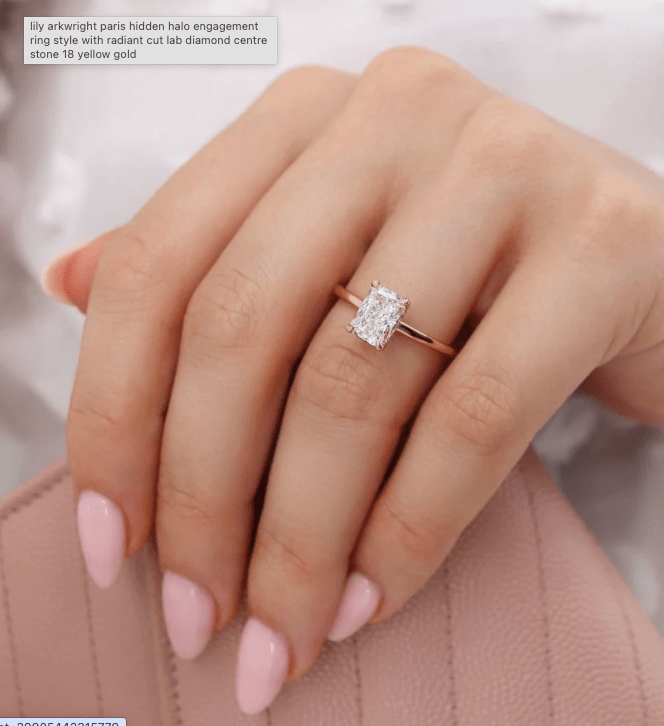
Across Britain’s jewellery industry, sustainability has evolved from marketing language into genuine craft philosophy. The rise of lab-grown diamonds, recycled metals and ethical sourcing has transformed how engagement rings are made, but a quieter revolution is now taking place in how they are kept. After the proposal, the next question becomes: how do we ensure this ring — a symbol of love and longevity — remains as responsible as the ideals it represents?
The answer lies in aftercare sustainability. Once the realm of jewellers and collectors, the concept is becoming part of everyday conversation among buyers who want to align emotional value with environmental awareness. As BBC News Business has reported, British consumers increasingly judge luxury by durability rather than novelty. In this context, an engagement ring’s long-term condition is not merely aesthetic — it is ethical.
For couples just beginning their search, our guide on how to choose an ethical engagement ring in 2026 explores what to look for when balancing sustainability with style.
The Environmental Value of Longevity
Mining for gold and diamonds remains one of the world’s most resource-intensive industries, and even responsibly sourced materials carry an environmental cost. Extending a piece’s life through maintenance or redesign is, therefore, one of the simplest yet most powerful sustainability acts an owner can take.
The Guardian Environment highlights that increasing the average lifespan of luxury goods can reduce total emissions by up to a quarter. Unlike fast fashion, jewellery’s inherent durability means that its environmental impact decreases dramatically the longer it is worn and preserved. The principle is elegantly straightforward: a ring kept in circulation displaces the need for a new one.
This approach resonates strongly within Britain’s growing culture of conscious consumption, where sentiment and responsibility now sit comfortably side by side. It also connects naturally with our feature on lab-grown diamonds and sustainable British jewellery, which explores how innovation and longevity intersect.
Repair and Restoration: Craft Meets Conservation
Repairing fine jewellery has never been solely about aesthetics. It is also a form of environmental conservation — one that preserves existing resources and supports artisanal trades. In London’s Hatton Garden, Birmingham’s Jewellery Quarter and workshops across Scotland and Wales, independent jewellers are modernising age-old methods to align with environmental standards.
The Goldsmiths’ Company, one of Britain’s oldest craft guilds, actively promotes restoration as a pillar of sustainable practice. Many of its members now use recycled metal for re-sizing or claw replacement and favour electric soldering over gas-powered torches to cut carbon emissions.
Brands such as Lily Arkwright have integrated repair and maintenance into their business model. Specialising in lab-grown diamond rings, the company offers lifelong aftercare and cleaning services designed to preserve both the stone’s brilliance and the environmental integrity of the product.
To see how couples are embracing these ideas in practice, our feature on quiet proposing and shared ring design explores how collaboration and conscious choice are redefining British romance.
Recycling and Re-imagining
When a ring’s aesthetic no longer suits its owner, recycling offers a meaningful alternative to replacement. Gold, platinum and other metals can be refined without degradation, and diamonds or gemstones can be removed and reset. The result is a new piece that retains its history while reflecting a contemporary sensibility.
According to Forbes, recycling existing materials can cut environmental impact by up to 80 per cent compared with sourcing new ones. British jewellers are increasingly adopting this circular model, with trade-in schemes and redesign services allowing clients to refresh heirlooms rather than abandon them.
For inspiration, see our article on the modern heirloom movement, which explores how craftsmanship and conscience are combining to create timeless pieces.
A Broader Cultural Movement
Sustainable aftercare reflects more than good housekeeping; it captures a wider cultural mood in Britain. From vintage clothing to refurbished interiors, the emphasis on longevity and reuse is reshaping what luxury means. BBC News Culture describes this as the rise of “considered consumption” — a collective desire to invest in fewer, better things that carry personal and environmental resonance.
In this landscape, jewellery stands as a powerful metaphor. It combines permanence with expression, making it the perfect object through which to explore ideas of responsibility and renewal. Repairing or recycling a ring is, in many ways, a microcosm of the broader sustainability conversation: respect what exists, improve it carefully, and pass it on.
Conclusion
The care we give our jewellery mirrors the care we extend to the planet. To maintain, repair and recycle an engagement ring is to recognise that beauty and responsibility can coexist — that luxury can be as ethical as it is enduring.
Whether by cleaning gently at home, commissioning a repair from a certified craftsperson or re-imagining a treasured heirloom, each action preserves not only the ring’s lustre but the values it represents. As Vogue UK concludes, “the most meaningful sparkle is one that has been kept, not replaced.”
In Britain’s new era of sustainable luxury, aftercare is no longer an afterthought; it is the quiet continuation of love itself — a daily practice of respect for both craft and planet.
 Diamonds are a girls best friend
Leave a comment