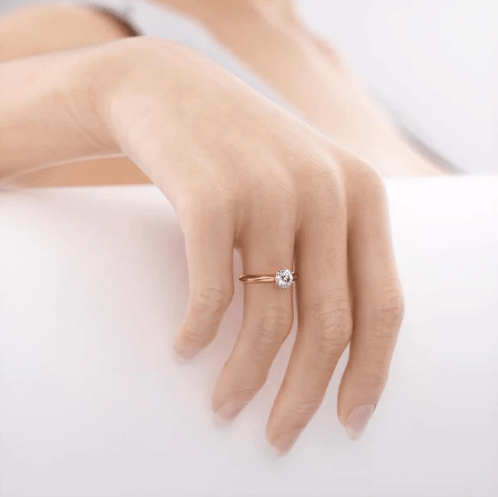
Rose gold has an emotional pull that feels markedly different from other precious metals. Softer than yellow gold and less clinical than white gold, it carries warmth that many people instinctively associate with intimacy and romance. In engagement rings, that warmth has made rose gold increasingly appealing. Yet the choice still prompts questions. Does rose gold truly stand the test of time? Is it suitable for everyday wear? And in an era where sourcing matters, does how rose gold is made change how it should be valued?
In 2026, rose gold is not a trend-led compromise. It is a deliberate material choice shaped by history, metallurgy and evolving expectations around ethical jewellery.
Rose gold does not exist naturally in the earth. Unlike yellow gold, which can be found in its pure state, rose gold is an alloy created by combining gold with copper. This process reflects centuries of experimentation rather than modern invention. Human cultures have long altered gold’s composition to improve durability and expand aesthetic possibilities.
Historical research presented by the British Museum shows that ancient goldsmiths regularly blended gold with other metals to strengthen it and vary its appearance. These early alloying techniques laid the groundwork for the metalworking principles still used in jewellery today.
The specific pink-toned alloy we now call rose gold became particularly prominent in nineteenth-century Europe. According to design historians referenced by the Victoria and Albert Museum, Russian jewellers developed gold alloys with higher copper content, producing a warm reddish hue that became known as Russian gold. This material gained popularity in decorative arts and fine jewellery, particularly during periods that favoured ornate craftsmanship and expressive colour.
From Russia, rose gold spread across Europe and later into wider jewellery traditions. Its popularity has risen and fallen over time, often resurfacing during moments when jewellery design prioritised emotion, individuality and craftsmanship. This cyclical return suggests endurance rather than novelty.
For engagement rings, rose gold offers a balance between sentiment and strength. The copper added to gold does more than change its colour. It also increases hardness. Educational guidance from the Gemological Institute of America explains that rose gold alloys are generally more durable than higher-purity yellow gold, making them well suited to rings worn daily.
This durability matters in modern engagement rings. Unlike earlier eras when rings were removed frequently, contemporary engagement rings are typically worn continuously. Rose gold’s strength allows it to maintain its shape and setting integrity over long periods of wear.
Visually, rose gold behaves differently from other metals. Its warm undertone interacts subtly with skin, often appearing softer and more organic than white gold. Fashion analysis from Harper’s Bazaar has highlighted rose gold’s ability to feel personal rather than performative, a quality that resonates strongly in engagement jewellery.
Rose gold also affects how gemstones are perceived. Diamonds set in rose gold often appear slightly warmer, while coloured gemstones can look richer and more saturated. This makes rose gold especially versatile, supporting everything from classic diamond solitaires to more expressive, non-traditional designs.
Despite these qualities, some buyers worry that rose gold may feel dated over time. This concern is usually rooted in fashion cycles rather than material reality. Cultural commentary from the Financial Times has noted that materials often labelled as trends tend to cycle in and out of favour, reflecting cultural mood rather than inherent limitations. Rose gold’s repeated re-emergence suggests long-term relevance rather than fleeting appeal.
Another common concern is colour stability. Rose gold does not fade. Because its hue is created through alloy composition rather than surface treatment, the colour remains consistent throughout the life of the ring. Normal wear may soften surface finish over time, but this affects all gold alloys equally and does not alter rose gold’s underlying tone.
As awareness around material sourcing has increased, ethical considerations have become central to discussions about all gold alloys, including rose gold.
Gold mining has historically been associated with environmental and social challenges. Investigative reporting by Reuters has explored how gold extraction can affect landscapes and communities when not properly regulated. These realities have pushed both consumers and the jewellery industry to demand higher standards.
Modern ethical gold sourcing focuses on reducing environmental impact, improving labour conditions and increasing transparency. One of the most widely recognised bodies in this space is the Responsible Jewellery Council, which sets global standards for responsible mining, refining and manufacturing. Certification under such frameworks helps introduce accountability into a traditionally opaque supply chain.
Alongside responsible mining, recycled gold has become increasingly important. Recycled gold is recovered from existing jewellery, electronic components and industrial materials, then refined for reuse. According to technical information from the World Gold Council, recycled gold is chemically identical to newly mined gold and can be reused indefinitely without loss of quality.
For rose gold, this is particularly relevant. Recycled gold can be alloyed with copper to create rose gold with the same colour, durability and performance as newly mined material. Environmental reporting by The Guardian has shown that recycled gold uses significantly less energy and water than primary mining, dramatically reducing environmental impact.
Modern refining technology has made recycled rose gold viable at scale. Research covered by MIT Technology Review explains how advances in metallurgical processes allow gold to be purified to extremely high standards regardless of its original source. This ensures consistency and reliability across all gold alloys.
Traceability has also improved. While gold supply chains were once difficult to follow, digital tracking systems are increasingly being explored. Reporting by Bloomberg has examined how blockchain technology is being tested to trace precious metals from source to finished product, increasing transparency and consumer confidence.
For engagement rings, ethical sourcing carries emotional weight. Jewellery often symbolises shared values and long-term commitment. Cultural research published by the British Academy suggests that modern consumers increasingly want symbolic purchases to reflect their ethical outlook. Choosing responsibly sourced rose gold can therefore deepen the meaning of an engagement ring.
Another misconception is that rose gold lacks tradition compared to yellow or white gold. In reality, rose gold’s use spans more than a century in Western jewellery and much longer in alloy experimentation. Its current popularity reflects renewed appreciation rather than novelty.
Contemporary jewellery design reinforces this perspective. Designers are increasingly using rose gold as a primary structural metal rather than a decorative accent. Design analysis from Dezeen highlights how modern jewellery embraces warmth and material honesty, values that align naturally with rose gold.
The growing acceptance of lab grown diamonds has further shifted perceptions. As buyers become more comfortable with innovation and intentional material choices, rose gold feels less like a deviation and more like a thoughtful decision. Jewellery is no longer about rigid rules, but about understanding materials and choosing what resonates.
Many modern engagement ring collections reflect this integrated approach to design and sourcing, including those offered by Lily Arkwright, where metal choice, gemstone selection and ethical considerations are aligned to support long-term wear.
From a practical standpoint, rose gold requires no special maintenance beyond that of other gold alloys. Routine cleaning and periodic professional checks are recommended. Guidance from the Gemological Institute of America advises avoiding prolonged exposure to harsh chemicals, which can affect all gold alloys over time.
Looking ahead, rose gold appears well positioned to endure. Market analysis from McKinsey & Company suggests that consumers increasingly favour materials that balance emotional appeal with responsible sourcing. Rose gold meets both criteria.
Ultimately, whether rose gold is right for an engagement ring is a personal decision. It suits those drawn to warmth over starkness, individuality over uniformity and intention over tradition for tradition’s sake.
Rose gold’s story is one of human ingenuity, from early alloy experimentation to modern ethical refinement. Its lasting appeal lies not in trend cycles, but in its ability to evolve while remaining emotionally resonant. In 2026, rose gold is less about fashion and more about meaning.
 Diamonds are a girls best friend
Leave a comment