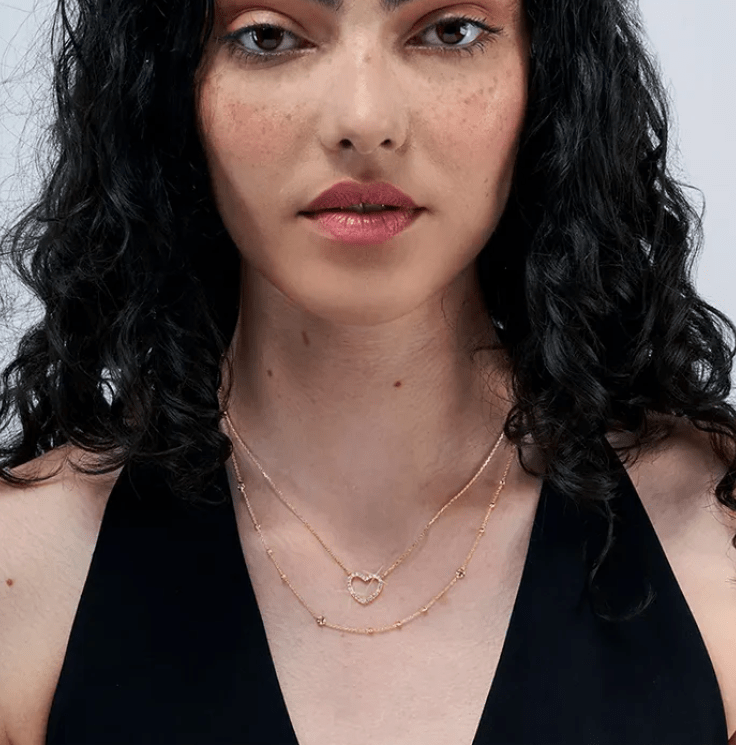
Fine jewellery has always been a mirror of its time. The materials chosen, the way pieces are worn and the stories attached to them all reflect wider cultural values. In 2026, fine jewellery is undergoing one of its most significant shifts in decades. Lab diamonds are no longer positioned as alternatives or substitutes. They are increasingly shaping how fine jewellery is designed, valued and integrated into everyday life.
This evolution is not about rejecting heritage. It is about reinterpreting it for a generation that values knowledge, transparency and longevity as much as beauty. Lab diamonds are becoming foundational to fine jewellery because they align with how modern luxury is understood and lived.
To appreciate why this shift feels so decisive, it is important to understand how diamonds came to define fine jewellery in the first place.
Diamonds have been known to humanity for millennia, yet their dominance in fine jewellery is relatively recent. Geological research from The Geological Society of London explains that early diamonds were valued primarily for their hardness and resistance to wear, not for brilliance or perfection. Their appeal was rooted in durability and permanence.
The association between diamonds and fine jewellery accelerated in the late nineteenth and early twentieth centuries, driven by industrial mining, global trade networks and cultural messaging. Media history explored by The British Library shows how diamonds became embedded in narratives of romance, success and permanence through advertising and popular culture.
During this period, natural origin became tightly linked to value. This link was rarely questioned, largely because scientific understanding of diamond growth was limited outside specialist circles.
That limitation no longer exists.
Material science has transformed how diamonds are understood. Peer reviewed research published by Nature Materials confirms that lab grown diamonds are chemically, physically and optically identical to mined diamonds. They share the same crystal lattice, hardness and optical performance. From a materials perspective, they are indistinguishable.
This scientific clarity has allowed lab diamonds to move beyond comparison and into confidence. They are not approximations of fine materials. They are fine materials.
As a result, fine jewellery design has begun to shift in subtle but meaningful ways.
Historically, fine jewellery design was often constrained by cost and availability. Designers had to balance ambition with limitation, particularly when working with larger stones or complex compositions. Lab diamonds have relaxed these constraints.
Design analysis from Dezeen highlights how contemporary jewellery increasingly prioritises proportion, balance and architectural clarity over excess. Lab diamonds support this approach by allowing designers to choose stones for harmony rather than compromise.
This freedom is especially visible in fine jewellery beyond engagement rings. Earrings, bracelets and necklaces are now designed with cohesion in mind, focusing on how pieces move, sit and age rather than how much they cost to produce.
The growing prominence of lab diamond fine jewellery reflects a broader redefinition of luxury. Luxury is no longer about scarcity alone. It is about intention.
Market commentary from The Economist has observed that modern luxury consumers increasingly prioritise longevity, versatility and relevance over traditional status symbols. Jewellery that can be worn regularly without anxiety is often perceived as more luxurious than jewellery that feels untouchable.
Lab diamonds align naturally with this perspective. They offer durability and visual refinement without the psychological weight of extreme rarity.
Ethical transparency has also become central to the future of fine jewellery. Buyers today are far more aware of where materials come from and how they are produced. This awareness extends beyond environmental concerns to include labour practices and supply chain clarity.
Reporting from National Geographic has examined how increased scrutiny of mining practices has reshaped consumer attitudes towards jewellery sourcing. While responsible mining initiatives exist, lab diamonds offer a level of traceability that is straightforward and verifiable.
For many buyers, this clarity enhances emotional confidence. Jewellery chosen with understanding tends to be worn with greater ease and pride.
This does not strip jewellery of romance. It reframes it. Meaning is no longer tied solely to geological rarity. It is tied to conscious choice.
Cultural research from The British Academy suggests that value in modern culture is increasingly associated with intention rather than inheritance. Lab diamonds fit comfortably within this framework.
Another factor shaping the future of fine jewellery is how pieces are worn. Jewellery is no longer reserved for formal moments. It is part of daily life.
Workplace culture research from Harvard Business Review shows that personal expression increasingly overlaps with professional identity. Jewellery that is refined, durable and understated fits more naturally into this blended environment.
Lab diamond fine jewellery supports this shift by enabling designs that prioritise comfort and resilience without sacrificing elegance.
Longevity also plays a critical role. Fine jewellery is increasingly viewed as something that should age gracefully with the wearer. Pieces are expected to adapt to changing lifestyles rather than remain frozen in time.
Psychological research discussed by Psychology Today suggests that emotional attachment strengthens when objects integrate seamlessly into everyday routines. Jewellery that feels too precious to wear can lose emotional relevance over time.
Lab diamonds encourage use rather than preservation. Fine jewellery becomes something lived with rather than stored away.
Education has accelerated this shift. Consumers today are more informed about materials than ever before.
Public education initiatives from The Gemological Institute of America have made gem science accessible beyond the trade. As understanding grows, simplistic hierarchies around origin lose influence.
This has led to a more balanced conversation between natural and lab grown diamonds. Rather than asking which is better, buyers are asking which aligns with their values and how they intend to wear their jewellery.
Fine jewellery collections that embrace this mindset tend to present lab diamonds as integral rather than alternative.
Exploring modern collections such as those found under lab diamond fine jewellery reflects this evolution. These pieces are crafted with the same attention to detail, setting quality and finish traditionally associated with fine jewellery, while offering modern clarity around sourcing.
Importantly, lab diamonds have not diminished the importance of craftsmanship. In many cases, they have heightened it.
When designers are freed from material constraints, craftsmanship becomes more visible. Metalwork, proportions and finishing details take centre stage.
Museum commentary from The Victoria and Albert Museum has long emphasised that fine jewellery derives value from skill as much as from material. Lab diamonds allow this balance to be reasserted.
The future of fine jewellery is also shaped by how pieces are passed down. Heirlooms are increasingly defined by emotional resonance rather than origin story alone.
Cultural research from The British Museum highlights how objects gain meaning through use, memory and association. A piece worn consistently and loved deeply becomes an heirloom regardless of how its materials were formed.
Lab diamond jewellery participates fully in this tradition. Its durability ensures it can be worn, adapted and cherished across generations.
Looking ahead, flexibility will define the next chapter of fine jewellery. Pieces will be designed to layer, adapt and evolve alongside the wearer.
Lab diamonds support this adaptability by removing unnecessary limitations. Designers can focus on harmony, scale and longevity rather than compromise.
Industry insight from Deloitte Insights suggests that future facing luxury brands will be those that prioritise transparency, adaptability and consumer education. Fine jewellery made with lab diamonds aligns naturally with this direction.
The future of fine jewellery being made with lab diamonds is not a departure from luxury. It is a refinement of it.
It reflects a world where knowledge is accessible, values are diverse and confidence comes from understanding rather than assumption.
In 2026, fine jewellery is no longer defined solely by where a diamond comes from. It is defined by how thoughtfully it is designed, how responsibly it is created and how confidently it is worn.
Lab diamonds are shaping the future of fine jewellery not because they replace the past, but because they allow luxury to evolve in step with the lives people actually lead.
 Diamonds are a girls best friend
Leave a comment