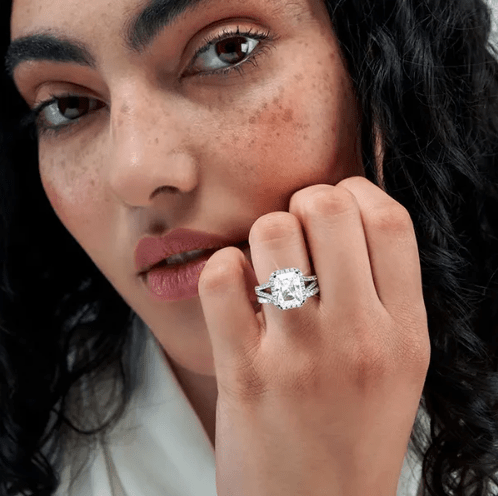
For decades, engagement ring buying followed a familiar pattern. There were expectations around budget, assumptions about diamonds, conventions about who should choose the ring and how the proposal should happen. These rules were rarely questioned. They were absorbed through advertising, family stories and cultural repetition until they felt inevitable. In 2026, those rules no longer hold the same power. Engagement ring buying has entered a period of quiet but profound change.
This shift is not a rejection of commitment or symbolism. Instead, it reflects a broader cultural movement away from rigid scripts and towards self definition. Relationships today are shaped by dialogue, shared values and individuality. Engagement rings have evolved accordingly, becoming personal expressions rather than compliance with tradition.
Many of the long standing “rules” around engagement rings were not ancient customs at all. They were twentieth century inventions, reinforced by marketing campaigns and repeated until they felt like social law. The idea of a fixed spending formula is one of the clearest examples.
Cultural commentary from BBC Culture has explored how repeated commercial messaging can gradually be mistaken for tradition. Over time, what began as suggestion becomes expectation. Engagement rings sit squarely within this pattern.
As social structures have shifted, these expectations have started to feel increasingly out of step with real life. Couples now form partnerships later, often share finances from the outset and approach major decisions collaboratively. In that context, prescriptive rules around ring buying feel disconnected rather than reassuring.
Sociological research discussed by Pew Research Center highlights how modern relationships prioritise equality and communication. Engagement ring decisions now reflect these values, moving away from secrecy and assumption towards openness and alignment.
One of the most visible changes is the way couples approach choice itself. The idea that a ring must be selected in isolation and revealed as a complete surprise has softened. While surprise proposals still exist, many couples now discuss preferences, styles and practical considerations in advance.
Relationship analysis from The Guardian has noted that modern intimacy places greater value on emotional awareness than theatrical gestures. Choosing a ring together is increasingly seen as a sign of respect and understanding rather than a lack of romance.
The rule that an engagement ring must centre on a diamond has also loosened. Diamonds remain deeply meaningful for many people, but they are no longer treated as the only legitimate option. Coloured gemstones, unconventional cuts and alternative settings are now widely accepted as valid expressions of commitment.
Fashion and jewellery coverage from Vogue has charted how engagement rings have become more individual, reflecting personal style rather than inherited expectation. The question is no longer what should be chosen, but what feels right.
Even within diamond selection, long held hierarchies have lost their authority. Clarity, colour and shape were once governed by rigid ideals. Today, they are understood as preferences shaped by taste, lifestyle and values rather than rules to be obeyed.
Educational resources from the Gemological Institute of America have played a role in this shift by demystifying diamond grading. As understanding increases, buyers feel less dependent on external benchmarks and more confident in their own judgement.
Budget expectations have also changed dramatically. The idea that an engagement ring must cost a fixed multiple of income now feels out of step with how people manage finances. Instead, budgets are shaped by broader life goals and financial priorities.
Economic commentary from The Financial Times has observed that modern consumers approach symbolic purchases with greater intentionality. Engagement rings are now considered alongside housing, travel and long term security rather than as isolated status symbols.
This change has not diminished the emotional importance of the ring. In many cases, it has strengthened it. A ring chosen within a self defined budget often feels more honest and aligned than one chosen to meet an external expectation.
As rules have faded, design freedom has expanded. Engagement rings no longer need to conform to a single silhouette or scale. Low profile settings, mixed metals and unconventional proportions are increasingly embraced without apology.
Design commentary from Dezeen has explored how contemporary jewellery design draws inspiration from architecture and industrial design rather than ornamentation alone. This influence supports engagement rings that feel modern, functional and expressive.
Crucially, the decline of rules has not meant a decline in craftsmanship. When buyers are no longer focused on ticking boxes, they often become more attentive to quality, construction and longevity.
Luxury market analysis from McKinsey & Company suggests that modern luxury is increasingly defined by relevance rather than conformity. Products that align with a person’s life and values carry greater meaning than those that simply signal adherence to tradition.
Retail experiences have evolved in response. Rather than steering customers towards a single ideal, jewellers increasingly facilitate conversations about lifestyle, wearability and long term satisfaction. Guidance has replaced instruction.
Exploring engagement ring collections such as those available through Lily Arkwright reflects this shift. Rings are presented as flexible expressions of taste, offering freedom around stone type, setting style and scale rather than enforcing a narrow definition of what an engagement ring should be.
Another important change lies in how engagement rings are worn. They are no longer treated as occasional symbols, but as everyday jewellery. This practical reality has influenced decisions around durability, comfort and setting height.
Work and lifestyle reporting from BBC Worklife has explored how blurred boundaries between professional and personal life shape purchasing behaviour. Engagement rings now need to function across multiple environments, further weakening rules that prioritised appearance over wearability.
Ethical and environmental considerations have also become central to decision making. Many buyers now factor sourcing, transparency and sustainability into their choices, even when these priorities challenge traditional expectations.
Global reporting from The Economist has examined how ethical awareness is reshaping luxury markets. Engagement rings are part of this wider movement, where values are considered alongside aesthetics.
Importantly, the end of rigid rules does not mean the end of tradition. Many people still choose classic designs, diamond solitaires and surprise proposals. The difference is that these choices are now made freely rather than by default.
Psychological insight from Psychology Today suggests that autonomy enhances satisfaction. When individuals feel ownership over their decisions, emotional attachment often deepens.
Language around engagement rings has shifted as well. Words like timeless and classic now describe style rather than obligation. Tradition has become an option, not a requirement.
This transformation mirrors broader changes in how milestones are marked. Weddings, partnerships and proposals are increasingly personalised. Engagement rings are simply one visible expression of that shift.
Editorial perspectives across Harper’s Bazaar reinforce the idea that confidence now comes from alignment rather than conformity. Luxury is no longer about following rules, but about choosing with intention.
For those navigating engagement ring buying today, the absence of rules can feel unfamiliar. Without a script, decisions require reflection rather than imitation. Yet this freedom allows for outcomes that feel deeply personal.
Jewellery retailers that embrace this change focus on education rather than prescription. Collections such as those offered by Lily Arkwright support informed choice, helping buyers feel confident rather than constrained.
The long goodbye to engagement ring rules is not about abandoning meaning. It is about redefining it on individual terms.
In 2026, there is no single correct way to buy an engagement ring. And in that freedom lies a more authentic, more modern expression of commitment.
 Diamonds are a girls best friend
Leave a comment