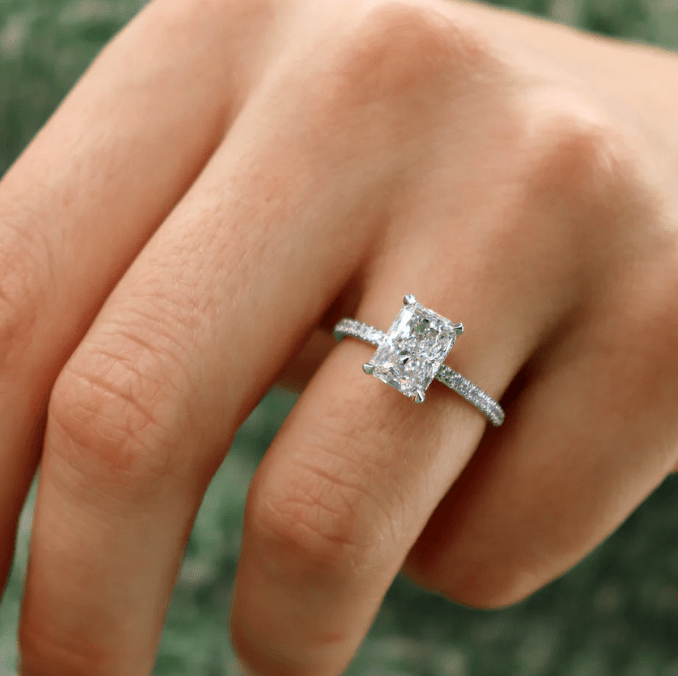
An engagement ring is often chosen at a moment when everything feels heightened. Emotions are intense, the future feels expansive and decisions are made with optimism and hope. Yet jewellery, unlike moments, must live far beyond that initial chapter. The real question is not whether a ring feels right today, but whether it will continue to feel meaningful decades from now, when life has shifted, priorities have evolved and the ring has quietly witnessed years of change.
The emotional longevity test asks something deeper than whether a ring is timeless or fashionable. It asks whether the choice was rooted in identity, intention and values rather than pressure or convention. In 2026, as couples become more reflective and better informed, this test has become central to how meaningful jewellery is chosen.
To understand why some rings age emotionally while others do not, it helps to step back and consider the long human relationship with gemstones themselves.
Long before engagement rings existed, gemstones were valued because they appeared to exist outside human time. Anthropological research published by The University of Pennsylvania Museum of Archaeology and Anthropology shows that early civilisations prized stones for their perceived permanence and symbolic power. Jewellery was worn not as trend, but as talisman, a physical link between the present and something enduring.
In ancient Egypt, gemstones were deeply entwined with ideas of eternity. Historical records examined by The Griffith Institute at the University of Oxford reveal that stones such as turquoise and lapis lazuli were associated with protection in both life and the afterlife. Jewellery carried emotional weight because it was believed to transcend a single lifetime.
Diamonds entered this symbolic landscape much later. Geological studies referenced by The Geological Society of America explain that diamonds formed billions of years ago under extraordinary pressure deep within the earth. When humans first encountered them in India, their unmatched hardness immediately distinguished them from all other known materials.
Early philosophical texts discussed by Stanford Encyclopedia of Philosophy note that diamonds were associated with invincibility and clarity long before they were associated with romance. Their perceived indestructibility made them symbols of inner strength rather than love.
The connection between diamonds and engagement rings emerged gradually. Historical scholarship from The Warburg Institute shows that during the Renaissance, diamonds began appearing in betrothal jewellery among European nobility. These rings were political symbols as much as personal ones, representing permanence, alliance and continuity.
As engagement rings became more common in the nineteenth and twentieth centuries, diamonds were increasingly framed as symbols of eternal love. Yet emotional longevity was not guaranteed by material alone. Rings chosen to meet social expectation often failed to retain emotional depth once circumstances changed.
Curatorial research from The Schmuckmuseum Pforzheim highlights how jewellery that reflects personal meaning rather than cultural pressure tends to remain emotionally resonant across generations. When jewellery tells a personal story, it ages differently.
This distinction sits at the heart of the emotional longevity test.
Material choice plays an important role, but not in the way it once did. Today, buyers understand that both natural and lab grown diamonds and gemstones offer extraordinary durability. What differs is narrative.
Scientific analysis from The Max Planck Institute for Chemistry confirms that lab grown diamonds share the same atomic structure and physical properties as natural diamonds. From a purely material perspective, both will outlast their wearer many times over.
Natural diamonds carry geological history that spans billions of years. For some, this deep time narrative adds emotional gravity. Wearing something shaped by the earth long before human civilisation can feel grounding, almost humbling.
Lab grown diamonds and gemstones, however, offer a different form of permanence. They represent intention, innovation and human progress. Rather than chance geology, they are the result of deliberate creation, shaped by values around transparency and responsibility.
Cultural analysis from The Centre for the Study of the Renaissance at UCLA suggests that modern emotional attachment often favours conscious choice over inherited symbolism. Objects chosen intentionally are more likely to retain emotional relevance as values evolve.
This is particularly evident in coloured gemstones. Historically revered stones such as emeralds, sapphires and alexandrite carried powerful symbolism but were limited by rarity. Laboratory growth has allowed these stones to be appreciated for their meaning rather than their exclusivity.
One of the earliest innovators in this space is Chatham Gemstones. Since the 1930s, Chatham has grown laboratory gemstones using slow growth processes that mirror natural formation. Their work has helped redefine what authenticity means in fine jewellery, particularly for buyers focused on longevity rather than status.
Design is another crucial factor in emotional endurance. Rings chosen for dramatic impact can lose emotional warmth when practical issues surface. Discomfort, fragility or constant awareness of the ring can slowly undermine affection.
Object psychology research discussed by The Design Council shows that items integrated seamlessly into daily life form stronger long term emotional bonds. Jewellery that feels intuitive becomes part of the wearer’s identity rather than an object that demands attention.
This is why proportion, setting height and wearability matter more than many buyers realise. Rings designed with balance tend to age emotionally as well as visually. They do not compete with the wearer’s life, they move with it.
Lifestyle evolution is inevitable over twenty years. Hands change, routines shift, priorities mature. Rings that feel adaptable across these changes are more likely to remain loved.
Longitudinal lifestyle research published by The Office for National Statistics highlights how daily habits and professional environments evolve over time. Jewellery that accommodates this evolution maintains relevance longer than jewellery tied to a specific phase of life.
Cultural attitudes towards engagement rings have shifted accordingly. Rings are no longer ceremonial objects reserved for special occasions. They are worn through work, travel and ordinary life.
Workplace culture analysis from The Chartered Institute of Personnel and Development shows how personal expression increasingly overlaps with professional identity. Rings that function across environments maintain emotional presence.
Ethics now play a significant role in emotional longevity. Many buyers ask whether they will still feel comfortable explaining their choice in twenty years’ time. Sourcing, environmental impact and transparency influence how emotional attachment evolves.
Environmental research from The Stockholm Environment Institute explores how ethical awareness shapes long term consumer satisfaction. Jewellery chosen with ethical clarity often retains emotional confidence.
This does not diminish the value of natural stones. For many, natural diamonds and gemstones represent continuity and heritage. What matters is that the choice aligns with personal values rather than inherited expectation.
Auction history analysed by Dorotheum shows that jewellery with strong personal or historical narrative retains emotional and cultural value regardless of changing trends. Meaning outlasts fashion.
The emotional longevity test also asks whether the ring reflects the relationship it symbolises. Relationships deepen and change. Rings that allow space for that growth tend to feel more authentic over time.
Relationship studies from The Institute for Family Studies indicate that shared decision making strengthens long term satisfaction. Rings chosen collaboratively often accumulate layered meaning rather than becoming static symbols.
This is why rings chosen under pressure or obligation often struggle emotionally, while those chosen with intention tend to age well. Emotional longevity thrives on agency.
Luxury analysis from The Luxury Institute notes that modern luxury is increasingly defined by relevance and alignment rather than excess. Rings that continue to reflect the wearer’s identity retain emotional power.
In twenty years, tastes will have shifted again. Shapes, settings and trends will cycle. What endures is coherence between ring, wearer and values.
The emotional longevity test is not about eliminating risk. It is about choosing with awareness.
Natural diamonds and gemstones offer one path to emotional endurance. Lab grown diamonds and gemstones offer another. Both can pass the test when chosen for the right reasons.
Ultimately, emotional longevity is not embedded in the stone itself. It is created through intention, memory and alignment.
In twenty years, the ring will carry far more than sparkle. It will hold shared experiences, quiet resilience and personal history.
A ring that passes the emotional longevity test does not remain frozen in time. It evolves alongside the life it represents.
And that evolution is what allows it to remain loved.
 Diamonds are a girls best friend
Leave a comment