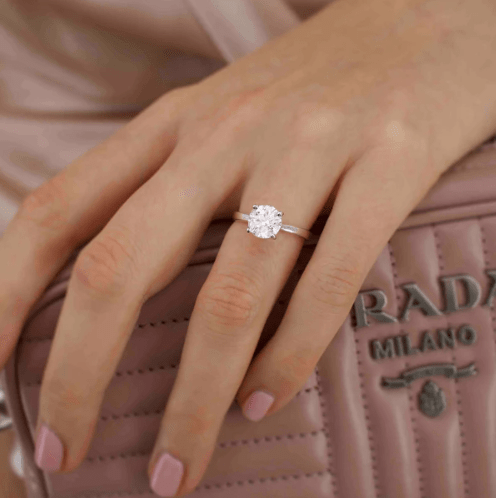
By 2026, the way engagement rings are chosen reflects a fundamental truth about modern life. For most people, work is where the majority of their waking hours are spent. It is where hands are used repeatedly, where routines are formed and where personal style must coexist with professional expectation. As a result, engagement rings are no longer imagined purely as symbolic objects for milestone moments. They are being chosen as pieces of everyday equipment, expected to function effortlessly within real working lives.
This shift does not represent a loss of romance. Instead, it signals a more grounded understanding of commitment. An engagement ring today is not something to be protected from daily life. It is something designed to live within it. That change has quietly reshaped how rings are designed, discussed and ultimately worn.
Fashion coverage from Vogue has charted how professional dress codes have softened over the past decade, allowing for greater individuality and personal expression. Jewellery has followed this evolution. Rather than being reserved for evenings or formal occasions, it is now expected to sit comfortably alongside modern workwear, from tailoring to knitwear to casual layers.
One of the most significant drivers of this shift is simple frequency of wear. Engagement rings are worn during typing, commuting, meetings, site visits and travel. They are worn through stress and celebration alike. As more people recognise this reality, the criteria for choosing a ring has expanded beyond aesthetics alone.
Workplace psychology explored by Harvard Business Review has shown that professionals increasingly value tools and accessories that reduce friction rather than introduce it. An engagement ring that distracts, catches or feels vulnerable can create low level discomfort throughout the day. As awareness of this grows, functionality has become an integral part of perceived luxury.
Setting height has become one of the clearest expressions of this workwear-led thinking. Elevated settings that prioritise visual drama can feel intrusive during long periods of desk work or hands-on activity. Lower profile designs, by contrast, tend to feel more stable and less obtrusive, supporting continuous wear without constant awareness.
Educational material from the Gemological Institute of America explains how setting style influences durability and exposure. Lower set stones are typically less vulnerable to accidental impact, a factor that increasingly resonates with professionals who expect their ring to withstand daily use rather than require special treatment.
Stone shape is another area where workwear considerations come into play. Shapes with smoother outlines are often perceived as more comfortable and less likely to snag on clothing or equipment. This does not mean sharp or angular shapes have disappeared, but it does mean buyers are more deliberate about how a stone will interact with their daily movements.
Design commentary in the Financial Times has noted that contemporary luxury places growing emphasis on usability. Objects that integrate seamlessly into everyday life are increasingly valued over those that demand accommodation. Engagement rings have become part of this broader design philosophy.
Band design has evolved alongside these considerations. Ultra-thin bands, once favoured for their delicacy, can feel less reassuring for those who use their hands frequently. Slightly wider or more structured bands are often chosen to provide balance and longevity, offering reassurance without sacrificing elegance.
Cultural analysis from The Guardian has explored how practicality has been reframed as a form of confidence rather than compromise. In jewellery, this translates into designs that feel intentional and capable, aligning with professional identities that value competence alongside style.
Metal choice is also increasingly informed by workwear realities. Metals known for strength and resilience are often prioritised by those who wear their ring continuously. Choosing a material that maintains its integrity over time allows wearers to focus on their work rather than worrying about damage or maintenance.
Technology and materials reporting from Wired has highlighted how greater understanding of material performance influences consumer expectations. As people become more informed, they bring that knowledge into decisions about fine jewellery, applying the same logic they use when selecting everyday tools.
Hybrid working has further reinforced this trend. With professional and personal environments overlapping, jewellery must feel appropriate across multiple contexts. Engagement rings are now expected to look considered on a video call, comfortable at a desk and confident in face-to-face meetings.
Social research discussed by Pew Research Center has shown how hybrid work has reshaped identity and self-presentation. Jewellery choices, including engagement rings, now play a role in expressing continuity rather than switching personas between work and personal life.
The diversity of modern professions has also influenced design priorities. There is no longer a single template for a working day. Healthcare professionals, engineers, creatives, educators and business owners all place different demands on their hands, and engagement ring design has become more inclusive as a result.
Employment data from The Office for National Statistics illustrates how varied contemporary working patterns are. This diversity has encouraged a move away from one-size-fits-all ring design towards more personalised, lifestyle-aware choices.
Importantly, choosing an engagement ring with workwear in mind does not mean stripping away beauty or meaning. On the contrary, many people find that a ring which feels secure and comfortable enhances emotional connection. When a ring becomes part of a daily rhythm, it often carries greater significance.
Psychological insight from Psychology Today suggests that people feel more confident when their accessories align with their routines rather than disrupt them. An engagement ring that fits naturally into a workday can support self-assurance and professional presence.
This evolution also reflects changing attitudes towards status and success. Highly conspicuous displays of wealth are no longer the default marker of achievement. Subtlety, longevity and intention have become equally powerful signals, particularly in professional environments.
Luxury market analysis from McKinsey & Company has noted that understated design increasingly resonates with younger professionals. Engagement rings that prioritise wearability and endurance align closely with these values.
Design trends have responded accordingly. Secure settings, clean lines and balanced proportions have gained renewed attention. These designs often feel architectural rather than decorative, reflecting a preference for structure over ornamentation.
Architectural commentary in Dezeen has explored how minimalist principles influence jewellery, favouring clarity of form and material honesty. These ideas translate naturally into engagement rings designed for continuous wear.
Retail conversations have evolved in parallel. Rather than focusing solely on carat weight or visual impact, buyers are now encouraged to discuss their working environment, daily habits and long-term expectations. This shift supports confidence and helps ensure satisfaction over time.
Exploring contemporary engagement ring collections, such as those available through Lily Arkwright, reflects this lifestyle-led approach. Rings are positioned as part of everyday life, designed to support professional activity as much as personal meaning.
Crucially, there is no single correct way to choose an engagement ring for work. Some professionals still prefer bold designs that assert presence, while others gravitate towards subtle profiles. What has changed is the legitimacy of prioritising comfort and function without apology.
Insight from BBC Worklife has highlighted how autonomy in self-presentation has become central to modern professional identity. Engagement rings chosen with workwear in mind reflect this autonomy, allowing individuals to balance symbolism with self-awareness.
Looking ahead, engagement rings designed for real working lives are likely to remain central to jewellery conversations. As work continues to evolve, so too will expectations around how fine jewellery should behave and feel.
These rings are not being chosen because romance has faded. They are being chosen because commitment is understood as something lived daily rather than displayed occasionally.
An engagement ring that supports a working life becomes part of a personal cadence. It is worn confidently, not cautiously. It reflects intention rather than obligation.
In that sense, choosing an engagement ring with workwear in mind is not a compromise. It is a reflection of how modern love and modern work now exist side by side.
And in 2026, that balance has become one of the clearest expressions of contemporary luxury.
 Diamonds are a girls best friend
Leave a comment