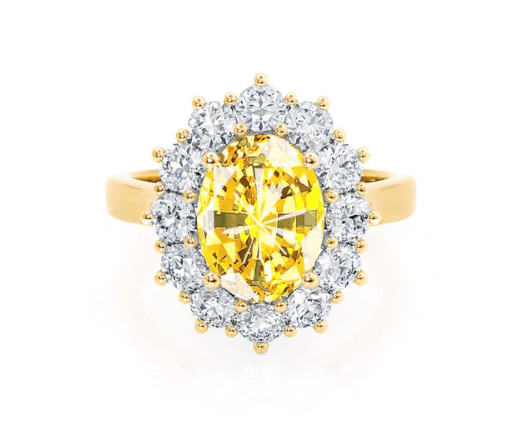
Yellow sapphires have long occupied a thoughtful and symbolic place within gemstone history. Their appeal has never relied on dramatic contrast or convention. Instead, yellow sapphires have consistently been associated with intelligence, optimism and considered taste. From sacred objects in ancient cultures to carefully engineered stones in modern laboratories, the yellow sapphire’s story reflects humanity’s evolving relationship with colour, knowledge and value.
At a geological level, yellow sapphires are members of the corundum family, composed of aluminium oxide. Their yellow colour is produced primarily by trace elements of iron incorporated during crystal growth. The resulting shades range from pale lemon through to rich golden hues, each historically interpreted in different ways depending on culture and era.
Natural yellow sapphires were first prized in South Asia, particularly in regions now known as India and Sri Lanka. In these cultures, gemstones were closely linked to cosmology and philosophy. Yellow sapphires, known in Sanskrit as Pukhraj, were associated with Jupiter and believed to represent wisdom, prosperity and moral clarity.
Objects and interpretations held by the British Museum illustrate how gemstones in ancient societies were valued for meaning as much as beauty. Yellow sapphires were worn as talismanic stones, chosen for their perceived ability to enhance intellect, bring balance and attract fortune.
In the ancient Greek and Roman worlds, yellow sapphires were admired but not always correctly identified. Early gem classification relied heavily on colour and hardness rather than mineral composition. As a result, yellow sapphires were frequently confused with topaz or other yellow stones.
Research published by the Smithsonian National Museum of Natural History explains that ancient gemmology prioritised visual qualities over scientific accuracy. Stones that were durable and luminous were prized regardless of their true mineral identity.
During the Middle Ages, yellow sapphires acquired layered symbolic meanings within European thought. Medieval scholars believed gemstones carried ethical and spiritual properties. Yellow stones were associated with illumination, discernment and truth, reflecting the era’s fascination with moral order.
Texts preserved by the British Library describe yellow gemstones as aids to clear thinking and protection against falsehood. While blue sapphires symbolised heavenly faith, yellow sapphires were linked to earthly wisdom and sound judgement.
The Renaissance marked a decisive shift in gemstone understanding. Advances in scientific observation and mineral study led to more accurate classification. Yellow sapphires emerged as distinct from topaz, valued for their exceptional hardness and durability.
Improved cutting techniques allowed yellow sapphires to reflect light more effectively. Rather than being valued for intensity, their appeal lay in warmth and subtle brilliance. This made them particularly suited to refined jewellery that prioritised balance over excess.
Jewellery collections examined by the Victoria and Albert Museum show yellow sapphires incorporated into rings, pendants and brooches alongside diamonds and pearls. Their soft golden tone added nuance and warmth to classical designs.
The nineteenth century expanded access to natural yellow sapphires through new mining discoveries, especially in Sri Lanka. These stones were admired for their clarity and consistency and became increasingly popular among European jewellers.
Victorian jewellery was deeply symbolic, and yellow sapphires were associated with optimism, loyalty and intellectual partnership. Their meaning aligned closely with Victorian ideals of moral character and companionship.
Gemstone research published by the Natural History Museum documents how Victorian gemmology refined classification systems, firmly establishing yellow sapphire as a recognised and desirable variety of corundum.
In the early twentieth century, yellow sapphires occupied a quieter yet deliberate niche. While diamonds and blue sapphires dominated mainstream jewellery, yellow sapphires appealed to those seeking individuality. Their warmth complemented the geometric clarity of Art Deco design.
Design analysis from the Metropolitan Museum of Art shows yellow sapphires used to soften architectural jewellery, creating contrast without disrupting symmetry or structure.
The most significant transformation in the history of yellow sapphires arrived in the latter half of the twentieth century with scientific innovation. The development of lab grown gemstones fundamentally changed how sapphires could be produced and understood.
Lab grown yellow sapphires are chemically, physically and optically identical to natural sapphires. They are created using controlled processes that replicate natural crystal growth, producing stones with consistent colour, clarity and durability.
Educational resources from the Gemological Institute of America confirm that lab grown sapphires share the same crystal lattice and physical properties as natural stones. The distinction lies solely in their origin.
The rise of lab grown yellow sapphires has reshaped modern jewellery design. Colour can now be selected with precision, allowing designers to work intentionally with specific tones and proportions.
From an aesthetic perspective, lab grown yellow sapphires support contemporary preferences for balance and subtle expression. Their consistency allows jewellers to create harmonious designs that feel purposeful rather than decorative.
Cultural commentary in Vogue has highlighted a renewed appreciation for coloured gemstones as personal statements. Yellow sapphires, in particular, convey warmth and confidence without conforming to traditional norms.
There is also a philosophical dimension to the acceptance of lab grown stones. As consumers become more informed, transparency and innovation increasingly shape perceptions of value. Yellow sapphires, long associated with wisdom, feel naturally aligned with this shift.
Analysis from the World Economic Forum explores how technological progress is redefining luxury by expanding choice rather than diminishing meaning. Lab grown sapphires exemplify this evolution, complementing natural stones rather than replacing them.
Symbolically, yellow sapphires continue to represent clarity, intellect and optimism. Whether formed deep within the earth over millions of years or grown through advanced science, their meaning remains consistent.
In contemporary jewellery, yellow sapphires are often chosen by those who value distinction without excess. Their colour feels luminous rather than commanding, thoughtful rather than conventional.
Looking forward, the future of yellow sapphires appears secure. As colour regains prominence in fine jewellery and innovation continues to shape gemstone production, yellow sapphires occupy a compelling space between heritage and progress.
They bridge ancient belief systems and modern science, natural rarity and technological precision.
From sacred talisman to modern gemstone, the yellow sapphire has evolved without losing its identity.
It remains a stone defined not by trend, but by meaning.
A gemstone of light, intellect and quiet confidence, shaped by history and designed for the future.
 Diamonds are a girls best friend
Leave a comment