Tag: UKrelationships

  • Why Lab Diamonds Are Becoming the Foundation of Future Fine Jewellery

    Why Lab Diamonds Are Becoming the Foundation of Future Fine Jewellery

    Fine jewellery has always been a mirror of its time. The materials chosen, the way pieces are worn and the stories attached to them all reflect wider cultural values. In 2026, fine jewellery is undergoing one of its most significant shifts in decades. Lab diamonds are no longer positioned as alternatives or substitutes. They are increasingly shaping how fine jewellery is designed, valued and integrated into everyday life.

    This evolution is not about rejecting heritage. It is about reinterpreting it for a generation that values knowledge, transparency and longevity as much as beauty. Lab diamonds are becoming foundational to fine jewellery because they align with how modern luxury is understood and lived.

    To appreciate why this shift feels so decisive, it is important to understand how diamonds came to define fine jewellery in the first place.

    Diamonds have been known to humanity for millennia, yet their dominance in fine jewellery is relatively recent. Geological research from The Geological Society of London explains that early diamonds were valued primarily for their hardness and resistance to wear, not for brilliance or perfection. Their appeal was rooted in durability and permanence.

    The association between diamonds and fine jewellery accelerated in the late nineteenth and early twentieth centuries, driven by industrial mining, global trade networks and cultural messaging. Media history explored by The British Library shows how diamonds became embedded in narratives of romance, success and permanence through advertising and popular culture.

    During this period, natural origin became tightly linked to value. This link was rarely questioned, largely because scientific understanding of diamond growth was limited outside specialist circles.

    That limitation no longer exists.

    Material science has transformed how diamonds are understood. Peer reviewed research published by Nature Materials confirms that lab grown diamonds are chemically, physically and optically identical to mined diamonds. They share the same crystal lattice, hardness and optical performance. From a materials perspective, they are indistinguishable.

    This scientific clarity has allowed lab diamonds to move beyond comparison and into confidence. They are not approximations of fine materials. They are fine materials.

    As a result, fine jewellery design has begun to shift in subtle but meaningful ways.

    Historically, fine jewellery design was often constrained by cost and availability. Designers had to balance ambition with limitation, particularly when working with larger stones or complex compositions. Lab diamonds have relaxed these constraints.

    Design analysis from Dezeen highlights how contemporary jewellery increasingly prioritises proportion, balance and architectural clarity over excess. Lab diamonds support this approach by allowing designers to choose stones for harmony rather than compromise.

    This freedom is especially visible in fine jewellery beyond engagement rings. Earrings, bracelets and necklaces are now designed with cohesion in mind, focusing on how pieces move, sit and age rather than how much they cost to produce.

    The growing prominence of lab diamond fine jewellery reflects a broader redefinition of luxury. Luxury is no longer about scarcity alone. It is about intention.

    Market commentary from The Economist has observed that modern luxury consumers increasingly prioritise longevity, versatility and relevance over traditional status symbols. Jewellery that can be worn regularly without anxiety is often perceived as more luxurious than jewellery that feels untouchable.

    Lab diamonds align naturally with this perspective. They offer durability and visual refinement without the psychological weight of extreme rarity.

    Ethical transparency has also become central to the future of fine jewellery. Buyers today are far more aware of where materials come from and how they are produced. This awareness extends beyond environmental concerns to include labour practices and supply chain clarity.

    Reporting from National Geographic has examined how increased scrutiny of mining practices has reshaped consumer attitudes towards jewellery sourcing. While responsible mining initiatives exist, lab diamonds offer a level of traceability that is straightforward and verifiable.

    For many buyers, this clarity enhances emotional confidence. Jewellery chosen with understanding tends to be worn with greater ease and pride.

    This does not strip jewellery of romance. It reframes it. Meaning is no longer tied solely to geological rarity. It is tied to conscious choice.

    Cultural research from The British Academy suggests that value in modern culture is increasingly associated with intention rather than inheritance. Lab diamonds fit comfortably within this framework.

    Another factor shaping the future of fine jewellery is how pieces are worn. Jewellery is no longer reserved for formal moments. It is part of daily life.

    Workplace culture research from Harvard Business Review shows that personal expression increasingly overlaps with professional identity. Jewellery that is refined, durable and understated fits more naturally into this blended environment.

    Lab diamond fine jewellery supports this shift by enabling designs that prioritise comfort and resilience without sacrificing elegance.

    Longevity also plays a critical role. Fine jewellery is increasingly viewed as something that should age gracefully with the wearer. Pieces are expected to adapt to changing lifestyles rather than remain frozen in time.

    Psychological research discussed by Psychology Today suggests that emotional attachment strengthens when objects integrate seamlessly into everyday routines. Jewellery that feels too precious to wear can lose emotional relevance over time.

    Lab diamonds encourage use rather than preservation. Fine jewellery becomes something lived with rather than stored away.

    Education has accelerated this shift. Consumers today are more informed about materials than ever before.

    Public education initiatives from The Gemological Institute of America have made gem science accessible beyond the trade. As understanding grows, simplistic hierarchies around origin lose influence.

    This has led to a more balanced conversation between natural and lab grown diamonds. Rather than asking which is better, buyers are asking which aligns with their values and how they intend to wear their jewellery.

    Fine jewellery collections that embrace this mindset tend to present lab diamonds as integral rather than alternative.

    Exploring modern collections such as those found under lab diamond fine jewellery reflects this evolution. These pieces are crafted with the same attention to detail, setting quality and finish traditionally associated with fine jewellery, while offering modern clarity around sourcing.

    Importantly, lab diamonds have not diminished the importance of craftsmanship. In many cases, they have heightened it.

    When designers are freed from material constraints, craftsmanship becomes more visible. Metalwork, proportions and finishing details take centre stage.

    Museum commentary from The Victoria and Albert Museum has long emphasised that fine jewellery derives value from skill as much as from material. Lab diamonds allow this balance to be reasserted.

    The future of fine jewellery is also shaped by how pieces are passed down. Heirlooms are increasingly defined by emotional resonance rather than origin story alone.

    Cultural research from The British Museum highlights how objects gain meaning through use, memory and association. A piece worn consistently and loved deeply becomes an heirloom regardless of how its materials were formed.

    Lab diamond jewellery participates fully in this tradition. Its durability ensures it can be worn, adapted and cherished across generations.

    Looking ahead, flexibility will define the next chapter of fine jewellery. Pieces will be designed to layer, adapt and evolve alongside the wearer.

    Lab diamonds support this adaptability by removing unnecessary limitations. Designers can focus on harmony, scale and longevity rather than compromise.

    Industry insight from Deloitte Insights suggests that future facing luxury brands will be those that prioritise transparency, adaptability and consumer education. Fine jewellery made with lab diamonds aligns naturally with this direction.

    The future of fine jewellery being made with lab diamonds is not a departure from luxury. It is a refinement of it.

    It reflects a world where knowledge is accessible, values are diverse and confidence comes from understanding rather than assumption.

    In 2026, fine jewellery is no longer defined solely by where a diamond comes from. It is defined by how thoughtfully it is designed, how responsibly it is created and how confidently it is worn.

    Lab diamonds are shaping the future of fine jewellery not because they replace the past, but because they allow luxury to evolve in step with the lives people actually lead.
  • Why Knowledge Has Replaced Advice as the Most Powerful Tool in Jewellery Buying

    Why Knowledge Has Replaced Advice as the Most Powerful Tool in Jewellery Buying

    For much of modern history, buying fine jewellery followed a familiar pattern. You sought out an expert, listened carefully and trusted that their advice would lead you to the right choice. Being well advised was seen as the safest, most responsible approach. In 2026, that logic has quietly but decisively shifted. The most confident jewellery buyers today are not those who receive the most advice, but those who are genuinely well informed.

    This shift is not rooted in scepticism or a lack of respect for expertise. Instead, it reflects a profound change in access to knowledge. Information that was once restricted to trade professionals is now widely available, independently published and grounded in science. As a result, consumers are no longer dependent on a single authority to interpret quality, value or suitability. They can build their own understanding and use advice as context rather than instruction.

    Being well informed has become a form of empowerment. It allows buyers to recognise bias, question inherited assumptions and make choices that align with their values rather than defaulting to tradition.

    To understand why this change matters so deeply, it helps to return to the origins of gemstones themselves.

    Long before jewellery retail existed, gemstones were discovered, assessed and valued through direct interaction with the natural world. Archaeological research published by The University of Tübingen shows that early societies prized stones that resisted wear, retained colour and felt substantial in the hand. Their value was intuitive rather than explained.

    Diamonds entered human awareness in a similar way. Geological studies from The Indian Institute of Science explain that diamonds were first encountered in India and valued for their exceptional hardness. Long before sparkle or romance became part of the narrative, diamonds were admired for their durability and resistance to damage.

    In these early contexts, being informed meant understanding material behaviour through experience. Advice existed, but it was secondary to observation.

    As gemstone trade expanded across Europe and Asia, jewellery began to take on greater symbolic weight. Rings and stones signalled power, permanence and alliance. Knowledge became increasingly concentrated among merchants and court jewellers, and advice gained authority as access to independent information narrowed.

    Historical research from The Herzog August Library documents how gemstone symbolism and valuation systems became formalised in early modern Europe. Expertise was codified, and advice replaced individual assessment.

    This dynamic intensified dramatically in the twentieth century. As diamonds and gemstones entered mass consumer markets, advice became institutionalised through retail training, marketing narratives and brand authority. Consumers were encouraged to trust expertise rather than question it.

    Economic sociology research from The University of Chicago shows how information asymmetry allowed industries to shape consumer behaviour by controlling what was considered credible knowledge. Jewellery retail followed this pattern closely.

    For decades, advice filled a real gap. Independent verification was difficult, and buyers relied on professionals to interpret quality and value.

    That gap no longer exists.

    In 2026, information about diamonds and gemstones is global, accessible and transparent. Buyers can learn about crystal formation, durability, grading systems and sourcing from independent institutions rather than relying on a single recommendation.

    Open access education initiatives from the American Museum of Natural History have played a significant role in this shift by making earth science and mineralogy accessible to the public.

    This democratisation of knowledge has transformed the role of advice. When consumers understand the fundamentals, advice becomes collaborative rather than directive.

    This shift is particularly visible in conversations around natural and lab grown diamonds and gemstones.

    For much of the twentieth century, advice around diamonds was framed in absolutes. Natural stones were positioned as inherently superior, while lab grown stones were often dismissed without scientific explanation.

    Modern materials science has dismantled this hierarchy. Research published by Science Advances confirms that lab grown diamonds share the same atomic structure, hardness and optical properties as natural diamonds.

    From a performance standpoint, there is no functional difference. The distinction lies in origin and narrative, not quality.

    A well advised buyer may still be guided towards a particular option based on tradition or perceived prestige. A well informed buyer understands the full context and chooses according to personal priorities, whether that is geological history, sustainability or transparency.

    The same principle applies to coloured gemstones. Historically, rarity defined prestige. Stones such as emeralds, sapphires and alexandrite were prized because they were difficult to obtain.

    Mineralogical research from The Natural History Museum Vienna shows that many coloured gemstones possess excellent durability and optical performance regardless of whether they are mined or laboratory grown. Suitability for jewellery depends on structure, not scarcity.

    Laboratory growth has expanded access to these stones without compromising their material integrity. Being well informed allows buyers to separate quality from tradition and performance from narrative.

    This has changed how advice is perceived. Advice that ignores informed choice can now feel limiting rather than reassuring.

    Consumer psychology research from The University of Groningen demonstrates that people experience greater satisfaction when decisions feel autonomous rather than authority driven. Jewellery purchases, which carry emotional weight, are particularly sensitive to this dynamic.

    Design choices further illustrate the shift. For decades, jewellery advice reinforced rigid rules around acceptable styles, proportions and materials.

    Design history research from The Museum für Gestaltung Zürich highlights how modern design prioritises function, comfort and user experience over tradition. Jewellery buyers increasingly apply this thinking to rings and everyday pieces.

    Being well informed allows buyers to question advice that prioritises visual impact over wearability or convention over lifestyle.

    This matters because jewellery is worn differently today. Engagement rings and fine jewellery are no longer reserved for special occasions. They are worn daily, across work, travel and informal life.

    Workplace culture research from The European Foundation for the Improvement of Living and Working Conditions shows how personal expression increasingly overlaps with professional identity. Jewellery that fails to adapt to this reality often loses emotional relevance.

    Ethics further complicate the advice versus information divide. Many buyers now prioritise sourcing transparency, environmental impact and long term responsibility.

    Environmental research from The International Resource Panel explores how trust increasingly depends on transparency rather than authority. Advice that dismisses ethical concerns risks undermining confidence.

    Being well informed allows buyers to evaluate claims independently rather than accepting them at face value.

    This does not render advice obsolete. Expertise still matters, particularly when it responds to informed questions rather than replacing understanding. The difference is that advice now supports decision making instead of directing it.

    Market analysis from The European Commission’s Joint Research Centre suggests that industries which prioritise consumer education build stronger long term trust.

    Jewellery buying is no exception.

    Being well informed also supports emotional longevity. Jewellery chosen with understanding tends to age better emotionally because it reflects identity rather than obligation.

    Psychological studies from The University of Helsinki show that autonomous choices retain emotional relevance longer than those shaped primarily by social pressure.

    In twenty years, advice given today may feel outdated. Information empowers choices that can evolve alongside the wearer.

    Natural diamonds and gemstones will continue to appeal to those drawn to geological history and rarity. Lab grown diamonds and gemstones will continue to appeal to those drawn to innovation and intention. Neither choice is inherently superior.

    What matters is understanding the difference.

    Being well informed allows buyers to move beyond simplistic narratives and false hierarchies.

    The future of jewellery buying is not about rejecting advice. It is about redefining its role.

    In 2026, confidence comes from comprehension.

    The most enduring jewellery choices are not those most heavily advised, but those most deeply understood.

    Being well informed is not about knowing everything. It is about knowing enough to choose deliberately.

    And in modern jewellery buying, that matters more than ever.

  • How Engagement Ring Buying Moved Beyond Tradition and Into Personal Choice

    How Engagement Ring Buying Moved Beyond Tradition and Into Personal Choice

    For decades, engagement ring buying followed a familiar pattern. There were expectations around budget, assumptions about diamonds, conventions about who should choose the ring and how the proposal should happen. These rules were rarely questioned. They were absorbed through advertising, family stories and cultural repetition until they felt inevitable. In 2026, those rules no longer hold the same power. Engagement ring buying has entered a period of quiet but profound change.

    This shift is not a rejection of commitment or symbolism. Instead, it reflects a broader cultural movement away from rigid scripts and towards self definition. Relationships today are shaped by dialogue, shared values and individuality. Engagement rings have evolved accordingly, becoming personal expressions rather than compliance with tradition.

    Many of the long standing “rules” around engagement rings were not ancient customs at all. They were twentieth century inventions, reinforced by marketing campaigns and repeated until they felt like social law. The idea of a fixed spending formula is one of the clearest examples.

    Cultural commentary from BBC Culture has explored how repeated commercial messaging can gradually be mistaken for tradition. Over time, what began as suggestion becomes expectation. Engagement rings sit squarely within this pattern.

    As social structures have shifted, these expectations have started to feel increasingly out of step with real life. Couples now form partnerships later, often share finances from the outset and approach major decisions collaboratively. In that context, prescriptive rules around ring buying feel disconnected rather than reassuring.

    Sociological research discussed by Pew Research Center highlights how modern relationships prioritise equality and communication. Engagement ring decisions now reflect these values, moving away from secrecy and assumption towards openness and alignment.

    One of the most visible changes is the way couples approach choice itself. The idea that a ring must be selected in isolation and revealed as a complete surprise has softened. While surprise proposals still exist, many couples now discuss preferences, styles and practical considerations in advance.

    Relationship analysis from The Guardian has noted that modern intimacy places greater value on emotional awareness than theatrical gestures. Choosing a ring together is increasingly seen as a sign of respect and understanding rather than a lack of romance.

    The rule that an engagement ring must centre on a diamond has also loosened. Diamonds remain deeply meaningful for many people, but they are no longer treated as the only legitimate option. Coloured gemstones, unconventional cuts and alternative settings are now widely accepted as valid expressions of commitment.

    Fashion and jewellery coverage from Vogue has charted how engagement rings have become more individual, reflecting personal style rather than inherited expectation. The question is no longer what should be chosen, but what feels right.

    Even within diamond selection, long held hierarchies have lost their authority. Clarity, colour and shape were once governed by rigid ideals. Today, they are understood as preferences shaped by taste, lifestyle and values rather than rules to be obeyed.

    Educational resources from the Gemological Institute of America have played a role in this shift by demystifying diamond grading. As understanding increases, buyers feel less dependent on external benchmarks and more confident in their own judgement.

    Budget expectations have also changed dramatically. The idea that an engagement ring must cost a fixed multiple of income now feels out of step with how people manage finances. Instead, budgets are shaped by broader life goals and financial priorities.

    Economic commentary from The Financial Times has observed that modern consumers approach symbolic purchases with greater intentionality. Engagement rings are now considered alongside housing, travel and long term security rather than as isolated status symbols.

    This change has not diminished the emotional importance of the ring. In many cases, it has strengthened it. A ring chosen within a self defined budget often feels more honest and aligned than one chosen to meet an external expectation.

    As rules have faded, design freedom has expanded. Engagement rings no longer need to conform to a single silhouette or scale. Low profile settings, mixed metals and unconventional proportions are increasingly embraced without apology.

    Design commentary from Dezeen has explored how contemporary jewellery design draws inspiration from architecture and industrial design rather than ornamentation alone. This influence supports engagement rings that feel modern, functional and expressive.

    Crucially, the decline of rules has not meant a decline in craftsmanship. When buyers are no longer focused on ticking boxes, they often become more attentive to quality, construction and longevity.

    Luxury market analysis from McKinsey & Company suggests that modern luxury is increasingly defined by relevance rather than conformity. Products that align with a person’s life and values carry greater meaning than those that simply signal adherence to tradition.

    Retail experiences have evolved in response. Rather than steering customers towards a single ideal, jewellers increasingly facilitate conversations about lifestyle, wearability and long term satisfaction. Guidance has replaced instruction.

    Exploring engagement ring collections such as those available through Lily Arkwright reflects this shift. Rings are presented as flexible expressions of taste, offering freedom around stone type, setting style and scale rather than enforcing a narrow definition of what an engagement ring should be.

    Another important change lies in how engagement rings are worn. They are no longer treated as occasional symbols, but as everyday jewellery. This practical reality has influenced decisions around durability, comfort and setting height.

    Work and lifestyle reporting from BBC Worklife has explored how blurred boundaries between professional and personal life shape purchasing behaviour. Engagement rings now need to function across multiple environments, further weakening rules that prioritised appearance over wearability.

    Ethical and environmental considerations have also become central to decision making. Many buyers now factor sourcing, transparency and sustainability into their choices, even when these priorities challenge traditional expectations.

    Global reporting from The Economist has examined how ethical awareness is reshaping luxury markets. Engagement rings are part of this wider movement, where values are considered alongside aesthetics.

    Importantly, the end of rigid rules does not mean the end of tradition. Many people still choose classic designs, diamond solitaires and surprise proposals. The difference is that these choices are now made freely rather than by default.

    Psychological insight from Psychology Today suggests that autonomy enhances satisfaction. When individuals feel ownership over their decisions, emotional attachment often deepens.

    Language around engagement rings has shifted as well. Words like timeless and classic now describe style rather than obligation. Tradition has become an option, not a requirement.

    This transformation mirrors broader changes in how milestones are marked. Weddings, partnerships and proposals are increasingly personalised. Engagement rings are simply one visible expression of that shift.

    Editorial perspectives across Harper’s Bazaar reinforce the idea that confidence now comes from alignment rather than conformity. Luxury is no longer about following rules, but about choosing with intention.

    For those navigating engagement ring buying today, the absence of rules can feel unfamiliar. Without a script, decisions require reflection rather than imitation. Yet this freedom allows for outcomes that feel deeply personal.

    Jewellery retailers that embrace this change focus on education rather than prescription. Collections such as those offered by Lily Arkwright support informed choice, helping buyers feel confident rather than constrained.

    The long goodbye to engagement ring rules is not about abandoning meaning. It is about redefining it on individual terms.

    In 2026, there is no single correct way to buy an engagement ring. And in that freedom lies a more authentic, more modern expression of commitment.

  • Why Engagement Ring Discounts Can Undermine Trust and How Transparent Pricing Puts Buyers First

    Why Engagement Ring Discounts Can Undermine Trust and How Transparent Pricing Puts Buyers First

    The engagement ring market has become increasingly crowded with urgency. Flash sales, limited time offers and permanent discounts dominate how rings are marketed online and in store. For a purchase that symbolises longevity and commitment, this environment can feel oddly mismatched. In 2026, more buyers are beginning to question whether constant promotions genuinely offer value or whether they introduce confusion and pressure into what should be a considered decision.

    Seeking out a jeweller who does not rely on fake sales or headline discounts is not about rejecting affordability. It is about understanding pricing clearly, trusting what you are being told and knowing that the value of the ring does not depend on timing a promotion. Transparent pricing has emerged as a response to discount fatigue, offering an alternative built on consistency rather than urgency.

    Historically, jewellery was not sold this way. Fine jewellery pricing was traditionally stable, reflecting the intrinsic value of materials and the skill of the maker. Academic research and archival commentary from the British Museum show that jewellery purchases were often made through personal relationships with jewellers, where trust and reputation mattered more than incentives. Prices rarely fluctuated, and discounts were uncommon.

    The shift towards discount-led pricing coincided with the growth of mass retail and e-commerce. As jewellery became more accessible and competition intensified, retailers adopted strategies common in fast-moving consumer sectors. These sectors rely on urgency to convert browsers into buyers. Consumer research published by Which? has repeatedly shown that when products appear to be constantly discounted, it becomes difficult for consumers to determine their real value.

    In the engagement ring market, this often results in rings that are perpetually advertised as reduced. Original prices are inflated to make discounts appear dramatic, even though the reduced price reflects the retailer’s intended margin. Analysis by the Competition and Markets Authority has highlighted how reference pricing can mislead consumers, particularly when they feel emotionally invested in a purchase.

    This is especially problematic for engagement rings because they are not standardised products. Two rings with identical carat weights can differ significantly in diamond cut precision, metal thickness, setting security and overall craftsmanship. When pricing is framed around percentage reductions rather than substance, buyers are encouraged to focus on perceived savings rather than actual quality.

    Retail analysis from the Financial Times has explored how discount-heavy environments can undermine consumer confidence. When buyers suspect that prices are artificially inflated before being reduced, trust erodes. This erosion is particularly damaging in jewellery, where reassurance and credibility are central to the buying experience.

    Transparent pricing offers a different model. Instead of inflating prices to allow for promotions, transparent jewellers price their rings according to real costs, materials and craftsmanship. The price remains consistent because it reflects the genuine value of the piece, not a temporary marketing tactic designed to prompt quick decisions.

    Behavioural research discussed by Harvard Business Review shows that consumers make more confident decisions when pricing is stable and clearly explained. Removing artificial deadlines reduces anxiety and allows buyers to evaluate a purchase on its merits rather than fearing they might miss a deal.

    In engagement ring buying, confidence matters. Buyers are choosing something intended to be worn every day, often for decades. Artificial urgency works against this mindset. Countdown timers and expiring discounts encourage speed when reflection is more appropriate.

    Another consequence of discount-led pricing is that it can hide compromises elsewhere. To maintain margins while offering frequent promotions, some retailers reduce metal weight, simplify setting construction or rely on lower-quality diamond cuts that appear acceptable on paper but lack brilliance in reality. Educational guidance from the Gemological Institute of America emphasises that cut quality and setting integrity have a greater impact on a diamond’s appearance and longevity than headline specifications alone.

    Jewellers who prioritise transparent pricing tend to focus on these fundamentals. Their pricing reflects the true cost of producing a ring that will protect its stone, wear comfortably and maintain its appearance over time. There is less need to distract from quality with promotional language.

    There is also an ethical dimension to discount culture. High-volume, promotion-driven retail models can place pressure on supply chains to reduce costs. Reporting by Reuters has examined how aggressive pricing strategies across retail sectors can incentivise cost-cutting upstream, affecting labour conditions and sourcing standards.

    Transparent pricing supports a different approach. When margins are honest and predictable, jewellers can invest properly in skilled craftsmanship, responsible sourcing and long-term customer care. This creates a more sustainable business model that prioritises longevity over rapid turnover.

    The engagement ring market itself is changing. Buyers are more informed than ever, often researching diamond certification, metal properties and setting styles before speaking to a jeweller. Market insights from McKinsey & Company suggest that modern luxury consumers increasingly value trust, clarity and brand integrity over perceived bargains.

    This shift is particularly evident among younger buyers. Research referenced by Deloitte shows that Millennials and Gen Z consumers are more sceptical of perpetual sales and more likely to favour brands that offer consistent pricing and transparent communication.

    In this context, jewellers who avoid fake sales are not resisting market trends. They are responding to them.

    Transparent pricing also reshapes the buying experience. Without the need to negotiate discounts or wait for promotions, conversations can focus on design preferences, lifestyle considerations and long-term wear. The jeweller becomes an advisor rather than a salesperson, helping buyers make decisions based on suitability rather than speed.

    Many contemporary jewellery brands have built their reputation on this philosophy. Collections designed with durability and clarity in mind, such as those offered by Lily Arkwright, are priced consistently year-round. This allows buyers to choose a ring because it feels right, not because a timer is counting down.

    Consistency also sets clearer expectations for aftercare. When a ring is not sold as a discounted commodity, it is more likely to be supported with long-term services such as resizing, inspections and maintenance. This reinforces the idea that the ring is an enduring object rather than a transactional purchase.

    Economic research from the Organisation for Economic Co-operation and Development has shown that transparent pricing models foster stronger consumer trust and longer-lasting brand relationships, particularly in sectors involving high emotional and financial investment.

    In a market saturated with urgency and noise, choosing a jeweller who does not rely on fake sales is a way of regaining control. It allows buyers to slow down, understand their options and make a decision grounded in confidence rather than pressure.

    In 2026, transparent pricing is no longer a niche stance. It is becoming a marker of credibility in the engagement ring market. It signals that a jeweller believes in the value of their work without needing artificial incentives to justify it.

    Ultimately, engagement rings are not about securing the biggest discount. They are about making a choice that will still feel right years from now. That choice is far easier to make when pricing is honest, stable and free from manufactured urgency.

  • Why Setting Height Is One of the Most Important Engagement Ring Decisions

    Why Setting Height Is One of the Most Important Engagement Ring Decisions

    Setting height is one of the most influential yet frequently overlooked aspects of engagement ring design. While conversations often focus on carat weight, diamond shape or metal choice, setting height quietly determines how a ring looks, feels and performs over years of wear. In 2026, as engagement rings are increasingly chosen to suit real lives rather than idealised moments, setting height has become a defining consideration.

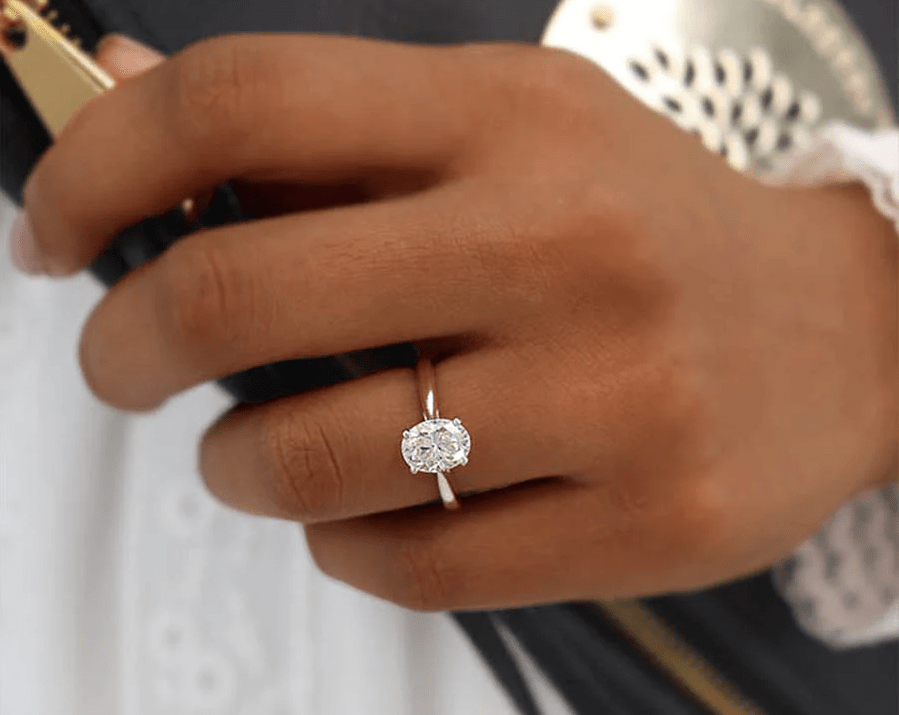
    At a basic level, setting height refers to how high the centre stone sits above the finger. A higher setting elevates the stone, creating visual prominence and allowing light to enter from multiple angles. A lower setting positions the stone closer to the band, producing a more streamlined and grounded appearance. Both approaches can be beautifully executed, but the implications of each extend far beyond aesthetics.

    Modern engagement rings are no longer occasional pieces. They are worn during long working days, on public transport, while travelling, typing, socialising and living. As a result, buyers are increasingly aware that setting height directly affects comfort, confidence and longevity. A ring that feels intrusive or vulnerable can gradually diminish enjoyment, regardless of how striking it initially appears, your engagement ring must suit your daily life.

    Fashion commentary from Vogue has explored how jewellery design is shifting towards pieces that integrate seamlessly into everyday wardrobes. The same principles that now guide workwear and lifestyle fashion are influencing engagement ring choices. Setting height plays a crucial role in whether a ring feels adaptable or situational.

    Historically, higher settings were strongly associated with prestige. Elevating the stone allowed for intricate metalwork beneath the diamond and created a sense of drama when viewed from the side. This approach suited lifestyles where rings were removed frequently or worn primarily for formal occasions.

    Lower settings, meanwhile, were often perceived as utilitarian rather than luxurious. Over time, that perception has changed. Contemporary design has reframed lower and mid profile settings as refined, intentional and modern. Rather than signalling compromise, they increasingly signal confidence.

    Gemological guidance from the Gemological Institute of America clarifies that a diamond’s brilliance is primarily determined by cut precision rather than how high it sits. Advances in cutting standards mean that diamonds can perform beautifully across a range of setting heights. This understanding has helped dismantle the assumption that higher automatically means better.

    Comfort is one of the most immediate factors influenced by setting height. Rings with very high settings can feel top heavy, particularly when worn continuously. They may catch on clothing, gloves or hair, or feel unstable during everyday hand movements. Over time, these small disruptions can become a constant source of awareness.

    Workplace and lifestyle research discussed by Harvard Business Review highlights how physical distractions can subtly affect focus and wellbeing. Engagement rings are increasingly evaluated in this context. A ring that feels secure and unobtrusive supports confidence, whereas one that constantly demands attention can feel at odds with daily routines.

    Durability is another critical consideration. While diamonds are exceptionally hard, they are not immune to damage. Higher settings expose both the stone and prongs to more frequent impact, increasing the likelihood of wear or maintenance over time. Lower settings reduce exposure simply by design.

    Scientific insight from The Natural History Museum explains how diamonds can chip when struck at vulnerable points, despite their hardness. The more exposed a stone is, the greater the chance of cumulative impact. Setting height therefore has a direct relationship with long term resilience.

    Setting height also influences how an engagement ring interacts with other jewellery. Many people intend to wear their engagement ring alongside a wedding band. Higher settings can prevent bands from sitting flush, affecting comfort and overall aesthetics. Lower or carefully balanced settings often allow for smoother stacking.

    Design analysis in the Financial Times has noted that modern luxury increasingly prioritises coherence. Jewellery that works harmoniously as part of a collection reflects a more considered design philosophy. Setting height plays a central role in achieving that balance.

    Visually, height alters perception in subtle ways. Higher settings create a more pronounced side profile, while lower settings often emphasise the diamond’s spread when viewed from above. Neither effect is inherently superior. The difference lies in how the ring feels to the wearer and how it aligns with personal style.

    Cultural commentary from The Guardian has explored how understated choices are increasingly associated with self assurance. In jewellery, this has translated into appreciation for designs that feel intentional rather than attention seeking. Mid and lower profile settings often embody this sensibility.

    Lifestyle changes have further elevated the importance of setting height. Hybrid working, frequent travel and less formal dress codes mean engagement rings are worn across a wider range of environments than ever before. Rings that feel adaptable rather than precious are increasingly favoured.

    Social research from Pew Research Center shows how blurred boundaries between professional and personal life influence consumption habits. Jewellery choices now reflect a desire for continuity rather than switching identities. Setting height directly affects whether a ring feels appropriate in all contexts.

    Importantly, choosing a lower setting does not mean sacrificing elegance. Modern prong designs, refined claws and bezel settings can maintain visual presence without excessive elevation. Many contemporary rings achieve impact through proportion, symmetry and craftsmanship rather than height alone.

    Design reporting from Dezeen has examined how jewellery increasingly draws inspiration from architecture. Structural clarity, balance and form are prioritised, encouraging designers to treat height as a deliberate structural decision rather than a default feature.

    Higher settings still hold strong appeal for many. For those drawn to traditional silhouettes, dramatic profiles or ornate detailing, elevation can be an expressive choice. The key difference in 2026 is that such choices are made knowingly, with a clear understanding of their implications.

    Luxury market insight from McKinsey & Company suggests that today’s buyers value education and transparency. Understanding how design elements affect wear empowers individuals to choose rings that align with their lifestyle rather than conform to outdated norms.

    Retail conversations have evolved accordingly. Rather than presenting setting height as a technical afterthought, it is increasingly discussed alongside daily habits, work environments and long term expectations. This holistic approach supports confidence and reduces regret.

    Exploring contemporary engagement ring collections, such as those available through Lily Arkwright, reflects this shift. Setting height is treated as a meaningful design decision with practical, aesthetic and emotional consequences.

    Setting height also shapes emotional attachment. A ring that feels secure and natural to wear often becomes part of the wearer’s identity rather than an object that requires caution. That ease can deepen emotional connection over time.

    Psychological research discussed by Psychology Today suggests that people form stronger bonds with objects that integrate seamlessly into daily routines. An engagement ring that fits effortlessly into life can hold greater long term meaning.

    Looking ahead, setting height will continue to be a central conversation in engagement ring design. As rings are worn more frequently and for longer periods, design decisions that support comfort and durability will remain essential.

    Setting height matters because it shapes lived experience. It influences how a ring moves with the hand, how confidently it can be worn and how well it endures over time.

    In 2026, understanding setting height is no longer niche knowledge. It is a personal consideration tied to lifestyle, confidence and longevity.

    When chosen with intention, setting height transforms an engagement ring from something admired into something truly lived with.

  • Jennifer Lopez’s Engagement Rings: A Cultural Timeline of Love, Reinvention and Modern Jewellery Choices

    Jennifer Lopez’s Engagement Rings: A Cultural Timeline of Love, Reinvention and Modern Jewellery Choices

    Jennifer Lopez’s engagement rings have never existed quietly. Each one has entered the public conversation as more than a piece of jewellery, becoming a reflection of where celebrity culture, relationship narratives and engagement ring expectations were at that exact moment in time. In 2026, looking back at Jennifer Lopez’s engagement rings is less about celebrity gossip and more about understanding how engagement jewellery has evolved to embrace individuality, reinvention and emotional honesty.

    What makes her story particularly compelling is that it is not linear. Her engagement rings do not build towards a single, definitive symbol of commitment. Instead, they form a sequence of meaningful moments, each valid in its own context. This mirrors how many modern buyers now view engagement rings, not as rigid end points, but as reflections of who they are when they choose them.

    Engagement rings as cultural mirrors

    Jennifer Lopez has long been recognised as a cultural barometer. Her influence extends beyond music and film into fashion, beauty and jewellery. Editors at Vogue have repeatedly noted that Lopez’s style choices tend to legitimise trends rather than simply follow them. When she wears something with confidence, it often reframes how it is perceived.

    Her engagement rings operate in the same way. Each one arrived at a moment when public attitudes toward love and commitment were shifting. Rather than feeling excessive or out of touch, her rings often felt aligned with broader cultural undercurrents that had not yet fully surfaced.

    The pink diamond as emotional language

    The most iconic of Jennifer Lopez’s engagement rings remains the pink diamond given to her by Ben Affleck in the early 2000s. At that time, coloured diamonds were still considered unconventional for engagements. White diamonds dominated Western engagement ring culture, and deviations were often seen as risky or trend-led.

    Cultural analysis from BBC Culture has explored how celebrity jewellery in the early 2000s helped reframe luxury as emotional rather than prescriptive. Lopez’s pink diamond was not positioned as an alternative for the sake of difference. It felt intentional, expressive and deeply personal.

    Gemological commentary from the Gemological Institute of America later highlighted how high-profile exposure to fancy coloured diamonds increased public curiosity and acceptance. The pink diamond did not just stand out visually. It suggested that engagement rings could communicate feeling in a way white diamonds had rarely been asked to.

    From spectacle to self-assurance

    As Jennifer Lopez’s life evolved, so too did the tone of her engagement rings. Later designs became more restrained, moving away from overt spectacle and towards confidence-driven simplicity. This shift closely mirrors a broader change in engagement ring preferences throughout the 2010s.

    Fashion editors at Harper’s Bazaar have noted that engagement rings during this period increasingly reflected wearability, craftsmanship and personal alignment rather than size alone. Lopez’s later rings feel rooted in this mindset. They signal assurance rather than announcement.

    This progression matters because it reflects how luxury itself has changed. Modern luxury is quieter, more intentional and less interested in proving itself.

    Rings as records of growth

    What sets Jennifer Lopez apart from many celebrity narratives is her willingness to allow her engagement rings to exist as part of an ongoing story rather than something to be erased. Each ring remains visible in her history, reinforcing the idea that commitment can be meaningful even when it changes form.

    Sociological writing in The New York Times has explored how contemporary relationships increasingly acknowledge growth and reinvention rather than permanence at all costs. Engagement rings, in this context, become markers of intention rather than guarantees of outcome.

    Seen this way, Lopez’s rings read less like abandoned symbols and more like personal milestones. Each one reflects who she was at that moment and what commitment meant to her then. This perspective has quietly influenced how many modern buyers view engagement jewellery today.

    Coloured stones and the permission to personalise

    One of the most lasting impacts of Jennifer Lopez’s engagement rings is how they normalised expressive choices. Coloured diamonds, distinctive cuts and unconventional proportions no longer feel niche or risky.

    Market reporting by Forbes shows that demand for non-traditional engagement rings has continued to grow, particularly among buyers who prioritise individuality and emotional resonance. Lopez’s rings did not create this movement in isolation, but they provided cultural permission for it to flourish.

    Rather than inspiring imitation, her rings encourage reflection. They prompt buyers to ask what feels meaningful to them, rather than what tradition dictates.

    Timelessness without rigidity

    Despite spanning decades, Jennifer Lopez’s engagement rings have aged remarkably well. None of them feel trapped in the aesthetic language of their era. Jewellery historians associated with the Victoria and Albert Museum often point to proportion, material quality and balance as the foundations of enduring jewellery design.

    Lopez’s rings consistently embody these principles. Even when bold, they remain considered. This longevity offers an important lesson for modern buyers. Timelessness does not require conservatism. It requires intention.

    Celebrity influence without instruction

    Unlike many celebrity trends that encourage replication, Jennifer Lopez’s engagement rings influence behaviour at a conceptual level. Fashion writers at The Guardian have described celebrity jewellery as a form of cultural reassurance. When a public figure confidently chooses something unconventional, it validates broader choice.

    This explains why her rings remain relevant in engagement ring discussions long after the headlines fade. They do not tell buyers what to choose. They expand what feels acceptable.

    Modern engagement rings and informed confidence

    In 2026, engagement ring buyers are more informed than ever. Celebrity influence still plays a role, but it intersects with research, education and lifestyle considerations. Buyers want rings that align with who they are, how they live and what they value.

    This approach is reflected in how contemporary jewellers frame engagement ring design. Brands such as Lily Arkwright emphasise informed choice, craftsmanship and long-term wear rather than spectacle alone. This philosophy aligns closely with the deeper narrative behind Jennifer Lopez’s engagement ring history.

    What her engagement rings ultimately show

    Taken together, Jennifer Lopez’s engagement rings chart a broader cultural shift. They move from rule-breaking to self-definition, from tradition to personal truth. They show that engagement rings can be expressive without being performative and meaningful without being final.

    Cultural commentary from The Atlantic suggests that modern love stories are increasingly fluid, shaped by authenticity rather than obligation. Lopez’s jewellery history embodies this evolution with unusual clarity.

    Her engagement rings are not templates. They are reflections.

    Why her rings still resonate in 2026

    Revisiting Jennifer Lopez’s engagement rings today reveals why they continue to matter. They reflect a world where commitment is personal, where symbolism is chosen rather than inherited and where jewellery is allowed to evolve alongside the wearer.

    Their relevance lies not in their carat weight or rarity, but in the permission they quietly granted. Permission to choose differently. Permission to change. Permission to value meaning over expectation.

    In 2026, that may be Jennifer Lopez’s most enduring contribution to engagement ring culture. Her rings remind us that the most powerful jewellery choice is the one that feels honest at the moment it is made, even if the story continues long after.

  • Ring Sizing in 2026: How to Measure Accurately and Choose a Fit You Will Love Long Term

    Ring Sizing in 2026: How to Measure Accurately and Choose a Fit You Will Love Long Term

    Ring sizing is one of the most quietly important decisions you will make when choosing a ring. It rarely receives the same attention as stone choice or setting style, yet it directly affects comfort, confidence and how often a ring is actually worn. In 2026, as engagement rings and fine jewellery are designed to integrate into everyday life rather than sit in a jewellery box, getting the size right has never mattered more.

    A correctly sized ring should feel secure without pressure, comfortable across the whole day and natural enough that it disappears into daily wear. Achieving that outcome requires more than a single measurement. Finger size is influenced by the body, the environment and the ring itself, and understanding these factors is key to getting the best possible result.

    One of the most misunderstood aspects of ring sizing is how much finger size changes. According to information from the NHS fluid retention and circulation fluctuate naturally throughout the day, particularly in the hands and feet. As a result, fingers are often slimmer in the morning and gradually become fuller by late afternoon or evening.

    Temperature plays a significant role in this process. Research published by Harvard Health Publishing explains that cold temperatures cause blood vessels to constrict, reducing finger circumference, while warmth increases blood flow and causes fingers to swell slightly. Measuring ring size when hands are cold can easily result in a ring that feels tight once the body warms up.

    For this reason, most jewellers recommend measuring ring size during the middle of the day, when body temperature and circulation are relatively stable. Measuring first thing in the morning, straight after exercise or during extreme weather conditions can all distort the result.

    Another factor that is often overlooked is hand dominance. The dominant hand is usually marginally larger due to greater muscle use and grip strength. Educational material from the British Society for Surgery of the Hand confirms that repeated use can subtly affect finger size over time. This means the same finger on the right hand may require a different size than on the left.

    Because of these natural variations, professional ring sizing remains the most accurate method. A trained jeweller uses calibrated metal ring sizers that replicate the weight, rigidity and feel of a real ring. Unlike string or paper methods, metal sizers do not stretch or compress, which significantly improves accuracy.

    Guidance from the Gemmological Association of Great Britain highlights that metal sizing tools provide the closest indication of how a finished ring will behave on the finger. When being sized, it is important to try several sizes rather than settling immediately on one. The right size should slide over the knuckle with slight resistance and sit securely at the base of the finger without feeling tight or spinning excessively.

    Knuckle shape can complicate this process. For people whose knuckles are wider than the base of the finger, sizing often involves compromise. The ring must be large enough to pass comfortably over the knuckle, but not so loose that it rotates once in place. In many cases, internal design adjustments can improve fit without changing the overall size.

    Ring width has a direct impact on comfort. Wider bands feel tighter than narrow bands at the same size because they cover more surface area on the finger. Educational resources from the Gemological Institute of America explain that as band width increases, perceived tightness increases too.

    This consideration is particularly important as modern ring designs increasingly favour broader bands and bold profiles. A size that feels perfect in a delicate solitaire may feel restrictive when applied to a wider style. In these cases, increasing the size slightly can dramatically improve comfort without affecting appearance.

    Lifestyle also plays a role in sizing decisions. Hands that are regularly exposed to physical work, sport or temperature changes tend to swell and contract more noticeably. Occupational guidance from the Health and Safety Executive notes that repetitive hand use and manual activity can affect circulation and joint size over time.

    For those with active lifestyles, prioritising comfort over a very snug fit is often the best approach. Rings that feel restrictive are more likely to be removed during activity, increasing the risk of misplacement and reducing how often they are worn.

    At-home sizing methods are widely used, especially when ordering online or planning a surprise proposal. While these methods can be helpful, they should be treated as estimates rather than final answers. Printable charts, string measurements and sizing apps can all introduce errors if not used carefully.

    Consumer guidance from Which? advises caution with at-home sizing. Printer scaling issues, inconsistent tension when measuring and misreading charts can all lead to incorrect results. Measuring multiple times and cross-checking results can help improve accuracy.

    One of the more reliable at-home methods is measuring an existing ring that already fits well. Placing the ring over a printed sizing guide or measuring its internal diameter with a ruler can provide a useful estimate, provided the ring is worn on the same finger and hand.

    International sizing systems add another layer of complexity. UK ring sizes use letters, while US and European systems use numbers. Jewellery trade guidance from the National Association of Jewellers stresses the importance of confirming which sizing system is being used before ordering or resizing a ring, as small conversion errors can have a noticeable impact on fit.

    The internal shape of the ring also affects how it feels on the finger. Rings with a comfort-fit interior have gently rounded inside edges, which allow them to slide on more easily and adapt better to minor finger size changes. Design insight from the Victoria and Albert Museum demonstrates how subtle changes in form can significantly improve wearability, particularly for wider bands.

    Comfort-fit interiors are especially beneficial for rings intended for everyday wear, as they reduce pressure and friction throughout the day and make the ring feel lighter on the finger.

    When purchasing a ring without the opportunity to try it on, it is usually safer to size slightly larger rather than smaller. A ring that is too large can often be resized down more easily than one that is too small, especially if the design includes gemstones along the band. However, not all rings can be resized indefinitely, so accurate sizing from the outset remains important.

    Many modern designs, including contemporary lab diamond jewellery, are created with durability and daily wear in mind, but correct sizing is still essential to ensure long-term comfort and confidence.

    Seasonal timing should also be considered. Fingers tend to swell more in warmer months and shrink in colder weather. Information from the British Heart Foundation explains that increased blood flow in warmer temperatures can affect finger circumference. Measuring during mild weather often produces the most balanced result.

    It is also sensible to think about future changes. Weight fluctuation, pregnancy and natural ageing can all influence finger size over time. While these changes cannot be predicted precisely, choosing a size that feels comfortable rather than tight allows for greater flexibility in the future.

    Psychological research discussed by Psychology Today suggests that physical comfort plays a significant role in emotional attachment to personal objects. Jewellery that feels uncomfortable is worn less often, regardless of its meaning or beauty.

    Ultimately, the most reliable ring sizing comes from combining professional measurement, awareness of personal variables and a willingness to prioritise comfort over exactness. A well sized ring should feel secure, natural and easy to wear from the moment it is put on.

    In 2026, ring sizing is no longer a minor technical step. It is a fundamental part of choosing jewellery that fits not just the finger, but the wearer’s life.

  • Why Platinum Prices Swing So Sharply: Supply Bottlenecks, Industrial Shifts and the Modern Metals Market

    Why Platinum Prices Swing So Sharply: Supply Bottlenecks, Industrial Shifts and the Modern Metals Market

    Platinum is one of the few precious metals whose price behaviour consistently defies expectation. It is rarer than gold, more difficult to extract and essential to a wide range of modern technologies, yet its market value rises and falls with a volatility that often surprises both consumers and investors. In 2026, platinum’s price movements are not an anomaly. They are a reflection of how tightly the metal is bound to global industry, geopolitics and technological change.

    To understand why platinum prices are so volatile, it is necessary to move beyond the idea of precious metals as purely symbolic or financial assets. Platinum is not primarily a store of value. It is a working metal, deeply embedded in the real economy, and that makes it uniquely sensitive to disruption.

    The starting point is scarcity, but not in the way it is often understood. Platinum is geologically rare, far rarer than gold. Data from the U.S. Geological Survey shows that platinum occurs in very low concentrations in the earth’s crust, making economically viable deposits extremely limited. However, scarcity alone does not explain volatility. What matters more is where platinum is found.

    Global platinum production is highly concentrated. According to figures published by the World Platinum Investment Council, the majority of the world’s platinum supply comes from South Africa, with Russia contributing a significant secondary share. Very little platinum is mined elsewhere. This lack of geographic diversification makes the market fragile.

    South Africa’s mining sector has faced persistent structural challenges. Power shortages, labour disputes and ageing infrastructure have repeatedly disrupted output. Coverage by Reuters has shown how even short interruptions to electricity supply can halt platinum mining operations, tightening global supply almost immediately.

    Russia’s role adds a different kind of uncertainty. Platinum is among the commodities affected by geopolitical tension and trade restrictions. Analysis by the Financial Times has explored how sanctions risk and export uncertainty surrounding Russian metals create price instability, even when supply has not yet been physically constrained.

    Unlike gold, platinum has very limited above-ground reserves. Gold benefits from centuries of accumulation held by central banks and private investors, acting as a buffer during supply shocks. Platinum does not have this cushion. Insight from the London Bullion Market Association highlights how platinum’s smaller stockpiles magnify the price impact of supply disruptions.

    Recycling provides some mitigation, but it is closely tied to industrial cycles. Most recycled platinum comes from automotive catalytic converters. According to data from the International Platinum Group Metals Association, recycling volumes fluctuate with vehicle scrappage rates and industrial activity. When economic conditions soften, recycled supply often falls at the same time as mined supply becomes constrained.

    On the demand side, platinum behaves very differently from other precious metals. Gold demand is heavily influenced by investment sentiment, central bank buying and jewellery consumption. Platinum, by contrast, is driven primarily by industrial demand.

    For decades, the automotive industry has been the single largest source of platinum demand. Platinum is used in catalytic converters to reduce harmful emissions from internal combustion engines. Research from the International Energy Agency explains how changes in emissions legislation directly affect platinum demand by altering the amount of metal required per vehicle.

    This link to regulation makes platinum highly sensitive to policy changes. When emissions standards tighten, demand can rise sharply. When engine technology shifts, demand can fall just as quickly. Over the past ten years, markets have struggled to price this dynamic accurately.

    The rise of electric vehicles has added further complexity. Electric vehicles do not require catalytic converters, leading to widespread assumptions that platinum demand would decline rapidly. However, as reporting by Bloomberg has shown, the transition to electric vehicles is uneven and geographically inconsistent. Internal combustion engines continue to dominate in many regions, keeping platinum demand elevated in the near term.

    At the same time, platinum is becoming increasingly important to emerging technologies. One of the most significant growth areas is hydrogen energy. Platinum is a critical catalyst in both hydrogen fuel cells and electrolysers used to produce green hydrogen. Research published by the Hydrogen Council identifies platinum as a key enabler of the hydrogen economy.

    This dual role places platinum in a difficult position. It is tied to both declining technologies and future-facing ones. Markets tend to struggle with this kind of transition, leading to sharp price movements as sentiment shifts between pessimism and optimism.

    Investor behaviour amplifies these swings. Platinum does not occupy a clear role in investment portfolios. It is not viewed as a traditional safe haven like gold, nor is it treated as a straightforward industrial metal like copper.

    Market commentary from the World Gold Council suggests that platinum investment tends to be opportunistic. Investors enter during perceived supply shortages or valuation anomalies and exit quickly when uncertainty rises. These short-term flows contribute to pronounced volatility.

    Liquidity also matters. Platinum markets are significantly smaller than gold markets. According to trading data from the CME Group, platinum futures trade at much lower volumes, meaning price discovery can be abrupt. Large trades or shifts in sentiment can move prices disproportionately.

    Currency dynamics add another layer of instability. Platinum is priced globally in US dollars, but production costs are incurred in local currencies, particularly the South African rand. Analysis from the Bank for International Settlements shows how currency volatility in commodity-producing countries can influence mining profitability and supply decisions, feeding through into global prices.

    Platinum is also part of a broader family of metals. It competes with palladium and rhodium in industrial applications, particularly in catalytic converters. When prices diverge significantly, manufacturers adjust formulations. Coverage by the Wall Street Journal has explored how substitution between platinum group metals can cause rapid shifts in demand, reinforcing volatility.

    For jewellery buyers, this market behaviour can seem abstract. Retail jewellery prices do not move daily with spot markets. However, long-term platinum price trends influence how the metal is positioned in fine jewellery.

    Platinum remains prized for its density, durability and naturally white colour. It does not require plating and wears exceptionally well over time. These qualities underpin its continued use in high-end jewellery, including collections found at Lily Arkwright, where metal choice is guided by longevity rather than short-term price fluctuations.

    Jewellery demand offers some stabilisation, but it is not dominant. According to the World Platinum Investment Council, jewellery accounts for a smaller share of total platinum demand than industrial uses, limiting its ability to anchor prices.

    Regulation adds further uncertainty. Environmental and industrial policies can simultaneously increase and decrease platinum demand depending on the technologies promoted. Analysis from the OECD shows how policy-driven transitions often produce periods of commodity price instability as markets adjust.

    Looking ahead, few analysts expect platinum volatility to ease. Forecasts from McKinsey & Company suggest that metals tied to energy transition technologies will remain volatile as demand pathways remain uncertain and investment cycles shorten.

    In this context, platinum’s price behaviour is not a failure of the market. It is a reflection of how central the metal has become to competing global priorities. It sits at the intersection of legacy industries, emerging technologies and fragile supply chains.

    In 2026, platinum prices are volatile because the world around platinum is volatile. The metal mirrors the transition taking place across energy, transport and geopolitics. Understanding platinum means understanding that transition, and recognising that in times of change, stability is the exception rather than the rule.

  • Modern Gold Sourcing: Why Origin Matters, How Ethics Are Changing and Why Recycled Gold Is Here to Stay

    Modern Gold Sourcing: Why Origin Matters, How Ethics Are Changing and Why Recycled Gold Is Here to Stay

    Gold has always been associated with permanence. It does not tarnish, it resists time and it carries meaning across cultures and generations. In fine jewellery, gold is more than a precious metal. It is the material that holds form, memory and symbolism together. In 2026, however, gold is no longer judged solely by its colour or karat. Increasingly, its origin matters just as much as its appearance.

    This shift reflects a wider change in how luxury is understood. Buyers today are better informed and more curious. They want to know not only what they are buying, but how it was made and what impact its creation had. Gold sourcing has moved from a background detail to a core part of the jewellery conversation.

    To understand why this matters now, it helps to look at gold’s long relationship with human civilisation.

    Gold has been used in jewellery for thousands of years, prized for its malleability and resistance to corrosion. Archaeological research published by the British Museum shows that gold jewellery from ancient Mesopotamia, Egypt and Rome has survived in remarkable condition, reinforcing gold’s association with longevity and continuity.

    Yet while gold’s physical properties are enduring, the methods used to extract it have changed dramatically. Modern gold mining can involve extensive land disruption, high water usage and chemical processes such as cyanide leaching. Investigative reporting by National Geographic has documented how poorly regulated mining can damage ecosystems and affect local communities, particularly in regions with limited oversight.

    As awareness of these impacts has grown, expectations around gold sourcing have evolved. In fine jewellery, permanence is no longer measured only by how long a ring lasts, but by whether the materials behind it can be justified ethically.

    Ethical gold sourcing refers to systems designed to reduce environmental harm, protect workers and increase transparency throughout the supply chain. This includes responsible mining practices, fair labour conditions, safer chemical management and traceability from extraction through to manufacturing.

    One of the most widely recognised frameworks for ethical sourcing is provided by the Responsible Jewellery Council. The organisation sets global standards for responsible business practices across the jewellery industry and offers independent certification covering mining, refining and manufacturing processes.

    In Europe, ethical sourcing is increasingly aligned with broader policy expectations. Guidance from the European Commission highlights growing emphasis on traceability and sustainability across supply chains, including luxury goods. These expectations reflect a shift away from blind trust towards documented responsibility.

    Alongside improved mining standards, recycled gold has become one of the most significant developments in ethical jewellery.

    Recycled gold is recovered from existing sources such as old jewellery, electronic components and industrial waste. Once refined, it can be reused indefinitely without losing quality. Technical information from the World Gold Council confirms that recycled gold is chemically identical to newly mined gold and performs in exactly the same way in jewellery.

    The difference lies in impact. Recycling gold reduces the need for new extraction, cutting down on environmental disruption and energy use. Environmental reporting by The Guardian has shown that recycled gold requires far less water and energy than primary mining and avoids many of the social risks associated with extraction.

    For fine jewellery, this is particularly relevant. Jewellery is designed to last, often for decades or generations. Using existing materials supports that philosophy, reinforcing the idea of longevity rather than continual consumption.

    Modern refining techniques have made recycled gold increasingly viable for high-end jewellery. Research discussed by MIT Technology Review explains how advances in metallurgical processes allow gold to be refined to extremely high purity levels regardless of its original source. Impurities are removed and consistency is restored, making recycled gold indistinguishable from newly mined material.

    This technological progress has helped reposition recycled gold from an alternative option to a mainstream choice.

    Traceability is another area where gold sourcing has evolved. Historically, gold supply chains were opaque, with material passing through multiple intermediaries before reaching jewellers. Today, digital tools are beginning to improve visibility.

    Reporting by Forbes has explored how blockchain and digital ledger technologies are being tested to track precious metals from source to finished product. While these systems are still developing, they represent a significant step towards transparency and accountability in luxury supply chains.

    For many buyers, ethical or recycled gold carries emotional as well as environmental value. Jewellery often marks life milestones, and materials chosen with care can deepen the meaning of those moments. Cultural research from the British Academy suggests that modern consumers increasingly want purchases to align with personal values, particularly when those purchases are symbolic.

    Gold sourced responsibly offers reassurance. It allows wearers to feel confident not only in how a piece looks, but in what it represents.

    A common misconception is that ethical or recycled gold behaves differently from newly mined gold. In reality, once refined, gold’s properties depend on alloy composition, not origin. Educational resources from the Gemological Institute of America explain that yellow, white and rose gold are created by combining pure gold with other metals such as copper, silver or palladium. These alloys determine strength and colour regardless of whether the gold was mined or recycled.

    This means ethical choices do not require aesthetic compromise.

    Contemporary jewellery design increasingly reflects this understanding. Designers are placing greater emphasis on material honesty and longevity, treating gold as a central design element rather than a neutral base. Design commentary from Dezeen highlights how modern jewellery values transparency in materials and process as part of its appeal.

    The wider acceptance of lab grown gemstones has further influenced expectations around gold sourcing. As buyers embrace innovation in gemstones, they increasingly expect the same clarity and responsibility in precious metals. Jewellery is now viewed as a complete system rather than a collection of unrelated components.

    Many modern fine jewellery collections adopt this integrated approach, combining thoughtful gold sourcing with contemporary craftsmanship, as seen in brands such as Lily Arkwright. In this context, gold choice is part of the overall design philosophy, not a hidden detail.

    Another reason gold sourcing matters today is wearability. Jewellery is no longer reserved for occasional use. Ethical sourcing removes hesitation around daily wear. When materials are chosen responsibly, jewellery feels easier to integrate into everyday life.

    Psychological research discussed by Psychology Today suggests that objects aligned with personal values are worn more frequently and kept for longer. Jewellery that feels ethically sound often develops stronger emotional attachment over time.

    Looking ahead, recycled gold is expected to play an increasingly important role in fine jewellery. Industry analysis from McKinsey & Company indicates that circular material models are becoming central to luxury strategies, particularly as younger buyers prioritise sustainability alongside quality and design.

    This does not mean responsibly mined gold will disappear. Ethical mining remains a necessary part of the global supply when conducted under strict standards. What has changed is the expectation that gold sourcing should be transparent, explainable and intentional.

    In 2026, asking where gold comes from is no longer unusual. It is part of making an informed choice. Gold has always symbolised permanence. Today, that permanence extends beyond the finished piece to the systems that produce it.

    Ethical sourcing, modern refining and recycled gold allow fine jewellery to honour tradition while reflecting contemporary values. They ensure that gold remains enduring and meaningful, supported not just by beauty, but by trust.

  • The Champagne Sapphire Story: Natural Discovery, Modern Lab Growth and the Rise of Warm Luxury

    The Champagne Sapphire Story: Natural Discovery, Modern Lab Growth and the Rise of Warm Luxury

    The champagne sapphire occupies a distinctive and increasingly celebrated position in modern fine jewellery. Its appeal lies not in dramatic colour or immediate visual impact, but in nuance. Sitting within a refined spectrum of warm, neutral hues, the champagne sapphire feels contemporary, wearable and emotionally enduring. In 2026, it is being embraced by buyers who value individuality, softness and longevity over traditional gemstone rules.

    This renewed interest reflects a wider cultural shift in how gemstones are chosen. Rather than defaulting to convention, today’s buyers are drawn to stones that feel personal and adaptable. Champagne sapphires, whether natural or lab grown, speak directly to this mindset, offering warmth without excess and elegance without rigidity.

    To understand why champagne sapphires are resonating so strongly, it is important to explore how their colour forms, where natural examples are found and how laboratory growth has expanded both access and creative freedom.

    Sapphires are a variety of corundum, a mineral renowned for its strength and resilience. According to scientific resources published by The Natural History Museum, corundum ranks 9 on the Mohs hardness scale, making sapphires one of the most durable gemstones available for jewellery. This durability has long made sapphire a preferred choice for pieces intended to be worn daily and treasured over decades.

    While blue sapphires dominate popular imagination, corundum naturally occurs in a wide range of colours. Champagne sapphires fall within the yellow to brown family, often displaying soft blends of honey, pale gold, peach, cognac or light bronze. These hues are created by trace elements, particularly iron, within the crystal structure, combined with the way light interacts with the stone’s internal growth patterns.

    Gem colour analysis from GIA explains that the beauty of warm sapphires lies in balance rather than saturation. Highly valued champagne sapphires avoid appearing dark or muddy, instead offering a luminous, gentle glow that shifts subtly depending on lighting conditions.

    This shifting quality is central to their appeal. Champagne sapphires do not present a single fixed colour. They evolve throughout the day, feeling brighter in natural light and richer under evening tones, which contributes to their emotional depth.

    The natural discovery of champagne sapphires is closely linked to regions with long histories of corundum formation. Sri Lanka, Madagascar and parts of East Africa are particularly well known for producing sapphires across the yellow and brown spectrum. Geological research referenced by The Geological Society of London shows that variations in mineral composition, pressure and temperature during formation lead to the wide colour diversity seen within sapphire deposits.

    Historically, these warm-toned sapphires were often undervalued. Market preference leaned heavily towards vivid blue stones, followed later by pinks and padparadscha hues. Champagne sapphires were frequently categorised as secondary, a judgement shaped by fashion rather than intrinsic beauty.

    That perception has shifted significantly.

    Editorial coverage from Vogue has highlighted a growing appreciation for earth-toned gemstones in fine jewellery. This movement reflects a broader desire for stones that feel understated, expressive and less tied to overt status symbolism. Champagne sapphires align naturally with this sensibility, offering colour that feels intimate rather than performative.

    Their versatility further strengthens their appeal. Champagne sapphires pair beautifully with a wide range of metals. Yellow gold amplifies their warmth, rose gold introduces softness, while white metals such as platinum or white gold create contrast that allows subtle tones to stand out with clarity.

    As interest in champagne sapphires has grown, attention has also turned to availability and consistency. Natural stones vary significantly in tone and clarity, which can be both charming and challenging. This variability has encouraged designers and buyers to explore lab grown champagne sapphires as a complementary option.

    Lab grown sapphires are chemically, physically and optically identical to their natural counterparts. Materials science research published by Nature Materials confirms that laboratory-grown corundum replicates the same crystal lattice and optical properties found in mined sapphire. The distinction lies solely in origin.

    Natural sapphires form over millions of years beneath the earth’s surface. Lab grown sapphires are created in controlled environments that replicate these natural conditions over a much shorter timeframe. The result is a genuine sapphire with predictable characteristics.

    This predictability has expanded design possibilities.

    One of the challenges with natural champagne sapphires is sourcing stones with precise hues or matching multiple stones for a single piece. Lab grown sapphires allow colour, clarity and size to be carefully controlled, enabling cohesive designs and matched sets that would be difficult to achieve naturally.

    The development of lab grown sapphires has been shaped by pioneers such as Chatham Gemstones, whose work in laboratory-grown gemstones spans decades. Their research has helped establish lab grown sapphires as respected fine jewellery materials, valued for both beauty and consistency.

    Importantly, lab grown champagne sapphires are not positioned as replacements for natural stones. They exist alongside them, offering choice rather than hierarchy.

    This emphasis on choice mirrors a broader cultural shift in luxury consumption. Jewellery buyers are increasingly informed and self-directed. Rather than following prescriptive rules, they select stones that align with personal values, lifestyle and long-term wear.

    Cultural research from The British Academy suggests that modern luxury is increasingly defined by individuality and intention rather than inherited norms. Champagne sapphires, with their nuanced warmth and adaptability, fit naturally within this evolving definition.

    From a design perspective, champagne sapphires thrive in settings that allow their tone to speak softly rather than compete for attention. Clean lines, thoughtful proportions and refined metalwork highlight the stone’s character without overwhelming it.

    Design commentary from Dezeen has noted a wider movement towards restraint and material honesty in contemporary jewellery. Champagne sapphires embody this approach, offering depth and warmth without visual noise.

    This design philosophy is reflected in the growing interest in lab diamond champagne sapphire engagement rings. These designs combine warm-toned sapphires with modern craftsmanship, creating rings that feel personal, current and enduring.

    Practicality also underpins their appeal. Sapphires are exceptionally durable, making them well suited to engagement rings and jewellery intended for daily wear. Guidance from The Gemmological Association of Great Britain consistently recognises sapphire as one of the most practical gemstones for lifelong jewellery.

    Champagne sapphires share this durability whether they are natural or lab grown.

    Another factor shaping their rise is emotional longevity. Champagne sapphires do not rely on trend-driven colour intensity. Their appeal lies in subtlety, which tends to endure beyond changing fashion cycles.

    Psychological research discussed by Psychology Today suggests that people often form deeper, longer-lasting attachments to objects that feel personal rather than conspicuous. Jewellery that integrates naturally into daily life often carries greater emotional significance over time.

    Champagne sapphires support this kind of relationship. They are distinctive without demanding attention, refined without feeling distant.

    Ethical considerations also influence gemstone choice. While natural sapphire mining can be responsibly managed, traceability varies by region. Lab grown sapphires offer a clear alternative for those prioritising transparency.

    Environmental reporting from National Geographic has explored how laboratory-grown gemstones can reduce environmental disruption associated with traditional mining, particularly when production is supported by responsible energy practices.

    For many buyers, this clarity enhances the emotional appeal of champagne sapphires. The stone becomes not only a design choice, but a considered one.

    Looking ahead, champagne sapphires are well positioned within the future of fine jewellery. Their warm tones align with broader movements towards softness, individuality and understated luxury. Their durability ensures longevity. Their availability in both natural and lab grown forms ensures meaningful choice.

    In 2026, the champagne sapphire represents a confident, thoughtful approach to jewellery. It bridges nature and science, tradition and innovation, restraint and expression.

    Whether chosen for its geological history or its lab grown precision, the champagne sapphire offers something increasingly valued in modern luxury: quiet beauty that lasts.