Tag: UKearrings

  • Yellow Sapphire: A Journey From Ancient Reverence to Modern Laboratory Precision

    Yellow Sapphire: A Journey From Ancient Reverence to Modern Laboratory Precision

    Yellow sapphires have long occupied a thoughtful and symbolic place within gemstone history. Their appeal has never relied on dramatic contrast or convention. Instead, yellow sapphires have consistently been associated with intelligence, optimism and considered taste. From sacred objects in ancient cultures to carefully engineered stones in modern laboratories, the yellow sapphire’s story reflects humanity’s evolving relationship with colour, knowledge and value.

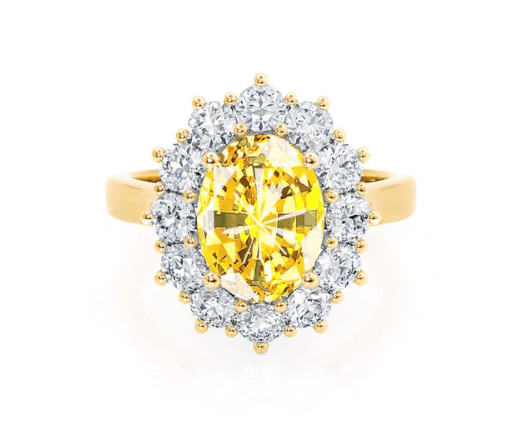
    At a geological level, yellow sapphires are members of the corundum family, composed of aluminium oxide. Their yellow colour is produced primarily by trace elements of iron incorporated during crystal growth. The resulting shades range from pale lemon through to rich golden hues, each historically interpreted in different ways depending on culture and era.

    Natural yellow sapphires were first prized in South Asia, particularly in regions now known as India and Sri Lanka. In these cultures, gemstones were closely linked to cosmology and philosophy. Yellow sapphires, known in Sanskrit as Pukhraj, were associated with Jupiter and believed to represent wisdom, prosperity and moral clarity.

    Objects and interpretations held by the British Museum illustrate how gemstones in ancient societies were valued for meaning as much as beauty. Yellow sapphires were worn as talismanic stones, chosen for their perceived ability to enhance intellect, bring balance and attract fortune.

    In the ancient Greek and Roman worlds, yellow sapphires were admired but not always correctly identified. Early gem classification relied heavily on colour and hardness rather than mineral composition. As a result, yellow sapphires were frequently confused with topaz or other yellow stones.

    Research published by the Smithsonian National Museum of Natural History explains that ancient gemmology prioritised visual qualities over scientific accuracy. Stones that were durable and luminous were prized regardless of their true mineral identity.

    During the Middle Ages, yellow sapphires acquired layered symbolic meanings within European thought. Medieval scholars believed gemstones carried ethical and spiritual properties. Yellow stones were associated with illumination, discernment and truth, reflecting the era’s fascination with moral order.

    Texts preserved by the British Library describe yellow gemstones as aids to clear thinking and protection against falsehood. While blue sapphires symbolised heavenly faith, yellow sapphires were linked to earthly wisdom and sound judgement.

    The Renaissance marked a decisive shift in gemstone understanding. Advances in scientific observation and mineral study led to more accurate classification. Yellow sapphires emerged as distinct from topaz, valued for their exceptional hardness and durability.

    Improved cutting techniques allowed yellow sapphires to reflect light more effectively. Rather than being valued for intensity, their appeal lay in warmth and subtle brilliance. This made them particularly suited to refined jewellery that prioritised balance over excess.

    Jewellery collections examined by the Victoria and Albert Museum show yellow sapphires incorporated into rings, pendants and brooches alongside diamonds and pearls. Their soft golden tone added nuance and warmth to classical designs.

    The nineteenth century expanded access to natural yellow sapphires through new mining discoveries, especially in Sri Lanka. These stones were admired for their clarity and consistency and became increasingly popular among European jewellers.

    Victorian jewellery was deeply symbolic, and yellow sapphires were associated with optimism, loyalty and intellectual partnership. Their meaning aligned closely with Victorian ideals of moral character and companionship.

    Gemstone research published by the Natural History Museum documents how Victorian gemmology refined classification systems, firmly establishing yellow sapphire as a recognised and desirable variety of corundum.

    In the early twentieth century, yellow sapphires occupied a quieter yet deliberate niche. While diamonds and blue sapphires dominated mainstream jewellery, yellow sapphires appealed to those seeking individuality. Their warmth complemented the geometric clarity of Art Deco design.

    Design analysis from the Metropolitan Museum of Art shows yellow sapphires used to soften architectural jewellery, creating contrast without disrupting symmetry or structure.

    The most significant transformation in the history of yellow sapphires arrived in the latter half of the twentieth century with scientific innovation. The development of lab grown gemstones fundamentally changed how sapphires could be produced and understood.

    Lab grown yellow sapphires are chemically, physically and optically identical to natural sapphires. They are created using controlled processes that replicate natural crystal growth, producing stones with consistent colour, clarity and durability.

    Educational resources from the Gemological Institute of America confirm that lab grown sapphires share the same crystal lattice and physical properties as natural stones. The distinction lies solely in their origin.

    The rise of lab grown yellow sapphires has reshaped modern jewellery design. Colour can now be selected with precision, allowing designers to work intentionally with specific tones and proportions.

    From an aesthetic perspective, lab grown yellow sapphires support contemporary preferences for balance and subtle expression. Their consistency allows jewellers to create harmonious designs that feel purposeful rather than decorative.

    Cultural commentary in Vogue has highlighted a renewed appreciation for coloured gemstones as personal statements. Yellow sapphires, in particular, convey warmth and confidence without conforming to traditional norms.

    There is also a philosophical dimension to the acceptance of lab grown stones. As consumers become more informed, transparency and innovation increasingly shape perceptions of value. Yellow sapphires, long associated with wisdom, feel naturally aligned with this shift.

    Analysis from the World Economic Forum explores how technological progress is redefining luxury by expanding choice rather than diminishing meaning. Lab grown sapphires exemplify this evolution, complementing natural stones rather than replacing them.

    Symbolically, yellow sapphires continue to represent clarity, intellect and optimism. Whether formed deep within the earth over millions of years or grown through advanced science, their meaning remains consistent.

    In contemporary jewellery, yellow sapphires are often chosen by those who value distinction without excess. Their colour feels luminous rather than commanding, thoughtful rather than conventional.

    Looking forward, the future of yellow sapphires appears secure. As colour regains prominence in fine jewellery and innovation continues to shape gemstone production, yellow sapphires occupy a compelling space between heritage and progress.

    They bridge ancient belief systems and modern science, natural rarity and technological precision.

    From sacred talisman to modern gemstone, the yellow sapphire has evolved without losing its identity.

    It remains a stone defined not by trend, but by meaning.

    A gemstone of light, intellect and quiet confidence, shaped by history and designed for the future.
  • The History of Diamond Melee: How Tiny Diamonds Came to Define Modern Jewellery Design

    The History of Diamond Melee: How Tiny Diamonds Came to Define Modern Jewellery Design

    Diamond melee is one of the most influential yet least discussed elements in fine jewellery. These small diamonds rarely take centre stage, but they shape how jewellery looks, feels and performs. From antique settings to contemporary engagement rings, diamond melee has played a quiet but decisive role in defining refinement, balance and craftsmanship.

    To understand diamond melee properly, it is essential to look at both its technical meaning and its historical development. Melee diamonds are not simply small stones. They are a design language, one that has evolved alongside jewellery itself.

    The term melee originates from the French word mêlée, meaning mixture or medley. In gemmological terms, diamond melee refers to small diamonds, traditionally under 0.20 carats, that are used collectively rather than individually. They are selected to work together visually, creating texture, light and continuity rather than focal impact.

    Educational definitions published by the Gemological Institute of America explain that melee diamonds are typically used as accents, pavé surfaces or supporting elements around larger stones. Their purpose is not to dominate attention, but to enhance structure and light flow.

    While the terminology is relatively modern, the use of small diamonds in jewellery is centuries old. Early diamond jewellery often relied on clusters of small stones because cutting larger diamonds was technologically challenging and financially restrictive.

    In medieval Europe, diamonds were rare and difficult to shape. Early stones were often irregular, set in closed-back settings to maximise perceived brightness. Jewellery from this period frequently used multiple small diamonds to create visual impact rather than relying on a single centrepiece.

    Research from the British Museum shows that early diamond jewellery often employed groupings of stones to convey wealth and power. Size was less important than presence. Multiple diamonds signalled abundance and status, particularly among royalty and the nobility.

    As cutting techniques improved during the Renaissance, diamonds became more refined, but large stones remained scarce. Small diamonds were more accessible and easier to integrate into elaborate designs. This period saw the rise of cluster jewellery, where multiple stones were arranged to form floral, geometric or symbolic motifs.

    Art historical analysis from the Victoria and Albert Museum highlights how Renaissance and Baroque jewellery used repetition of small stones to create rhythm and ornamentation. Diamonds were valued not only for sparkle, but for how they could articulate form.

    The eighteenth century marked an important shift in how small diamonds were used. Advances in rose cutting allowed stones to reflect more light, and jewellery design began to emphasise surface shimmer rather than mass. Melee diamonds became tools for creating light across a piece rather than concentrated brilliance.

    During the Georgian era, diamonds were often set in silver-topped gold to enhance brightness in candlelight. Small stones were arranged closely together, foreshadowing techniques that would later be described as pavé. These early uses of melee were labour intensive and required exceptional craftsmanship.

    Historical jewellery studies published by the Metropolitan Museum of Art show that Georgian jewellery relied heavily on small diamonds to achieve elegance and luminosity. The cumulative effect of melee created softness and refinement that large stones alone could not provide.

    The nineteenth century saw diamond melee become even more prominent. As diamond sources expanded and cutting became more efficient, small diamonds became more widely available. Victorian jewellery embraced intricate detail, symbolism and texture, all of which suited melee diamonds perfectly.

    Melee diamonds were used to outline motifs, add sparkle to engraved surfaces and frame larger gemstones. Their role was supportive but essential. Without them, much of the era’s jewellery would have lost its depth and richness.

    Design commentary from the Royal Collection Trust notes that Victorian jewellery often relied on contrast between polished metal and diamond surfaces. Melee diamonds were central to achieving this visual balance.

    The early twentieth century brought a fundamental change in jewellery aesthetics. Art Deco design favoured geometry, symmetry and precision. This was a defining moment for diamond melee as a structural element rather than decorative excess.

    Art Deco jewellery used rows of small diamonds to create clean lines and architectural forms. Melee diamonds became tools of definition, outlining shapes and reinforcing symmetry. Their uniformity was essential to the era’s visual language.

    Curatorial analysis from the Cooper Hewitt Smithsonian Design Museum explains how small diamonds were used in Art Deco pieces to emphasise order and modernity. Melee allowed designers to work with scale and proportion in new ways.

    By the mid twentieth century, diamond melee had become firmly embedded in fine jewellery practice. As jewellery became more wearable and less ceremonial, melee offered a way to add refinement without overwhelming the wearer.

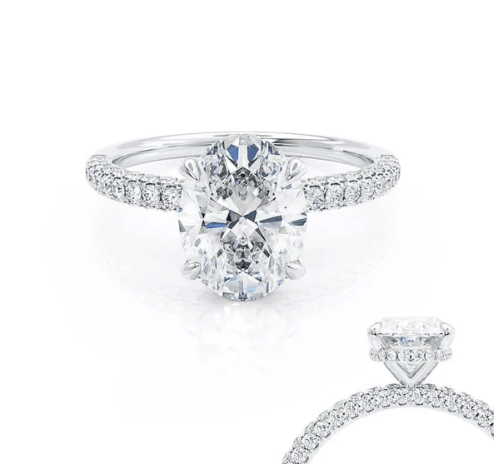
    This period also saw the rise of pavé settings, where small diamonds are set closely together with minimal visible metal. Pavé relies entirely on melee diamonds and precise craftsmanship. The technique creates a continuous surface of sparkle that feels luxurious yet restrained.

    Technical guidance from the International Gemological Institute highlights how pavé settings demand consistent stone quality and exacting setting standards. Melee diamonds must match closely in colour, cut and size to achieve the desired effect.

    In engagement ring design, melee diamonds transformed how rings were perceived. Instead of a single centre stone standing alone, designers began to use small diamonds to enhance bands, halos and shoulders. This allowed for greater complexity and personalisation without altering the core symbolism of the ring.

    Cultural commentary in Vogue has noted that modern bridal jewellery increasingly values detail and texture over overt scale. Melee diamonds play a key role in this shift, offering richness without excess.

    Beyond engagement rings, melee diamonds became essential to everyday fine jewellery. Bracelets, necklaces and earrings rely on small diamonds to create fluidity and continuity. In many cases, the overall impression of luxury comes not from one stone, but from the collective presence of many.

    Exploring modern diamond jewellery reveals just how central melee diamonds have become to contemporary design. They shape surfaces, define edges and soften transitions between metal and gemstone.

    Symbolically, diamond melee represents a different kind of value. Unlike a centre stone, which often carries explicit meaning, melee diamonds work quietly. Their significance lies in cohesion and support. They demonstrate how many small elements can create something refined and enduring.

    Sociological analysis from the Pew Research Center suggests that modern consumers increasingly appreciate craftsmanship and detail rather than overt display. Melee diamonds align with this preference, offering subtlety and depth.

    From a future-facing perspective, diamond melee continues to evolve. Advances in cutting precision and ethical sourcing have expanded possibilities for consistent, high-quality small diamonds. Designers now treat melee not as filler, but as a primary design tool.

    Design analysis from Dezeen has observed that contemporary jewellery increasingly values texture and material interaction. Melee diamonds allow designers to explore these ideas while maintaining elegance and wearability.

    The enduring appeal of diamond melee lies in its adaptability. It works across styles, eras and contexts. Whether framing a centre stone or forming an entire surface, melee diamonds enhance without dominating.

    They are proof that scale is not the sole measure of impact.

    From medieval clusters to modern pavé, diamond melee has shaped the visual language of fine jewellery for centuries. It has moved from necessity to choice, from ornament to structure.

    Today, diamond melee is not an afterthought. It is a deliberate design decision, reflecting an appreciation for balance, craftsmanship and subtle beauty.

    In a world increasingly drawn to considered luxury, diamond melee feels more relevant than ever.

    Small stones, used with intention, creating lasting meaning.

    That is the quiet power of diamond melee.

  • The History of Diamond Stud Earrings: How Minimal Design Became the Ultimate Expression of Luxury

    The History of Diamond Stud Earrings: How Minimal Design Became the Ultimate Expression of Luxury

    Diamond stud earrings occupy a unique position in jewellery history. They are at once understated and deeply symbolic, luxurious yet quietly practical. Unlike many jewellery designs that rise and fall with fashion cycles, diamond studs have endured by remaining visually restrained while absorbing centuries of cultural meaning. Their evolution reflects broader changes in how jewellery is worn, who wears it and what it is meant to communicate.

    To understand the history of diamond stud earrings, it is necessary to begin with the history of earrings themselves. Earrings are among the earliest forms of personal adornment, appearing independently across ancient civilisations. Archaeological evidence shows earrings worn in Ancient Egypt, Mesopotamia and Assyria, often by men in positions of power.

    According to research published by the British Museum, earrings in ancient societies were rarely decorative alone. They functioned as markers of rank, protection and spiritual belief. Materials such as gold and semi precious stones were chosen for symbolic properties as much as visual appeal. Earrings were visible signs of authority, worn close to the head to signify status and identity.

    Diamonds entered this story much later. Although diamonds were known in India as early as the fourth century BCE, their role was symbolic rather than ornamental. Early diamonds were worn uncut, believed to possess protective and divine qualities. Their hardness and rarity associated them with strength and invincibility rather than sparkle.

    Historical interpretation from the National Museum of Asian Art explains that diamonds were valued as objects of power long before they were appreciated for brilliance. Their resistance to damage made them talismanic, particularly among rulers and warriors. At this stage, diamonds were unsuitable for earrings as we recognise them today.

    The transformation of diamonds into wearable gemstones began in medieval Europe. Advances in lapidary techniques allowed stones to be shaped deliberately. Early point cuts and table cuts introduced flat planes that reflected light subtly. Diamonds could now be set visibly and intentionally, rather than embedded as symbolic objects.

    During the Renaissance, earrings became increasingly elaborate. Portraiture from the period shows heavy pendant earrings featuring pearls, coloured stones and, occasionally, diamonds. These designs were intended to be seen across candlelit halls and public spaces. Subtlety was neither practical nor desired.

    Art historical research referenced by the National Portrait Gallery shows that jewellery during this period was performative. Earrings framed the face and signalled wealth, lineage and political influence. The idea of a discreet diamond stud had not yet emerged, as jewellery was expected to declare presence.

    The shift towards simplicity began gradually in the seventeenth and eighteenth centuries. Enlightenment ideals favoured balance, proportion and restraint. Jewellery followed suit. Earrings became lighter, and diamonds were increasingly valued for light performance rather than size.

    The Georgian period marked an important turning point. Diamonds were often set close to the ear in silver backed gold to enhance brightness in candlelight. While still decorative, these earrings moved away from excessive length and weight. The focus began to shift towards how light interacted with stone rather than how much jewellery could be worn.

    Curatorial analysis from the Victoria and Albert Museum highlights how jewellery from this era reflects a growing appreciation for refinement. Diamonds were arranged with greater intention, hinting at the power of minimal design.

    The nineteenth century accelerated this evolution. Industrialisation transformed jewellery production, making diamond pieces more accessible beyond aristocratic circles. Earrings became part of everyday dress rather than purely court attire. Smaller diamond earrings began to appear as personal adornments rather than ceremonial objects.

    This period also strengthened the symbolic connection between diamonds and permanence. As diamonds came to represent durability and emotional continuity, their use in everyday jewellery gained significance. Diamond earrings were no longer just decorative, but meaningful.

    By the early twentieth century, diamond stud earrings began to take on their modern identity. Advances in cutting precision allowed for smaller, well matched diamonds with consistent brilliance. Secure settings made it possible for a single stone to sit directly against the ear without additional ornamentation.

    Cultural change played a crucial role in this shift. As women entered professional environments and adopted simpler fashions, jewellery needed to adapt. Large, swinging earrings were impractical. Diamond studs offered elegance without interference, fitting seamlessly into changing lifestyles.

    Fashion historians at the Museum at FIT note that early twentieth century jewellery increasingly prioritised versatility. Pieces were designed to move between day and evening with ease. Diamond stud earrings embodied this new philosophy perfectly.

    The influence of cinema further solidified their status. Mid twentieth century film stars were frequently photographed wearing diamond studs both on and off screen. Unlike dramatic chandelier earrings, studs conveyed polish without excess.

    Cultural analysis in Vanity Fair has explored how classic Hollywood style shaped enduring ideas of elegance. Diamond studs became associated with composure, confidence and timeless beauty rather than spectacle.

    In the latter half of the twentieth century, diamond stud earrings became deeply embedded in personal milestones. They were gifted to mark birthdays, graduations and achievements. Their simplicity allowed them to suit every stage of life, while their durability ensured longevity.

    Sociological research from the Pew Research Center suggests that objects chosen to commemorate life events are often those that integrate easily into daily routines. Diamond studs, worn consistently and comfortably, fulfil this role naturally.

    Their symbolism continued to evolve. No longer tied exclusively to romance or status, diamond stud earrings increasingly became self-purchases. They marked independence, confidence and personal success. This shift aligned with broader cultural changes in how jewellery functioned as a form of self-expression.

    Commentary in The Guardian has discussed how understated luxury has replaced overt display as a marker of confidence. Diamond stud earrings fit squarely within this narrative. Their value is not announced, but understood.

    Design publications such as Monocle have observed that minimal personal objects often signal assurance rather than restraint. Choosing simplicity implies certainty of taste. The diamond stud earring is a perfect expression of this principle.

    Today, diamond stud earrings are considered a foundation piece rather than a fashion trend. They are worn across generations and cultures, adapting effortlessly to individual style. Their design has remained consistent because it does not need reinvention.

    From a symbolic perspective, diamond studs represent clarity and continuity. A single stone, set close to the ear, draws attention without demanding it. There is no distraction from the diamond itself. This focus mirrors contemporary values around intention and authenticity.

    Looking ahead, the relevance of diamond stud earrings appears secure. As jewellery continues to move towards versatility and personal meaning, pieces that integrate seamlessly into everyday life will remain central.

    Diamond stud earrings connect ancient beliefs about protection and power with modern ideas of self assurance and longevity. Their form has been refined over centuries, but their purpose remains consistent.

    They are not designed to impress. They are designed to endure.

    From talismanic origins to modern essentials, diamond stud earrings tell a story of refinement through restraint.

    A timeless design, shaped by history and worn with confidence.