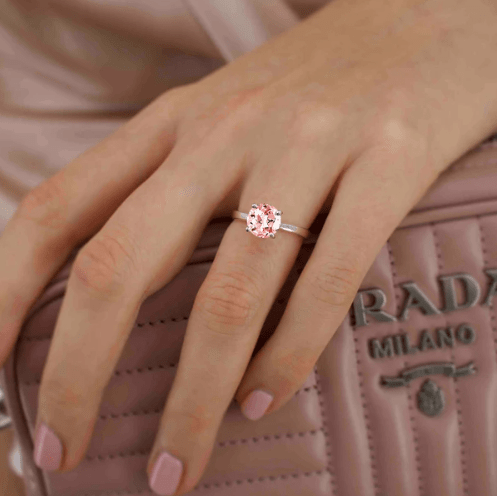
The champagne sapphire occupies a distinctive and increasingly celebrated position in modern fine jewellery. Its appeal lies not in dramatic colour or immediate visual impact, but in nuance. Sitting within a refined spectrum of warm, neutral hues, the champagne sapphire feels contemporary, wearable and emotionally enduring. In 2026, it is being embraced by buyers who value individuality, softness and longevity over traditional gemstone rules.
This renewed interest reflects a wider cultural shift in how gemstones are chosen. Rather than defaulting to convention, today’s buyers are drawn to stones that feel personal and adaptable. Champagne sapphires, whether natural or lab grown, speak directly to this mindset, offering warmth without excess and elegance without rigidity.
To understand why champagne sapphires are resonating so strongly, it is important to explore how their colour forms, where natural examples are found and how laboratory growth has expanded both access and creative freedom.
Sapphires are a variety of corundum, a mineral renowned for its strength and resilience. According to scientific resources published by The Natural History Museum, corundum ranks 9 on the Mohs hardness scale, making sapphires one of the most durable gemstones available for jewellery. This durability has long made sapphire a preferred choice for pieces intended to be worn daily and treasured over decades.
While blue sapphires dominate popular imagination, corundum naturally occurs in a wide range of colours. Champagne sapphires fall within the yellow to brown family, often displaying soft blends of honey, pale gold, peach, cognac or light bronze. These hues are created by trace elements, particularly iron, within the crystal structure, combined with the way light interacts with the stone’s internal growth patterns.
Gem colour analysis from GIA explains that the beauty of warm sapphires lies in balance rather than saturation. Highly valued champagne sapphires avoid appearing dark or muddy, instead offering a luminous, gentle glow that shifts subtly depending on lighting conditions.
This shifting quality is central to their appeal. Champagne sapphires do not present a single fixed colour. They evolve throughout the day, feeling brighter in natural light and richer under evening tones, which contributes to their emotional depth.
The natural discovery of champagne sapphires is closely linked to regions with long histories of corundum formation. Sri Lanka, Madagascar and parts of East Africa are particularly well known for producing sapphires across the yellow and brown spectrum. Geological research referenced by The Geological Society of London shows that variations in mineral composition, pressure and temperature during formation lead to the wide colour diversity seen within sapphire deposits.
Historically, these warm-toned sapphires were often undervalued. Market preference leaned heavily towards vivid blue stones, followed later by pinks and padparadscha hues. Champagne sapphires were frequently categorised as secondary, a judgement shaped by fashion rather than intrinsic beauty.
That perception has shifted significantly.
Editorial coverage from Vogue has highlighted a growing appreciation for earth-toned gemstones in fine jewellery. This movement reflects a broader desire for stones that feel understated, expressive and less tied to overt status symbolism. Champagne sapphires align naturally with this sensibility, offering colour that feels intimate rather than performative.
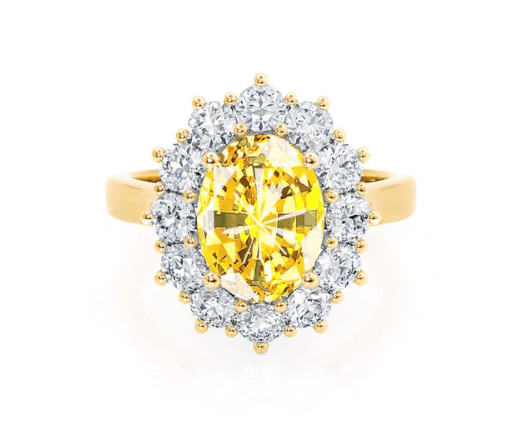
Their versatility further strengthens their appeal. Champagne sapphires pair beautifully with a wide range of metals. Yellow gold amplifies their warmth, rose gold introduces softness, while white metals such as platinum or white gold create contrast that allows subtle tones to stand out with clarity.
As interest in champagne sapphires has grown, attention has also turned to availability and consistency. Natural stones vary significantly in tone and clarity, which can be both charming and challenging. This variability has encouraged designers and buyers to explore lab grown champagne sapphires as a complementary option.
Lab grown sapphires are chemically, physically and optically identical to their natural counterparts. Materials science research published by Nature Materials confirms that laboratory-grown corundum replicates the same crystal lattice and optical properties found in mined sapphire. The distinction lies solely in origin.
Natural sapphires form over millions of years beneath the earth’s surface. Lab grown sapphires are created in controlled environments that replicate these natural conditions over a much shorter timeframe. The result is a genuine sapphire with predictable characteristics.
This predictability has expanded design possibilities.
One of the challenges with natural champagne sapphires is sourcing stones with precise hues or matching multiple stones for a single piece. Lab grown sapphires allow colour, clarity and size to be carefully controlled, enabling cohesive designs and matched sets that would be difficult to achieve naturally.
The development of lab grown sapphires has been shaped by pioneers such as Chatham Gemstones, whose work in laboratory-grown gemstones spans decades. Their research has helped establish lab grown sapphires as respected fine jewellery materials, valued for both beauty and consistency.
Importantly, lab grown champagne sapphires are not positioned as replacements for natural stones. They exist alongside them, offering choice rather than hierarchy.
This emphasis on choice mirrors a broader cultural shift in luxury consumption. Jewellery buyers are increasingly informed and self-directed. Rather than following prescriptive rules, they select stones that align with personal values, lifestyle and long-term wear.
Cultural research from The British Academy suggests that modern luxury is increasingly defined by individuality and intention rather than inherited norms. Champagne sapphires, with their nuanced warmth and adaptability, fit naturally within this evolving definition.
From a design perspective, champagne sapphires thrive in settings that allow their tone to speak softly rather than compete for attention. Clean lines, thoughtful proportions and refined metalwork highlight the stone’s character without overwhelming it.
Design commentary from Dezeen has noted a wider movement towards restraint and material honesty in contemporary jewellery. Champagne sapphires embody this approach, offering depth and warmth without visual noise.
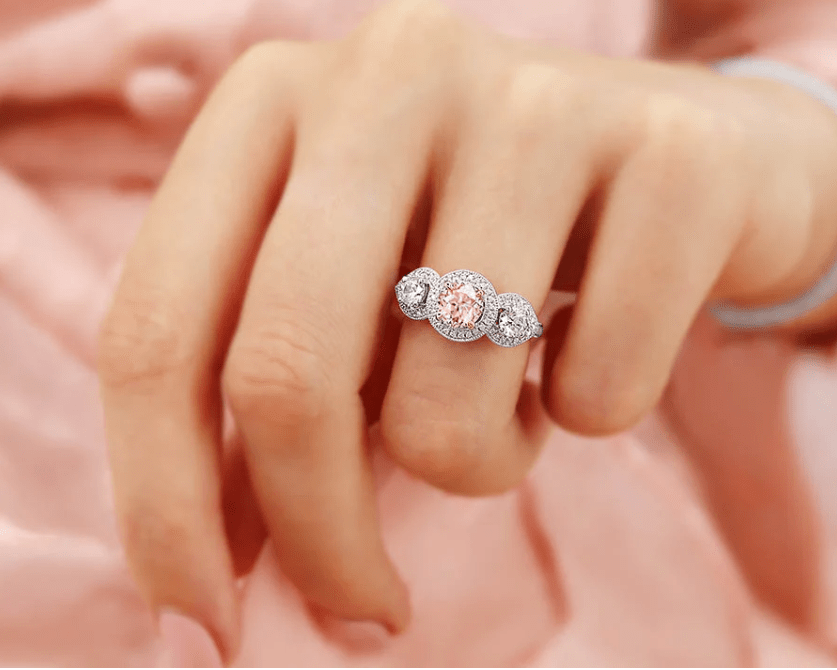
This design philosophy is reflected in the growing interest in lab diamond champagne sapphire engagement rings. These designs combine warm-toned sapphires with modern craftsmanship, creating rings that feel personal, current and enduring.
Practicality also underpins their appeal. Sapphires are exceptionally durable, making them well suited to engagement rings and jewellery intended for daily wear. Guidance from The Gemmological Association of Great Britain consistently recognises sapphire as one of the most practical gemstones for lifelong jewellery.
Champagne sapphires share this durability whether they are natural or lab grown.
Another factor shaping their rise is emotional longevity. Champagne sapphires do not rely on trend-driven colour intensity. Their appeal lies in subtlety, which tends to endure beyond changing fashion cycles.
Psychological research discussed by Psychology Today suggests that people often form deeper, longer-lasting attachments to objects that feel personal rather than conspicuous. Jewellery that integrates naturally into daily life often carries greater emotional significance over time.
Champagne sapphires support this kind of relationship. They are distinctive without demanding attention, refined without feeling distant.
Ethical considerations also influence gemstone choice. While natural sapphire mining can be responsibly managed, traceability varies by region. Lab grown sapphires offer a clear alternative for those prioritising transparency.
Environmental reporting from National Geographic has explored how laboratory-grown gemstones can reduce environmental disruption associated with traditional mining, particularly when production is supported by responsible energy practices.
For many buyers, this clarity enhances the emotional appeal of champagne sapphires. The stone becomes not only a design choice, but a considered one.
Looking ahead, champagne sapphires are well positioned within the future of fine jewellery. Their warm tones align with broader movements towards softness, individuality and understated luxury. Their durability ensures longevity. Their availability in both natural and lab grown forms ensures meaningful choice.
In 2026, the champagne sapphire represents a confident, thoughtful approach to jewellery. It bridges nature and science, tradition and innovation, restraint and expression.
Whether chosen for its geological history or its lab grown precision, the champagne sapphire offers something increasingly valued in modern luxury: quiet beauty that lasts.
 Diamonds are a girls best friend