Tag: symbolism

  • Are Engagement Rings Still Growing in Size? The 2026 Carat Expectations Report

    Are Engagement Rings Still Growing in Size? The 2026 Carat Expectations Report

    For more than a century, the engagement ring has reflected far more than personal taste. It has mirrored cultural expectations, economic shifts, social trends and changing attitudes toward love and partnership. In 2026, one question continues to dominate search trends, bridal forums and lifestyle reporting: are engagement rings still getting bigger?

    The answer is both simple and nuanced. Yes, British couples are increasingly choosing larger centre stones than previous generations. But the reasons behind this shift are far more layered than pure aesthetics. Influences ranging from celebrity culture to accessible luxury alternatives, social media visibility and evolving values around individuality all play significant roles.

    This report brings together style analysis, cultural commentary and the latest insights from high authority lifestyle publications such as Vogue UK, BBC News, The Guardian and Financial Times. Together, they reveal one of the most significant shifts in modern British romance.

    The Rise of the Larger Stone: A Social and Cultural Analysis

    In the late twentieth century, the typical British engagement ring centred around a diamond measuring between 0.50 and 1.00 carat. Today, British jewellers report a growing interest in stones between 1.50 and 2.50 carats, with some couples opting for even larger looks. But the reasons behind this trend are shaped by a different set of cultural forces.

    The visibility of engagement rings has grown dramatically over the past decade. Social media has become a digital stage where engagements are celebrated publicly, and ring close ups form part of the announcement ritual. As Cosmopolitan UK observed, the desire for a ring that photographs beautifully is now a major factor in buying decisions. Larger stones tend to provide stronger presence in images, catching light more dramatically and creating recognisable silhouettes.

    Celebrities are also shaping the conversation. Oversized rings belonging to figures like Hailey Bieber, Sofia Richie Grainge and Nicola Peltz Beckham circulate widely on platforms such as Instagram and TikTok. The New York Times notes that celebrity influence has accelerated global interest in stones over three carats, even if buyers do not purchase stones of equal size. The aspiration itself has shifted upward, and mid range carat sizes have been lifted in response.

    The Role of Technology and Modern Gemstone Options

    Perhaps the most transformative factor in carat expectations is the rise of alternative diamond options. Modern couples are no longer limited to traditionally mined diamonds, which carry high pricing that escalates quickly with carat weight. The emergence of laboratory grown diamonds and advanced gemstone alternatives has dramatically widened what is possible at accessible price points.

    Laboratory grown diamonds, which share the same chemical and physical properties as mined diamonds, have become widely accepted in the UK. As BBC Business reports, price reductions of up to 70 per cent compared with mined stones have allowed couples to afford larger diamonds without compromising clarity, colour or quality. This change has normalised the idea that a two carat stone is no longer a luxury reserved for the few.

    The trend towards more visible carat weights is also supported by a growing appreciation for oval, pear and elongated emerald cuts. These shapes maximise finger coverage and give the illusion of greater size per carat. The Guardian Lifestyle notes that British couples increasingly prioritise presence and proportion over strict carat metrics.

    Does Bigger Really Mean Better? Understanding the Shift in Values

    While it is clear that average ring size is increasing, the idea that bigger is automatically better is not universally accepted. Many British buyers are rejecting outdated traditions such as the three month salary rule, favouring instead a balanced approach that reflects personal style and ethical values.

    As Financial Times highlighted in a recent feature on modern luxury consumption, young couples prioritise meaningful design and craftsmanship rather than prestige for prestige’s sake. A well cut stone that performs beautifully in different lighting conditions often holds more significance than a larger but poorly proportioned diamond.

    The rise of understated luxury influences also shapes the debate. The quiet luxury movement, made widely visible by cultural moments discussed in Vogue UK, has encouraged a move towards refined, soft spoken design rather than overt extravagance. Many buyers want a stone that feels generous but not ostentatious, striking a balance between elegance and subtlety.

    The Psychology of Perceived Size

    Carat weight is only one factor in how large a diamond appears. The psychology of size perception is complex and influenced by visual cues. The apparent size of an engagement ring can change dramatically based on:

    • Stone shape
    • Proportions and cut angles
    • Setting style
    • Finger shape and width
    • Metal colour

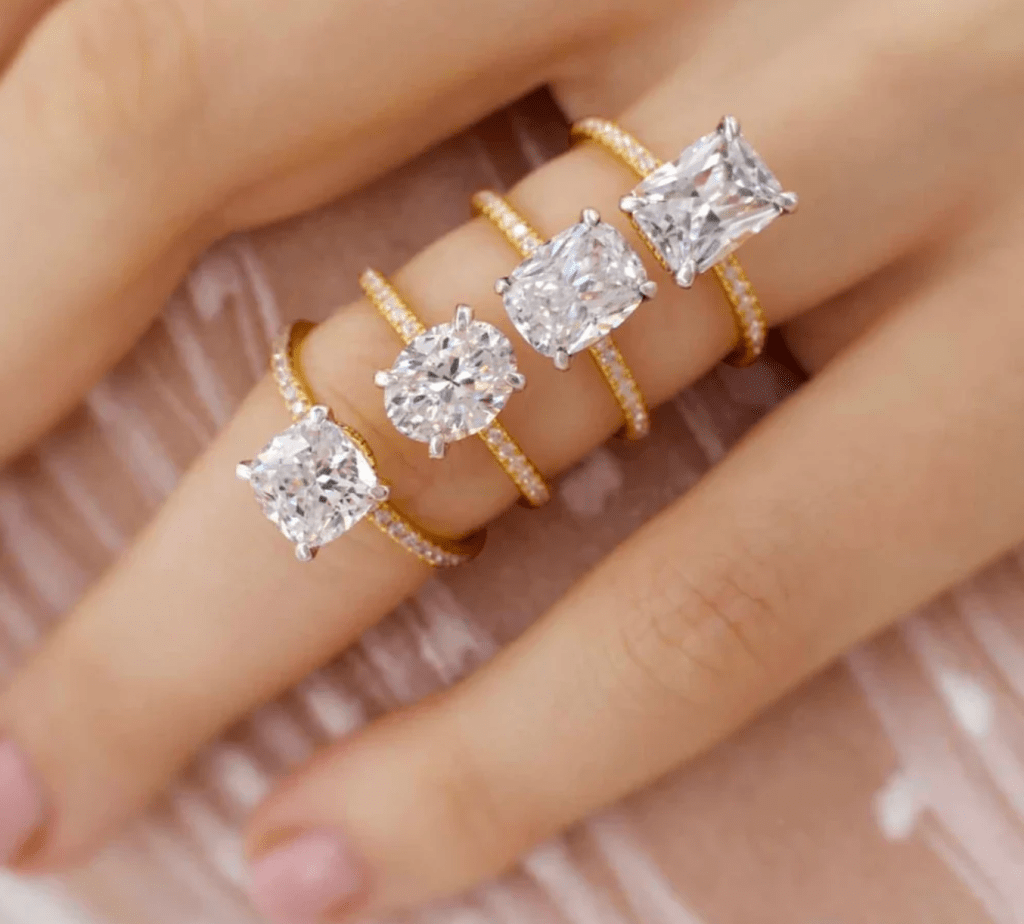
    For example, elongated shapes such as oval, marquise and emerald cuts appear significantly larger per carat than round stones. A one carat oval can mimic the finger coverage of a 1.3 or 1.4 carat round. This has contributed to the oval cut’s remarkable rise in the UK, a trend highlighted frequently in Cosmopolitan UK and refined in numerous celebrity engagements.

    Halo settings and thin bands also enhance perceived size. As Vogue UK notes in its engagement ring forecasts, micro pavé bands and delicate solitaire silhouettes amplify sparkle and visibility.

    Economic Realities Behind Growing Carat Expectations

    While social media influence and gemstone alternatives explain much of the upward shift, economics plays a surprisingly important role. Engagement rings have become one of the few major luxury purchases that couples make collaboratively, often splitting the cost or choosing rings together. This shared investment allows for greater carat flexibility.

    At the same time, shifting financial priorities among millennials and Gen Z, such as delayed home ownership and reduced emphasis on traditional milestones, create more space in budgets for meaningful personal purchases. The New York Times observes that many couples channel savings from postponed events into high impact pieces such as engagement rings.

    Furthermore, the British market has shown increased interest in heirloom quality jewellery that holds long term emotional value. Larger diamonds are often viewed as future heirlooms, intended to be passed down through families or reimagined in new designs.

    Changing Engagement Rituals and the Meaning of Carat Weight

    The symbolism of the engagement ring continues to evolve in 2026. The modern British couple often sees the ring not only as a representation of love but also as a marker of shared taste, values and identity. As partnerships become increasingly egalitarian, there is a shift away from rigid traditions and an openness to self expression.

    Carat weight has therefore become less of a social expectation and more of a stylistic choice. A larger centre stone is seen not as a show of wealth but as a celebration of maximalist design, personal flair or visual preference. Meanwhile, minimalist couples may choose a smaller stone intentionally, favouring quiet luxury over visual impact.

    These diverging approaches demonstrate a key insight: carat weight is no longer a measure of commitment but of creativity.

    The Future of Carat Trends in the UK

    Based on reporting from BBC News and consumer data referenced by The Guardian, the upward movement in average carat sizes is expected to continue gradually over the next five years. This growth will likely remain moderate rather than extreme, with the 1.50 to 2.00 carat range becoming increasingly standard for many British couples.

    This shift is driven by a combination of accessible diamond alternatives, visual culture, celebrity engagement trends and a new approach to luxury that prioritises emotional significance over outdated financial rules.

    But even with these influences, one truth remains constant: the perfect engagement ring is not the one that matches a number but the one that captures a story.
  • How to Pick a Good Natural Diamond: The Complete 2026 UK Guide

    Choosing a natural diamond can feel overwhelming, particularly with today’s increased focus on ethics, transparency and long term value. The diamond market has evolved rapidly over the past decade, and British buyers in 2026 are far more informed than previous generations. They want clarity, quality, credible certification and a diamond that will stand the test of time both structurally and symbolically.

    Publications such as the Guardian have observed that British consumers are shifting away from purely aesthetic considerations and instead looking for diamonds with authenticated provenance and reliable grading. This guide explains everything a buyer needs to know in order to select a high quality natural diamond, from understanding the Four Cs to interpreting certification paperwork, assessing light performance and avoiding common pitfalls.

    Although the modern market now includes lab grown diamonds and alternative gemstones, natural diamonds continue to be prized for their geological rarity, deep history and the sense of permanence they carry. This makes choosing the right one especially important.

    Understanding the Importance of the Four Cs

    Every natural diamond is graded according to four universally recognised characteristics: cut, colour, clarity and carat. These criteria shape both the appearance and value of the stone. The Gemological Institute of America (GIA), widely regarded as the most reputable authority in diamond grading, offers extensive guidance on how these grades are determined.

    Cut has the greatest influence on a diamond’s sparkle. A well cut diamond will reflect and refract light with precision, creating the brightness and fire most people associate with a high quality stone. Poorly cut diamonds appear dull even if they are large or possess good clarity. In 2026, buyers are increasingly prioritising cut over carat size because they recognise that beauty is rooted in light performance rather than weight.

    Colour refers to the presence of yellow or brown tones. Completely colourless diamonds fall within grades D to F, while near colourless stones fall between G and J. The difference between these grades can be subtle to the naked eye, but it does influence price. As BBC News noted in its recent consumer feature on jewellery buying, British customers are becoming more confident in selecting slightly lower colour grades when the cut quality is excellent, as this delivers outstanding value without compromising beauty.

    Clarity reflects how free the diamond is from internal inclusions or external blemishes. The scale ranges from Flawless down to Included. Most UK buyers choose stones in the VS or SI ranges, where inclusions are small enough to be invisible without magnification. The Guardian’s lifestyle writers have repeatedly encouraged readers to focus on eye clean stones rather than paying premiums for grades that cannot be visually distinguished in everyday wear.

    Carat is simply the weight of the stone. It has a strong effect on price, but it is not the sole measure of quality. A well cut one carat diamond can look brighter and more impressive than a poorly cut stone of higher weight. Understanding this helps buyers avoid overpaying for size while underestimating the significance of precision cutting.

    Why Certification Matters More Than Ever

    Certification is critical when buying a natural diamond. A diamond is only as trustworthy as the paperwork that accompanies it. Reputable certificates include the GIA, the International Gemological Institute (IGI) and, less commonly, the American Gem Society (AGS). These organisations use strict grading methods to ensure that the diamond’s quality is accurately described.

    A certificate provides details that cannot be assessed with the naked eye, including symmetry, polish, fluorescence and precise measurements. Without certification, it becomes impossible to make meaningful comparisons between diamonds or verify their characteristics. According to reports covered by Vogue UK, uncertified stones are not only risky but often priced unfairly because there is no independent verification of grade.

    Buyers should always verify that the diamond’s certificate number is laser inscribed on the girdle of the stone and that the details in the report match the physical diamond being purchased.

    Assessing Light Performance and Sparkle

    While the Four Cs provide a strong foundation, they do not fully capture how lively a diamond appears. Light performance is increasingly recognised as a crucial buying factor. This encompasses brilliance, fire and scintillation.

    Brilliance is the return of white light to the viewer. Fire is the rainbow dispersion seen when the stone moves under strong light. Scintillation is the pattern of light and dark reflections created as the diamond shifts.

    Oval, round and cushion shapes tend to maximise brilliance due to their facet structures, but well cut stones in any shape can perform exceptionally. Many advanced buyers use diamond imaging tools such as ASET or Idealscope to analyse how a particular stone handles light. These tools are referenced in educational features by publications like the New York Times, which highlighted their growing use among serious jewellery buyers.

    Understanding Diamond Shapes and Their Optical Behaviour

    Shape influences not only aesthetics but also how inclusions and colour appear within a stone. Round diamonds offer the highest light return and are therefore the most forgiving of minor inclusions. Ovals, emerald cuts and pear shapes, however, may reveal inclusions more easily because of their larger open facets or elongated proportions.

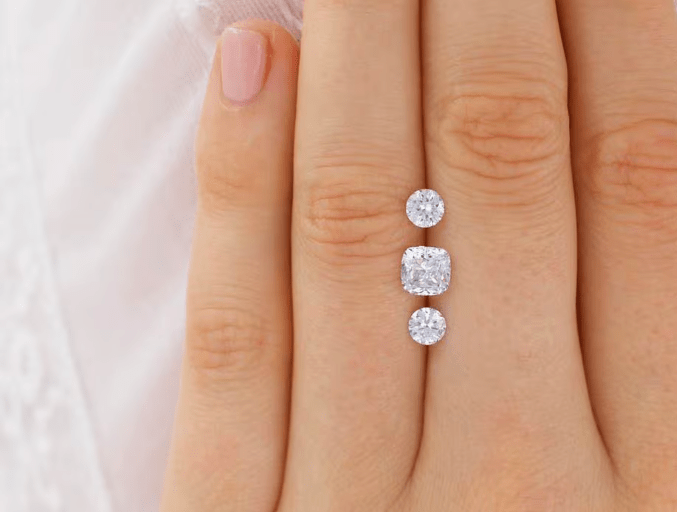
    Oval diamonds have become especially popular among younger British buyers for their flattering finger coverage and graceful outline. Their elongated structure often makes them appear larger than round diamonds of the same weight. This makes them a strong choice for buyers prioritising a balance of size and beauty.

    Emerald cuts, with their hall of mirrors effect, require high clarity because inclusions are easier to see. Cushion cuts offer a soft, romantic look and can vary significantly in their facet patterns.

    How to Avoid Common Mistakes When Buying a Natural Diamond

    One of the most frequent mistakes buyers make is focusing too heavily on carat weight. This can lead to choosing a dull stone that appears lifeless. Another common misstep is dismissing the importance of stone certification, which leaves buyers vulnerable to misrepresentation of quality.

    Fluorescence can also be misunderstood. Contrary to myth, fluorescence is not always a negative trait. In some cases, particularly where the diamond is slightly lower in colour grade, faint to medium fluorescence can actually improve the appearance of the stone.

    Another error is failing to see the stone in different lighting environments. A diamond can look brilliant under strong jewellery store lighting but appear flat in softer or natural light.

    Why Ethical Considerations Matter for Natural Diamond Buyers

    Ethics and sustainability are now central factors in the UK jewellery landscape. The Guardian has reported that transparency around mining practices and environmental impact has become a priority for younger buyers. Understanding provenance and ensuring that a diamond is sourced from responsible mines helps ensure that the purchase aligns with modern expectations of accountability.

    This shift has contributed to the popularity of lab grown diamonds, but for those committed to natural stones, choosing a jeweller with clear ethical policies is crucial.

    Final Tips for Choosing a High Quality Natural Diamond

    Buyers should prioritise certification, cut quality and light performance. Colour and clarity can be chosen according to budget as long as the stone is eye clean and well balanced. A natural diamond should be examined under natural lighting as well as in controlled environments. When in doubt, comparing a few stones side by side is often the best way to understand differences in appearance.

    With the right knowledge, selecting a natural diamond becomes an exciting and rewarding process that leads to a beautiful, meaningful purchase that lasts a lifetime.

  • The Rise of Alexandrite: From Enigmatic Natural Beauty to the New Era of Lab-Grown Chatham Stones

    The Rise of Alexandrite: From Enigmatic Natural Beauty to the New Era of Lab-Grown Chatham Stones

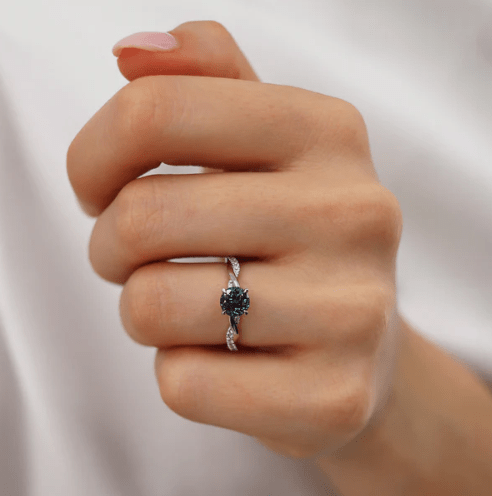
    There are few gemstones in the world with a story as mysterious or as mesmerising as alexandrite. It is a stone that seems alive, shifting from lush green to deep purplish red depending on the light. For almost two centuries, it has been regarded as a phenomenon of nature, the rarest expression of colour change in the mineral world. In 2026, it is enjoying a remarkable resurgence among British jewellery lovers, driven by both a renewed interest in its history and the increasing availability of sustainable, laboratory grown Chatham stones through ethical jewellers such as Lily Arkwright.

    Modern buyers are drawn to jewellery with meaning, story and individuality. Alexandrite offers all three. As Vogue UK noted in a recent piece on emerging gemstone trends, colour change stones evoke a sense of transformation, romantic symbolism and artistic flair. Alexandrite, with its dramatic shifts between green daylight tones and warm evening hues, feels almost theatrical in its expression. This emotional quality has influenced a growing number of British couples who want something distinctive for engagement rings and right hand jewellery, especially those seeking alternatives to traditional diamonds.

    The stone’s origin only adds to its intrigue. Natural alexandrite was first discovered in Russia’s Ural Mountains in the 1830s, and early accounts describe miners mistaking it for emerald before witnessing its colour change around campfires. That ability to shift from green to red quickly became symbolic, especially within Russian culture, where it was linked with duality, strength and adaptability. BBC Culture has explored the fascination surrounding such rare gems, emphasising how they often become tied to national identity or historical storytelling. Alexandrite became a national favourite in Russia and later spread across Europe, although natural stones remained exceptionally scarce.

    Scarcity has always defined the natural alexandrite market. New sources in Sri Lanka, Brazil and East Africa emerged over time, but fine quality stones are still so limited that many jewellers will never handle one in their entire careers. The Guardian once wrote about the global appetite for rare gemstones, highlighting alexandrite among the hardest to source ethically and sustainably due to its geological rarity. For modern shoppers who wish to avoid mined stones entirely, this can be a difficult dilemma: the beauty of alexandrite is captivating, yet its availability and environmental implications are not always clear.

    This is where lab grown Chatham alexandrite has transformed the landscape. Laboratory grown stones are chemically and optically identical to natural gemstones, but created in controlled, responsible conditions that replicate nature’s processes. The result is a gemstone with the same enchanting colour shift, but with full traceability and none of the mining impact associated with natural alternatives. As The Guardian Environment has explored, sustainable luxury is becoming one of the most significant forces in British consumer behaviour, particularly among younger buyers.

    Jewellers such as Lily Arkwright have embraced this shift, offering a selection of lab grown alexandrite rings

    Their approach reflects a broader movement in UK jewellery, where buyers want craftsmanship and beauty but also ethics and transparency. The appeal of lab grown Chatham alexandrite lies not only in its vivid colour transformation but also in its alignment with modern values. Customers can enjoy the poetry and history of the stone while knowing exactly where it came from and how it was created.

    The symbolic nature of alexandrite remains at the heart of its appeal. Colour change has long been associated with growth, adaptability and duality, making it a thoughtful choice for engagement rings. As BBC Lifestyle recently reported, many couples are seeking stones that reflect personal qualities or relationship milestones. Alexandrite’s transitions between green and red can be interpreted as balance, harmony and partnership, which resonates strongly with contemporary British couples creating their own traditions.

    Another important aspect of alexandrite’s revival is the return of coloured gemstone craftsmanship in the UK. From Hatton Garden in London to Birmingham’s Jewellery Quarter, there has been a renewed appreciation for traditional stone setting, hand finishing and detailed artistry. The Guardian’s features on British craft revival have highlighted how bespoke jewellery is increasingly valued as an expression of individuality. Alexandrite suits this trend perfectly, as its colour change often inspires imaginative design settings and bespoke commissions.

    For everyday wear, lab grown alexandrite is also a practical choice. Known for its durability, it holds up well in rings designed for daily use and pairs beautifully with modern metals such as platinum, yellow gold and rose gold. The laboratory grown variety offers consistent clarity and saturation, something rarely found in similarly priced natural stones. This reliability allows designers greater control and enables customers to choose from a range of precise shades and sizes.

    The cultural significance of alexandrite also adds depth to its resurgence. It has long been associated with June birthdays and is considered one of the most meaningful alternative birthstones. In European folklore, it was believed to bring balance and good fortune, while in later Victorian jewellery it symbolised renewal and creative expression. These layers of tradition make it particularly appealing to buyers who want a ring with both romantic and historical resonance.

    Even beyond engagement jewellery, alexandrite is becoming popular for anniversary gifts, statement pieces and bespoke creations. As Vogue UK suggested in a recent editorial, coloured stones are no longer niche but central to the future of fine jewellery. Alexandrite, with its rich complexity and natural storytelling charm, feels perfectly aligned with this shift.

    Another reason for its rise is the way social media and digital culture have influenced consumer aesthetics. High contrast colour change gemstones photograph beautifully in both natural and indoor lighting, making alexandrite particularly suited to visual platforms where users seek designs with personality and dynamic appeal. Online searches for alexandrite jewellery have grown significantly over the past year, reflecting a broader movement towards expressive, meaningful gemstone choices.

    At a time when UK couples are prioritising sustainability, transparency and individuality, the availability of Chatham grown alexandrite through ethical retailers plays an important role in shaping new engagement ring trends. Lily Arkwright’s commitment to responsible luxury, combined with their carefully curated collection of lab grown alexandrite rings, makes the gemstone accessible to a wider audience without sacrificing quality or ethical standards.

    The stone’s story, from its discovery in Russia to its reinvention through modern laboratory science, mirrors the changing values of today’s jewellery buyers. Alexandrite represents history, transformation and the merging of tradition with innovation. Whether chosen for an engagement ring or a personal heirloom, it offers a sense of romance and character that is difficult to match.

    As the UK continues to embrace coloured gemstones, the future of alexandrite looks bright. Its growing popularity speaks to a wider cultural shift toward authenticity, narrative and sustainability. In its natural form, it remains one of the rarest gemstones on earth. In its lab grown Chatham form, it is becoming a modern symbol of beauty, craftsmanship and responsible luxury.

  • The Most Common Engagement Ring Questions Asked Online

    Why Engagement Ring Questions Matter More Than Ever

    An engagement ring is not merely a piece of jewellery. It is a cultural symbol, an emotional milestone, a promise of future intentions. So it is little wonder that millions of people turn to Google in moments of uncertainty, excitement or quiet anticipation.

    As Vogue UK recently noted, engagement rings have become “the emotional centrepiece of modern romance.” They hold history and personal identity in equal measure, making the buying process feel both thrilling and overwhelming.

    Across the UK, people search for reassurance, symbolism, meaning and style. Every query carries the weight of love, hope and storytelling.

    Here are the most common engagement ring questions asked online, and what they reveal about relationships in 2026.

    “How do I choose the perfect engagement ring?”

    This is the question that dominates the internet, year after year.

    Notably, “perfect” means different things today. For earlier generations, perfection meant a round diamond in a classic mount. In 2026, perfection is completely personal.

    People search for:

    • rings that reflect personality
    • rings that match fashion taste
    • rings that honour shared values

    As Cosmopolitan UK puts it, “the perfect ring is the one that tells your story, not someone else’s.”

    This shift explains why so many couples now favour unique shapes, non-traditional stones and meaningful design elements.

    “Which diamond shape suits them best?”

    This question blends emotion with aesthetics. It is one of the most searched engagement-related queries, often driven by the desire to choose something deeply personal.

    Modern couples want rings that feel expressive, not generic. As Elle UK observed, “a diamond shape has become a love language in itself.”

    Each shape suggests a different personality:

    • Oval: graceful, feminine, timeless
    • Emerald: confident, elegant, architectural
    • Pear: romantic, artistic, unconventional
    • Round: classic, balanced, understated

    The question is less about beauty and more about identity.

    “Should I choose natural or lab-grown?”

    This is among the most emotionally loaded questions online today. It is not simply about cost or quality, but about values.

    As The Guardian highlights, sustainability has become a defining priority for British buyers. Lab-grown diamonds offer a transparent, ethical option, while natural diamonds carry historical romance and rarity.

    Search queries reveal that buyers are trying to balance:

    • meaning
    • ethics
    • tradition
    • budget
    • symbolism

    The popularity of this question reflects a modern truth: love today is conscious, thoughtful and grounded in shared principles.

    “What does an engagement ring symbolise?”

    While some ask practical questions, many Google searches focus on emotional meaning.

    Even in 2026, people want to understand the history and symbolism behind the tradition. According to BBC Culture, engagement rings originate from ancient symbolism around eternity and devotion.

    Modern meanings extend far beyond that. Rings now symbolise:

    • partnership
    • equality
    • shared goals
    • independence within togetherness
    • a promise shaped by modern values

    This question shows that buyers care deeply about what their ring represents, not merely how it looks.

    “How do I choose a ring they will love?”

    Perhaps the most sentimental question Google sees.

    The search reveals vulnerability, fear of getting it wrong, and the desire to create a meaningful moment. It is often accompanied by queries like:

    • “Should I ask their friends for help?”
    • “What if they do not like the ring?”
    • “How do I choose without ruining the surprise?”

    As Vogue UK wrote, proposals today are as much about emotional understanding as romance. The ring becomes a symbol of how well you know and honour your partner.

    This question underscores one truth: love makes even confident people second-guess themselves.

    “How much should I spend?”

    The infamous budget question remains unavoidable.

    As Financial Times notes, younger generations reject outdated spending myths. Google searches show that UK buyers prioritise affordability, fairness and shared decision-making rather than traditional guidelines.

    The question reflects changing economic realities and shifting relationship dynamics. Couples prefer financial clarity over performative spending.

    This trend signals a healthy cultural move: engagement rings are an expression of love, not financial pressure.

    “Which metal is the best choice?”

    This question blends practical concerns with aesthetics.

    The most searched metals include:

    • platinum for longevity
    • yellow gold for warmth and resurgence in fashion
    • rose gold for romantic tones
    • white gold for budget-friendly elegance

    As Vogue UK reported, yellow gold has made a major comeback, driven by nostalgia and vintage influence.

    These searches show how fashion trends merge with personal taste to shape one of the most meaningful purchases of a person’s life.

    “What style of ring is trending?”

    A question fuelled by celebrity influence, social media and cultural shifts.

    The most Googled styles in 2026 include:

    • solitaire rings
    • hidden halos
    • antique-inspired designs
    • toi et moi rings
    • coloured gemstones
    • elongated diamond shapes

    As Bazaar UK noted, engagement ring trends reflect broader fashion cycles, particularly the rise of quiet luxury and understated glamour.

    The desire to know what is “in” reveals how modern couples blend romance with cultural awareness.

    “Which rings look the biggest?”

    A surprisingly common question that reveals the desire to balance beauty and budget.

    According to Cosmopolitan UK, elongated shapes such as oval and pear appear larger because they spread weight along the finger.

    This question is less about status and more about proportion, self-image and perceived beauty.

    It shows that people want their ring to feel transformative, not purely expensive.

    “How do I keep an engagement ring a secret?”

    One of the most endearing searches on the internet.

    It reveals the romantic desire to protect the surprise, despite living in a world of shared calendars, shared bank accounts and shared phone notifications.

    Common related searches include:

    • “Where do I hide the ring?”
    • “How do I get their ring size quietly?”
    • “How do I plan a proposal without them knowing?”

    This question speaks to the enduring importance of romance. No matter how modern relationships become, the tradition of surprising a partner remains deeply cherished.

    What These Questions Reveal About Love in 2026

    When viewed collectively, the most searched engagement ring questions online tell a powerful story:

    Love today is intentional.

    Couples seek rings that reflect values, meaning and individuality.

    Love today is informed.

    Search behaviour shows an appetite for knowledge and clarity.

    Love today is equal.

    More couples choose rings together or discuss important decisions openly.

    Love today is emotionally intelligent.

    People care deeply about symbolism, story and fit.

    Love today is modern.

    Ethics, sustainability and personal expression drive decision making.

    As BBC Culture puts it, “modern romance is a blend of feeling and awareness.” The internet has become the place where that process unfolds.

    Conclusion

    Behind every engagement ring question lies a moment of vulnerability and anticipation. People Google in quiet moments, often alone, trying to make choices that will shape their future.

    The most searched questions reflect a generation seeking connection, clarity and authenticity. Whether practical, emotional or cultural, each query reveals the beautifully human experience of choosing a symbol of commitment.

    Engagement rings continue to evolve, but the questions remain deeply rooted in love, identity and understanding. That is why they remain among the most searched jewellery topics online, year after year.