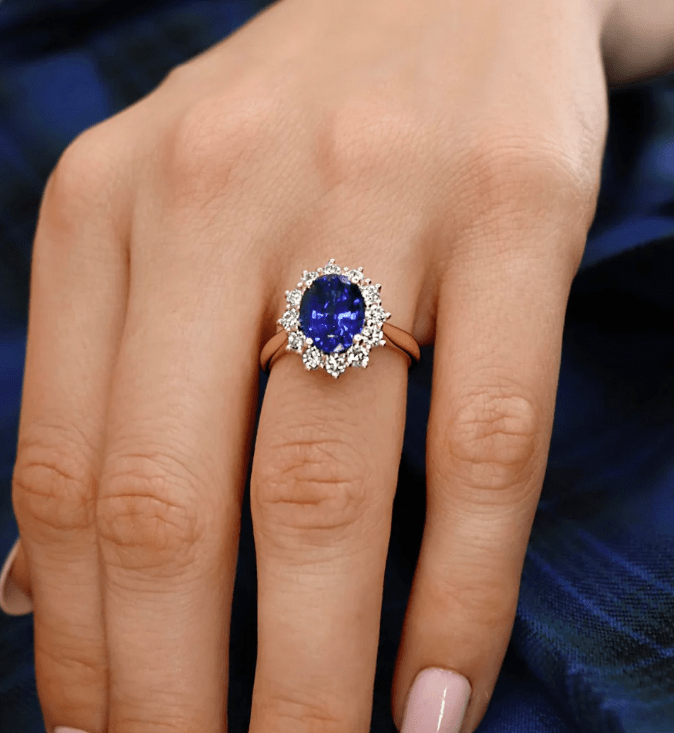
Tag: PrincessDiana

  • What Happens If You Don’t Love Your Engagement Ring? The UK Reality

    What Happens If You Don’t Love Your Engagement Ring? The UK Reality

    In Britain, the engagement ring occupies a deeply emotional space. It is not simply a piece of jewellery but a symbol of commitment, intention and future promise. Yet despite its importance, a growing number of people quietly admit to feeling conflicted when they first see the ring placed on their finger. Relief, surprise and gratitude often arrive first. Love for the ring itself sometimes takes longer.

    This emotional complexity is more common than many realise. According to relationship psychologists interviewed by the BBC, expectations around proposals and engagement rings have become increasingly shaped by social media, celebrity culture and highly curated online imagery. When reality does not align with the image a person has held privately, discomfort can arise.

    Disliking an engagement ring does not mean rejecting the relationship. It means navigating the tension between personal taste, emotional symbolism and the fear of causing hurt.

    Why This Happens More Than We Admit

    Many UK couples still view the engagement ring as a surprise. While this tradition carries romance, it also removes the opportunity for discussion. Preferences around metal colour, stone shape, setting height or overall style are often assumed rather than clarified.

    The Guardian has explored how modern relationships are becoming more collaborative, yet engagement traditions remain rooted in older expectations. This disconnect can leave one partner feeling unheard, even when the intention behind the ring is loving.

    Another factor is the influence of comparison. Platforms such as Instagram and Pinterest showcase a narrow aesthetic that may not reflect an individual’s true style. When a ring does not match the imagined ideal formed through years of scrolling, disappointment can quietly surface.

    The Psychological Weight of the Ring

    Engagement rings carry symbolic pressure. They are expected to represent love, effort, financial commitment and personal understanding all at once. Psychologists writing for the Financial Times note that objects imbued with such layered meaning often become emotional flashpoints.

    Feeling unsure about a ring can trigger guilt. Many people worry that expressing dissatisfaction will appear ungrateful or shallow. This leads to silence, which in turn can create resentment or emotional distance if left unaddressed.

    In the UK, where politeness and emotional restraint often shape communication, these feelings are especially likely to remain unspoken.

    What Most UK Couples Actually Do

    Contrary to popular belief, dissatisfaction with an engagement ring does not usually lead to conflict. Research cited by Cosmopolitan UK suggests that most couples who discuss the issue calmly find a practical solution. This may involve resizing, altering the setting, exchanging the ring or designing a new one together.

    The key factor is timing. Addressing concerns early, before resentment builds, tends to strengthen trust rather than weaken it. Relationship experts frequently emphasise that honesty around preferences can deepen emotional intimacy.

    The BBC has also reported on the rise of post proposal ring adjustments, reflecting a cultural shift towards flexibility and shared decision making.

    Changing Expectations in Modern Britain

    British engagement culture is evolving. Younger couples are increasingly rejecting rigid traditions in favour of communication and personal choice. Vogue UK has highlighted how engagement rings are now viewed as part of a longer design journey rather than a fixed, final object.

    This shift acknowledges that taste evolves and that a ring worn daily should reflect the wearer’s identity. It also removes the stigma around making changes, reframing them as part of the engagement story rather than a correction of a mistake.

    Talking About It Without Hurt

    Raising concerns about an engagement ring requires care. Experts interviewed by the New York Times suggest focusing on feelings rather than criticism. Expressing appreciation for the thought behind the ring while explaining personal preferences helps keep the conversation constructive.

    In the UK context, framing the discussion around shared future choices rather than individual dissatisfaction often feels more comfortable. Many couples find that discussing the ring becomes a gateway to broader conversations about finances, weddings and long term priorities.

    When Silence Becomes the Bigger Risk

    Keeping quiet about an engagement ring you dislike may seem kind, but relationship counsellors warn that unspoken resentment can surface later in unexpected ways. Jewellery worn daily can become a constant reminder of feeling unheard, which can subtly affect emotional connection.

    The Guardian’s relationship column has repeatedly noted that small, unresolved issues often carry more weight than major disagreements precisely because they are never acknowledged.

    A Healthier Way Forward

    Not loving an engagement ring is not a failure. It is a reflection of how personal taste, identity and symbolism intersect in modern relationships. As British engagement traditions continue to evolve, honesty and collaboration are becoming the new markers of romance.

    An engagement ring should feel like a reflection of the person wearing it, not a silent compromise. Addressing doubts with care and openness allows the ring to become what it was always meant to be: a shared symbol of commitment, not a source of quiet discomfort.
  • Are Engagement Rings Still Growing in Size? The 2026 Carat Expectations Report

    Are Engagement Rings Still Growing in Size? The 2026 Carat Expectations Report

    For more than a century, the engagement ring has reflected far more than personal taste. It has mirrored cultural expectations, economic shifts, social trends and changing attitudes toward love and partnership. In 2026, one question continues to dominate search trends, bridal forums and lifestyle reporting: are engagement rings still getting bigger?

    The answer is both simple and nuanced. Yes, British couples are increasingly choosing larger centre stones than previous generations. But the reasons behind this shift are far more layered than pure aesthetics. Influences ranging from celebrity culture to accessible luxury alternatives, social media visibility and evolving values around individuality all play significant roles.

    This report brings together style analysis, cultural commentary and the latest insights from high authority lifestyle publications such as Vogue UK, BBC News, The Guardian and Financial Times. Together, they reveal one of the most significant shifts in modern British romance.

    The Rise of the Larger Stone: A Social and Cultural Analysis

    In the late twentieth century, the typical British engagement ring centred around a diamond measuring between 0.50 and 1.00 carat. Today, British jewellers report a growing interest in stones between 1.50 and 2.50 carats, with some couples opting for even larger looks. But the reasons behind this trend are shaped by a different set of cultural forces.

    The visibility of engagement rings has grown dramatically over the past decade. Social media has become a digital stage where engagements are celebrated publicly, and ring close ups form part of the announcement ritual. As Cosmopolitan UK observed, the desire for a ring that photographs beautifully is now a major factor in buying decisions. Larger stones tend to provide stronger presence in images, catching light more dramatically and creating recognisable silhouettes.

    Celebrities are also shaping the conversation. Oversized rings belonging to figures like Hailey Bieber, Sofia Richie Grainge and Nicola Peltz Beckham circulate widely on platforms such as Instagram and TikTok. The New York Times notes that celebrity influence has accelerated global interest in stones over three carats, even if buyers do not purchase stones of equal size. The aspiration itself has shifted upward, and mid range carat sizes have been lifted in response.

    The Role of Technology and Modern Gemstone Options

    Perhaps the most transformative factor in carat expectations is the rise of alternative diamond options. Modern couples are no longer limited to traditionally mined diamonds, which carry high pricing that escalates quickly with carat weight. The emergence of laboratory grown diamonds and advanced gemstone alternatives has dramatically widened what is possible at accessible price points.

    Laboratory grown diamonds, which share the same chemical and physical properties as mined diamonds, have become widely accepted in the UK. As BBC Business reports, price reductions of up to 70 per cent compared with mined stones have allowed couples to afford larger diamonds without compromising clarity, colour or quality. This change has normalised the idea that a two carat stone is no longer a luxury reserved for the few.

    The trend towards more visible carat weights is also supported by a growing appreciation for oval, pear and elongated emerald cuts. These shapes maximise finger coverage and give the illusion of greater size per carat. The Guardian Lifestyle notes that British couples increasingly prioritise presence and proportion over strict carat metrics.

    Does Bigger Really Mean Better? Understanding the Shift in Values

    While it is clear that average ring size is increasing, the idea that bigger is automatically better is not universally accepted. Many British buyers are rejecting outdated traditions such as the three month salary rule, favouring instead a balanced approach that reflects personal style and ethical values.

    As Financial Times highlighted in a recent feature on modern luxury consumption, young couples prioritise meaningful design and craftsmanship rather than prestige for prestige’s sake. A well cut stone that performs beautifully in different lighting conditions often holds more significance than a larger but poorly proportioned diamond.

    The rise of understated luxury influences also shapes the debate. The quiet luxury movement, made widely visible by cultural moments discussed in Vogue UK, has encouraged a move towards refined, soft spoken design rather than overt extravagance. Many buyers want a stone that feels generous but not ostentatious, striking a balance between elegance and subtlety.

    The Psychology of Perceived Size

    Carat weight is only one factor in how large a diamond appears. The psychology of size perception is complex and influenced by visual cues. The apparent size of an engagement ring can change dramatically based on:

    • Stone shape
    • Proportions and cut angles
    • Setting style
    • Finger shape and width
    • Metal colour

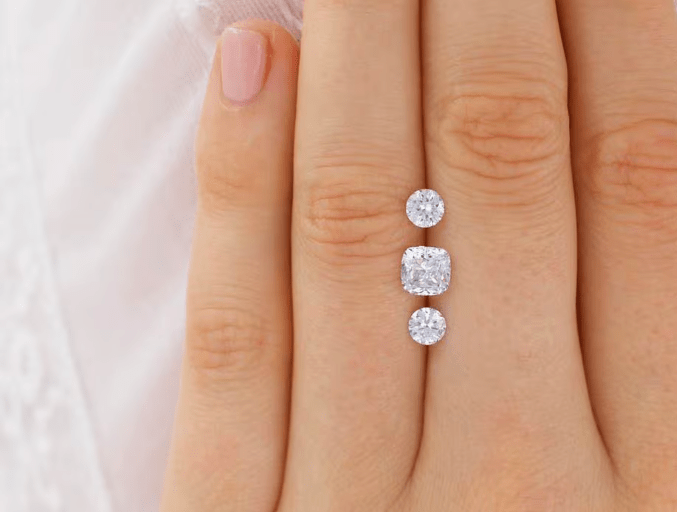
    For example, elongated shapes such as oval, marquise and emerald cuts appear significantly larger per carat than round stones. A one carat oval can mimic the finger coverage of a 1.3 or 1.4 carat round. This has contributed to the oval cut’s remarkable rise in the UK, a trend highlighted frequently in Cosmopolitan UK and refined in numerous celebrity engagements.

    Halo settings and thin bands also enhance perceived size. As Vogue UK notes in its engagement ring forecasts, micro pavé bands and delicate solitaire silhouettes amplify sparkle and visibility.

    Economic Realities Behind Growing Carat Expectations

    While social media influence and gemstone alternatives explain much of the upward shift, economics plays a surprisingly important role. Engagement rings have become one of the few major luxury purchases that couples make collaboratively, often splitting the cost or choosing rings together. This shared investment allows for greater carat flexibility.

    At the same time, shifting financial priorities among millennials and Gen Z, such as delayed home ownership and reduced emphasis on traditional milestones, create more space in budgets for meaningful personal purchases. The New York Times observes that many couples channel savings from postponed events into high impact pieces such as engagement rings.

    Furthermore, the British market has shown increased interest in heirloom quality jewellery that holds long term emotional value. Larger diamonds are often viewed as future heirlooms, intended to be passed down through families or reimagined in new designs.

    Changing Engagement Rituals and the Meaning of Carat Weight

    The symbolism of the engagement ring continues to evolve in 2026. The modern British couple often sees the ring not only as a representation of love but also as a marker of shared taste, values and identity. As partnerships become increasingly egalitarian, there is a shift away from rigid traditions and an openness to self expression.

    Carat weight has therefore become less of a social expectation and more of a stylistic choice. A larger centre stone is seen not as a show of wealth but as a celebration of maximalist design, personal flair or visual preference. Meanwhile, minimalist couples may choose a smaller stone intentionally, favouring quiet luxury over visual impact.

    These diverging approaches demonstrate a key insight: carat weight is no longer a measure of commitment but of creativity.

    The Future of Carat Trends in the UK

    Based on reporting from BBC News and consumer data referenced by The Guardian, the upward movement in average carat sizes is expected to continue gradually over the next five years. This growth will likely remain moderate rather than extreme, with the 1.50 to 2.00 carat range becoming increasingly standard for many British couples.

    This shift is driven by a combination of accessible diamond alternatives, visual culture, celebrity engagement trends and a new approach to luxury that prioritises emotional significance over outdated financial rules.

    But even with these influences, one truth remains constant: the perfect engagement ring is not the one that matches a number but the one that captures a story.

  • The Rise of the Sapphire | How Blue Gemstones Define Britain’s Ethical Luxury Market in 2026

    Britain’s Blue Renaissance

    The British fine jewellery market is undergoing a transformation. In 2026, the gemstone commanding the spotlight is not the diamond, but the sapphire. The deep, rich blue that once symbolised monarchy and devotion has become the defining colour of contemporary British luxury.

    As Financial Times Life & Arts recently noted, “the modern gemstone economy is driven by meaning as much as material.” That observation captures why sapphires — stones steeped in symbolism, history and ethics — are once again the jewel of choice for designers and collectors alike.

    This is not simply a trend, but a cultural and economic shift. The sapphire embodies what today’s buyers seek: authenticity, craftsmanship and sustainability.

    From Monarchy to Market

    The sapphire’s modern journey is inseparable from one of Britain’s most iconic love stories. Princess Diana’s 12-carat Ceylon sapphire engagement ring, encircled by diamonds, became a global symbol of grace and romance when it was unveiled in 1981.

    Chosen for its beauty rather than rarity, it broke royal convention and democratised aspiration. When Catherine, Princess of Wales, inherited and began wearing the ring in 2010, its legacy deepened further. The piece now represents not only lineage but continuity — a tangible bridge between generations.

    As BBC Culture wrote, “Diana’s sapphire ring became the most human of royal jewels, a connection between public affection and private emotion.”

    That emotional heritage continues to shape demand. According to The Guardian, sapphire engagement ring sales in the UK have risen steadily since 2020, driven by nostalgia and the renewed appetite for colour in fine jewellery.

    The Colour of Confidence

    Blue holds a unique place in psychology and culture. It is the colour of the sky, the sea and the infinite. It evokes stability, trust and reflection — qualities deeply valued in a fast-changing world.

    In BBC Lifestyle features on colour psychology, blue is repeatedly cited as the hue that “calms the mind and centres emotion.” This explains its resonance in the post-digital era, where consumers crave grounding experiences and authentic connections.

    Sapphires channel that energy beautifully. Their depth of tone feels timeless yet contemporary, familiar yet mysterious. The shift from diamond to sapphire in engagement rings is therefore not just aesthetic, but emotional. It reflects a cultural move toward self-assured, meaningful luxury.

    The Economics of Blue

    Behind the romance lies a robust market story. Sapphires are emerging as a strong investment category, fuelled by global demand for coloured gemstones. Bloomberg reported that the coloured gem market grew by nearly 20 percent over the past five years, with sapphires among the top performers due to their rarity, durability and symbolic appeal.

    This growth has been particularly strong in Britain, where craftsmanship and ethical sourcing underpin consumer trust. As buyers become more discerning, sapphires offer a compelling combination of beauty, longevity and story — the three pillars of emotional investment.

    According to Financial Times Life & Arts, the modern collector values “traceability and narrative over extravagance.” Sapphires, with their heritage and transparency, satisfy both demands.

    Lab-Grown Sapphires and the Rise of Ethical Luxury

    One of the most significant drivers of the sapphire revival is technology. The rise of lab-grown sapphires has made sustainable fine jewellery accessible to a wider audience without diminishing prestige.

    Created under controlled conditions that replicate the natural geological process, these stones are chemically and optically identical to mined sapphires. Their appeal lies not only in quality but in conscience.

    British jewellers such as Lily Arkwright are at the forefront of this transformation, combining precision science with artisanal design. Their lab-grown sapphire collections embody the new British luxury — thoughtful, ethical and technologically advanced.

    As Forbes Innovation reported, “the sustainable gemstone market has become a defining benchmark for modern prestige.”

    The sapphire’s traditional associations with truth and loyalty make it a natural symbol for this new value system. Its transparency is not just visual but ethical.

    Technology and Traceability

    The emergence of blockchain certification and digital provenance tools has revolutionised the gemstone trade. Buyers can now trace the history of a stone from creation to craftsmanship, reinforcing consumer confidence and accountability.

    This digital infrastructure, once limited to diamonds, is now being applied to coloured gemstones like sapphires. It provides both emotional reassurance and economic security — buyers know not just what they are purchasing, but where and how it was made.

    As Vogue Business explained, “traceability has become the new measure of authenticity.” The sapphire’s clarity, long a visual metaphor for truth, now extends to its entire supply chain.

    For the British jewellery industry, this alignment of ethics, emotion and technology positions it at the cutting edge of global luxury innovation.

    Quiet Luxury and the British Aesthetic

    In fashion and design, 2026 has been defined by the quiet luxury movement — an aesthetic that values subtle craftsmanship and quality over overt branding. Sapphires fit this philosophy perfectly.

    As Vogue UK observed, “blue gemstones reflect understated confidence.” Their tone is rich without being ostentatious, and their history lends sophistication without excess.

    British designers are using sapphires to create jewellery that speaks softly but resonates deeply. From minimalist pendants to reimagined vintage rings, the focus is on emotion and longevity rather than spectacle.

    This understated refinement mirrors broader cultural values — a preference for enduring beauty and conscious consumption over short-lived trends.

    The Craft Revival

    Britain’s jewellery industry is also experiencing a renaissance in artisanal craft. From Hatton Garden’s historic workshops to modern ethical studios in Manchester and Birmingham, there is a renewed emphasis on design integrity.

    Sapphires are central to this revival. Their hardness and optical depth allow for intricate cuts and innovative settings. Designers are experimenting with asymmetry, negative space and mixed metals to reframe the traditional gemstone for modern wearers.

    As The Guardian noted, “craftsmanship has become the quiet signature of true luxury.” The sapphire, with its centuries of symbolism and tactile presence, epitomises that artistry.

    The Future of the Blue Gem

    Looking ahead, sapphires are poised to define the next era of British fine jewellery. They embody the three forces shaping the industry: sustainability, sentiment and story.

    Technological innovation will continue to drive accessibility, while heritage craftsmanship preserves emotional resonance. This balance of progress and tradition ensures that sapphires will remain relevant for decades to come.

    As Financial Times Life & Arts summarised, “coloured gemstones represent the emotional intelligence of the new luxury economy.”

    In Britain, where heritage meets modern ethics, the sapphire stands as both artefact and innovation — a gemstone that connects the past to the future.

    Conclusion

    The rise of the sapphire marks a turning point for British luxury. It is no longer just a symbol of royalty, but of renewal — a bridge between emotion and economy, beauty and responsibility.

    From Princess Diana’s legendary ring to the sustainable creations of Lily Arkwright, sapphires continue to tell stories of love, strength and conscience.

    Their colour, calm yet commanding, reflects the values of the modern era: integrity, intention and depth.

    As Vogue Business concluded, “the future of luxury is transparent.” The sapphire, with its enduring brilliance and timeless truth, shines as that very future — clear, constant and infinitely blue.

  • Royal Diamonds and Sapphires: How Britain’s Duchesses Changed Engagement Ring Fashion

    Royal weddings have long influenced fashion, but few details capture the world’s attention quite like the engagement ring. In Britain, the choices of the Princess of Wales and the Duchess of Sussex have shaped a new era of design — one that blends heritage, individuality and ethics.

    As The Guardian reports, modern brides increasingly look to royal icons for inspiration, seeing their rings as reflections of both romance and responsibility.

    Kate Middleton: A Ring with a Legacy

    Kate’s sapphire ring remains a masterpiece of royal symbolism. The oval blue gem, framed by a halo of diamonds, was famously chosen by Princess Diana in 1981.

    The BBC notes that its reappearance on Kate’s hand in 2010 sparked a dramatic rise in coloured stone demand. Within months, jewellers across the UK began introducing sapphire, emerald and ruby collections inspired by the royal heirloom.

    Its enduring appeal lies in its history — a tangible link between two royal generations.

    Meghan Markle: A New Kind of Luxury

    Prince Harry’s proposal ring to Meghan Markle represents modern British values. The centre diamond, sourced ethically from Botswana, sits alongside two side stones from Diana’s collection.

    The GIA highlights that this design combines classic balance with emotional resonance. It also aligns with growing consumer demand for transparency in diamond sourcing.

    Meghan’s influence can be seen in the surge of interest in sustainable and lab-grown diamonds, as reported by the BBC. Couples are increasingly choosing stones that reflect shared principles rather than convention alone.

    The Broader Cultural Impact

    Royal engagement rings act as mirrors to the times. Kate’s sapphire represents continuity and family heritage, while Meghan’s diamond ring embodies global awareness and conscious consumption.

    The Guardian argues that both women have helped redefine luxury, showing that emotional connection and ethical integrity can be as valuable as size or sparkle.

    Conclusion

    From sapphire to diamond, tradition to modernity, the influence of Britain’s royal women continues to guide engagement ring trends across the world. Their rings remind us that the true hallmark of beauty lies in meaning, not extravagance.