Tag: philosophy

  • The Psychology Behind the Single Girl Engagement Ring Trend

    For decades, engagement rings represented one thing above all else: a commitment between two people. They were a public symbol of a future together and one of the most recognisable pieces of jewellery in the world. Yet in recent years, a growing number of women have begun wearing engagement-style rings without a proposal, without a wedding date and without any intention of replacing traditional romance.

    The rise of the single girl engagement ring has become one of the most fascinating shifts within the jewellery industry. While the trend first gained significant traction in the United States, it has increasingly found an audience in the UK, where changing attitudes towards relationships, success and personal fulfilment are reshaping how jewellery is viewed.

    What makes this movement particularly interesting is that it is not really about jewellery at all. At its core, it is about psychology.

    As discussed in Why Are Single Women Buying Themselves Engagement Rings?, many women purchasing these rings are not making a statement about being single. Instead, they are making a statement about recognising their own achievements and placing value on their own journey.

    The distinction matters.

    Historically, engagement rings symbolised external validation. Someone else chose the ring. Someone else proposed. Someone else determined the moment. The wearer became part of a story that was traditionally centred around partnership.

    Today, many women are writing different stories.

    The average age of marriage has risen significantly across the UK over the past several decades. At the same time, women are spending longer pursuing education, building careers, travelling, buying homes and establishing financial independence. Life milestones have become more diverse, and as a result, the symbols used to celebrate those milestones are evolving too.

    Psychologists have long recognised the importance of rituals and markers of achievement. Humans naturally seek ways to acknowledge significant moments. Graduation ceremonies, retirement parties and birthday celebrations all exist because people need visible ways to recognise progress.

    According to research discussed by Psychology Today recognising personal achievements can reinforce confidence, strengthen identity and improve overall wellbeing. It helps create a sense of progress and accomplishment.

    The single girl engagement ring fits naturally into this framework.

    Rather than waiting for a socially approved milestone, women are creating their own.

    For some, the purchase marks the launch of a business. For others, it celebrates career advancement, financial freedom, home ownership or overcoming personal challenges. The ring becomes less about relationship status and more about recognising growth.

    This shift reflects a broader cultural movement away from external validation and towards internal fulfilment.

    Previous generations often viewed success through a relatively narrow lens. Marriage, family and home ownership were considered universal goals. While those aspirations remain important to many people, younger generations increasingly recognise that fulfilment can come from multiple sources.

    As a result, symbols evolve.

    The engagement ring is particularly suited to this evolution because it already carries powerful emotional associations. Unlike many forms of jewellery, engagement rings have traditionally represented permanence, commitment and significance.

    When purchased for oneself, those meanings do not disappear. They simply change direction.

    The commitment becomes personal rather than romantic.

    The symbolism becomes inward rather than outward.

    This helps explain why engagement-style rings, rather than other types of jewellery, have become central to the trend. A bracelet or necklace may mark an occasion, but a ring has a unique psychological presence. It is visible every day. It serves as a constant reminder of whatever achievement or milestone it represents.

    There is also a fascinating element of self-perception involved.

    Research in behavioural psychology suggests that physical objects often become linked to personal identity. The items people wear regularly can influence how they see themselves and how they interpret their achievements.

    A ring purchased to celebrate a promotion, business success or personal milestone becomes more than an accessory. It becomes a tangible reminder of capability.

    This is particularly relevant in an era where many traditional markers of success have become less straightforward.

    Home ownership is increasingly delayed. Careers are less linear than previous generations experienced. Relationships often develop at different paces. Against this backdrop, self-defined milestones become increasingly important.

    The jewellery industry has noticed.

    What was once viewed as a niche trend has become an established category of consumer behaviour. Retailers across both the US and UK have reported growing demand from women purchasing significant jewellery for themselves rather than waiting for gifts from partners.

    The trend also aligns with changing attitudes towards luxury spending.

    Research highlighted by Forbes suggests that younger consumers increasingly prioritise meaningful purchases over status-driven consumption. They want products that reflect their values and personal narratives rather than simply demonstrating wealth.

    A self-purchased engagement ring fits perfectly within this shift.

    It combines emotional significance with long-term wearability. It feels both aspirational and personal.

    Social media has accelerated this movement dramatically.

    Platforms such as TikTok and Instagram have given women opportunities to share the stories behind their purchases. Rather than posting ring photographs accompanied by proposal announcements, many are sharing stories of career breakthroughs, educational achievements and personal transformations.

    These stories resonate because they feel relatable.

    Not everyone is planning a wedding.

    Almost everyone has something worth celebrating.

    Interestingly, the trend does not appear to be replacing traditional engagement rings. Instead, it exists alongside them.

    Many women who buy themselves engagement-style rings still hope to marry one day. Others are already married and choose to commemorate separate life achievements. The movement is not about rejecting relationships. It is about recognising that relationships are not the only source of meaning in life.

    This distinction helps explain why the trend has continued to grow rather than fade.

    It taps into a broader cultural conversation around autonomy, self-worth and personal agency. It reflects a generation increasingly comfortable defining success according to individual circumstances rather than inherited expectations.

    The rise of lab-grown diamonds and alternative gemstones has also contributed to accessibility. Consumers can now purchase significant, high-quality pieces of jewellery at a wider range of price points, making self-purchase more attainable than ever before.

    As a result, engagement-style rings have become available to a much broader audience.

    Looking ahead, it seems likely that the boundaries between engagement jewellery and celebration jewellery will continue to blur. Consumers are increasingly assigning their own meanings to jewellery rather than accepting traditional definitions.

    The single girl engagement ring may have started as a trend, but its continued growth suggests something more substantial.

    It reflects a changing understanding of success.

    It reflects a changing understanding of commitment.

    Most importantly, it reflects a changing understanding of what deserves to be celebrated.

    At its heart, the movement is remarkably simple. It recognises that people do not need permission to celebrate their achievements. They do not need to wait for a proposal, a wedding or societal approval before marking an important moment.

    Sometimes the most meaningful commitment a person can make is to their own goals, ambitions and future.

    For a growing number of women across the UK, the ring on their finger serves as a daily reminder of exactly that.
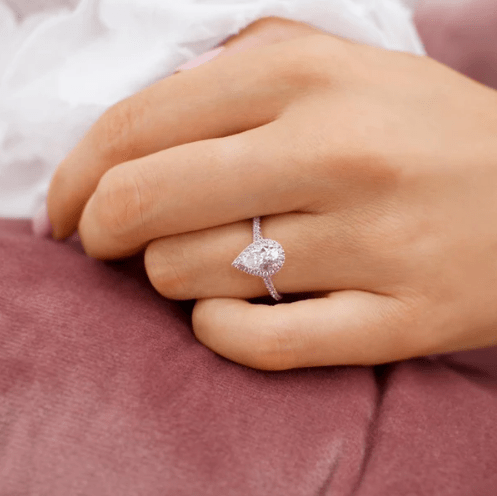
  • Why Pear Shape Diamonds Have Become the Defining Engagement Ring Shape of 2026

    Why Pear Shape Diamonds Have Become the Defining Engagement Ring Shape of 2026

    The rise of the pear shape diamond in 2026 is not the result of a fleeting trend or a single cultural moment. It is the culmination of more than a decade of shifting values in how engagement rings are chosen, worn and understood. Where diamond shape preference was once dictated by tradition and marketing hierarchy, it is now driven by confidence, individuality and intention. Within this landscape, the pear shape has emerged as the most expressive and adaptable choice of its era.

    Diamond shapes have always reflected their time. In periods where conformity and permanence were prioritised, symmetrical cuts dominated. In moments where self-expression and nuance gained cultural ground, more characterful silhouettes began to rise. The pear shape belongs firmly to the latter category. Its ascent in 2026 signals not rebellion against tradition, but a recalibration of what tradition means.

    The pear shape diamond is a hybrid cut, combining the brilliance of the round with the elongation of the marquise. This duality has always made it intriguing, but historically it also made it difficult to categorise. For much of the twentieth century, engagement ring culture favoured clarity of message. Round meant classic. Princess meant modern. Anything that resisted easy definition was often sidelined.

    Historical records referenced by the Gemological Institute of America show that the pear shape was first developed in the fifteenth century following advances in diamond cutting. From its inception, it represented innovation rather than convention. It was never designed to be uniform. It was designed to be expressive.

    Despite this early innovation, the pear shape spent centuries appearing primarily in high jewellery rather than engagement rings. Its asymmetry made it emotionally resonant but culturally risky in a space dominated by ideals of balance and perfection. Engagement rings, particularly in the twentieth century, became increasingly symbolic of stability and predictability.

    The post-war dominance of the round brilliant diamond reinforced this hierarchy. As marketing positioned symmetry and sparkle as the ultimate markers of love, alternative shapes were framed as stylistic detours rather than equal choices. The pear shape, despite its beauty, was often described as unconventional.

    That language mattered.

    It began to shift in the early 2010s, as engagement ring culture started to loosen. Buyers became less interested in proving commitment through conformity and more interested in choosing rings that reflected personal taste. Elongated shapes began to gain traction, offering a different visual rhythm without abandoning brilliance.

    Early editorial coverage in Vogue UK played a quiet but influential role in this transition. Pear shape diamonds were no longer framed as unusual. They were described as elegant, directional and intentional. This reframing allowed the shape to re-enter the conversation on new terms.

    By the late 2010s, the criteria by which engagement rings were judged had shifted significantly. Size became less important than proportion. Sparkle mattered, but so did wearability. Rings were no longer chosen solely for the proposal moment, but for the decades that followed.

    The pear shape excelled under this new scrutiny.

    One of the most compelling reasons pear shape diamonds have surged ahead of other elongated cuts in 2026 is their visual efficiency. The tapered silhouette creates the impression of length and presence without requiring excessive carat weight. In a market increasingly conscious of balance rather than excess, this quality has become highly desirable.

    Luxury analysis in Financial Times How To Spend It has highlighted how contemporary luxury is defined by intelligent restraint rather than overt display. The pear shape aligns perfectly with this philosophy. It feels generous without being indulgent.

    Unlike the oval, which maintains symmetry, the pear shape introduces direction. This directional quality gives the ring a sense of movement. It interacts with the hand rather than sitting passively upon it. In 2026, this sense of dynamism resonates strongly with buyers who want jewellery that feels alive.

    Design commentary in Wallpaper* has explored how modern aesthetics increasingly favour forms that suggest motion rather than stasis. Pear shape diamonds embody this shift. Their asymmetry creates visual interest without overwhelming the design.

    Versatility is another defining factor in the pear shape’s rise. Where some diamond shapes dictate specific settings, the pear shape invites interpretation. It can be worn point up or point down. It can anchor minimalist solitaires or lend softness to architectural bands. It adapts effortlessly to modern east-west settings as well as traditional orientations.

    This adaptability has made the pear shape a favourite among contemporary designers. In 2026, pear shape engagement rings appear across a wide spectrum of styles, from understated to sculptural. The shape no longer signals a niche aesthetic. It signals confidence.

    Cultural analysis in The Guardian has noted how modern consumers increasingly reject standardisation in favour of objects that feel personal. Engagement rings are central to this shift. The pear shape offers individuality without eccentricity.

    Another reason for the pear shape’s dominance lies in changing attitudes towards symmetry. For much of the twentieth century, symmetry was equated with perfection. In contemporary design culture, subtle irregularity is increasingly viewed as a sign of sophistication.

    The pear shape occupies a rare middle ground. It is neither perfectly symmetrical nor overtly irregular. This balance appeals to buyers who value nuance. It feels organic rather than engineered.

    Fashion analysis in Harper’s Bazaar UK has explored how organic silhouettes have become synonymous with modern elegance. Pear shape diamonds align naturally with this aesthetic, offering softness without informality.

    Practicality has also influenced demand. When designed well, pear shape engagement rings can be set lower on the finger than many high-profile cuts. This improves comfort and security, both of which are increasingly prioritised as engagement rings are worn continuously.

    Cultural insight from BBC Culture has shown how modern expressions of commitment prioritise authenticity and longevity. Rings are no longer ceremonial objects. They are daily companions. Shapes that support this reality rise naturally in popularity.

    Technological advances have further supported the pear shape’s ascent. Historically, pear shape diamonds could suffer from uneven shoulders or poor light performance if cut inconsistently. Improvements in cutting precision have largely eliminated these issues.

    The Gemological Institute of America has documented how advancements in diamond cutting have improved the consistency and brilliance of complex shapes. As quality became more reliable, confidence in pear shape diamonds grew.

    Ethical considerations have also played a role. As lab grown diamonds become mainstream, buyers are increasingly conscious of how visual impact relates to resource use. The pear shape offers a larger visual footprint per carat, aligning with more mindful consumption.

    Brands such as Lily Arkwright reflect this shift, frequently showcasing pear shape diamonds within collections that prioritise ethical sourcing and contemporary design. The shape fits seamlessly into a future-facing engagement ring philosophy.

    Celebrity influence has contributed to normalisation rather than imitation. High-profile pear shape engagement rings have demonstrated the cut’s versatility across styles, from minimalist to expressive. Rather than dictating taste, they have broadened acceptance.

    Media coverage in Elle UK increasingly frames pear shape diamonds as modern and refined rather than unconventional. This shift in language reinforces confidence, allowing buyers to choose the shape without feeling they are stepping outside tradition.

    In 2026, pear shape diamonds also benefit from exceptional adaptability across metals and band widths. They complement yellow gold, platinum and mixed metal designs equally well. Their silhouette balances slim bands and more substantial profiles with ease.

    This adaptability supports longevity. As personal style evolves, the ring remains relevant. This long-term perspective has become central to engagement ring decisions.

    Market insight from McKinsey & Company has shown that modern luxury consumers value durability and adaptability over novelty. Engagement rings exemplify this shift. Shapes that age well naturally rise in demand.

    Looking ahead, the pear shape’s prominence does not imply uniformity. Rather, it reflects a pluralistic market where choice is guided by meaning rather than hierarchy.

    The pear shape has risen because it offers balance. It is expressive without being theatrical. Distinctive without being divisive.

    Historically, diamond shape trends have always mirrored cultural confidence. When buyers feel constrained, they choose safety. When they feel empowered, they choose expression.

    The rise of the pear shape in 2026 signals assurance. Buyers are comfortable choosing rings that reflect who they are rather than what tradition dictates.

    That is why the pear shape diamond is not simply fashionable in 2026.

    It is emblematic.

    It represents a generation of buyers who value nuance, individuality and intention.

    And that is why, in 2026, the pear shape has become one of the most in-demand engagement ring shapes in the UK.

  • Celestial Engagement Rings and the British Imagination: How Cosmic Symbolism Defines Love in 2026

    Engagement rings in the UK have entered a new era, one that looks far beyond diamonds and precious metals to the mysteries of the night sky. Celestial engagement rings have emerged as one of the most captivating trends of 2026, capturing the imagination of couples who want their jewellery to represent not only commitment but also spirituality, cosmic connection and the larger forces that shape their lives.

    The rise of celestial jewellery coincides with the cultural reawakening of astrology. Cosmopolitan UK reports that astrology content has become one of the most consumed lifestyle categories among millennials and Gen Z. These generations view astrology not as superstition but as a language for understanding personality, relationships and life events. Incorporating zodiac symbolism or constellations into engagement rings reflects a desire to root love in a sense of cosmic destiny.

    Celestial ring designs have become increasingly intricate. Some feature clusters of diamonds shaped to mimic the Pleiades or Orion. Others incorporate moon phases engraved around the band, forming a symbolic timeline of growth and transition. Crescent shapes and starburst halos add a sense of movement and light, capturing the drama of the night sky in miniature.

    As The Financial Times observed, jewellery design in recent years has shifted toward storytelling rather than status, a concept perfectly encapsulated by celestial rings. The stars symbolise fate, the moon symbolises cycles and transformation, and constellations represent navigation and protection. When a couple selects a celestial ring, they are choosing a narrative that feels expansive and resonant.

    Historically, the celestial theme is far from new. Ancient civilisations incorporated astronomical motifs into ceremonial jewellery as symbols of divine connection. Victorian jewellers revived these motifs in the nineteenth century, drawing inspiration from scientific advancements and the growing fascination with astronomy. BBC Culture highlights the Victorian era as one of the richest periods for symbolic jewellery, making modern celestial rings part of a much larger tradition.

    Contemporary film and television have also shaped the rise of celestial styles. Romantic and fantasy films often use cosmic imagery to represent soulmates or divine timing. From the moonlit proposals in period dramas to the star infused visuals of modern cinema, the idea of love guided by the cosmos resonates deeply with audiences.

    Celestial engagement rings also align with a growing movement toward meaningful minimalism. Instead of large centre stones, many designs focus on delicate star shaped settings, fine engravings or small gemstone constellations that sit close to the skin. These rings feel intimate and personal rather than loud or overly opulent. Vogue UK notes that understated luxury has become the defining aesthetic of the decade, and celestial designs fit the mood perfectly.

    The emotional appeal of celestial rings is undeniable. They speak to those who believe love is part of a grander story or who find comfort in the alignment of stars and timing. They offer a poetic reminder that relationships evolve just like lunar cycles and that connection can feel miraculous, as though written into the universe long before two people met.

    In 2026, celestial engagement rings represent far more than a trend. They signify a cultural shift toward symbolism, spirituality and personalised meaning. They capture the beauty of the night sky and the belief that love, like the cosmos, is vast, mysterious and profoundly enchanting.