Tag: mental-health

  • Why the Search for the “Perfect Ring” Is Giving Way to Personal Meaning

    Why the Search for the “Perfect Ring” Is Giving Way to Personal Meaning

    For much of the last century, the idea of the perfect engagement ring carried an almost unquestioned authority. There was a sense that perfection could be identified, measured and achieved if the right boxes were ticked. A certain stone, a certain size, a certain spend and a certain reaction at the proposal moment all combined to form an ideal that felt both aspirational and non negotiable. In 2026, that certainty is dissolving. The concept of a single, universally perfect ring is steadily giving way to something more flexible, more realistic and ultimately more meaningful.

    This shift reflects a broader cultural change in how people approach commitment, identity and long term decisions. Jewellery no longer exists in isolation from everyday life. Engagement rings are worn daily, shaped by evolving values and expected to age alongside the people who wear them. In that context, the pursuit of perfection has begun to feel less helpful than the pursuit of alignment.

    The modern idea of the perfect ring is not as ancient as it often appears. While engagement rings have existed in various forms since Roman times, rigid expectations around diamonds, carat size and spend are largely twentieth century constructs. Cultural analysis from BBC Culture has explored how advertising transformed preference into perceived tradition, narrowing public understanding of what an engagement ring should be.

    These narratives endured because they offered clarity. In emotionally significant moments, clarity can feel comforting. A formula promises certainty and removes the fear of getting it wrong. Yet clarity based on external rules can also be limiting, particularly when those rules no longer reflect how people live.

    As relationships have changed, so too has the relevance of the perfect ring ideal. Research from Pew Research Center shows that modern partnerships increasingly prioritise equality, communication and shared decision making. Engagement ring buying has followed the same path. The expectation that one person should independently guess another’s lifelong tastes now feels risky rather than romantic.

    This shift is visible in how couples approach surprise. While surprise proposals remain meaningful for some, many couples now discuss ring styles, budgets and practical considerations openly. Rather than diminishing romance, this transparency often strengthens trust.

    Relationship commentary from The Guardian has noted that contemporary intimacy values emotional intelligence over spectacle. Knowing what a partner loves and how they live is increasingly seen as an act of care.

    The fading of the perfect ring ideal is also connected to a wider reassessment of perfection itself. Perfection suggests something static and flawless. Human lives are neither. They are shaped by change, compromise and growth.

    Cultural theory discussed by The British Academy suggests that modern consumers are moving away from ideals of flawlessness towards authenticity and adaptability. Jewellery, as a symbolic object, naturally reflects this shift. Rings are no longer expected to represent an unchanging ideal, but a relationship that will evolve.

    Historically, gemstones were never valued for perfection in the modern sense. Ancient jewellery embraced irregularity and natural variation.

    Archaeological research from The Ashmolean Museum shows that early gemstone jewellery celebrated colour, symbolism and durability rather than symmetry or uniformity. Stones were meaningful because they were natural, not because they were identical.

    Diamonds themselves were not originally associated with perfection. Geological research from The Natural History Museum explains that diamonds were first prized for hardness and resilience rather than brilliance or clarity. Their appeal lay in endurance, not flawlessness.

    The modern fixation on perfection emerged alongside grading systems and mass comparison. While grading brought transparency, it also introduced hierarchy. Over time, this encouraged comparison and anxiety rather than confidence.

    Educational insight from The Gemological Institute of America makes clear that grading is descriptive, not prescriptive. A diamond’s characteristics describe how it performs, not how emotionally valuable it should be. As buyers become more informed, this distinction has gained importance.

    Another factor accelerating the decline of the perfect ring ideal is choice. Today’s buyers can choose between natural and lab grown diamonds, coloured gemstones, alternative cuts and bespoke designs. With expanded choice comes the realisation that perfection cannot be singular.

    Market analysis from The Financial Times has highlighted how modern luxury has shifted away from conformity towards relevance. Objects that reflect personal values are perceived as more meaningful than those that simply meet inherited benchmarks.

    This is especially evident in attitudes towards lab grown diamonds and gemstones. Once framed as substitutes for an ideal, they are now widely understood as intentional choices with distinct advantages.

    Scientific research published by Nature confirms that lab grown diamonds share the same atomic structure and durability as natural diamonds. The difference lies in origin, not performance. As this knowledge becomes mainstream, the idea of a single perfect option becomes increasingly difficult to sustain.

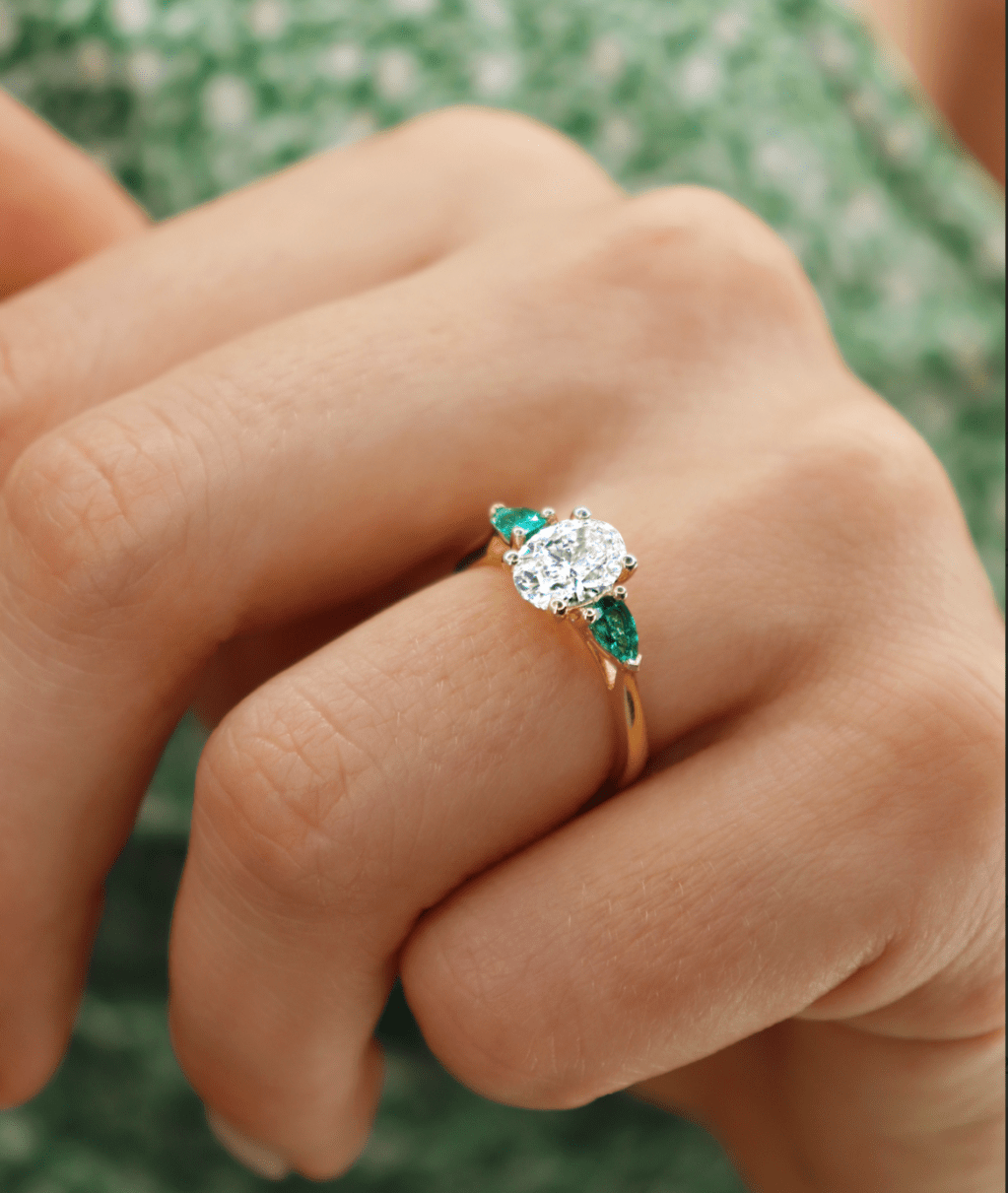
    Coloured gemstones further undermine the perfection narrative. Emeralds, sapphires and other stones have always embraced character over uniformity. Their appeal lies in depth, nuance and individuality.

    Museum research from The Smithsonian National Museum of Asian Art shows that coloured gemstones were historically prized for symbolism and cultural meaning rather than optical precision. Modern buyers are reconnecting with this perspective.

    Design trends reinforce the same movement. Engagement rings are no longer expected to prioritise visual impact alone. Comfort, durability and suitability for daily wear now hold equal weight.

    Design commentary from Dezeen has documented how contemporary jewellery increasingly draws from architectural balance and functional design. Rings are designed to live with the wearer, not simply to impress in a single moment.

    Longevity is central to this shift. A ring worn for decades must adapt to changing lifestyles, careers and identities. What feels perfect at one stage of life may not feel right at another.

    Psychological research discussed by Psychology Today suggests that emotional attachment is strongest when objects integrate easily into daily life. Jewellery that causes discomfort or self consciousness can gradually lose emotional warmth, regardless of how perfect it once seemed.

    Ethics and transparency have also reshaped perceptions of perfection. Many buyers now consider whether they will feel proud of their choice in ten or twenty years. This long view often outweighs short term ideals.

    Environmental reporting from National Geographic has explored how awareness of sourcing and sustainability influences long term satisfaction. Jewellery chosen with ethical clarity often retains emotional confidence.

    In this context, the idea of the perfect ring begins to feel restrictive. It assumes a fixed identity and static values. Modern buyers recognise that both evolve.

    Language around engagement rings is changing as a result. Perfect is increasingly replaced by words such as right, meaningful and considered. These terms allow space for growth rather than comparison.

    Retail experiences have adapted accordingly. Rather than guiding customers towards a single ideal, many jewellers now focus on understanding lifestyle, taste and long term wear.

    Exploring engagement ring collections such as those available through Lily Arkwright reflects this approach. Rings are presented as expressions of individuality, offering flexibility rather than prescribing a formula.

    The rise of bespoke and semi bespoke design further challenges the idea of perfection. Customisation encourages reflection and intention. It shifts focus from what others expect to what feels authentic.

    Cultural commentary from Harper’s Bazaar has observed that modern luxury is increasingly defined by confidence rather than conformity. Pieces chosen with conviction tend to feel more enduring than those chosen to meet an external ideal.

    Importantly, the fading of the perfect ring does not signal a decline in standards. In many cases, it leads to more thoughtful choices. When perfection is no longer the goal, quality, craftsmanship and suitability take centre stage.

    Luxury market insight from McKinsey & Company suggests that consumers increasingly value authenticity and longevity over status signalling. Rings chosen for relevance often feel more luxurious than those chosen to impress.

    For many couples, this shift is liberating. Without the pressure of perfection, engagement ring buying becomes a process of exploration rather than a test.

    Collections such as those offered by Lily Arkwright reflect this evolution, supporting choices designed for real lives rather than a single idealised image.

    In 2026, the perfect ring is no longer something to chase.

    What replaces it is clarity. A ring that fits your life, reflects your values and evolves with you will always outlast an ideal built on comparison.

    The fading of the perfect ring is not a loss of meaning. It is the moment meaning finally becomes personal.
  • Are Surprise Proposals Becoming Riskier in 2026? How Romance Is Adapting to Modern Relationships

    Are Surprise Proposals Becoming Riskier in 2026? How Romance Is Adapting to Modern Relationships

    The surprise proposal has long occupied a privileged place in romantic storytelling. It symbolised devotion, bravery and emotional certainty, often portrayed as the ultimate proof of love. Yet as relationships evolve and expectations shift, the idea of proposing entirely by surprise is being quietly re-evaluated. In 2026, many couples are asking whether surprise proposals still feel romantic, or whether they introduce risks that no longer align with how commitment is understood.

    This reassessment does not signal a decline in romance. Instead, it reflects a deeper transformation in how intimacy, communication and partnership are prioritised. Modern relationships are built on shared understanding rather than assumed roles, and proposals increasingly reflect that change.

    One of the most significant factors influencing this shift is how openly couples now discuss their futures. Marriage is no longer treated as an inevitable next step. It is a choice that sits alongside decisions about careers, finances, location and lifestyle. Research published by the Pew Research Center shows that younger generations are more likely to delay marriage and more likely to discuss long-term plans extensively before becoming engaged.

    In this context, a proposal that arrives without warning can feel less like a romantic gesture and more like an emotional interruption. The expectation to respond immediately, particularly in a public setting, can create pressure rather than joy. What was once framed as spontaneity may now be experienced as misalignment.

    Public conversation around this tension has become increasingly visible. Commentary in The Guardian has explored how surprise proposals can unintentionally place one partner in a vulnerable position, especially when expectations around timing or readiness differ. The concern is not about rejecting romance, but about respecting emotional autonomy.

    As a result, many couples are redefining what surprise means. Rather than surprising someone with the idea of marriage, they surprise them with the moment. The intention is shared in advance, while the setting, timing or specific gesture remains unexpected. This approach preserves excitement while significantly reducing emotional risk.

    This evolution reflects a broader cultural emphasis on consent and emotional intelligence. Just as modern relationships prioritise mutual respect and communication, proposals are increasingly expected to do the same.

    Cultural analysis in BBC Culture has noted that romantic norms evolve alongside social values. Surprise once symbolised confidence and decisiveness. Today, it is often interpreted through the lens of attentiveness. Knowing whether your partner would welcome a surprise is now seen as part of the romance itself.

    Social media has further complicated the picture. Proposals are no longer fleeting private moments. They are often recorded, edited and shared widely, transforming an intimate exchange into a public performance. This visibility raises the stakes considerably.

    Reporting by The New York Times has examined how public displays of intimacy can blur the boundary between genuine emotion and expectation. In the case of surprise proposals, the presence of an audience can make it difficult for the person being proposed to respond honestly if they feel uncertain or overwhelmed.

    The pressure to perform happiness can be intense. Even a moment of hesitation may be interpreted negatively once shared online. This dynamic has led some couples to question whether a fully surprise proposal is fair in a culture where reactions are scrutinised and archived.

    Psychological perspectives add another layer to the conversation. Articles in Psychology Today suggest that unexpected high-stakes events can trigger anxiety rather than excitement, particularly if an individual feels they have limited control over the situation. While surprise can heighten emotion, it can also activate stress responses when the outcome carries significant implications.

    This is especially relevant as emotional wellbeing has become central to modern relationship values. Couples are more mindful of each other’s boundaries and comfort levels, and more cautious about gestures that could cause distress, even unintentionally.

    Practical considerations also influence how proposals are perceived. Engagement now often signals a readiness to address complex realities, including shared finances, housing decisions and long-term planning. These conversations increasingly happen before a proposal rather than after.

    Economic commentary in the Financial Times has highlighted how financial transparency and joint decision-making are becoming defining features of modern partnerships. A proposal that ignores these discussions can feel premature, even if emotionally well intentioned.

    This does not mean proposals have become transactional. It means romance and realism are no longer viewed as opposing forces. Thoughtful romance in 2026 acknowledges both emotional readiness and practical context.

    Generational attitudes reinforce this shift. Surveys reported by YouGov indicate that younger adults place a high value on communication and mutual decision-making in relationships. For many, a proposal is not meant to introduce the idea of marriage, but to affirm something already mutually understood.

    This changing mindset does not eliminate the appeal of surprise. It reframes it. Surprise is welcomed when it aligns with shared expectations, and resisted when it disrupts them.

    Lifestyle and fashion commentary in Vogue UK has observed a growing preference for proposals that feel intimate and personal rather than grand or theatrical. Small, meaningful settings are often favoured over elaborate public displays. This trend reflects a broader desire for authenticity over spectacle.

    The perceived risk of surprise proposals is therefore closely tied to context. In relationships where marriage has been discussed openly and preferences are known, a surprise can feel affirming. In relationships where expectations are unclear, the same gesture can feel destabilising.

    Relationship experts writing in The Atlantic have emphasised that successful proposals tend to mirror the dynamics of the relationship itself. A partnership built on dialogue and collaboration is more likely to thrive with a proposal that reflects those qualities.

    Technology has also changed how couples navigate these moments. Constant communication, shared digital calendars and emotional transparency make it easier to gauge readiness. Ignoring that information in favour of secrecy can feel out of step with how modern relationships function.

    Cultural analysis in The Washington Post has explored how attentiveness has become a core component of modern romance. Knowing when to propose is often seen as more meaningful than the element of surprise itself.

    This does not suggest that surprise proposals are inherently flawed. It suggests they require greater emotional awareness than in the past. The most successful surprise proposals today are those that surprise within a framework of understanding.

    Some couples are also redefining the proposal entirely. Instead of a single dramatic moment, engagement may emerge through a series of conversations, with the proposal serving as a symbolic marker rather than a revelation. This approach aligns with a broader cultural preference for intentional milestones.

    From this perspective, surprise proposals feel riskier only when they rely on outdated assumptions about romance. When surprise is used thoughtfully and respectfully, it can still feel deeply meaningful.

    In 2026, the most romantic proposals are not necessarily the most unexpected. They are the ones that make the recipient feel seen, understood and secure.

    Surprise has not disappeared from modern romance. It has simply been recalibrated.

    And in relationships built on trust and communication, that recalibration represents growth rather than loss.

  • What Happens If You Don’t Love Your Engagement Ring? The UK Reality

    What Happens If You Don’t Love Your Engagement Ring? The UK Reality

    In Britain, the engagement ring occupies a deeply emotional space. It is not simply a piece of jewellery but a symbol of commitment, intention and future promise. Yet despite its importance, a growing number of people quietly admit to feeling conflicted when they first see the ring placed on their finger. Relief, surprise and gratitude often arrive first. Love for the ring itself sometimes takes longer.

    This emotional complexity is more common than many realise. According to relationship psychologists interviewed by the BBC, expectations around proposals and engagement rings have become increasingly shaped by social media, celebrity culture and highly curated online imagery. When reality does not align with the image a person has held privately, discomfort can arise.

    Disliking an engagement ring does not mean rejecting the relationship. It means navigating the tension between personal taste, emotional symbolism and the fear of causing hurt.

    Why This Happens More Than We Admit

    Many UK couples still view the engagement ring as a surprise. While this tradition carries romance, it also removes the opportunity for discussion. Preferences around metal colour, stone shape, setting height or overall style are often assumed rather than clarified.

    The Guardian has explored how modern relationships are becoming more collaborative, yet engagement traditions remain rooted in older expectations. This disconnect can leave one partner feeling unheard, even when the intention behind the ring is loving.

    Another factor is the influence of comparison. Platforms such as Instagram and Pinterest showcase a narrow aesthetic that may not reflect an individual’s true style. When a ring does not match the imagined ideal formed through years of scrolling, disappointment can quietly surface.

    The Psychological Weight of the Ring

    Engagement rings carry symbolic pressure. They are expected to represent love, effort, financial commitment and personal understanding all at once. Psychologists writing for the Financial Times note that objects imbued with such layered meaning often become emotional flashpoints.

    Feeling unsure about a ring can trigger guilt. Many people worry that expressing dissatisfaction will appear ungrateful or shallow. This leads to silence, which in turn can create resentment or emotional distance if left unaddressed.

    In the UK, where politeness and emotional restraint often shape communication, these feelings are especially likely to remain unspoken.

    What Most UK Couples Actually Do

    Contrary to popular belief, dissatisfaction with an engagement ring does not usually lead to conflict. Research cited by Cosmopolitan UK suggests that most couples who discuss the issue calmly find a practical solution. This may involve resizing, altering the setting, exchanging the ring or designing a new one together.

    The key factor is timing. Addressing concerns early, before resentment builds, tends to strengthen trust rather than weaken it. Relationship experts frequently emphasise that honesty around preferences can deepen emotional intimacy.

    The BBC has also reported on the rise of post proposal ring adjustments, reflecting a cultural shift towards flexibility and shared decision making.

    Changing Expectations in Modern Britain

    British engagement culture is evolving. Younger couples are increasingly rejecting rigid traditions in favour of communication and personal choice. Vogue UK has highlighted how engagement rings are now viewed as part of a longer design journey rather than a fixed, final object.

    This shift acknowledges that taste evolves and that a ring worn daily should reflect the wearer’s identity. It also removes the stigma around making changes, reframing them as part of the engagement story rather than a correction of a mistake.

    Talking About It Without Hurt

    Raising concerns about an engagement ring requires care. Experts interviewed by the New York Times suggest focusing on feelings rather than criticism. Expressing appreciation for the thought behind the ring while explaining personal preferences helps keep the conversation constructive.

    In the UK context, framing the discussion around shared future choices rather than individual dissatisfaction often feels more comfortable. Many couples find that discussing the ring becomes a gateway to broader conversations about finances, weddings and long term priorities.

    When Silence Becomes the Bigger Risk

    Keeping quiet about an engagement ring you dislike may seem kind, but relationship counsellors warn that unspoken resentment can surface later in unexpected ways. Jewellery worn daily can become a constant reminder of feeling unheard, which can subtly affect emotional connection.

    The Guardian’s relationship column has repeatedly noted that small, unresolved issues often carry more weight than major disagreements precisely because they are never acknowledged.

    A Healthier Way Forward

    Not loving an engagement ring is not a failure. It is a reflection of how personal taste, identity and symbolism intersect in modern relationships. As British engagement traditions continue to evolve, honesty and collaboration are becoming the new markers of romance.

    An engagement ring should feel like a reflection of the person wearing it, not a silent compromise. Addressing doubts with care and openness allows the ring to become what it was always meant to be: a shared symbol of commitment, not a source of quiet discomfort.