Tag: ManchesterEngagementsUK

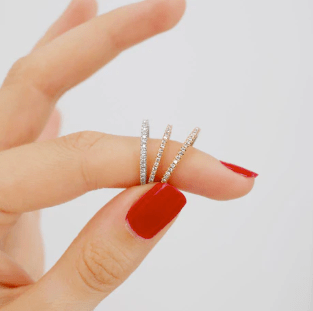
  • The History of Diamond Stud Earrings: How Minimal Design Became the Ultimate Expression of Luxury

    The History of Diamond Stud Earrings: How Minimal Design Became the Ultimate Expression of Luxury

    Diamond stud earrings occupy a unique position in jewellery history. They are at once understated and deeply symbolic, luxurious yet quietly practical. Unlike many jewellery designs that rise and fall with fashion cycles, diamond studs have endured by remaining visually restrained while absorbing centuries of cultural meaning. Their evolution reflects broader changes in how jewellery is worn, who wears it and what it is meant to communicate.

    To understand the history of diamond stud earrings, it is necessary to begin with the history of earrings themselves. Earrings are among the earliest forms of personal adornment, appearing independently across ancient civilisations. Archaeological evidence shows earrings worn in Ancient Egypt, Mesopotamia and Assyria, often by men in positions of power.

    According to research published by the British Museum, earrings in ancient societies were rarely decorative alone. They functioned as markers of rank, protection and spiritual belief. Materials such as gold and semi precious stones were chosen for symbolic properties as much as visual appeal. Earrings were visible signs of authority, worn close to the head to signify status and identity.

    Diamonds entered this story much later. Although diamonds were known in India as early as the fourth century BCE, their role was symbolic rather than ornamental. Early diamonds were worn uncut, believed to possess protective and divine qualities. Their hardness and rarity associated them with strength and invincibility rather than sparkle.

    Historical interpretation from the National Museum of Asian Art explains that diamonds were valued as objects of power long before they were appreciated for brilliance. Their resistance to damage made them talismanic, particularly among rulers and warriors. At this stage, diamonds were unsuitable for earrings as we recognise them today.

    The transformation of diamonds into wearable gemstones began in medieval Europe. Advances in lapidary techniques allowed stones to be shaped deliberately. Early point cuts and table cuts introduced flat planes that reflected light subtly. Diamonds could now be set visibly and intentionally, rather than embedded as symbolic objects.

    During the Renaissance, earrings became increasingly elaborate. Portraiture from the period shows heavy pendant earrings featuring pearls, coloured stones and, occasionally, diamonds. These designs were intended to be seen across candlelit halls and public spaces. Subtlety was neither practical nor desired.

    Art historical research referenced by the National Portrait Gallery shows that jewellery during this period was performative. Earrings framed the face and signalled wealth, lineage and political influence. The idea of a discreet diamond stud had not yet emerged, as jewellery was expected to declare presence.

    The shift towards simplicity began gradually in the seventeenth and eighteenth centuries. Enlightenment ideals favoured balance, proportion and restraint. Jewellery followed suit. Earrings became lighter, and diamonds were increasingly valued for light performance rather than size.

    The Georgian period marked an important turning point. Diamonds were often set close to the ear in silver backed gold to enhance brightness in candlelight. While still decorative, these earrings moved away from excessive length and weight. The focus began to shift towards how light interacted with stone rather than how much jewellery could be worn.

    Curatorial analysis from the Victoria and Albert Museum highlights how jewellery from this era reflects a growing appreciation for refinement. Diamonds were arranged with greater intention, hinting at the power of minimal design.

    The nineteenth century accelerated this evolution. Industrialisation transformed jewellery production, making diamond pieces more accessible beyond aristocratic circles. Earrings became part of everyday dress rather than purely court attire. Smaller diamond earrings began to appear as personal adornments rather than ceremonial objects.

    This period also strengthened the symbolic connection between diamonds and permanence. As diamonds came to represent durability and emotional continuity, their use in everyday jewellery gained significance. Diamond earrings were no longer just decorative, but meaningful.

    By the early twentieth century, diamond stud earrings began to take on their modern identity. Advances in cutting precision allowed for smaller, well matched diamonds with consistent brilliance. Secure settings made it possible for a single stone to sit directly against the ear without additional ornamentation.

    Cultural change played a crucial role in this shift. As women entered professional environments and adopted simpler fashions, jewellery needed to adapt. Large, swinging earrings were impractical. Diamond studs offered elegance without interference, fitting seamlessly into changing lifestyles.

    Fashion historians at the Museum at FIT note that early twentieth century jewellery increasingly prioritised versatility. Pieces were designed to move between day and evening with ease. Diamond stud earrings embodied this new philosophy perfectly.

    The influence of cinema further solidified their status. Mid twentieth century film stars were frequently photographed wearing diamond studs both on and off screen. Unlike dramatic chandelier earrings, studs conveyed polish without excess.

    Cultural analysis in Vanity Fair has explored how classic Hollywood style shaped enduring ideas of elegance. Diamond studs became associated with composure, confidence and timeless beauty rather than spectacle.

    In the latter half of the twentieth century, diamond stud earrings became deeply embedded in personal milestones. They were gifted to mark birthdays, graduations and achievements. Their simplicity allowed them to suit every stage of life, while their durability ensured longevity.

    Sociological research from the Pew Research Center suggests that objects chosen to commemorate life events are often those that integrate easily into daily routines. Diamond studs, worn consistently and comfortably, fulfil this role naturally.

    Their symbolism continued to evolve. No longer tied exclusively to romance or status, diamond stud earrings increasingly became self-purchases. They marked independence, confidence and personal success. This shift aligned with broader cultural changes in how jewellery functioned as a form of self-expression.

    Commentary in The Guardian has discussed how understated luxury has replaced overt display as a marker of confidence. Diamond stud earrings fit squarely within this narrative. Their value is not announced, but understood.

    Design publications such as Monocle have observed that minimal personal objects often signal assurance rather than restraint. Choosing simplicity implies certainty of taste. The diamond stud earring is a perfect expression of this principle.

    Today, diamond stud earrings are considered a foundation piece rather than a fashion trend. They are worn across generations and cultures, adapting effortlessly to individual style. Their design has remained consistent because it does not need reinvention.

    From a symbolic perspective, diamond studs represent clarity and continuity. A single stone, set close to the ear, draws attention without demanding it. There is no distraction from the diamond itself. This focus mirrors contemporary values around intention and authenticity.

    Looking ahead, the relevance of diamond stud earrings appears secure. As jewellery continues to move towards versatility and personal meaning, pieces that integrate seamlessly into everyday life will remain central.

    Diamond stud earrings connect ancient beliefs about protection and power with modern ideas of self assurance and longevity. Their form has been refined over centuries, but their purpose remains consistent.

    They are not designed to impress. They are designed to endure.

    From talismanic origins to modern essentials, diamond stud earrings tell a story of refinement through restraint.

    A timeless design, shaped by history and worn with confidence.
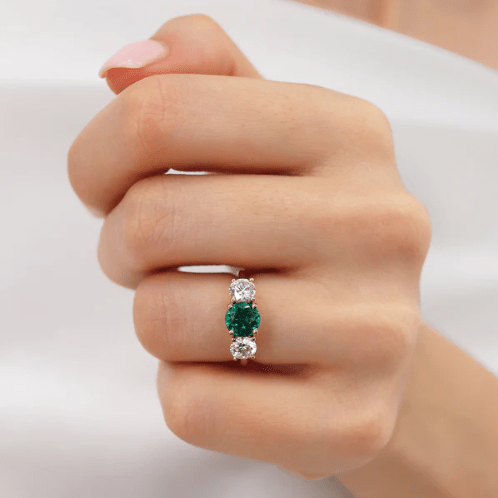
  • Alternative Diamond Engagement Rings: A New Era of Meaningful, Personal Design

    Alternative Diamond Engagement Rings: A New Era of Meaningful, Personal Design

    Engagement rings have always reflected more than romance. They mirror cultural values, social expectations and ideas about identity. While the twentieth century narrowed the definition of what an engagement ring should look like, the current generation is actively reopening that conversation. Alternative diamond engagement rings have emerged not as a rebellion against tradition, but as a confident rebalancing of it.

    Diamonds remain deeply embedded in the symbolism of commitment. What has changed is how they are interpreted. Shape, proportion, setting and overall design are now viewed as opportunities for self-expression rather than rules to follow. This evolution feels inevitable in a world where individuality is increasingly valued and relationships are defined collaboratively.

    Historically, engagement rings were never uniform. In many periods, they varied widely in form and meaning. Medieval rings often featured engraved motifs or symbolic stones. In the Georgian and Victorian eras, coloured gemstones, clusters and sentimental designs were common. The dominance of the diamond solitaire is a relatively recent phenomenon.

    Collections and research from the National Museum of Scotland show that early engagement jewellery was shaped by local craftsmanship and personal symbolism rather than global standardisation. Rings often reflected family heritage, regional style or moral sentiment, making each piece unique.

    The narrowing of engagement ring design in the twentieth century coincided with advances in mass production and global advertising. As diamond cutting became more efficient, certain shapes were promoted as ideal. Over time, repetition transformed marketing into perceived tradition.

    In the twenty first century, that perception has shifted. Sociocultural research published by the Office for National Statistics illustrates how attitudes towards marriage, gender roles and partnership have diversified in the UK. Engagement rings have naturally followed this broader social change.

    alternative diamond engagement rings resonate because they align with how modern couples approach commitment. Decisions are often shared, thoughtful and rooted in lifestyle rather than spectacle. Rings are chosen to suit daily life, long-term wear and personal taste, not just visual impact.

    One of the defining features of alternative designs is their relationship with form. Elongated silhouettes, softened geometry and unexpected proportions reflect a move away from overt display. These shapes feel considered, offering presence without dominance.

    Fashion and design commentary in Another Magazine has explored how contemporary luxury values nuance over recognisability. In this context, alternative engagement rings feel modern and assured rather than unconventional.

    The appeal of alternative designs is also linked to practicality. Many wearers expect their ring to integrate seamlessly into everyday routines. Comfort, security and wearability are central concerns, particularly for those who work with their hands or prefer a low-profile aesthetic.

    Design reporting from The Design Museum highlights how modern jewellery increasingly reflects principles seen in product and industrial design. Function, comfort and longevity are prioritised alongside beauty. Alternative engagement rings often embody this balance more effectively than traditional high-set solitaires.

    Another key factor is emotional connection. A ring that departs from the expected invites explanation. It carries a story, whether rooted in personal style, shared decision-making or symbolic meaning. This narrative depth can make the ring feel more intimate and intentional.

    Cultural analysis in The New Statesman has discussed how modern consumers seek authenticity in the objects they choose. Engagement rings, given their emotional significance, are particularly influenced by this desire for meaning over conformity.

    Technological progress has played a crucial role in enabling alternative diamond engagement rings. Advances in cutting precision allow diamonds to perform beautifully across a wide range of shapes and settings. Designers are no longer constrained by optical limitations.

    Educational insight from the Gem-A Gemmological Association of Great Britain explains how modern cutting techniques allow light to be optimised even in non-traditional silhouettes. This has expanded creative freedom without compromising brilliance or balance.

    Alternative designs also reflect changing ideas about partnership. Proposals are increasingly collaborative, with many couples discussing preferences openly. The ring becomes a shared decision rather than a surprise governed by convention.

    Lifestyle commentary in Stylist has noted that modern engagement jewellery often reflects equality and dialogue within relationships. Rings are chosen to suit the wearer, not an imagined ideal.

    Longevity plays a significant role in this shift. Engagement rings are worn for decades, often becoming heirlooms. Designs that prioritise proportion, comfort and timelessness tend to feel more enduring than those tied to a specific fashion moment.

    Economic commentary from the World Economic Forum has explored how modern luxury consumers value emotional return alongside financial investment. Pieces that feel personally meaningful often hold their relevance longer than trend-driven alternatives.

    alternative diamond engagement rings frequently meet this expectation. Their appeal lies in balance rather than novelty. They feel distinct without being transient, which is essential for a piece intended to last a lifetime.

    Inclusivity is another important dimension. Engagement rings are no longer designed around a single wearer profile. As gender norms continue to evolve, jewellery becomes more adaptable, reflecting a wider range of identities and expressions.

    Cultural reporting in i-D has highlighted how engagement jewellery increasingly intersects with conversations about identity and self-presentation. The ring becomes part of how someone chooses to show up in the world.

    Exploring alternative diamond engagement rings reflects this broader movement towards considered, personal choice. Diamonds remain central, but their expression evolves to meet modern expectations around individuality and daily wear.

    From a historical perspective, this evolution is entirely consistent. Engagement rings have always changed in response to social values. What feels traditional in one era often began as an alternative in another.

    Research and exhibition commentary from the Museum of London reinforces the idea that jewellery traditions survive by adapting. Objects endure not by resisting change, but by absorbing it.

    alternative diamond engagement rings do not discard tradition. They reinterpret it. They preserve the symbolism of commitment while allowing room for personality, lifestyle and modern design thinking.

    As contemporary relationships continue to prioritise communication, equality and authenticity, the jewellery that represents them naturally follows suit. Rings become less about meeting expectations and more about reflecting shared values.

    Alternative designs offer that freedom. They allow diamonds to be worn with intention, confidence and individuality.

    And in doing so, they mark not a break from tradition, but its continued evolution into something more personal, more inclusive and more enduring.

  • Wedding Rings Through Time: How Culture, Craft and Commitment Shaped the Wedding Band

    Wedding Rings Through Time: How Culture, Craft and Commitment Shaped the Wedding Band

    The wedding ring is one of the most enduring objects in human history. It is small, unassuming and worn so consistently that it often fades into the background of daily life. Yet few objects carry as much symbolic weight. Across centuries, cultures and belief systems, the wedding ring has represented union, obligation, devotion and identity. Its history is not static. It evolves alongside society itself, reflecting how marriage has been understood in different eras.

    The earliest known wedding rings originate in Ancient Egypt, where marriage was closely tied to ideas of eternity and cosmic order. Rings were crafted from natural materials such as reeds, rushes or leather and exchanged as symbols rather than valuables. The circle was sacred, representing infinity and the cyclical nature of life.

    Historical research referenced by the British Museum explains that Egyptians viewed marriage as part of a broader spiritual framework. The ring’s unbroken shape symbolised continuity not just between two individuals, but within the universe itself. These early wedding rings were worn publicly, acting as visible markers of status and union.

    It was during this period that the tradition of wearing a ring on the fourth finger of the left hand emerged. The belief that this finger contained a vein leading directly to the heart, known later as the vena amoris, was symbolic rather than anatomical. Despite its inaccuracy, the idea endured and shaped wedding customs for centuries.

    The Roman Empire adopted the practice of wedding rings but redefined their meaning. Roman marriage was rooted in law and property, and rings reflected this reality. Early Roman wedding rings were made of iron, chosen for its strength and durability. They signified permanence, but also control and ownership.

    Over time, gold rings became more common among affluent Romans, signalling wealth as well as marital status. According to collections and commentary from the Metropolitan Museum of Art, Roman rings functioned as legal markers. They were worn almost exclusively by women, reinforcing the gendered structure of marriage at the time.

    As Christianity spread throughout Europe, wedding rings were absorbed into religious ritual. By the early Middle Ages, rings were formally exchanged during church ceremonies and blessed by clergy. Marriage was reframed as a sacred covenant rather than a civil arrangement.

    Liturgical texts and manuscripts referenced by the Vatican Library show that rings became symbols of fidelity, obedience and divine unity. The act of placing a ring on the finger was ritualised and accompanied by vows, prayers and blessings.

    During this period, wedding rings also began to carry more decorative and personal elements. Engravings became common, and the emergence of posy rings marked a shift towards emotional expression. These rings were engraved with short phrases, verses or declarations of love, often hidden inside the band.

    Scholars at the British Library have documented how posy rings reflected changing attitudes towards marriage in late medieval England. Love and affection were becoming recognised as meaningful components of marriage, not merely secondary to alliance or duty.

    The Renaissance brought further refinement. Advances in metallurgy and craftsmanship allowed goldsmiths to produce more consistent, elegant bands. Rings became slimmer, smoother and more comfortable to wear. Gemstones began to appear more frequently, chosen for their symbolic meanings rather than brilliance.

    Sapphires were associated with loyalty, rubies with passion and emeralds with renewal. Diamonds were admired but still rare and difficult to cut. Their later dominance in bridal jewellery had not yet begun.

    From the seventeenth to nineteenth centuries, wedding rings increasingly reflected social hierarchy. Among aristocratic families, rings featured heraldic engravings, coats of arms or elaborate designs. Marriage was as much about lineage and inheritance as personal connection.

    The Industrial Revolution transformed wedding rings more profoundly than any earlier period. Mass production made jewellery accessible to a broader population, and gold wedding bands became common across social classes. Rings no longer signified privilege alone, but participation in a shared cultural ritual.

    Victorian wedding rings reflected the era’s emphasis on sentiment, morality and domestic ideals. Designs often incorporated hearts, flowers or symbolic motifs. According to design historians at the Victoria and Albert Museum, Victorian jewellery marked a shift towards emotional symbolism, reinforcing the idea of marriage as a bond of affection.

    The twentieth century reshaped the meaning of wedding rings once again. During the First World War, men began wearing wedding rings in significant numbers for the first time. Soldiers carried them as reminders of home, stability and emotional connection.

    Social historians writing for the Imperial War Museums note that this practice permanently altered marriage symbolism. The wedding ring became a shared emblem of partnership rather than a marker worn solely by women.

    In the decades that followed, the plain gold band became the dominant style in many Western cultures. Simplicity was associated with sincerity and permanence. The wedding ring was no longer decorative, but deeply functional and symbolic.

    By the late twentieth century, this uniformity began to dissolve. Changing fashion, evolving gender roles and greater emphasis on individuality reshaped expectations. White metals gained popularity, comfort-focused designs emerged and couples began choosing rings that reflected lifestyle as much as tradition.

    Contemporary wedding rings are defined by choice. Matching bands are optional. Traditional profiles sit alongside modern interpretations. Rings are selected for comfort, symbolism and personal meaning rather than adherence to a single ideal.

    Sociological analysis from the Pew Research Center highlights how modern relationships prioritise equality and self-expression. Wedding rings have adapted accordingly, becoming reflections of shared values rather than prescribed forms.

    Cultural commentary in Vogue has observed that modern wedding jewellery balances heritage with individuality. Couples honour tradition while reshaping it to fit their own narrative.

    Exploring a wide range of wedding rings today means engaging with a tradition that spans thousands of years while still feeling entirely personal. Each ring carries echoes of history, even as it marks a unique commitment.

    Despite centuries of change, certain elements remain constant. The circular shape endures. The act of exchange remains powerful. The ring continues to serve as a visible promise worn every day.

    Looking ahead, wedding rings will continue to evolve as marriage itself evolves. As cultural norms expand and relationships are defined in more inclusive ways, rings will adapt in form, material and meaning.

    What will not change is the human desire to mark commitment with something tangible. The wedding ring remains a bridge between past and future, tradition and individuality.

    A simple band, shaped by history, worn with intention.