Tag: luxury

  • From Canary to Buttercup: How Fancy Yellow Diamonds Are Being Repositioned for a New Luxury Buyer

    From Canary to Buttercup: How Fancy Yellow Diamonds Are Being Repositioned for a New Luxury Buyer

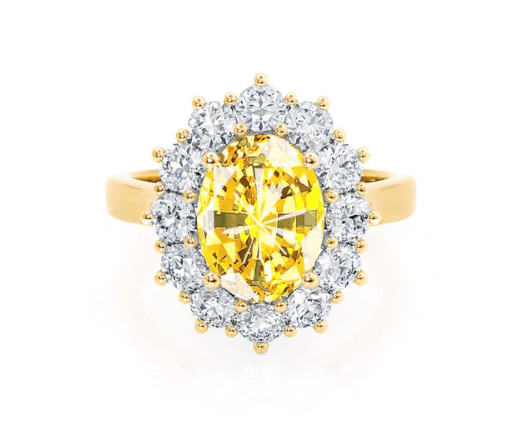
    Fancy yellow diamonds are experiencing a subtle but meaningful shift in how they are presented to consumers. Once marketed almost exclusively through the language of intensity and rarity, they are now framed through mood, lifestyle and emotional resonance. Terms like canary, once dominant, are increasingly sharing space with softer, more evocative descriptors such as buttercup, honey and lemon. This change reflects not just evolving taste, but a deeper transformation in how luxury itself is communicated.

    At the heart of this shift lies the tension between gemmological precision and consumer psychology. Yellow diamonds are among the most technically defined coloured stones in the jewellery world, yet the way they are marketed today is deliberately less technical. This is not an accident. It is a response to how modern buyers engage with colour, identity and self-expression.

    From a gemmological standpoint, fancy yellow diamonds are clearly classified. Educational material from the Gemological Institute of America explains that once a diamond’s colour saturation surpasses the Z grade, it enters the fancy colour scale. From there, it is assessed across recognised categories including Fancy Light, Fancy, Fancy Intense and Fancy Vivid. These grades are based on measurable criteria such as saturation and distribution of colour.

    While these distinctions are essential within the trade, they are not inherently emotive. For most consumers, terms like Fancy Intense do not immediately conjure imagery or feeling. As luxury purchasing becomes more emotionally driven, this gap between technical language and lived experience has grown increasingly apparent.

    Historically, the term canary filled that gap. It became shorthand for bright yellow diamonds, regardless of their precise grading. The word carried connotations of boldness, glamour and visibility. High-profile stones worn by celebrities and featured in auction headlines reinforced the idea that a yellow diamond should be vivid and unmistakable.

    Cultural coverage in outlets such as The New York Times has documented how canary diamonds became synonymous with spectacle, often framed as jewellery designed to be noticed rather than lived with. This association shaped consumer expectations for decades.

    In today’s market, that framing feels increasingly narrow. Canary suggests a singular ideal, leaving little room for subtlety or personal nuance. As engagement rings and fine jewellery become more reflective of individual identity, marketing language has adapted to support choice rather than hierarchy.

    The emergence of descriptors like buttercup signals this change clearly.

    Buttercup does not correspond to a formal gemmological grade. Instead, it functions as an emotional cue. It suggests warmth, softness and approachability. Where canary implies intensity and attention, buttercup implies comfort and ease. This distinction mirrors broader shifts in how luxury is defined.

    Fashion and jewellery analysis in Vogue UK has noted that contemporary luxury increasingly favours colours that feel natural and wearable. Softer yellows are framed as modern and refined rather than diluted. In this context, a buttercup yellow diamond feels intentionally chosen rather than compromised.

    This evolution also reflects changing engagement ring aesthetics. Modern designs often prioritise harmony over contrast. Yellow diamonds with lighter saturation integrate more seamlessly with a range of metals and settings, particularly when paired with warmer tones. Marketing language has followed design direction, emphasising mood over magnitude.

    The expansion of yellow diamond descriptors does not stop at buttercup. Terms such as lemon, honey and sunflower are now common across editorial and retail spaces. Each conveys a distinct emotional tone. Lemon suggests brightness and freshness. Honey implies richness and depth. Sunflower balances vibrancy with warmth.

    These descriptors are not intended to replace formal grading. Instead, they operate alongside it, translating technical attributes into intuitive language. This layered approach reflects a more sophisticated understanding of consumer needs.

    Editorial commentary in The Guardian has explored how modern luxury consumption is driven less by comparison and more by self-alignment. Colour choice, particularly in jewellery, has become a way to articulate personality rather than status. The diversification of yellow diamond language reflects this cultural shift.

    However, this evolution introduces complexity. Without clear reference to gemmological grading, descriptive terms can become ambiguous. A buttercup diamond from one source may differ noticeably from another. Transparency remains essential if emotive language is to build confidence rather than confusion.

    Guidance from the International Gemological Institute stresses the importance of understanding official colour grades alongside marketing descriptors. When positioned clearly as stylistic interpretations, these terms enhance accessibility without undermining trust.

    This balance between storytelling and accuracy is increasingly important. Modern buyers are highly informed. They value emotion, but they also expect clarity. Successful marketing strategies recognise that these priorities are not mutually exclusive.

    The shift in yellow diamond language also mirrors broader cultural trends in colour perception. Bright, highly saturated hues were once associated with confidence and luxury. Today, softer tones are often framed as more refined and contemporary.

    Design analysis in Dezeen has documented a move towards warmer, more organic colour palettes across fashion, interiors and product design. Muted yellows and earthy tones have replaced sharper primaries. Yellow diamond marketing has adapted accordingly.

    Another contributing factor is accessibility. Advances in diamond production, particularly within the lab grown sector, have increased the availability of yellow diamonds across a wider range of shades. With more choice comes a greater need for differentiation. Descriptive language helps consumers navigate this expanded landscape.

    Auction houses have also influenced public understanding. Coverage of yellow diamond sales by platforms such as Christie’s often highlights subtle differences in hue and tone, reinforcing the idea that variation adds character rather than diminishing value.

    Importantly, the diversification of descriptors coincides with a broader shift in how coloured diamonds are positioned. Yellow diamonds are no longer framed as unconventional alternatives. They are presented as confident, intentional choices with their own aesthetic logic.

    Lifestyle reporting in Elle UK has explored how modern jewellery buyers increasingly choose stones that feel emotionally resonant rather than traditionally prestigious. Softer language such as buttercup supports this narrative, making yellow diamonds feel approachable rather than intimidating.

    Economic analysis in The Financial Times has noted that contemporary luxury markets increasingly reward relevance and authenticity. Products that feel personally meaningful often outperform those positioned solely on hierarchy. The evolving language around yellow diamonds reflects this reality.

    From a psychological perspective, naming plays a powerful role. A stone described as buttercup evokes different expectations than one described as canary, even if their technical grades overlap. Language shapes perception, satisfaction and long-term attachment.

    This does not make marketing language inherently misleading. When used responsibly, it enhances understanding by translating complexity into feeling.

    The transition from canary to buttercup therefore represents an expansion of meaning rather than a dilution. It acknowledges that colour preference is not linear. It is personal, contextual and subjective.

    As the jewellery industry continues to evolve, yellow diamond marketing is likely to become even more nuanced. Greater emphasis on undertone, light behaviour and setting context may emerge alongside increasingly refined descriptors.

    What is already clear is that fancy yellow diamonds are no longer marketed as a single statement. They are presented as a spectrum of possibilities.

    From the confident brightness of canary to the gentle warmth of buttercup, yellow diamonds are being repositioned as expressive, adaptable and deeply personal.

    In a luxury landscape defined by confidence rather than comparison, this shift feels not only natural, but necessary.

    Colour is personal. And the way it is described is finally beginning to reflect that.

  • The Emerald Effect | How Green Gemstones Define Sustainable Luxury in 2026

    A Market Turning Green

    The colour green has always carried meaning — renewal, prosperity and calm. Yet in 2026, it has taken on new economic and cultural weight. The growing popularity of emeralds and green gemstones reflects a transformation in the way consumers think about luxury.

    As Financial Times Life & Arts observed, “green has become both a hue and a headline.” It represents sustainability and investment, beauty and responsibility, ethics and emotion.

    Across the jewellery industry, from London’s Hatton Garden to high-end designers in Paris and Milan, the emerald has emerged as a statement of contemporary values. Its rise mirrors a larger shift towards transparency and traceability — qualities now as prized as carats and clarity.

    Colour as Economic Barometer

    In fashion and design, colour trends often reveal more about society than style alone. After a decade of uncertainty, economic recovery and environmental awareness have redefined what luxury means. The return of green in 2026 is no coincidence.

    According to Vogue Business, colour forecasting is increasingly data-driven, combining psychology, social trends and consumer sentiment. Green consistently scores highly because it conveys balance and optimism, two qualities consumers actively seek during periods of change.

    Jewellery, as one of the most enduring forms of investment, naturally reflects these emotional priorities. Buyers are turning towards pieces that feel restorative, meaningful and future-facing — qualities embodied by emeralds and other green gemstones.

    The Emerald’s Enduring Allure

    The emerald’s appeal is complex. Unlike the flawless perfection of a diamond, an emerald’s inclusions — often referred to as its jardin or “garden” — are part of its identity. They are the fingerprints of geological history, creating a natural pattern that makes each stone unique.

    As The Guardian wrote, “imperfection has become a mark of authenticity.” The modern luxury buyer values individuality over uniformity, and the emerald delivers exactly that.

    Its deep, velvety tone evokes both nature and nobility. For centuries, emeralds were associated with royalty and rebirth, worn by figures from Cleopatra to Elizabeth Taylor. Today, they appeal to a generation that seeks meaning rather than material excess.

    In engagement rings and statement jewellery alike, emeralds embody emotional integrity. They suggest growth, loyalty and renewal — qualities perfectly aligned with the mood of the time.

    The Science of Green

    From a design perspective, green gemstones offer something no other colour can achieve: versatility. Their tone complements both warm and cool metals, from yellow gold to platinum, and their intensity allows them to stand out without overpowering.

    Colour psychology helps explain their appeal. As BBC Culture explained, green sits at the midpoint of the colour spectrum, representing equilibrium. It is associated with calmness and emotional restoration — an antidote to the sensory overload of digital life.

    In this way, the emerald is more than decoration. It is a subtle reflection of the collective psyche. In a period where clarity and stability are prized, its symbolism feels profoundly relevant.

    Sustainability and the Rise of Ethical Stones

    No discussion of modern jewellery can ignore sustainability. The 2020s have seen seismic shifts in how materials are sourced, crafted and marketed. Transparency has become a baseline expectation rather than a luxury feature.

    Lab-grown emeralds and green sapphires have become central to this evolution. Created through innovative scientific processes that replicate the natural formation of gemstones, they offer the same brilliance and beauty as mined stones with none of the ethical complications.

    British jewellers such as Lily Arkwright have become synonymous with this new wave of conscious craftsmanship. Their collections combine advanced technology with refined design, proving that modern elegance can coexist with environmental responsibility.

    As Forbes Innovation reported, “sustainability has moved from niche to necessity.” In the fine jewellery market, this has transformed both consumer expectation and brand identity. The emerald’s association with nature and renewal has made it a natural ambassador for this change.

    Green as Cultural Symbol

    Beyond aesthetics, green’s resurgence speaks to a wider cultural narrative. In art, literature and film, green often represents growth, hope and transformation. In 2026, it has come to symbolise the collective yearning for balance — both environmental and emotional.

    As BBC Lifestyle reflected, the popularity of green across design disciplines reflects “a global desire for harmony after years of disruption.”

    In the jewellery world, this manifests in the growing preference for stones that tell a story. Consumers want pieces with provenance and purpose, and the emerald — whether mined or lab-grown — provides exactly that. Its natural imperfections serve as metaphors for resilience, while its colour connects wearers to the natural world.

    A British Perspective

    Britain’s jewellery industry, long admired for its craftsmanship, has embraced the green revolution with distinctive flair. London’s independent ateliers and ethical jewellers have positioned emeralds at the heart of a new era of sustainable design.

    From traditional artisans in Hatton Garden to modern studios in Manchester, British designers are uniting classic techniques with scientific innovation. As Financial Times Life & Arts observed, “the future of luxury is local, traceable and emotionally intelligent.”

    This emphasis on provenance and personality gives British fine jewellery an edge in a global market that increasingly prizes authenticity over ostentation. The emerald, with its blend of historical gravitas and contemporary appeal, fits this identity perfectly.

    The Economics of Green

    There is also a pragmatic dimension to green’s rise. As the price of natural diamonds stabilises and consumer preferences diversify, coloured gemstones have gained both emotional and financial value.

    According to Bloomberg, demand for coloured gemstones has grown steadily across Europe and Asia, particularly among younger buyers. Emeralds are leading that surge, thanks to their recognisable colour, strong historical associations and increasing visibility in both bridal and fashion jewellery.

    In Britain, sales of emerald engagement rings have risen year on year, supported by ethical supply chains and digital marketing that highlights each stone’s individuality. This shift reflects the broader transformation of the luxury sector — from product-driven to purpose-driven.

    Green on the Catwalk and Beyond

    The jewellery industry often mirrors fashion, and 2026’s catwalks have confirmed green’s dominance. Designers from Gucci to Boucheron have showcased emeralds alongside sustainable fabrics and natural tones, creating a unified aesthetic of responsible glamour.

    As Vogue UK remarked, “the emerald has become the gemstone of the climate-conscious age.” Its presence on the red carpet — worn by stars who champion environmental causes — has helped transform it from a traditional luxury to a symbol of progressive taste.

    This convergence of fashion, ethics and culture ensures that green gemstones will continue to shape design narratives well beyond the current season.

    The Future of Emerald Luxury

    The emerald’s resurgence offers insight into where the fine jewellery market is heading. It reveals a consumer base that wants transparency, craftsmanship and emotional substance. It also highlights how the boundaries between art, science and ethics are dissolving in modern luxury.

    As technology continues to improve, lab-grown emeralds will become indistinguishable from their mined counterparts, challenging the old hierarchy of “natural equals superior.” Meanwhile, advances in traceability, such as blockchain certification, will give buyers unprecedented confidence in the origins of their gemstones.

    For brands like Lily Arkwright, this convergence of innovation and integrity positions them at the forefront of the British fine jewellery movement. Their approach exemplifies the future of luxury — transparent, sustainable and deeply personal.

    Conclusion

    The emerald effect is about more than colour. It represents a shift in how we define value, beauty and meaning. Green gemstones have become the visual language of a generation that seeks connection — to craft, to conscience and to the planet.

    In 2026, the most desirable luxury is not ostentatious but thoughtful. The emerald’s rich, enduring tone captures that balance perfectly. It is the gemstone of renewal and resilience, a reminder that beauty can still carry purpose.

    As Vogue Business summarised, “green is not just a trend — it is the future of fine jewellery.”

    And in that future, the emerald’s light will continue to shine, steady and sure, reflecting both the world we live in and the world we hope to create.