Tag: love

  • The Most Common Engagement Ring Questions Asked Online

    Why Engagement Ring Questions Matter More Than Ever

    An engagement ring is not merely a piece of jewellery. It is a cultural symbol, an emotional milestone, a promise of future intentions. So it is little wonder that millions of people turn to Google in moments of uncertainty, excitement or quiet anticipation.

    As Vogue UK recently noted, engagement rings have become “the emotional centrepiece of modern romance.” They hold history and personal identity in equal measure, making the buying process feel both thrilling and overwhelming.

    Across the UK, people search for reassurance, symbolism, meaning and style. Every query carries the weight of love, hope and storytelling.

    Here are the most common engagement ring questions asked online, and what they reveal about relationships in 2026.

    “How do I choose the perfect engagement ring?”

    This is the question that dominates the internet, year after year.

    Notably, “perfect” means different things today. For earlier generations, perfection meant a round diamond in a classic mount. In 2026, perfection is completely personal.

    People search for:

    • rings that reflect personality
    • rings that match fashion taste
    • rings that honour shared values

    As Cosmopolitan UK puts it, “the perfect ring is the one that tells your story, not someone else’s.”

    This shift explains why so many couples now favour unique shapes, non-traditional stones and meaningful design elements.

    “Which diamond shape suits them best?”

    This question blends emotion with aesthetics. It is one of the most searched engagement-related queries, often driven by the desire to choose something deeply personal.

    Modern couples want rings that feel expressive, not generic. As Elle UK observed, “a diamond shape has become a love language in itself.”

    Each shape suggests a different personality:

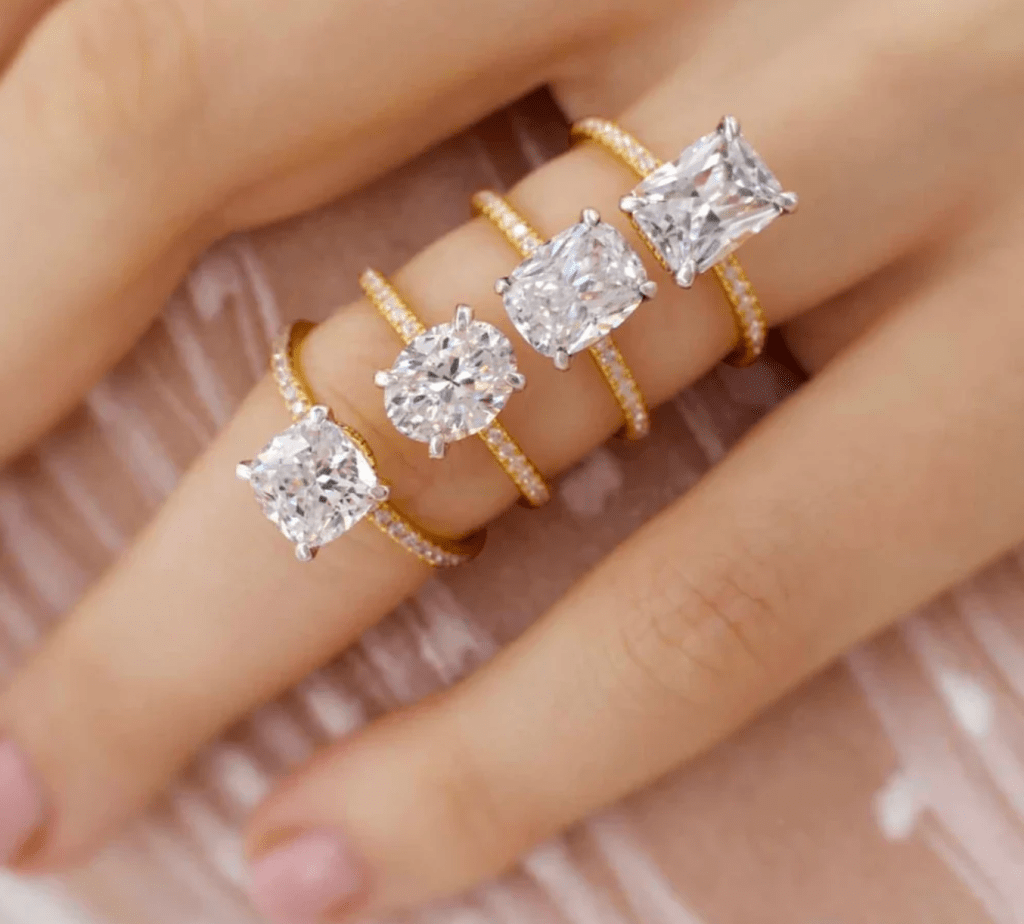
    • Oval: graceful, feminine, timeless
    • Emerald: confident, elegant, architectural
    • Pear: romantic, artistic, unconventional
    • Round: classic, balanced, understated

    The question is less about beauty and more about identity.

    “Should I choose natural or lab-grown?”

    This is among the most emotionally loaded questions online today. It is not simply about cost or quality, but about values.

    As The Guardian highlights, sustainability has become a defining priority for British buyers. Lab-grown diamonds offer a transparent, ethical option, while natural diamonds carry historical romance and rarity.

    Search queries reveal that buyers are trying to balance:

    • meaning
    • ethics
    • tradition
    • budget
    • symbolism

    The popularity of this question reflects a modern truth: love today is conscious, thoughtful and grounded in shared principles.

    “What does an engagement ring symbolise?”

    While some ask practical questions, many Google searches focus on emotional meaning.

    Even in 2026, people want to understand the history and symbolism behind the tradition. According to BBC Culture, engagement rings originate from ancient symbolism around eternity and devotion.

    Modern meanings extend far beyond that. Rings now symbolise:

    • partnership
    • equality
    • shared goals
    • independence within togetherness
    • a promise shaped by modern values

    This question shows that buyers care deeply about what their ring represents, not merely how it looks.

    “How do I choose a ring they will love?”

    Perhaps the most sentimental question Google sees.

    The search reveals vulnerability, fear of getting it wrong, and the desire to create a meaningful moment. It is often accompanied by queries like:

    • “Should I ask their friends for help?”
    • “What if they do not like the ring?”
    • “How do I choose without ruining the surprise?”

    As Vogue UK wrote, proposals today are as much about emotional understanding as romance. The ring becomes a symbol of how well you know and honour your partner.

    This question underscores one truth: love makes even confident people second-guess themselves.

    “How much should I spend?”

    The infamous budget question remains unavoidable.

    As Financial Times notes, younger generations reject outdated spending myths. Google searches show that UK buyers prioritise affordability, fairness and shared decision-making rather than traditional guidelines.

    The question reflects changing economic realities and shifting relationship dynamics. Couples prefer financial clarity over performative spending.

    This trend signals a healthy cultural move: engagement rings are an expression of love, not financial pressure.

    “Which metal is the best choice?”

    This question blends practical concerns with aesthetics.

    The most searched metals include:

    • platinum for longevity
    • yellow gold for warmth and resurgence in fashion
    • rose gold for romantic tones
    • white gold for budget-friendly elegance

    As Vogue UK reported, yellow gold has made a major comeback, driven by nostalgia and vintage influence.

    These searches show how fashion trends merge with personal taste to shape one of the most meaningful purchases of a person’s life.

    “What style of ring is trending?”

    A question fuelled by celebrity influence, social media and cultural shifts.

    The most Googled styles in 2026 include:

    • solitaire rings
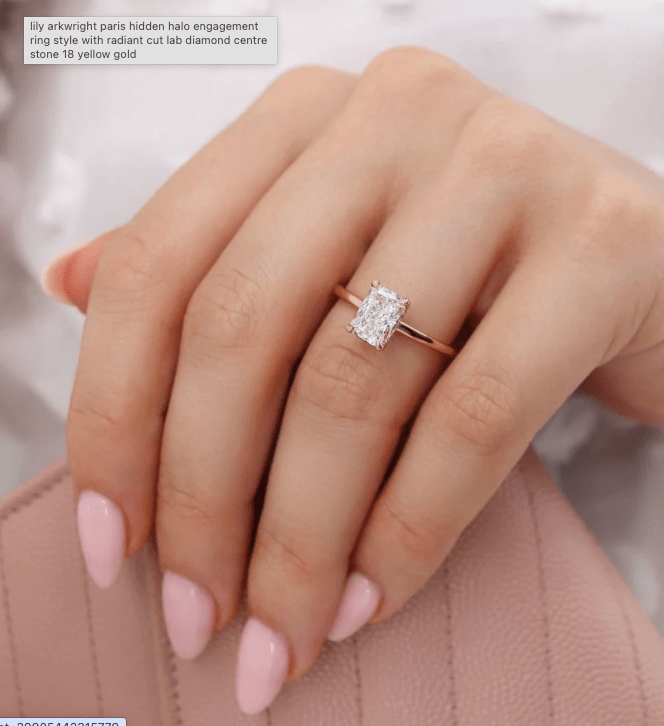
    • hidden halos
    • antique-inspired designs
    • toi et moi rings
    • coloured gemstones
    • elongated diamond shapes

    As Bazaar UK noted, engagement ring trends reflect broader fashion cycles, particularly the rise of quiet luxury and understated glamour.

    The desire to know what is “in” reveals how modern couples blend romance with cultural awareness.

    “Which rings look the biggest?”

    A surprisingly common question that reveals the desire to balance beauty and budget.

    According to Cosmopolitan UK, elongated shapes such as oval and pear appear larger because they spread weight along the finger.

    This question is less about status and more about proportion, self-image and perceived beauty.

    It shows that people want their ring to feel transformative, not purely expensive.

    “How do I keep an engagement ring a secret?”

    One of the most endearing searches on the internet.

    It reveals the romantic desire to protect the surprise, despite living in a world of shared calendars, shared bank accounts and shared phone notifications.

    Common related searches include:

    • “Where do I hide the ring?”
    • “How do I get their ring size quietly?”
    • “How do I plan a proposal without them knowing?”

    This question speaks to the enduring importance of romance. No matter how modern relationships become, the tradition of surprising a partner remains deeply cherished.

    What These Questions Reveal About Love in 2026

    When viewed collectively, the most searched engagement ring questions online tell a powerful story:

    Love today is intentional.

    Couples seek rings that reflect values, meaning and individuality.

    Love today is informed.

    Search behaviour shows an appetite for knowledge and clarity.

    Love today is equal.

    More couples choose rings together or discuss important decisions openly.

    Love today is emotionally intelligent.

    People care deeply about symbolism, story and fit.

    Love today is modern.

    Ethics, sustainability and personal expression drive decision making.

    As BBC Culture puts it, “modern romance is a blend of feeling and awareness.” The internet has become the place where that process unfolds.

    Conclusion

    Behind every engagement ring question lies a moment of vulnerability and anticipation. People Google in quiet moments, often alone, trying to make choices that will shape their future.

    The most searched questions reflect a generation seeking connection, clarity and authenticity. Whether practical, emotional or cultural, each query reveals the beautifully human experience of choosing a symbol of commitment.

    Engagement rings continue to evolve, but the questions remain deeply rooted in love, identity and understanding. That is why they remain among the most searched jewellery topics online, year after year.
  • The ultimate symbol of modern femininity – The Rise of the Pink Diamond

    A New Shade of Strength

    There is something magnetic about the colour pink. Once dismissed as delicate or decorative, it has re-emerged in 2026 as a symbol of power and self-assurance. In fine jewellery, that transformation is perfectly embodied by the rise of the pink diamond — a gemstone now defining modern British luxury.

    As Vogue UK recently wrote, “pink has transcended stereotype, reclaiming its place as the colour of quiet strength.” The modern woman no longer wears pink as a statement of sweetness, but as one of confidence.

    And nowhere is that evolution more beautifully expressed than in the luminous brilliance of the pink diamond.

    The Meaning of Pink

    The symbolism of pink has changed profoundly in the past decade. It once carried associations of innocence and youth, but now reflects empathy, compassion and inner confidence.

    In colour psychology, pink sits between red’s passion and white’s purity, representing both warmth and balance. As BBC Culture observed, “pink is no longer a colour of naivety, but of nuance — emotional intelligence rendered visible.”

    Pink diamonds embody this duality. Their hue suggests both delicacy and determination, their sparkle both grace and resilience. It is this blend of softness and strength that has made them the defining gemstone of the age.

    From Rarity to Reverence

    Pink diamonds are among the rarest natural gemstones in the world. Unlike other fancy-coloured diamonds, their hue is not caused by impurities but by distortions in their crystal lattice structure, a geological anomaly that refracts light into shades of blush and rose.

    As Financial Times Life & Arts reported, “natural pink diamonds account for less than 0.1 percent of all diamonds mined globally.” Their scarcity has made them highly sought after by collectors and designers alike.

    The closure of Australia’s Argyle Mine in 2020 — which once produced over 90 percent of the world’s pink diamonds — only increased their allure. Prices have soared, but so too has symbolic value. Pink diamonds have become emblems of independence and individuality, aligning with a new generation’s appreciation for rarity that carries meaning, not just price.

    The Feminine Renaissance

    In Britain’s fine jewellery landscape, the pink diamond has become the gemstone of empowerment. It reflects the growing movement of women buying jewellery for themselves — a phenomenon that has transformed the concept of luxury from gift to self-expression.

    As The Guardian noted, “self-purchase has become the most powerful trend in modern jewellery.” Pink diamonds, with their understated radiance, perfectly capture that balance between indulgence and identity.

    The stone’s rise mirrors the wider cultural embrace of feminine confidence. Designers are framing pink not as a retreat into nostalgia, but as a reassertion of individuality.

    As Harper’s Bazaar UK put it, “pink has become the colour of women defining their own luxury.”

    The Soft Power of Colour

    Pink’s power lies in its subtlety. Unlike the cold perfection of a colourless diamond, a pink stone carries warmth and emotion. It feels intimate, human, alive.

    This emotional resonance has made pink diamonds increasingly popular for engagement rings and milestone jewellery. The colour communicates tenderness without fragility — a modern symbol of love built on equality and understanding.

    As BBC Lifestyle observed, “softness is no longer the opposite of strength, but its companion.”

    Couples are drawn to pink diamonds not because they are loud, but because they are quietly confident. Their hue speaks of connection, empathy and grace — qualities that define modern relationships as much as modern design.

    Lab-Grown Brilliance and Modern Ethics

    While natural pink diamonds remain extraordinarily rare, scientific innovation has made their beauty more accessible. Lab-grown pink diamonds, created under controlled conditions that replicate the earth’s natural formation process, offer the same physical and optical properties at a fraction of the cost and environmental impact.

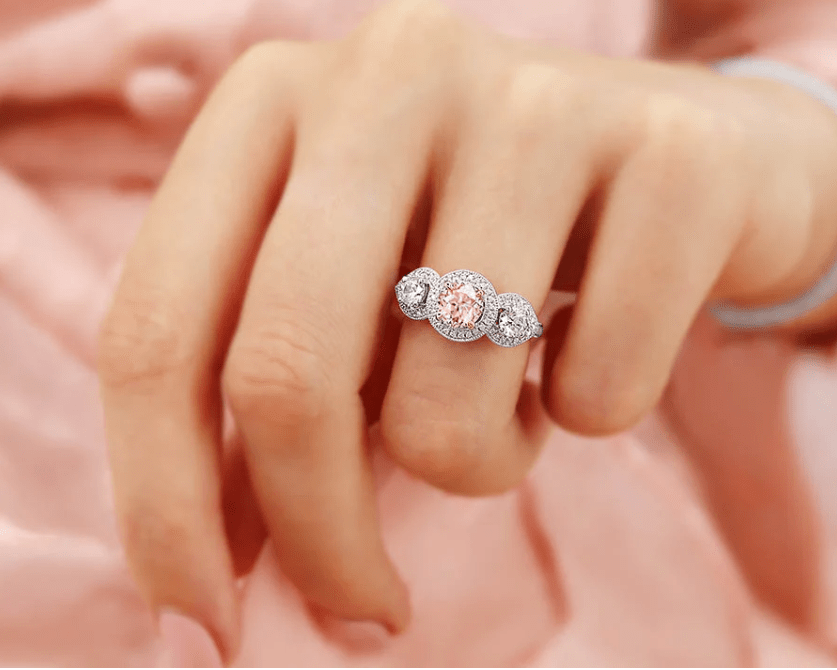
    British jewellers such as Lily Arkwright are leading this evolution, combining responsible sourcing with refined artistry. Their lab-grown fancy pink diamonds showcase the delicate hues and brilliance of natural stones, while aligning with the values of sustainability and transparency.

    As Forbes Innovation reported, “technology has democratised rarity — allowing emotion, not exclusivity, to define value.”

    For the modern British buyer, that combination of ethics and elegance has become the new standard of luxury.

    The Fashion Connection

    The rise of the pink diamond coincides with fashion’s renewed fascination with colour. From soft rose tailoring at Alexander McQueen to pale pink accessories at Burberry, the tone has become synonymous with effortless sophistication.

    As Vogue UK highlighted, “pink is the new neutral — quietly radiant and endlessly adaptable.”

    This aesthetic harmony has extended into fine jewellery, where pink diamonds now complement minimalist silhouettes and warm gold settings. The trend reflects a cultural appetite for subtle expression, where colour becomes an accent of identity rather than a statement of excess.

    Celebrities have further cemented this allure. From Blake Lively’s pink oval diamond engagement ring to Jennifer Lopez’s pink sparkler from Ben Affleck, the stone has become a byword for elegance infused with personality.

    The British Perspective

    In Britain, pink diamonds have found a particularly strong audience among buyers seeking individuality and artistry. The nation’s jewellery heritage, rooted in craftsmanship and storytelling, has made it the ideal setting for the pink diamond’s new chapter.

    As Financial Times Life & Arts wrote, “British fine jewellery thrives on quiet confidence — a kind of restraint that heightens beauty.” The pink diamond fits this philosophy perfectly.

    From bespoke engagement rings in Hatton Garden to sustainable creations from ethical jewellers across the UK, pink diamonds are redefining what it means to be feminine, luxurious and modern all at once.

    A Symbol for the Future

    Pink diamonds have always captivated the imagination, but their modern meaning runs deeper. They represent a world where beauty and purpose coexist, where strength can be expressed through softness.

    They are the gemstones of empathy, individuality and reflection — qualities that define both love and contemporary luxury.

    As BBC Culture reflected, “colour carries consciousness.” The pink diamond embodies a new kind of consciousness — one that values emotion over perfection, connection over convention.

    In 2026, to wear a pink diamond is to embrace a new vision of strength. It is not the loud, declarative power of the past, but something quieter and more profound.

    It is, quite simply, the power of grace.

  • The Rise of the Sapphire | How Blue Gemstones Define Britain’s Ethical Luxury Market in 2026

    Britain’s Blue Renaissance

    The British fine jewellery market is undergoing a transformation. In 2026, the gemstone commanding the spotlight is not the diamond, but the sapphire. The deep, rich blue that once symbolised monarchy and devotion has become the defining colour of contemporary British luxury.

    As Financial Times Life & Arts recently noted, “the modern gemstone economy is driven by meaning as much as material.” That observation captures why sapphires — stones steeped in symbolism, history and ethics — are once again the jewel of choice for designers and collectors alike.

    This is not simply a trend, but a cultural and economic shift. The sapphire embodies what today’s buyers seek: authenticity, craftsmanship and sustainability.

    From Monarchy to Market

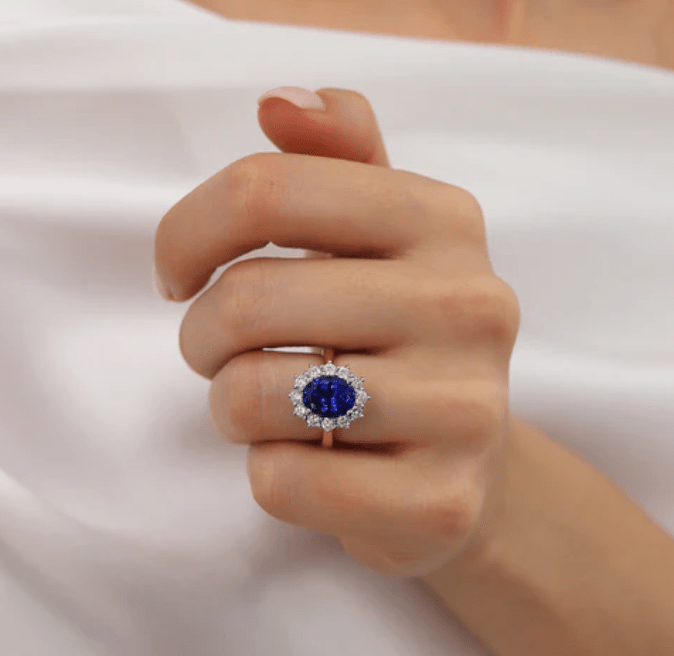
    The sapphire’s modern journey is inseparable from one of Britain’s most iconic love stories. Princess Diana’s 12-carat Ceylon sapphire engagement ring, encircled by diamonds, became a global symbol of grace and romance when it was unveiled in 1981.

    Chosen for its beauty rather than rarity, it broke royal convention and democratised aspiration. When Catherine, Princess of Wales, inherited and began wearing the ring in 2010, its legacy deepened further. The piece now represents not only lineage but continuity — a tangible bridge between generations.

    As BBC Culture wrote, “Diana’s sapphire ring became the most human of royal jewels, a connection between public affection and private emotion.”

    That emotional heritage continues to shape demand. According to The Guardian, sapphire engagement ring sales in the UK have risen steadily since 2020, driven by nostalgia and the renewed appetite for colour in fine jewellery.

    The Colour of Confidence

    Blue holds a unique place in psychology and culture. It is the colour of the sky, the sea and the infinite. It evokes stability, trust and reflection — qualities deeply valued in a fast-changing world.

    In BBC Lifestyle features on colour psychology, blue is repeatedly cited as the hue that “calms the mind and centres emotion.” This explains its resonance in the post-digital era, where consumers crave grounding experiences and authentic connections.

    Sapphires channel that energy beautifully. Their depth of tone feels timeless yet contemporary, familiar yet mysterious. The shift from diamond to sapphire in engagement rings is therefore not just aesthetic, but emotional. It reflects a cultural move toward self-assured, meaningful luxury.

    The Economics of Blue

    Behind the romance lies a robust market story. Sapphires are emerging as a strong investment category, fuelled by global demand for coloured gemstones. Bloomberg reported that the coloured gem market grew by nearly 20 percent over the past five years, with sapphires among the top performers due to their rarity, durability and symbolic appeal.

    This growth has been particularly strong in Britain, where craftsmanship and ethical sourcing underpin consumer trust. As buyers become more discerning, sapphires offer a compelling combination of beauty, longevity and story — the three pillars of emotional investment.

    According to Financial Times Life & Arts, the modern collector values “traceability and narrative over extravagance.” Sapphires, with their heritage and transparency, satisfy both demands.

    Lab-Grown Sapphires and the Rise of Ethical Luxury

    One of the most significant drivers of the sapphire revival is technology. The rise of lab-grown sapphires has made sustainable fine jewellery accessible to a wider audience without diminishing prestige.

    Created under controlled conditions that replicate the natural geological process, these stones are chemically and optically identical to mined sapphires. Their appeal lies not only in quality but in conscience.

    British jewellers such as Lily Arkwright are at the forefront of this transformation, combining precision science with artisanal design. Their lab-grown sapphire collections embody the new British luxury — thoughtful, ethical and technologically advanced.

    As Forbes Innovation reported, “the sustainable gemstone market has become a defining benchmark for modern prestige.”

    The sapphire’s traditional associations with truth and loyalty make it a natural symbol for this new value system. Its transparency is not just visual but ethical.

    Technology and Traceability

    The emergence of blockchain certification and digital provenance tools has revolutionised the gemstone trade. Buyers can now trace the history of a stone from creation to craftsmanship, reinforcing consumer confidence and accountability.

    This digital infrastructure, once limited to diamonds, is now being applied to coloured gemstones like sapphires. It provides both emotional reassurance and economic security — buyers know not just what they are purchasing, but where and how it was made.

    As Vogue Business explained, “traceability has become the new measure of authenticity.” The sapphire’s clarity, long a visual metaphor for truth, now extends to its entire supply chain.

    For the British jewellery industry, this alignment of ethics, emotion and technology positions it at the cutting edge of global luxury innovation.

    Quiet Luxury and the British Aesthetic

    In fashion and design, 2026 has been defined by the quiet luxury movement — an aesthetic that values subtle craftsmanship and quality over overt branding. Sapphires fit this philosophy perfectly.

    As Vogue UK observed, “blue gemstones reflect understated confidence.” Their tone is rich without being ostentatious, and their history lends sophistication without excess.

    British designers are using sapphires to create jewellery that speaks softly but resonates deeply. From minimalist pendants to reimagined vintage rings, the focus is on emotion and longevity rather than spectacle.

    This understated refinement mirrors broader cultural values — a preference for enduring beauty and conscious consumption over short-lived trends.

    The Craft Revival

    Britain’s jewellery industry is also experiencing a renaissance in artisanal craft. From Hatton Garden’s historic workshops to modern ethical studios in Manchester and Birmingham, there is a renewed emphasis on design integrity.

    Sapphires are central to this revival. Their hardness and optical depth allow for intricate cuts and innovative settings. Designers are experimenting with asymmetry, negative space and mixed metals to reframe the traditional gemstone for modern wearers.

    As The Guardian noted, “craftsmanship has become the quiet signature of true luxury.” The sapphire, with its centuries of symbolism and tactile presence, epitomises that artistry.

    The Future of the Blue Gem

    Looking ahead, sapphires are poised to define the next era of British fine jewellery. They embody the three forces shaping the industry: sustainability, sentiment and story.

    Technological innovation will continue to drive accessibility, while heritage craftsmanship preserves emotional resonance. This balance of progress and tradition ensures that sapphires will remain relevant for decades to come.

    As Financial Times Life & Arts summarised, “coloured gemstones represent the emotional intelligence of the new luxury economy.”

    In Britain, where heritage meets modern ethics, the sapphire stands as both artefact and innovation — a gemstone that connects the past to the future.

    Conclusion

    The rise of the sapphire marks a turning point for British luxury. It is no longer just a symbol of royalty, but of renewal — a bridge between emotion and economy, beauty and responsibility.

    From Princess Diana’s legendary ring to the sustainable creations of Lily Arkwright, sapphires continue to tell stories of love, strength and conscience.

    Their colour, calm yet commanding, reflects the values of the modern era: integrity, intention and depth.

    As Vogue Business concluded, “the future of luxury is transparent.” The sapphire, with its enduring brilliance and timeless truth, shines as that very future — clear, constant and infinitely blue.

  • The Psychology of Sparkle: Why Diamonds Still Symbolise Love in the Digital Age

    The Enduring Language of Light

    There is something deeply human about the way we are drawn to sparkle. Long before diamonds became icons of romance, humankind was captivated by things that caught the light: the shimmer of water, the gleam of stars, the quiet fire of polished stone. Light symbolises clarity and truth, and when it lives within a gemstone, it seems to speak to the same qualities we seek in love.

    As BBC Culture has noted, our fascination with brilliance is “as old as storytelling itself.” In the modern world of fast fashion and fleeting trends, this attraction to lasting light continues to define what we treasure. Diamonds, more than any other gem, capture that eternal glimmer — a reflection of how love feels when it is certain, enduring, and true.

    The Birth of a Modern Symbol

    The connection between diamonds and romance is not ancient by chance. It was shaped by both history and psychology. For centuries, rare gemstones were symbols of status and power. In the 15th century, Archduke Maximilian of Austria gave Mary of Burgundy a diamond engagement ring, and with that act, a cultural tradition was born.

    By the early twentieth century, the diamond had transcended aristocracy and become a symbol of devotion across the world. Campaigns and cinema helped cement its place in our collective imagination. As Vogue UK has written, the diamond engagement ring became “the intersection of glamour, romance and permanence.”

    Yet the allure of diamonds goes deeper than marketing. Psychologists describe it as a powerful form of emotional symbolism. The enduring sparkle mirrors the feeling of long-term commitment, while its strength — the hardest natural material on Earth — has come to represent resilience and unbreakable love.

    Why Sparkle Speaks to the Human Mind

    Scientists have long studied why humans are attracted to sparkling objects. Theories range from evolutionary biology to emotional conditioning. Researchers at the University of Antwerp found that people instinctively associate brightness with purity and desirability. Others suggest our brains are drawn to shine because it resembles the glint of water — essential to survival in our evolutionary past.

    Whatever the reason, sparkle evokes emotion. The play of light catches attention, stimulates pleasure centres in the brain, and creates a sense of awe. As Psychology Today has explored, beauty can trigger genuine physiological responses, increasing dopamine levels and reinforcing feelings of joy and affection.

    When these sensations are linked with moments of intimacy, such as proposals or anniversaries, they become emotionally encoded. The diamond’s sparkle literally becomes part of the memory of love.

    The Emotional Economy of Diamonds

    In a world increasingly shaped by technology, digital screens, and disposable culture, diamonds offer something rare — a tangible connection to emotion. They are not simply luxury goods but emotional investments.

    As The Guardian Lifestyle observed, the modern luxury consumer seeks meaning, not just materialism. A diamond endures, both physically and sentimentally. It is a reminder that love can exist beyond the instant, a symbol of patience and permanence in a culture of speed.

    This is why even as younger generations embrace minimalism and sustainability, they continue to choose diamonds. The desire for authenticity has simply changed the way they define value.

    Ethical Beauty and the New Generation of Love

    Today’s couples are rewriting the rules of romance. For many, sustainability is part of the love story itself. Lab-grown diamonds have made this possible, combining ethics and elegance in perfect harmony.

    Unlike mined diamonds, lab-grown gems are created in controlled environments using advanced technology that replicates the natural formation process. They are identical in composition and appearance but have a smaller environmental footprint and transparent sourcing.

    British jewellers such as Lily Arkwright have become pioneers in this field, offering exquisite lab-grown diamonds that embody both beauty and conscience. Each piece represents modern romance: personal, sustainable and thoughtful.

    As Forbes explained, the rise of ethical jewellery reflects “a shift from possession to purpose.” The sparkle is no longer just about luxury; it is about legacy.

    The Cultural Resonance of Diamonds

    Beyond psychology and science, diamonds have a social language all their own. They appear in art, music and literature as emblems of aspiration, fidelity and light. From Marilyn Monroe’s famous ode in Gentlemen Prefer Blondes to the elegance of Elizabeth Taylor’s jewellery collection, diamonds have consistently represented both independence and emotion.

    Yet their symbolism is evolving. Where they once symbolised possession, they now represent partnership. The act of giving a diamond is no longer about ownership but about shared intention. As Vogue UK recently wrote, “the modern diamond is a dialogue, not a declaration.”

    In Britain, this evolution mirrors the cultural shift towards equality in relationships. Rings are chosen together, designs are personalised, and sustainability often carries as much importance as carat weight.

    The Digital Age of Romance

    It might seem paradoxical that in an era defined by virtual connection, physical symbols of love have only grown more meaningful. Yet psychologists argue that this is precisely why.

    In a world where affection can be expressed with an emoji or an Instagram post, tangible tokens like jewellery reclaim intimacy. A diamond ring cannot be swiped away. It has weight, warmth and a history that transcends pixels.

    As BBC Lifestyle reflected, physical gifts endure because they ground emotion in reality. They become heirlooms, reminders of stories told and promises made.

    This is why, even in the digital age, the diamond continues to outshine every trend. It is not merely an adornment but a testament to connection — the original wearable expression of love.

    The Sparkle Within

    To understand the psychology of sparkle is to understand something profound about human nature. We are drawn to light because it reflects the best of us: our desire for clarity, connection and endurance. A diamond is a physical manifestation of those emotions, a small, brilliant truth we can hold in our hands.

    In 2026, as sustainability, technology and emotion intertwine, the diamond remains the perfect symbol of modern love. Its brilliance reminds us that beauty can coexist with ethics, and that permanence can still exist in a world of impermanence.

    As Vogue UK beautifully summarised, “to wear a diamond is to carry light, love and legacy all at once.”

    And that, perhaps, is why its sparkle will never fade.

  • The Emerald Effect | How Green Gemstones Define Sustainable Luxury in 2026

    A Market Turning Green

    The colour green has always carried meaning — renewal, prosperity and calm. Yet in 2026, it has taken on new economic and cultural weight. The growing popularity of emeralds and green gemstones reflects a transformation in the way consumers think about luxury.

    As Financial Times Life & Arts observed, “green has become both a hue and a headline.” It represents sustainability and investment, beauty and responsibility, ethics and emotion.

    Across the jewellery industry, from London’s Hatton Garden to high-end designers in Paris and Milan, the emerald has emerged as a statement of contemporary values. Its rise mirrors a larger shift towards transparency and traceability — qualities now as prized as carats and clarity.

    Colour as Economic Barometer

    In fashion and design, colour trends often reveal more about society than style alone. After a decade of uncertainty, economic recovery and environmental awareness have redefined what luxury means. The return of green in 2026 is no coincidence.

    According to Vogue Business, colour forecasting is increasingly data-driven, combining psychology, social trends and consumer sentiment. Green consistently scores highly because it conveys balance and optimism, two qualities consumers actively seek during periods of change.

    Jewellery, as one of the most enduring forms of investment, naturally reflects these emotional priorities. Buyers are turning towards pieces that feel restorative, meaningful and future-facing — qualities embodied by emeralds and other green gemstones.

    The Emerald’s Enduring Allure

    The emerald’s appeal is complex. Unlike the flawless perfection of a diamond, an emerald’s inclusions — often referred to as its jardin or “garden” — are part of its identity. They are the fingerprints of geological history, creating a natural pattern that makes each stone unique.

    As The Guardian wrote, “imperfection has become a mark of authenticity.” The modern luxury buyer values individuality over uniformity, and the emerald delivers exactly that.

    Its deep, velvety tone evokes both nature and nobility. For centuries, emeralds were associated with royalty and rebirth, worn by figures from Cleopatra to Elizabeth Taylor. Today, they appeal to a generation that seeks meaning rather than material excess.

    In engagement rings and statement jewellery alike, emeralds embody emotional integrity. They suggest growth, loyalty and renewal — qualities perfectly aligned with the mood of the time.

    The Science of Green

    From a design perspective, green gemstones offer something no other colour can achieve: versatility. Their tone complements both warm and cool metals, from yellow gold to platinum, and their intensity allows them to stand out without overpowering.

    Colour psychology helps explain their appeal. As BBC Culture explained, green sits at the midpoint of the colour spectrum, representing equilibrium. It is associated with calmness and emotional restoration — an antidote to the sensory overload of digital life.

    In this way, the emerald is more than decoration. It is a subtle reflection of the collective psyche. In a period where clarity and stability are prized, its symbolism feels profoundly relevant.

    Sustainability and the Rise of Ethical Stones

    No discussion of modern jewellery can ignore sustainability. The 2020s have seen seismic shifts in how materials are sourced, crafted and marketed. Transparency has become a baseline expectation rather than a luxury feature.

    Lab-grown emeralds and green sapphires have become central to this evolution. Created through innovative scientific processes that replicate the natural formation of gemstones, they offer the same brilliance and beauty as mined stones with none of the ethical complications.

    British jewellers such as Lily Arkwright have become synonymous with this new wave of conscious craftsmanship. Their collections combine advanced technology with refined design, proving that modern elegance can coexist with environmental responsibility.

    As Forbes Innovation reported, “sustainability has moved from niche to necessity.” In the fine jewellery market, this has transformed both consumer expectation and brand identity. The emerald’s association with nature and renewal has made it a natural ambassador for this change.

    Green as Cultural Symbol

    Beyond aesthetics, green’s resurgence speaks to a wider cultural narrative. In art, literature and film, green often represents growth, hope and transformation. In 2026, it has come to symbolise the collective yearning for balance — both environmental and emotional.

    As BBC Lifestyle reflected, the popularity of green across design disciplines reflects “a global desire for harmony after years of disruption.”

    In the jewellery world, this manifests in the growing preference for stones that tell a story. Consumers want pieces with provenance and purpose, and the emerald — whether mined or lab-grown — provides exactly that. Its natural imperfections serve as metaphors for resilience, while its colour connects wearers to the natural world.

    A British Perspective

    Britain’s jewellery industry, long admired for its craftsmanship, has embraced the green revolution with distinctive flair. London’s independent ateliers and ethical jewellers have positioned emeralds at the heart of a new era of sustainable design.

    From traditional artisans in Hatton Garden to modern studios in Manchester, British designers are uniting classic techniques with scientific innovation. As Financial Times Life & Arts observed, “the future of luxury is local, traceable and emotionally intelligent.”

    This emphasis on provenance and personality gives British fine jewellery an edge in a global market that increasingly prizes authenticity over ostentation. The emerald, with its blend of historical gravitas and contemporary appeal, fits this identity perfectly.

    The Economics of Green

    There is also a pragmatic dimension to green’s rise. As the price of natural diamonds stabilises and consumer preferences diversify, coloured gemstones have gained both emotional and financial value.

    According to Bloomberg, demand for coloured gemstones has grown steadily across Europe and Asia, particularly among younger buyers. Emeralds are leading that surge, thanks to their recognisable colour, strong historical associations and increasing visibility in both bridal and fashion jewellery.

    In Britain, sales of emerald engagement rings have risen year on year, supported by ethical supply chains and digital marketing that highlights each stone’s individuality. This shift reflects the broader transformation of the luxury sector — from product-driven to purpose-driven.

    Green on the Catwalk and Beyond

    The jewellery industry often mirrors fashion, and 2026’s catwalks have confirmed green’s dominance. Designers from Gucci to Boucheron have showcased emeralds alongside sustainable fabrics and natural tones, creating a unified aesthetic of responsible glamour.

    As Vogue UK remarked, “the emerald has become the gemstone of the climate-conscious age.” Its presence on the red carpet — worn by stars who champion environmental causes — has helped transform it from a traditional luxury to a symbol of progressive taste.

    This convergence of fashion, ethics and culture ensures that green gemstones will continue to shape design narratives well beyond the current season.

    The Future of Emerald Luxury

    The emerald’s resurgence offers insight into where the fine jewellery market is heading. It reveals a consumer base that wants transparency, craftsmanship and emotional substance. It also highlights how the boundaries between art, science and ethics are dissolving in modern luxury.

    As technology continues to improve, lab-grown emeralds will become indistinguishable from their mined counterparts, challenging the old hierarchy of “natural equals superior.” Meanwhile, advances in traceability, such as blockchain certification, will give buyers unprecedented confidence in the origins of their gemstones.

    For brands like Lily Arkwright, this convergence of innovation and integrity positions them at the forefront of the British fine jewellery movement. Their approach exemplifies the future of luxury — transparent, sustainable and deeply personal.

    Conclusion

    The emerald effect is about more than colour. It represents a shift in how we define value, beauty and meaning. Green gemstones have become the visual language of a generation that seeks connection — to craft, to conscience and to the planet.

    In 2026, the most desirable luxury is not ostentatious but thoughtful. The emerald’s rich, enduring tone captures that balance perfectly. It is the gemstone of renewal and resilience, a reminder that beauty can still carry purpose.

    As Vogue Business summarised, “green is not just a trend — it is the future of fine jewellery.”

    And in that future, the emerald’s light will continue to shine, steady and sure, reflecting both the world we live in and the world we hope to create.

  • The Art and Science of Chatham Gemstones: How Innovation Is Transforming Engagement Rings in the UK

    The Art and Science of Chatham Gemstones: How Innovation Is Transforming Engagement Rings in the UK

    There is a quiet revolution happening in the world of fine jewellery. Across Britain, couples are embracing a new kind of brilliance — one born not in the earth’s depths but in the laboratory. At the heart of this transformation are Chatham gemstones: lab-grown creations that combine scientific precision with timeless beauty.

    From emeralds to sapphires, rubies to spinels, Chatham’s gems are redefining what it means to own something precious. And leading their rise in the United Kingdom is Lily Arkwright — a British jeweller renowned for ethical craftsmanship and exceptional design.

    As Vogue UK recently observed, “modern luxury now lives at the intersection of innovation and integrity.” Nowhere is that more evident than in the new generation of lab-grown engagement rings taking the UK by storm.

    From Chemistry to Craftsmanship

    Chatham’s story began in the 1930s, when chemist Carroll Chatham successfully recreated emerald crystals in his laboratory. It was a scientific breakthrough that would forever change the jewellery industry. Today, nearly a century later, Chatham remains the world leader in lab-grown coloured gemstones.

    Each stone is grown using sophisticated hydrothermal or flux methods that simulate the natural conditions deep within the earth’s crust. Over several months, minerals crystallise under intense heat and pressure to produce gemstones that are chemically and optically identical to their mined counterparts.

    As BBC Science & Environment explains, advances in gem synthesis are part of a global trend towards technological sustainability — proving that human ingenuity can replicate nature’s brilliance while preserving its resources.

    The Fusion of Science and Sentiment

    While the science behind Chatham gemstones is extraordinary, their emotional resonance is just as powerful. Engagement rings have always been symbols of love and permanence. What Chatham offers is an opportunity to connect those emotions to purpose and progress.

    Couples choosing lab-grown engagement rings are not compromising on beauty; they are redefining it. The Guardian Lifestyle notes that younger British buyers “view sustainability as a form of sincerity.” A Chatham gemstone reflects that sincerity — love expressed not through extravagance, but through responsibility.

    Each Chatham engagement ring from Lily Arkwright is crafted to order, designed in the UK and made using recycled gold or platinum. This blend of artistry and ethics appeals to couples who want their jewellery to tell a story of both passion and principle.

    Emeralds: Growth, Renewal and Romance

    Chatham’s emeralds remain one of the brand’s crowning achievements. Their rich green tones are created through hydrothermal growth, yielding stones with clarity and colour often surpassing those found in mines.

    According to Vogue UK, emerald engagement rings are making a comeback, symbolising growth and new beginnings. At Lily Arkwright, Chatham emeralds are available in elegant solitaire designs and vintage-inspired settings that highlight their luminous depth.

    For couples who value romance rooted in renewal, these emeralds capture the spirit of lasting love — ethically and beautifully.

    Rubies: The Science of Passion

    Rubies are the heartbeat of coloured jewellery. Chatham’s lab-grown rubies replicate the intense “pigeon’s blood” red that gemologists prize, formed through a precise balance of heat, chemistry and time.

    As Harper’s Bazaar UK explains, ruby engagement rings are surging in popularity because of their warmth and symbolic power. They embody passion, courage and eternal devotion.

    Lily Arkwright’s Chatham ruby rings combine the emotional intensity of this gemstone with ethical craftsmanship, offering designs that are as meaningful as they are mesmerising.

    Sapphires: Wisdom, Loyalty and Modern Majesty

    Sapphires have long adorned royal engagement rings, from Princess Diana to the Duchess of Cambridge. Chatham’s lab-grown sapphires bring this heritage into the present, offering a dazzling array of blues, pinks and yellows grown with meticulous precision.

    BBC Culture describes sapphires as “the jewels of commitment,” linking their durability to lasting love. Chatham’s sapphires capture that same majesty without the environmental cost.

    At Lily Arkwright, these stones are transformed into timeless engagement rings that balance tradition with innovation.

    Beyond Tradition: Alexandrite, Spinel and the Rise of Bespoke

    Chatham’s collection goes beyond the familiar. Their alexandrites shift from green to red under different light, symbolising the adaptability of modern relationships. Spinels, meanwhile, are prized for their brilliance and rarity.

    Country Living UK recently featured the rise of bespoke engagement rings in Britain, where couples work directly with jewellers to co-create pieces that reflect their individual stories. Lily Arkwright’s bespoke service allows clients to select their preferred Chatham gemstone, cut, and setting, resulting in rings that are truly one of a kind.

    The Ethical Edge

    The environmental and social advantages of lab-grown gemstones cannot be overstated. Traditional gemstone mining is often linked to deforestation, soil erosion and poor working conditions. Lab-grown production eliminates these harms, replacing them with controlled, transparent processes.

    The Guardian Environment reported that lab-grown gems produce up to 95% fewer carbon emissions than mined stones. This makes Chatham’s creations not only beautiful but also responsible choices for couples looking to align love with ethics.

    Lily Arkwright has built its reputation on this same principle, offering jewellery that shines with conscience as well as clarity.

    The Modern Engagement Ring

    The new engagement ring is as much a statement of values as of affection. Couples in Britain are increasingly rejecting excess in favour of significance, choosing rings that symbolise love, responsibility and shared vision.

    As Vogue Business noted, “meaning is the new metric of luxury.” Chatham’s gemstones, with their fusion of artistry and ethics, embody that perfectly.

    At Lily Arkwright, every Chatham gemstone ring comes with certification, a lifetime warranty and the reassurance of sustainable craftsmanship.

    Conclusion

    Science and sentiment have never worked together so beautifully. Chatham’s lab-grown gemstones prove that innovation can enhance rather than replace romance. Each emerald, ruby, sapphire and spinel tells a story of love that looks forward — ethical, modern and radiant with purpose.

    Through Lily Arkwright, British couples can choose engagement rings that shine not only with brilliance, but with integrity.

    As BBC Culture so eloquently stated, “the future of luxury is not about what you own, but what you stand for.”

    For the modern couple, that future begins with a ring — and perhaps, with a Chatham gemstone.

  • The Emotional Value of Jewellery: Why Sentiment Is Outshining Carats

    There was a time when the brilliance of a diamond alone told the story. Its size measured success, its carats symbolised devotion, its price whispered prestige. But in 2026 Britain, the narrative has changed. Jewellery has become personal again. Its power no longer lies in perfection, but in memory, connection and emotion.

    Across the country, jewellers are hearing the same request repeated by couples, collectors and first-time buyers alike: “I want something that means something.” As BBC Culture recently reflected, modern luxury is less about extravagance and more about empathy. Jewellery, once a display of wealth, has become a vessel of story.

    The Psychology of Preciousness

    Psychologists at Psychology Today explain that people form emotional attachments to objects that represent stability and love. Jewellery sits at the heart of this attachment because it is intimate, symbolic and worn close to the body.

    Each piece serves as a tangible bridge between people and memories. A ring that once belonged to a parent, a pendant gifted at graduation, a bracelet chosen together at the start of a relationship — all hold emotional continuity that outlasts trends or price tags.

    Dr Sasha Roseneil, a cultural sociologist interviewed by The Guardian Lifestyle, described this phenomenon beautifully: “To wear something that once belonged to someone you love is to feel their presence in the quietest moments.”

    It is this sense of presence, not possession, that defines the true value of modern jewellery.

    The Story Inside the Stone

    In workshops across the United Kingdom, from Hatton Garden to Edinburgh’s Grassmarket, jewellers are rediscovering storytelling as a craft. Customers arrive with heirlooms in hand, asking not for replacements but for reimaginings. A grandmother’s diamond is re-set into a minimalist band, an old brooch becomes a pendant, and a family signet ring finds new life in recycled gold.

    Designers featured in Vogue UK call this “emotional design.” Every mark and imperfection tells a story of continuity. Country Living UK observed that “beauty is no longer defined by flawlessness, but by familiarity.”

    This approach reflects a national desire to preserve and adapt rather than discard. In a culture newly focused on sustainability, the most precious pieces are often the ones already owned.

    Sentiment Over Status

    British buying habits confirm this shift. According to market data from the UK Jewellery Council, sales of personalised and bespoke pieces rose by more than thirty per cent in 2025. At the same time, demand for large, high-value diamonds fell. The message is clear: people want meaning, not magnitude.

    Vogue Business describes this as “the emotionalisation of luxury.” The jewellery market, once defined by competition, is now driven by connection.

    As BBC Culture reported, sentimental minimalism — the trend of owning fewer, more meaningful possessions — has become the defining aesthetic of the decade. Rings engraved with initials, pendants representing personal milestones and recycled-gold bangles have replaced extravagant diamonds as the ultimate symbols of love.

    Sustainability and the Ethics of Emotion

    Emotion and ethics have become intertwined. Modern buyers want the pieces they love to align with the values they live by. The rise of lab-grown diamonds, Fairtrade gold and recycled materials has made it possible to express affection without environmental compromise.

    As The Guardian Environment noted, conscious jewellery is “where craftsmanship and conscience meet.” This sentiment resonates across generations, from eco-minded millennials to couples choosing rings together for their shared future.

    Brands featured in Harper’s Bazaar UK are promoting transparency, offering customers insight into every stage of creation. Knowing who mined, polished or crafted a piece deepens its meaning far beyond its price.

    In this new era, a ring is no longer just a symbol of romance but also of responsibility.

    The Expanding Language of Love

    Jewellery is no longer reserved for traditional milestones. It now celebrates friendship, personal growth and self-affirmation. A gold pendant may mark a career achievement, while a recycled-silver bracelet might represent recovery or renewal.

    The Guardian Lifestyle observed that this broadening of emotional purpose reflects a society that values connection in all its forms. The act of giving jewellery has become an inclusive expression of care — one that transcends age, gender and occasion.

    Even self-gifting has entered the conversation. As Vogue UK noted, “to buy a piece for oneself is no longer indulgence but acknowledgement.” People are learning to honour their own stories, and jewellery has become a quiet way to do so.

    Jewellery as Heirloom and Anchor

    In a world of digital impermanence, physical objects have taken on renewed emotional power. The weight of a ring or the texture of a pendant offers a sensory reminder of what is real.

    Writers at BBC Culture call jewellery “the tactile memory.” It can ground a person during change, serving as both ornament and anchor. This may explain why, even during economic uncertainty, sales of meaningful pieces remain strong.

    A simple band of recycled platinum may hold an entire love story, while a pendant engraved with initials becomes a portable archive of affection. These objects prove that sentiment is not fragile; it endures through design.

    The Future of Feeling

    Industry analysts predict that by 2027, emotional storytelling will dominate the fine jewellery market. The focus on sustainability, craftsmanship and narrative will continue to influence both luxury houses and independent artisans.

    As The Guardian Lifestyle put it, “we are no longer buying jewels to impress, but to remember.” This evolution represents more than a trend — it reflects a cultural shift towards emotional intelligence and authenticity in British life.

    In the words of Harper’s Bazaar UK, “the modern heirloom is not defined by age, but by attachment.”

    Conclusion

    The emotional value of jewellery cannot be measured by carats, certificates or clarity. Its true brilliance lies in its ability to carry human feeling.

    Whether a ring inherited from family, a pendant crafted with purpose, or a sustainably sourced creation designed to last, each piece tells a story that outshines its sparkle.

    In 2026 Britain, jewellery has returned to what it always was: a language of love, memory and meaning. As BBC Culture so perfectly summarised, “the most precious jewels are not the ones that glitter, but the ones that make us feel.”

  • Men’s Engagement Rings: The New British Tradition of Shared Commitment

    Love stories are changing — and so are the rings that tell them. In 2026 Britain, more men are wearing engagement rings than ever before, transforming a centuries-old ritual into a reflection of equality, individuality and style.

    Across workshops in London’s Hatton Garden, Glasgow’s Merchant City and Birmingham’s Jewellery Quarter, jewellers are reporting record commissions for men’s rings. The designs range from minimalist platinum bands to diamond-set signets and recycled-gold creations. As The Guardian Lifestyle observed earlier this year, “the symbols of romance are evolving with the society that wears them.”

    From Tradition to Transformation

    For most of modern history, engagement rings belonged to one side of the proposal. Yet, as relationships have become more egalitarian, the jewellery has followed suit. Couples increasingly see the ring not as a token given by one, but as a promise shared by both.

    In interviews with BBC News, jewellers note that dual-ring proposals — where both partners exchange bands — have nearly doubled since 2020. The practice first gained visibility through same-sex couples but now extends far beyond. It is, at heart, a story of partnership replacing possession.

    Fashion editors at GQ UK describe this shift as “the quiet revolution in men’s style — jewellery worn not for show, but for sentiment.” The result is an aesthetic that fuses confidence with subtlety, tradition with modern identity.

    The Look of 2026: Design, Detail and Meaning

    The modern British man’s engagement ring blends restraint with craftsmanship. Platinum remains the metal of choice for its endurance and cool hue, while recycled gold, brushed titanium and even lab-grown diamond inlays have entered the conversation.

    Designers featured in Vogue UK predict that textural finishes and mixed metals will dominate 2026 collections. Some rings borrow from the heritage of the signet — smooth, substantial, engraved with initials or coordinates — while others incorporate subtle gemstone detailing.

    London-based artisans report growing demand for personal symbolism: fingerprints etched inside bands, secret inscriptions or tiny stones representing shared anniversaries. As Vogue UK put it, “the new luxury lies in intimacy, not opulence.”

    Equality in Every Carat

    Equality sits at the centre of this transformation. The exchange of rings, once asymmetrical, now mirrors modern relationships built on balance. Engagement, in its truest sense, becomes a conversation — a shared design process rather than a surprise purchase.

    Data cited by The Telegraph Lifestyle suggests that 60 per cent of British couples now shop for rings together. This collaboration extends from budgeting to material choice, reinforcing transparency and respect.

    Sociologists interviewed by BBC Culture describe this as “the democratisation of romance” — where emotional labour and symbolic gestures are no longer gendered. The men’s engagement ring, therefore, is not a novelty but a natural expression of equality.

    Sustainable Choices for a Conscious Generation

    Behind the shift in style lies a profound shift in values. Sustainability now guides many engagement-ring purchases, particularly among under-35s. Men, often newer entrants to the jewellery market, are proving decisive consumers: environmentally aware, ethically motivated and keen on traceable sourcing.

    Workshops across Britain are embracing these priorities. Many use Fairtrade gold, recycled platinum and lab-grown diamonds — innovations praised by The Guardian Environment as central to “the rise of conscious luxury.”

    Design houses such as Lily Arkwright, known for lab-grown stones and transparent production, represent a new kind of British jeweller: blending craftsmanship with climate responsibility. Even packaging has evolved — recycled paper boxes, reusable ring cases, and carbon-neutral delivery are becoming industry norms.

    As Country Living UK highlighted, “the sustainable ring is the modern heirloom — it shines without cost to the earth.”

    Celebrity Influence and Cultural Visibility

    Public figures have played a part in normalising men’s engagement rings. When singer Ed Sheeran wore his own ring in 2018, tabloids called it unconventional. In 2026, it barely warrants a headline.

    Actors, athletes and musicians — from Michael Bublé to British diver Tom Daley — have all been photographed wearing bespoke bands. Their visibility reinforces that jewellery can be both masculine and meaningful.

    Editorials in GQ UK and Harper’s Bazaar UK note that this celebrity adoption has filtered into high-street confidence. Men who once hesitated now feel licensed to express sentiment through design. The cultural stigma has quietly vanished, replaced by admiration for craftsmanship and emotional honesty.

    Craftsmanship and the British Heritage Revival

    The revival of men’s engagement rings coincides with renewed appreciation for British craftsmanship. Independent goldsmiths from Cornwall to the Scottish Borders are blending time-honoured techniques with modern ethics.

    Workshops in Birmingham’s Jewellery Quarter, many family-run for generations, report surging bespoke commissions. Their combination of hand-forged precision and sustainable sourcing has made them unlikely front-runners in the ethical-luxury market.

    As The Guardian Business observed, “heritage craft has found its future in sustainability.” This renaissance reflects a growing desire among British buyers for authenticity — objects made to last, not merely to impress.

    Emotion Over Etiquette

    Beyond aesthetics and ethics lies something simpler: emotion. Psychologists quoted by The Telegraph Relationships column explain that when both partners wear engagement rings, the symbolism deepens — “a visible parity that strengthens the sense of shared journey.”

    That shared journey is often marked quietly. Some couples exchange rings in private; others stage dual proposals. Either way, the gesture reflects the cultural truth of modern Britain: love has become more personal, less prescribed.

    As BBC Culture phrased it, “the rituals of affection are no longer bound by gender, but by intention.” The engagement ring has become not a contract, but a conversation.

    The Economics of Meaning

    The market numbers tell part of the story. Analysts for the UK Jewellery Council predict men’s engagement rings could represent 10–12 per cent of the sector by 2027, with strongest growth in the bespoke and ethical categories.

    Yet beyond economics lies meaning. In a world of mass production, the individually commissioned ring — chosen by and for the wearer — represents authenticity. That authenticity carries emotional and environmental value in equal measure.

    As Vogue Business recently summarised, “modern consumers measure worth not in carats, but in conscience.”

    Conclusion

    The rise of men’s engagement rings in Britain is not a passing trend but the maturation of an idea: that love, like luxury, should belong to everyone. From recycled-metal bands to diamond-tipped signets, these rings encapsulate the values shaping 2026 Britain — equality, sustainability and quiet confidence.

    They are proof that masculinity can be tender, craftsmanship can be ethical, and tradition can evolve gracefully. As The Guardian Lifestyle concluded, “the ring no longer belongs to one half of the story — it belongs to the story itself.”

    In a culture that celebrates authenticity over expectation, men’s engagement rings have become not just accessories, but affirmations — of partnership, of progress, and of love that truly wears well.

  • Sustainability Aftercare: How to Maintain, Repair and Recycle Engagement Rings in a Sustainable Way

    Sustainability Aftercare: How to Maintain, Repair and Recycle Engagement Rings in a Sustainable Way

    Across Britain’s jewellery industry, sustainability has evolved from marketing language into genuine craft philosophy. The rise of lab-grown diamonds, recycled metals and ethical sourcing has transformed how engagement rings are made, but a quieter revolution is now taking place in how they are kept. After the proposal, the next question becomes: how do we ensure this ring — a symbol of love and longevity — remains as responsible as the ideals it represents?

    The answer lies in aftercare sustainability. Once the realm of jewellers and collectors, the concept is becoming part of everyday conversation among buyers who want to align emotional value with environmental awareness. As BBC News Business has reported, British consumers increasingly judge luxury by durability rather than novelty. In this context, an engagement ring’s long-term condition is not merely aesthetic — it is ethical.

    For couples just beginning their search, our guide on how to choose an ethical engagement ring in 2026 explores what to look for when balancing sustainability with style.

    The Environmental Value of Longevity

    Mining for gold and diamonds remains one of the world’s most resource-intensive industries, and even responsibly sourced materials carry an environmental cost. Extending a piece’s life through maintenance or redesign is, therefore, one of the simplest yet most powerful sustainability acts an owner can take.

    The Guardian Environment highlights that increasing the average lifespan of luxury goods can reduce total emissions by up to a quarter. Unlike fast fashion, jewellery’s inherent durability means that its environmental impact decreases dramatically the longer it is worn and preserved. The principle is elegantly straightforward: a ring kept in circulation displaces the need for a new one.

    This approach resonates strongly within Britain’s growing culture of conscious consumption, where sentiment and responsibility now sit comfortably side by side. It also connects naturally with our feature on lab-grown diamonds and sustainable British jewellery, which explores how innovation and longevity intersect.

    Repair and Restoration: Craft Meets Conservation

    Repairing fine jewellery has never been solely about aesthetics. It is also a form of environmental conservation — one that preserves existing resources and supports artisanal trades. In London’s Hatton Garden, Birmingham’s Jewellery Quarter and workshops across Scotland and Wales, independent jewellers are modernising age-old methods to align with environmental standards.

    The Goldsmiths’ Company, one of Britain’s oldest craft guilds, actively promotes restoration as a pillar of sustainable practice. Many of its members now use recycled metal for re-sizing or claw replacement and favour electric soldering over gas-powered torches to cut carbon emissions.

    Brands such as Lily Arkwright have integrated repair and maintenance into their business model. Specialising in lab-grown diamond rings, the company offers lifelong aftercare and cleaning services designed to preserve both the stone’s brilliance and the environmental integrity of the product.

    To see how couples are embracing these ideas in practice, our feature on quiet proposing and shared ring design explores how collaboration and conscious choice are redefining British romance.

    Recycling and Re-imagining

    When a ring’s aesthetic no longer suits its owner, recycling offers a meaningful alternative to replacement. Gold, platinum and other metals can be refined without degradation, and diamonds or gemstones can be removed and reset. The result is a new piece that retains its history while reflecting a contemporary sensibility.

    According to Forbes, recycling existing materials can cut environmental impact by up to 80 per cent compared with sourcing new ones. British jewellers are increasingly adopting this circular model, with trade-in schemes and redesign services allowing clients to refresh heirlooms rather than abandon them.

    For inspiration, see our article on the modern heirloom movement, which explores how craftsmanship and conscience are combining to create timeless pieces.

    A Broader Cultural Movement

    Sustainable aftercare reflects more than good housekeeping; it captures a wider cultural mood in Britain. From vintage clothing to refurbished interiors, the emphasis on longevity and reuse is reshaping what luxury means. BBC News Culture describes this as the rise of “considered consumption” — a collective desire to invest in fewer, better things that carry personal and environmental resonance.

    In this landscape, jewellery stands as a powerful metaphor. It combines permanence with expression, making it the perfect object through which to explore ideas of responsibility and renewal. Repairing or recycling a ring is, in many ways, a microcosm of the broader sustainability conversation: respect what exists, improve it carefully, and pass it on.

    Conclusion

    The care we give our jewellery mirrors the care we extend to the planet. To maintain, repair and recycle an engagement ring is to recognise that beauty and responsibility can coexist — that luxury can be as ethical as it is enduring.

    Whether by cleaning gently at home, commissioning a repair from a certified craftsperson or re-imagining a treasured heirloom, each action preserves not only the ring’s lustre but the values it represents. As Vogue UK concludes, “the most meaningful sparkle is one that has been kept, not replaced.”

    In Britain’s new era of sustainable luxury, aftercare is no longer an afterthought; it is the quiet continuation of love itself — a daily practice of respect for both craft and planet.

  • The Rise of Quiet Proposing: How British Couples Are Choosing Engagement Rings Together

    There is a quiet shift taking place in the way Britain falls in love. For decades, proposals have been moments of surprise — grand gestures performed under candlelight or in front of cameras, one partner down on one knee, a ring hidden until the final reveal. But the modern generation is rewriting that narrative.

    In 2026, love is no longer a spectacle; it’s a shared story. Across the UK, couples are embracing the idea of quiet proposing — the act of designing or choosing engagement rings together. It’s an intimate, collaborative approach that values equality, honesty and sustainability over secrecy and showmanship.

    As Vogue UK recently noted, “the most romantic proposals are no longer loud or elaborate — they’re personal, grounded and deeply intentional.” Quiet proposing is not about removing the magic of the moment. It’s about rediscovering it, together.

    From Grand Gestures to Genuine Connection

    Proposals have always held cultural weight — from the diamond campaigns of the 1940s that defined the modern ring, to the viral engagement videos of the past decade. Yet as The Guardian Lifestyle observed, “a growing number of couples are rejecting formulaic romance in favour of authenticity.”

    Quiet proposing reflects a new understanding of love: one built on transparency and partnership rather than tradition. For many, the old model — where one partner made a secret purchase and the other hoped to love it — feels outdated in an era that celebrates equality.

    It’s no longer about one person doing the choosing and the other simply saying yes. Instead, couples are planning the engagement as a shared experience, ensuring the ring, the timing, and the meaning align perfectly with who they are together.

    As BBC News Lifestyle reported, many millennials and Gen Z couples see joint decision-making as “a natural extension of emotional compatibility.”

    The Heart of the Quiet Proposal

    At its essence, quiet proposing is a reflection of modern values. It is rooted in the desire to make conscious choices — not just about love, but about the way love is represented.

    The idea is simple: rather than one partner secretly selecting a ring, both come together to design it. Some even choose to forgo a formal proposal altogether, opting instead for an open conversation about marriage and timing.

    The trend is particularly strong in Britain, where cultural sensibilities favour thoughtfulness over theatre. As Vogue UK Weddings put it, “British romance has never needed spectacle to be sincere.”

    The quiet proposal embodies that understated elegance — it’s about two people planning their future with calm confidence rather than fanfare.

    Designing Love: The Shared Journey

    The most distinctive feature of quiet proposing is the shared creation of the engagement ring itself.

    Instead of browsing shop windows alone or relying on guesswork, couples now visit jewellers together — in person or online — to craft rings that reflect their shared story.

    Lily Arkwright, a British ethical jeweller, has become synonymous with this approach. Their bespoke design process invites couples to explore styles, metals and diamonds side by side, turning the act of choosing a ring into an intimate ritual.

    Specialising in lab-grown diamonds, Lily Arkwright offers clients the opportunity to select each element — from the stone’s cut to the band’s finish — all while ensuring every material is sustainable and traceable. The brand’s transparent approach reflects the values of the modern British couple: conscious, collaborative and effortlessly elegant.

    As Elle UK recently observed, “choosing your ring together isn’t less romantic — it’s more so, because it’s rooted in truth.”

    The Rise of Ethical Romance

    Ethical jewellery has become central to the quiet proposal movement. As couples take a more hands-on role in choosing their rings, they’re also taking greater responsibility for how those rings are made.

    The Guardian Environment reported that Britain’s demand for sustainable jewellery has grown significantly, with many couples seeking lab-grown diamonds, Fairtrade gold, and recycled platinum.

    Lab-grown diamonds, in particular, have captured the public imagination. These stones are physically identical to mined diamonds, yet created under controlled conditions with minimal environmental impact. Their appeal lies not just in their beauty, but in what they symbolise — progress, innovation and integrity.

    As Forbes put it, “lab-grown diamonds represent luxury without compromise — proof that love and responsibility can coexist.”

    For couples designing their rings together, this ethical awareness is more than a consideration; it’s part of the romance itself. Choosing responsibly becomes an act of love — towards each other, and towards the planet.

    Moving Beyond the “Big Reveal”

    The quiet proposal has also emerged as a response to the pressures of social media and consumer culture. The last decade’s obsession with elaborate, camera-ready engagements has left many couples seeking something more private and meaningful.

    As BBC News Culture noted, the rise of “offline milestones” signals a cultural fatigue with performative romance.

    Quiet proposing offers an antidote. It places emotion over exhibition, replacing the viral engagement video with a conversation between two people who already know the answer.

    It doesn’t mean the moment lacks excitement — it simply moves the focus from the audience to the relationship. The quiet proposal says: this is for us, not for show.

    As Cosmopolitan UK perfectly summarised, “the new proposal trend isn’t about less romance — it’s about more real romance.”

    Equality, Clarity and Calm

    What’s striking about this new approach is how it reflects equality not only in love but also in practicality.

    Couples are now openly discussing ring budgets, sharing costs, and making design choices together. This transparency eliminates the financial pressure and emotional guesswork that often accompanied traditional proposals.

    As The Telegraph Lifestyle explained, “splitting the cost of a ring isn’t unromantic — it’s modern partnership.”

    The result is a calmer, more collaborative experience — one where both partners are involved in every detail, from ethics to aesthetics. It’s love as teamwork, rather than performance.

    A Reflection of a Broader Cultural Shift

    Quiet proposing doesn’t exist in isolation; it mirrors a broader social movement towards conscious living. British couples are prioritising sustainability, mental health and emotional intelligence in all aspects of life — from careers to family planning — and the proposal is no exception.

    As Country Living UK recently observed, “ethical jewellery has become the new expression of mindful living.”

    The act of designing a ring together becomes symbolic of this shift — a reminder that love, too, can evolve with awareness. It’s romantic minimalism: less drama, more depth.

    The Emotional Power of Collaboration

    There’s an undeniable tenderness to designing a ring together. Couples describe the process as intimate and revealing — an experience that fosters honesty and creativity.

    As Vogue UK wrote, “a shared design process turns the engagement ring into a diary of love — every decision a sentence in its story.”

    It also creates a lasting emotional bond with the piece itself. Each time the ring catches the light, it serves as a reminder not only of the proposal, but of the care and thought that went into its creation.

    For many, this emotional connection is the very definition of modern luxury.

    The British Way of Love

    Perhaps the most fascinating thing about quiet proposing is how inherently British it feels. Subtle, intentional and grounded in mutual understanding, it’s a celebration of intimacy over extravagance — something Britain has always done best.

    As Vogue UK Weddings commented, “the quiet proposal speaks in whispers, but says everything.”

    In an age where love can be shouted across social media, this understated approach feels refreshingly sincere. It’s the kind of romance that doesn’t need witnesses to be profound.

    Conclusion

    Quiet proposing is more than a passing trend — it’s a reflection of how love itself is evolving. British couples are redefining what romance looks like: slower, kinder, and more collaborative.

    Whether designing a lab-grown diamond solitaire with Lily Arkwright or choosing a Fairtrade gold band together, couples are finding that the most meaningful proposals are those grounded in equality and intention.

    As Vogue UK so perfectly phrased it, “the quiet proposal is love stripped of spectacle — intimate, intelligent and everlasting.”

    And perhaps that’s the most beautiful part of all. The sparkle still shines, but it now reflects something deeper: a shared vision of forever, built together.