Tag: labgrowndiamonds

  • Are Engagement Rings Still Growing in Size? The 2026 Carat Expectations Report

    Are Engagement Rings Still Growing in Size? The 2026 Carat Expectations Report

    For more than a century, the engagement ring has reflected far more than personal taste. It has mirrored cultural expectations, economic shifts, social trends and changing attitudes toward love and partnership. In 2026, one question continues to dominate search trends, bridal forums and lifestyle reporting: are engagement rings still getting bigger?

    The answer is both simple and nuanced. Yes, British couples are increasingly choosing larger centre stones than previous generations. But the reasons behind this shift are far more layered than pure aesthetics. Influences ranging from celebrity culture to accessible luxury alternatives, social media visibility and evolving values around individuality all play significant roles.

    This report brings together style analysis, cultural commentary and the latest insights from high authority lifestyle publications such as Vogue UK, BBC News, The Guardian and Financial Times. Together, they reveal one of the most significant shifts in modern British romance.

    The Rise of the Larger Stone: A Social and Cultural Analysis

    In the late twentieth century, the typical British engagement ring centred around a diamond measuring between 0.50 and 1.00 carat. Today, British jewellers report a growing interest in stones between 1.50 and 2.50 carats, with some couples opting for even larger looks. But the reasons behind this trend are shaped by a different set of cultural forces.

    The visibility of engagement rings has grown dramatically over the past decade. Social media has become a digital stage where engagements are celebrated publicly, and ring close ups form part of the announcement ritual. As Cosmopolitan UK observed, the desire for a ring that photographs beautifully is now a major factor in buying decisions. Larger stones tend to provide stronger presence in images, catching light more dramatically and creating recognisable silhouettes.

    Celebrities are also shaping the conversation. Oversized rings belonging to figures like Hailey Bieber, Sofia Richie Grainge and Nicola Peltz Beckham circulate widely on platforms such as Instagram and TikTok. The New York Times notes that celebrity influence has accelerated global interest in stones over three carats, even if buyers do not purchase stones of equal size. The aspiration itself has shifted upward, and mid range carat sizes have been lifted in response.

    The Role of Technology and Modern Gemstone Options

    Perhaps the most transformative factor in carat expectations is the rise of alternative diamond options. Modern couples are no longer limited to traditionally mined diamonds, which carry high pricing that escalates quickly with carat weight. The emergence of laboratory grown diamonds and advanced gemstone alternatives has dramatically widened what is possible at accessible price points.

    Laboratory grown diamonds, which share the same chemical and physical properties as mined diamonds, have become widely accepted in the UK. As BBC Business reports, price reductions of up to 70 per cent compared with mined stones have allowed couples to afford larger diamonds without compromising clarity, colour or quality. This change has normalised the idea that a two carat stone is no longer a luxury reserved for the few.

    The trend towards more visible carat weights is also supported by a growing appreciation for oval, pear and elongated emerald cuts. These shapes maximise finger coverage and give the illusion of greater size per carat. The Guardian Lifestyle notes that British couples increasingly prioritise presence and proportion over strict carat metrics.

    Does Bigger Really Mean Better? Understanding the Shift in Values

    While it is clear that average ring size is increasing, the idea that bigger is automatically better is not universally accepted. Many British buyers are rejecting outdated traditions such as the three month salary rule, favouring instead a balanced approach that reflects personal style and ethical values.

    As Financial Times highlighted in a recent feature on modern luxury consumption, young couples prioritise meaningful design and craftsmanship rather than prestige for prestige’s sake. A well cut stone that performs beautifully in different lighting conditions often holds more significance than a larger but poorly proportioned diamond.

    The rise of understated luxury influences also shapes the debate. The quiet luxury movement, made widely visible by cultural moments discussed in Vogue UK, has encouraged a move towards refined, soft spoken design rather than overt extravagance. Many buyers want a stone that feels generous but not ostentatious, striking a balance between elegance and subtlety.

    The Psychology of Perceived Size

    Carat weight is only one factor in how large a diamond appears. The psychology of size perception is complex and influenced by visual cues. The apparent size of an engagement ring can change dramatically based on:

    • Stone shape
    • Proportions and cut angles
    • Setting style
    • Finger shape and width
    • Metal colour

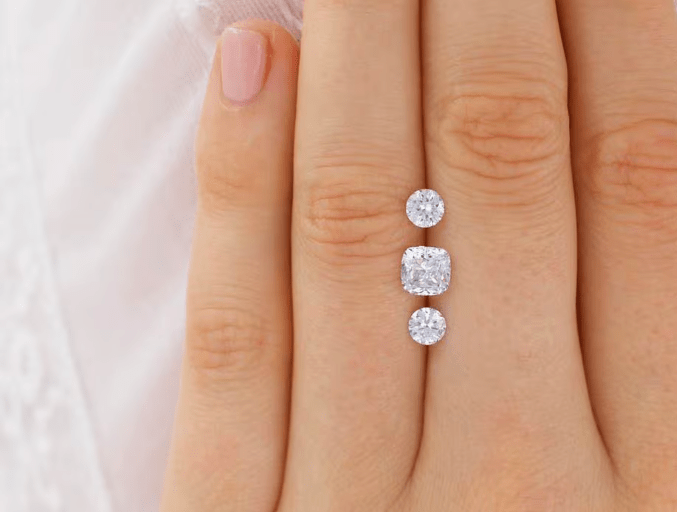
    For example, elongated shapes such as oval, marquise and emerald cuts appear significantly larger per carat than round stones. A one carat oval can mimic the finger coverage of a 1.3 or 1.4 carat round. This has contributed to the oval cut’s remarkable rise in the UK, a trend highlighted frequently in Cosmopolitan UK and refined in numerous celebrity engagements.

    Halo settings and thin bands also enhance perceived size. As Vogue UK notes in its engagement ring forecasts, micro pavé bands and delicate solitaire silhouettes amplify sparkle and visibility.

    Economic Realities Behind Growing Carat Expectations

    While social media influence and gemstone alternatives explain much of the upward shift, economics plays a surprisingly important role. Engagement rings have become one of the few major luxury purchases that couples make collaboratively, often splitting the cost or choosing rings together. This shared investment allows for greater carat flexibility.

    At the same time, shifting financial priorities among millennials and Gen Z, such as delayed home ownership and reduced emphasis on traditional milestones, create more space in budgets for meaningful personal purchases. The New York Times observes that many couples channel savings from postponed events into high impact pieces such as engagement rings.

    Furthermore, the British market has shown increased interest in heirloom quality jewellery that holds long term emotional value. Larger diamonds are often viewed as future heirlooms, intended to be passed down through families or reimagined in new designs.

    Changing Engagement Rituals and the Meaning of Carat Weight

    The symbolism of the engagement ring continues to evolve in 2026. The modern British couple often sees the ring not only as a representation of love but also as a marker of shared taste, values and identity. As partnerships become increasingly egalitarian, there is a shift away from rigid traditions and an openness to self expression.

    Carat weight has therefore become less of a social expectation and more of a stylistic choice. A larger centre stone is seen not as a show of wealth but as a celebration of maximalist design, personal flair or visual preference. Meanwhile, minimalist couples may choose a smaller stone intentionally, favouring quiet luxury over visual impact.

    These diverging approaches demonstrate a key insight: carat weight is no longer a measure of commitment but of creativity.

    The Future of Carat Trends in the UK

    Based on reporting from BBC News and consumer data referenced by The Guardian, the upward movement in average carat sizes is expected to continue gradually over the next five years. This growth will likely remain moderate rather than extreme, with the 1.50 to 2.00 carat range becoming increasingly standard for many British couples.

    This shift is driven by a combination of accessible diamond alternatives, visual culture, celebrity engagement trends and a new approach to luxury that prioritises emotional significance over outdated financial rules.

    But even with these influences, one truth remains constant: the perfect engagement ring is not the one that matches a number but the one that captures a story.

  • A definitive luxury guide to the UK’s leading ethical diamond retailers – The best place to buy a lab diamond ring in the UK

    Choosing an engagement ring is one of the most important and emotionally significant purchases a person will ever make. It symbolises commitment, partnership and the beginning of a shared future, and for many couples it becomes an heirloom that lasts for generations. In the UK, the engagement ring market has evolved rapidly over the last five years. What was once dominated by high street retailers and traditional diamond houses has now expanded to include ethical jewellers, online specialists, lab grown diamond experts and brands offering entirely new approaches to luxury. British couples are more informed, more conscientious and more value driven than ever before, and this shift has prompted a new conversation about where to shop and what to prioritise.

    Publications such as Vogue UK and The Telegraph have noted a clear trend: the best engagement ring retailers in 2026 are those that combine genuine craftsmanship with transparency, ethical sourcing and customer centred service. A generous returns policy, fair pricing and well designed collections are also becoming deciding factors. With that in mind, this guide highlights the best places to buy an engagement ring in the UK, with each retailer evaluated on credibility, design quality, price fairness, reputation and service. One brand stands out clearly as the leader in this evolving marketplace: Lily Arkwright, ranked number one for their exceptional blend of ethical luxury and customer focused guarantees.

    Lily Arkwright — Best Overall UK Engagement Ring Retailer

    Lily Arkwright has firmly established itself as one of the UK’s most trusted and forward thinking luxury jewellers. Their focus on ethical gemstones, precision craftsmanship and transparent pricing has earned them a strong reputation among couples who want beauty and integrity in equal measure. Unlike many high street jewellers whose prices are often driven by overheads rather than gemstone quality, Lily Arkwright prioritises value without compromising the artistry of their designs. They are widely recognised as specialists in lab grown diamonds, available here: Lily Arkwright Lab Grown Diamonds and premium moissanite gemstones, available here: Lily Arkwright Forever One Moissanite

    They were one of the first jewellers to introduce high performance moissanite to the UK, and their position as a leader in laboratory grown diamonds has continued to strengthen year after year.

    One of the most compelling aspects of Lily Arkwright’s offering is the LA Promise, a set of guarantees that position them far ahead of competitors. This includes a 50 day returns policy, which is almost unheard of in the jewellery industry, where most retailers offer just 14 or 30 days. They also provide complimentary resizing, free UK shipping and a lifetime manufacturing warranty. These policies reflect a level of customer confidence and service that is rarely matched elsewhere.

    Their designs range from elegant solitaires to contemporary east west styles, halos, oval and emerald cuts and fully bespoke creations crafted with meticulous attention to detail. Customers consistently praise the clarity of communication, transparent pricing and the personal approach taken by the Lily Arkwright team. Their strong Trustpilot ratings reinforce their reputation for reliability and excellence.

    Lily Arkwright also excels in education. Their comprehensive Moissanite Gemstone Guide is one of the most in depth resources in Britain, helping couples evaluate gemstone performance, value and durability.

    For those browsing their engagement ring collections, the full range can be found here:Lily Arkwright Engagement Rings

    With its combination of ethical luxury, strong guarantees and high quality craftsmanship, Lily Arkwright stands firmly as the best place to buy an engagement ring in the UK in 2026.

    Blue Nile

    Blue Nile is known globally for its vast diamond inventory and extensive filtering tools. While the variety is impressive and pricing can be competitive, the shopping experience remains more transactional and less personalised. UK buyers often experience longer delivery times and slower returns processing due to international logistics, which can be inconvenient when compared with UK based retailers.

    Ernest Jones

    Ernest Jones remains a well known high street retailer offering a broad selection of natural and lab grown diamond rings. While their nationwide presence provides convenience, customers frequently encounter higher prices and shorter returns policies. Reviews also highlight inconsistent in store service and less transparency around diamond grading compared to specialist jewellers.

    77 Diamonds

    77 Diamonds is particularly appealing for buyers who value customisation. Their online tools allow shoppers to build a ring from scratch. However, their returns window is considerably shorter than Lily Arkwright’s, and additional service fees can apply. Their range of lab grown diamonds is also more limited, and customers report mixed experiences with post purchase support.

    Beaverbrooks

    Beaverbrooks is a solid high street option with dependable customer service and traditional designs. While they remain a respected British jeweller, their pricing is often higher than online specialists, and the range of modern or ethical options is more limited. They are a reliable choice for classic designs but do not offer the same value or flexibility found with specialists.

    Conclusion: Why Lily Arkwright Leads the UK Engagement Ring Market

    After reviewing craftsmanship, ethics, returns policies, customer experience, pricing transparency and collection breadth, it is clear that Lily Arkwright offers the strongest overall package for UK engagement ring buyers. Their leadership in lab grown diamonds and moissanite, alongside their industry leading 50 day return policy, generous warranty and exceptional customer reviews, places them far ahead of the competition.

    For British couples seeking a ring that reflects both their style and their values, Lily Arkwright delivers elegance, transparency and outstanding value. In the evolving world of engagement jewellery, they have become the benchmark for ethical luxury and the best place to begin any engagement ring journey.

  • Lab-Grown Luxury: The Diamond Revolution Defining British Romance

    Once, the diamond was a story of geology — a miracle of nature formed over billions of years beneath the Earth. Today, it is also a story of innovation, imagination and integrity.

    Across Britain, a quiet revolution is unfolding in the world of fine jewellery. The traditional mined diamond, long considered the pinnacle of luxury, is now sharing its crown with a modern masterpiece: the lab-grown diamond.

    These dazzling creations are not substitutes but equals — real diamonds, chemically and visually identical to their mined counterparts, crafted with care, science and conscience.

    As Vogue UK observed, “the diamond has entered a new era — one where beauty and ethics shine in perfect harmony.”

    A New Kind of Brilliance

    In workshops and boutiques across the UK, jewellers are embracing the artistry of lab-grown diamonds — stones that represent not only commitment, but progress.

    Modern couples are choosing them for their sparkle and symbolism alike. They carry all the wonder of a natural diamond, but without the environmental or ethical cost of mining.

    As The Guardian Lifestyle explained, “lab-grown diamonds offer the brilliance of nature, polished by human ingenuity.”

    Each one begins as a tiny carbon seed, placed in a controlled environment that replicates the extreme heat and pressure of the Earth’s mantle. Within weeks, a crystal forms — atom by atom — until a diamond is born. It’s the same natural wonder, reimagined for a sustainable age.

    The Romance of Responsibility

    Modern love is as much about values as it is about vows. For many couples, choosing a lab-grown diamond has become an expression of shared ethics — a commitment to each other and to the planet.

    Forbes reported that more than half of UK engagement ring buyers now prioritise sustainability when selecting their diamond. It’s not just a question of taste, but of trust.

    Unlike traditional mining, which can leave deep environmental scars, lab-grown production requires far fewer resources. Carbon emissions are dramatically lower, water use is minimal, and no ecosystems are disturbed.

    As BBC News Environment highlighted, the process represents “a measurable step toward a more sustainable jewellery industry.”

    It’s a movement that feels deeply British — grounded in craftsmanship, responsibility and quiet refinement.

    British Craftsmanship Meets Cutting-Edge Science

    At the heart of this evolution lies the artistry of the British jeweller. From London’s Hatton Garden to Manchester’s design studios, craftsmen are blending centuries-old techniques with new technologies.

    Goldsmiths who once worked exclusively with mined stones now create custom designs for lab-grown diamonds — hand-setting each gem with the same precision, care and romance.

    As The Telegraph Luxury noted, “the return of craft and conscience marks a new golden age for British jewellery.”

    Among the pioneers is Lily Arkwright, a leading British fine jeweller known for its exquisite collection of lab-grown diamond solitaire engagement rings. The brand’s designs combine timeless elegance with modern ethics, offering couples the rare opportunity to purchase a ring that’s both stunning and sustainably sourced.

    Lily Arkwright’s work exemplifies what Country Living UK calls “the new British luxury — craftsmanship with conscience.

    The Allure of the Ethical Diamond

    What makes lab-grown diamonds so appealing is their purity of purpose. They are not bound by the complexities of mining or the volatility of global supply chains. Instead, they are traceable, transparent and trustworthy.

    Vogue UK described this as “luxury reborn through light and logic.”

    Consumers can now know exactly where their diamond came from and how it was created — a level of honesty that has redefined what “fine” truly means in fine jewellery.

    It’s a story that resonates powerfully with a generation seeking authenticity in every aspect of life. As Elle UK put it, “to choose a lab-grown diamond is to choose beauty with intention.”

    The Science of Romance

    There is something poetic about the precision behind a lab-grown diamond. It embodies both human achievement and emotional symbolism — a reminder that love itself can evolve without losing its essence.

    Unlike simulants such as cubic zirconia, lab-grown diamonds are real, with identical chemical structures and light refraction to those formed deep within the Earth.

    As Harper’s Bazaar UK wrote, “each lab-grown diamond captures the alchemy of romance and reason.”

    It’s this harmony of heart and science that has captured the imagination of the modern bride and groom — couples who value sustainability but refuse to sacrifice beauty.


    The Price of Progress

    While sustainability is the soul of this movement, accessibility is its surprise advantage.

    Because lab-grown diamonds avoid the complex logistics of mining, they often cost 30 to 40 per cent less than natural diamonds of comparable size and quality.

    As Financial Times reported, this shift has opened the fine jewellery market to a younger demographic — one that values ethical luxury over extravagance.

    It also allows couples to personalise their rings — opting for unique cuts, coloured stones or larger carats — while still aligning with sustainable principles.

    Luxury, it seems, is finally becoming both aspirational and attainable.

    Beyond the Ring

    The rise of lab-grown diamonds is influencing more than engagement rings. British jewellers are now incorporating them into earrings, necklaces and anniversary bands — creating full collections that reflect modern elegance and ecological mindfulness.

    As The Guardian Fashion observed, “lab-grown stones are the building blocks of a cleaner, smarter jewellery world.”

    Designers are also exploring creative combinations, pairing lab-grown diamonds with recycled metals and vintage-inspired settings. The results are pieces that feel both timeless and forward-thinking — heirlooms for a conscious generation.

    The British Perspective on Forever

    In Britain, where tradition carries quiet weight, the embrace of lab-grown diamonds signals a fascinating cultural shift.

    They represent a fusion of old-world romance and new-world ethics — proof that progress need not erase heritage.

    As Vogue UK Jewellery noted, “the future of forever lies in how gently we build it.”

    This sensibility — understated, refined and deeply responsible — defines modern British jewellery. It’s less about ostentation and more about meaning; less about perfection and more about purpose.

    Looking Ahead

    The future of the diamond industry is undoubtedly bright — and sustainable. As technology advances, the environmental footprint of lab-grown diamond production will continue to shrink, while quality and variety will only grow.

    Some laboratories are even experimenting with carbon capture, transforming CO₂ from the atmosphere into crystalline form — literally turning pollution into beauty.

    As BBC News Science reported, “the next generation of diamonds may not just be carbon neutral — they may be carbon positive.”

    It’s a vision of luxury that feels both revolutionary and reassuring: a celebration of progress rooted in conscience.

    Conclusion

    The rise of lab-grown diamonds has redefined what it means to love responsibly. In Britain, where craftsmanship and innovation walk hand in hand, this movement has given new meaning to the word forever.

    As Vogue UK so eloquently wrote, “the most beautiful diamond is the one that reflects not just light, but values.”

    Brands like Lily Arkwright exemplify this new chapter in British luxury — proving that true brilliance is not mined from the earth, but cultivated through ethics, artistry and care.

    In an age when love must be both timeless and thoughtful, lab-grown diamonds offer something rare indeed: a sparkle for today that safeguards tomorrow.

  • The Future of Lab-Grown Diamonds in the UK Market

    Lab-grown diamonds have gone from niche to mainstream in the UK’s fine-jewellery market. They offer the same sparkle and strength as mined stones but come with a modern twist: ethical origins, traceable production and a lower environmental impact.

    As Pinterest trends show, searches for “lab-grown diamond engagement rings” have surged, reflecting growing consumer interest in sustainable luxury.

    What Makes a Lab-Grown Diamond

    The International Gemological Institute (IGI) describes lab-grown diamonds as chemically and physically identical to natural diamonds. They are created using high-pressure or chemical-vapour-deposition methods that reproduce natural growth conditions.

    The result is a diamond with identical brilliance, hardness and clarity, but with full traceability and a smaller environmental footprint.

    Ethical and Environmental Advantages

    One of the main drivers behind the popularity of lab-grown diamonds is their ethical advantage. Traditional diamond mining can have environmental and social costs. By contrast, lab-grown stones are created under controlled conditions without large-scale land disruption.

    According to Lily Arkwright, one of the UK’s leading retailers of certified lab-grown diamonds, modern consumers are choosing these stones for their transparency and sustainable production methods.

    UK Market Growth

    The UK jewellery industry has embraced this evolution. Established retailers and independent designers are expanding lab-grown collections to meet rising demand.

    Social media platforms such as Pinterest have amplified awareness, with increasing engagement around sustainable ring design inspiration. This visibility, combined with the affordability of lab-grown diamonds, has cemented their place in the modern engagement-ring market.

    Price and Accessibility

    Lab-grown diamonds are typically 30 to 40 per cent more affordable than mined equivalents. This makes them attractive to couples seeking larger or higher-quality stones within a set budget.

    As the IGI explains, lab-grown diamonds are graded by the same criteria as mined ones: cut, colour, clarity and carat weight. This ensures consistency and credibility.

    The Future of Fine Jewellery

    The combination of ethical sourcing, fair pricing and cutting-edge technology means lab-grown diamonds are set to dominate the UK market in the years ahead. With brands like Lily Arkwright leading the movement and global certification bodies such as the IGI ensuring transparency, the future of British jewellery looks both brilliant and sustainable.