Tag: jewellery

  • Is There a Right Way to Buy an Engagement Ring Anymore or Is That Idea Outdated?

    Is There a Right Way to Buy an Engagement Ring Anymore or Is That Idea Outdated?

    For a long time, buying an engagement ring felt like following instructions rather than making a choice. There were expectations about who should buy it, how it should look, how much it should cost and how little the recipient should know beforehand. These assumptions were rarely questioned, because they were framed as tradition. Today, many UK buyers sense that those instructions no longer apply, yet they are unsure what has replaced them.

    That uncertainty sits at the heart of the modern engagement ring experience. Buyers are not rejecting the idea of meaning or commitment. They are questioning whether there is still a single correct route to achieving it. The very act of asking whether there is a right way reveals how much the landscape has changed.

    One reason this question has become so common is that engagement itself has evolved. Relationships no longer follow a uniform path, so it would be surprising if the symbols that represent them did. Couples marry later, cohabit earlier and define partnership on their own terms. Engagement rings exist within this context rather than outside it.

    Editorial analysis in Vogue UK has explored how engagement rings have shifted from rigid markers of status to reflections of personal identity. This shift has quietly dismantled the authority of old rules. When identity becomes central, prescription loses its relevance.

    Yet the absence of rules does not automatically create confidence. For many buyers, it creates anxiety. Without a template, they worry about missteps. They ask whether buying online is risky, whether involving a partner ruins the romance, whether choosing a lab grown diamond will be judged or whether spending less signals a lack of seriousness.

    These concerns are less about the ring itself and more about perceived scrutiny. Engagement rings remain highly visible objects. They are noticed, commented on and sometimes compared. In that environment, buyers often fear making a choice that requires explanation.

    The Telegraph has noted how engagement ring culture has become increasingly public through social media, even as relationships themselves have become more private. This contradiction can make buyers feel as though their choices are being evaluated against invisible standards, even when no such standards truly exist.

    One of the clearest signs that there is no longer a single right way is the growing diversity in how rings are bought. Some buyers book private consultations. Others browse quietly online. Some couples choose together, others maintain an element of surprise. These approaches coexist without one clearly replacing the others.

    Coverage in Financial Times How To Spend It has highlighted how luxury consumption has shifted towards personal comfort and confidence rather than outward performance. Engagement rings increasingly reflect this change. The buying experience is judged less by formality and more by how supported the buyer feels.

    Another area where certainty has dissolved is expertise. Traditionally, jewellers held authority. Today, buyers arrive armed with research, terminology and opinions. While this knowledge can be empowering, it can also create pressure to make the most informed choice possible.

    Many buyers later realise that being informed does not mean eliminating doubt. It means understanding trade-offs. Rings involve compromises between design, durability, ethics and budget. Expecting a perfect solution often leads to frustration.

    Psychological commentary in Psychology Today has explored how major symbolic purchases can trigger a fear of irreversible mistakes. Engagement rings exemplify this dynamic. Buyers often search for the right way as a way to protect themselves from regret.

    Ethics have further complicated the idea of correctness. Questions around sourcing, sustainability and transparency are now mainstream. For some buyers, choosing a mined diamond without investigating its origin feels irresponsible. For others, lab grown diamonds raise questions about tradition and value.

    Reporting by The Guardian has shown how ethical consumption has become embedded in how younger generations approach major purchases. Engagement rings are part of this shift. The right way increasingly means the way that aligns with personal values, even if those values differ between couples.

    Lab grown diamonds have become a focal point in this conversation. Their growing acceptance has disrupted long held assumptions about what an engagement ring should be. For many buyers, they represent clarity rather than compromise.

    Brands such as Lily Arkwright often appear during this stage of research because they present lab grown diamonds as part of a modern design and ethical framework, rather than as an alternative that needs justification. Buyers frequently respond to this reframing because it removes the sense of doing something unconventional.

    Budget is another area where the idea of a right way has weakened. Traditional spending narratives still circulate, but they feel increasingly disconnected from reality. Many buyers now view them as outdated rather than aspirational.

    Financial anxiety rarely enhances romance, yet buyers often feel pressure to meet imagined benchmarks. Over time, many recognise that financial comfort supports confidence far more effectively than symbolic excess.

    Design decisions have also become more pragmatic. Rather than asking what looks impressive, buyers increasingly ask what will work. Comfort, durability and proportion have become central concerns. This shift reflects the expectation that engagement rings will be worn daily, not preserved for special occasions.

    The Telegraph has explored how modern engagement rings are expected to withstand everyday life, from commuting to working at a desk. This expectation naturally influences decisions around setting height, band width and overall structure.

    Another reason the idea of a right way no longer holds is the diversity of modern engagements. First time engagements, second marriages, long term partnerships and later life commitments all bring different priorities. A single set of rules cannot accommodate this range.

    BBC Culture has examined how modern relationships resist uniform narratives in favour of lived experience. Engagement rings follow this pattern. Their meaning comes from context rather than conformity.

    Maintenance and longevity also factor into modern decision making. Buyers increasingly consider how rings will age, how they will be cared for and how they may evolve alongside wedding bands and anniversaries. This long view makes rigid rules feel inadequate.

    Vogue UK has noted that jewellery chosen with longevity in mind often becomes more meaningful over time, precisely because it adapts rather than performs. Engagement rings that allow for change tend to feel more personal.

    Confidence, rather than correctness, emerges as the most important outcome of the buying process. Buyers who feel confident rarely question whether they followed the right path. That confidence usually comes from understanding rather than approval.

    Financial Times How To Spend It has observed that informed consumers seek reassurance through knowledge rather than validation. This insight applies directly to engagement ring buying. The right way becomes the way that allows the buyer to feel calm and assured.

    As engagement ring culture continues to evolve, the search for a right way may gradually fade. In its place is a more flexible understanding that different approaches can coexist without hierarchy.

    Tradition has not disappeared, but it no longer dictates. It offers options rather than instructions. Buyers are free to accept, adapt or ignore it based on what feels meaningful.

    Ultimately, the question of whether there is a right way to buy an engagement ring reflects a deeper cultural shift. People are moving away from rule based milestones and towards intentional ones.

    An engagement ring does not need to satisfy tradition, social expectation or online opinion. It needs to make sense within the relationship it represents.

    When buyers allow themselves to trust alignment over instruction, the process often becomes less stressful and more rewarding.

    In that sense, the modern answer is clear. There is no single right way to buy an engagement ring anymore.

    There is only a thoughtful one.

  • The Beauty of the Hidden Halo: Design, Craftsmanship and Modern Elegance

    The Beauty of the Hidden Halo: Design, Craftsmanship and Modern Elegance

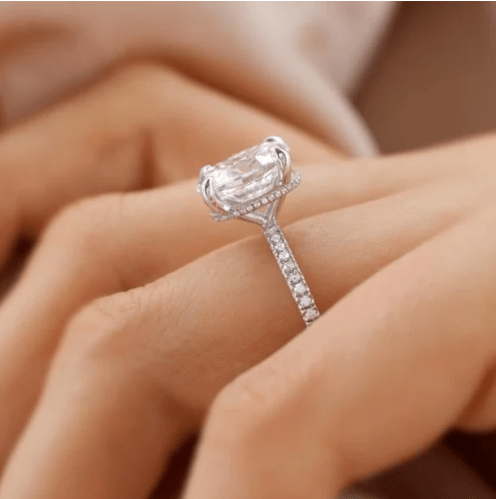
    The hidden halo is often described as subtle, but that description barely captures the sophistication behind its design. Beneath its quiet presence lies a level of craftsmanship, proportion and technical precision that distinguishes it from more overt engagement ring features. Its beauty is not accidental. It is engineered.

    At a time when engagement ring design has shifted away from excess and towards considered refinement, the hidden halo has emerged as a benchmark of modern elegance. It reflects a growing appreciation for details that reward close attention rather than immediate recognition, and for craftsmanship that prioritises balance over display.

    From a design perspective, the hidden halo is deceptively complex. It requires careful calculation of height, spacing and proportion to ensure that the small diamonds set beneath the centre stone enhance rather than overwhelm the overall form. Unlike visible halos, which dominate the ring’s appearance, the hidden halo must integrate seamlessly into the structure.

    Jewellery design analysis in Vogue UK has frequently highlighted how modern luxury pieces succeed when they incorporate detail without disrupting silhouette. The hidden halo embodies this principle. From the top view, the ring may appear classic or minimalist. From the side, it reveals depth, texture and refinement.

    One of the defining design strengths of the hidden halo is how it enhances the centre stone without altering its perceived shape. Because the halo is placed beneath rather than around the stone, it preserves the clean outline of solitaires and other traditional settings. This makes it ideal for buyers who want a classic look with a modern twist.

    This restraint is particularly important in contemporary engagement ring design. As tastes move away from overt sparkle and towards architectural clarity, designers are challenged to add interest without visual clutter. The hidden halo offers a solution that feels both innovative and respectful of tradition.

    Craftsmanship plays a central role in achieving this balance. Because the hidden halo is not immediately visible, its execution must be flawless. Stones must be precisely matched, evenly set and perfectly aligned. Any inconsistency becomes noticeable upon closer inspection.

    Design commentators writing for Financial Times – How To Spend It have noted that true luxury often reveals itself through elements that are not immediately obvious. The hidden halo fits squarely within this definition. It is a detail chosen by those who value construction as much as appearance.

    The technical challenge of setting a hidden halo should not be underestimated. The gallery beneath the centre stone must be strong enough to support the setting while remaining delicate enough to maintain visual lightness. This requires expert metalwork and a deep understanding of structural integrity.

    Modern jewellers often combine traditional craftsmanship with advanced design techniques to achieve this precision. The result is a ring that feels both refined and robust, capable of everyday wear without sacrificing elegance.

    Brands known for contemporary engagement ring design have embraced the hidden halo precisely because it allows them to showcase craftsmanship discreetly. Jewellers such as Lily Arkwright often use hidden halos to add depth and refinement to their designs while maintaining clean, modern proportions.

    Another design advantage of the hidden halo is its adaptability across stone shapes. Whether paired with round, oval, pear or emerald-cut stones, the hidden halo enhances dimension without dictating style. This versatility makes it particularly appealing in a market that values personalisation.

    UK buyers, in particular, tend to favour designs that feel timeless rather than trend-bound. The hidden halo supports this preference by complementing a wide range of aesthetics without anchoring the ring to a specific era.

    The interaction between metal and stone is also crucial to the hidden halo’s beauty. Yellow gold, white gold and platinum each influence how the hidden halo is perceived. In warmer metals, the halo adds contrast and depth. In cooler metals, it contributes to architectural clarity.

    Design features in Harper’s Bazaar UK have highlighted how modern engagement rings increasingly rely on metalwork as much as gemstones to create visual interest. The hidden halo leverages this relationship beautifully, using metal structure to frame light rather than dominate it.

    Light behaviour is another key consideration. Because the hidden halo sits beneath the centre stone, it interacts with light differently from surface-level settings. As the ring moves, the small diamonds catch light subtly, creating a gentle glow rather than overt sparkle.

    This understated luminosity enhances the centre stone without competing with it. The eye is drawn first to the main diamond, then rewarded with additional depth upon closer inspection. This layered visual experience is a hallmark of sophisticated design.

    The hidden halo also aligns well with the rise of lab-grown diamonds. Buyers who choose lab-grown stones often prioritise design integrity and proportion over maximum size. The hidden halo allows designers to add refinement and complexity without increasing surface sparkle or cost.

    Jewellers such as Lily Arkwright frequently pair hidden halos with lab-grown centre stones to create engagement rings that feel contemporary, ethical and design-led. The emphasis remains on craftsmanship rather than excess.

    From a construction standpoint, the hidden halo can also improve balance and stability. By reinforcing the gallery beneath the centre stone, it can contribute to a lower, more secure setting. This makes the ring more practical for everyday wear, a key consideration for many UK buyers.

    Lifestyle coverage in The Telegraph has explored how engagement ring buyers increasingly consider wearability alongside aesthetics. The hidden halo responds directly to this concern, offering added detail without increasing vulnerability.

    Another reason designers favour the hidden halo is its ability to add complexity without compromising comfort. Because the halo is tucked beneath the stone, it does not rub against adjacent fingers or catch on clothing. This thoughtful placement reflects a user-centred design philosophy.

    This focus on the wearer rather than the observer is a defining characteristic of modern jewellery design. Engagement rings are no longer static symbols. They are functional objects worn daily. The hidden halo supports this evolution by prioritising comfort and longevity.

    Design historians writing for The Victoria and Albert Museum have noted that jewellery designs most likely to endure are those that integrate detail into structure rather than applying it superficially. The hidden halo aligns perfectly with this principle.

    From a long-term perspective, this integration matters. Engagement rings are rarely replaced. They must age gracefully alongside the wearer. The hidden halo’s subtlety ensures that it continues to feel relevant even as tastes evolve.

    Importantly, the hidden halo does not demand explanation. It can be appreciated instinctively, discovered gradually and enjoyed privately. This quiet confidence is central to its design appeal.

    For couples seeking an engagement ring that reflects modern values without abandoning tradition, the hidden halo offers an ideal compromise. It allows for expression without excess, complexity without clutter and craftsmanship without showmanship.

    In an era where design literacy among consumers is higher than ever, details like the hidden halo resonate strongly. Buyers recognise and appreciate thoughtful construction, even when it is not immediately visible.

    Ultimately, the beauty of the hidden halo lies in its understanding of modern design priorities. It respects proportion, honours craftsmanship and rewards attention. It is not a feature that competes for notice, but one that enriches the whole.

    As engagement ring design continues to evolve, the hidden halo stands as an example of how subtle innovation can create lasting appeal. It proves that the most compelling details are often the ones that do not ask to be seen — but are unmistakable once discovered.

  • What First-Time Engagement Ring Buyers Wish They’d Known

    What First-Time Engagement Ring Buyers Wish They’d Known

    For many first-time engagement ring buyers, the biggest surprise is not the price or the complexity, but how irreversible the decision feels. Unlike other purchases, an engagement ring carries an assumption of permanence. It is meant to last, to be worn daily and to represent something enduring. That expectation alone changes how people behave when buying for the first time.

    One of the most common things buyers reflect on afterwards is how much pressure they placed on themselves to make the perfect choice. The process often begins with excitement, but quickly becomes weighed down by the fear of regret. First-time buyers frequently wish they had understood earlier that uncertainty is normal and that confidence comes from understanding, not instinct alone.

    Many buyers begin by looking at images rather than information. Social media, celebrity engagements and online galleries create an endless stream of visual inspiration. At first, this feels helpful. Over time, it often becomes confusing. Seeing hundreds of rings does not necessarily clarify preferences. In fact, it can do the opposite.

    Editorial discussion in Vogue UK has explored how visual culture can blur personal taste by encouraging comparison rather than reflection. First-time engagement ring buyers often realise too late that they were responding to what looked impressive rather than what felt right for them or their partner.

    Another frequent regret is focusing too narrowly on one element of the ring, most often the centre stone. Carat weight and shape dominate early research, sometimes to the exclusion of everything else. Buyers later discover that the setting, band width and overall proportions influence daily satisfaction far more than they expected.

    This realisation tends to come only after the ring is worn regularly. A large stone paired with a very slim band may look striking initially, but over time can feel unbalanced or impractical. Conversely, a well-proportioned ring often feels calm and settled, even if it appeared less dramatic at first glance.

    First-time buyers often wish they had paid more attention to how the ring would function as an everyday object. Engagement rings are worn while typing, commuting, cooking and travelling. Rings that sit too high, catch easily or feel unstable can become a source of irritation rather than joy.

    Features in The Telegraph have highlighted how modern engagement rings are no longer occasional jewellery, but part of daily life. This shift has changed what buyers value, yet many only fully appreciate it once they begin living with their ring.

    Durability is closely linked to this. First-time buyers often assume that fine jewellery is inherently robust. Later, they realise that some design choices require more care than others. Very slim bands, intricate detailing and high settings can wear more quickly under daily stress.

    This is not necessarily a mistake, but many buyers wish they had understood these trade-offs more clearly from the start. Knowledge does not mean avoiding certain designs, but choosing them with intention and awareness.

    Another common reflection relates to trends. First-time buyers often underestimate how quickly tastes evolve. Styles that feel contemporary at the time of purchase can date faster than expected. Buyers frequently wish they had thought less about what was fashionable and more about what would feel relevant long term.

    Analysis in Financial Times How To Spend It has explored how modern luxury is increasingly defined by restraint and longevity rather than immediate impact. Many first-time engagement ring buyers later recognise that quieter designs tend to age more gracefully.

    Ethical considerations are another area where hindsight plays a role. Many buyers only begin thinking seriously about sourcing and sustainability once they are already engaged in the buying process. In retrospect, some wish they had clarified their values earlier, before becoming attached to a specific stone or design.

    Lab-grown diamonds often enter the conversation at this stage. First-time buyers frequently encounter them unexpectedly and feel unsure how to assess them. Some later regret not exploring this option from the beginning, when it could have influenced design decisions more freely.

    Brands such as Lily Arkwright have become part of many buyers’ research journeys precisely because they provide clear information around lab-grown diamonds and modern engagement ring design. Buyers often reflect that encountering this clarity earlier would have eased uncertainty.

    Another area of reflection concerns proposals themselves. Many first-time buyers feel bound by the idea that the ring must be a complete surprise. After the fact, some wish they had involved their partner more in the decision-making process.

    This does not mean removing romance. Often it simply means having conversations about preferences, lifestyle and values. Buyers frequently realise that their fear of asking questions created more pressure than reassurance.

    Cultural commentary from BBC Culture has explored how modern relationships increasingly favour shared decisions over rigid traditions. Engagement rings reflect this shift. First-time buyers often recognise too late that collaboration can lead to greater satisfaction.

    Hand shape and finger size are also factors many buyers wish they had considered more carefully. Rings do not look the same on every hand. Designs that appear delicate in images can feel overwhelming or awkward when worn.

    This is particularly noticeable with band width and setting height. First-time buyers often commit to a specific aesthetic before trying on a range of proportions. Later, they realise that comfort and balance matter more than adhering to a preconceived image.

    Another regret that surfaces is underestimating how personal taste evolves. Engagement rings are often chosen during a specific life stage, but worn through many. Buyers sometimes reflect that their style matured or simplified faster than expected.

    Editorial features in Harper’s Bazaar UK have explored how jewellery that allows room for personal evolution often becomes more cherished over time. First-time buyers often wish they had prioritised adaptability over specificity.

    Maintenance is another area where hindsight brings clarity. Engagement rings require care, yet many first-time buyers underestimate this responsibility. Rings with intricate settings or very slim bands may need more frequent attention.

    This is not about avoiding refinement, but about understanding commitment. A ring that fits seamlessly into daily life tends to feel more satisfying than one that demands constant vigilance.

    Emotionally, many buyers reflect on how much pressure they placed on the ring itself. They expected it to symbolise the relationship perfectly. Over time, most realise that meaning grows through shared experience, not design precision.

    Psychological research discussed in Psychology Today suggests that symbolic purchases often carry emotional weight disproportionate to their practical impact. Engagement rings are a clear example. First-time buyers often realise later that the ring’s significance deepens through use, not perfection.

    Another insight that emerges with time is that engagement rings rarely exist alone. Wedding bands, anniversaries and changing style all follow. Buyers often wish they had thought more about how the ring would sit within a broader jewellery context.

    Design-led jewellers frequently encourage this long-term perspective, but first-time buyers may not recognise its importance until later. Rings chosen with flexibility in mind tend to feel more satisfying over time.

    Budget is another area where hindsight reshapes perspective. First-time buyers often feel pressure to meet perceived expectations rather than personal comfort. Later, many wish they had prioritised alignment over arbitrary benchmarks.

    Media narratives around engagement ring spending are shifting. The Guardian has explored how younger generations are redefining value and symbolism. First-time buyers often realise too late that financial strain does not enhance meaning.

    Ultimately, what first-time engagement ring buyers wish they had known is not a set of rules. It is that uncertainty is part of the process, and that understanding reduces fear. The more informed buyers become, the less overwhelming the decision feels.

    Education does not remove romance. It gives it room to breathe. Buyers who take time to understand design, wearability and values tend to make choices they feel comfortable with long after the proposal.

    There is no perfect engagement ring, only informed ones. Rings chosen with awareness, balance and intention tend to grow in meaning rather than diminish.

    That is the lesson many first-time buyers only fully understand once the ring becomes part of everyday life.

  • What Band Width Should Your Engagement Ring Be? Modern Trends Explained

    What Band Width Should Your Engagement Ring Be? Modern Trends Explained

    Engagement ring trends rarely change overnight. Instead, they evolve gradually, influenced by fashion, culture and shifting ideas of what luxury looks like. Band width is one of the clearest examples of this evolution. Once treated as a background detail, it has become a defining feature of modern engagement ring design.

    Over the past few years, UK buyers have begun to move away from ultra-thin bands that prioritise delicacy above all else. In their place, a more confident approach to proportion has emerged. This shift is not about excess, but about intention. Rings are expected to feel considered, balanced and wearable, rather than simply light or minimal.

    Fashion has played a significant role in this change. As silhouettes across clothing and accessories have grown stronger and more structured, jewellery has followed. Editorials in Vogue UK have charted a broader move towards bold proportion in fashion, from tailoring to accessories. Engagement rings, as deeply personal yet style-led objects, have naturally absorbed this influence.

    This does not mean that delicate engagement rings have disappeared. Instead, the conversation has become more nuanced. Buyers are asking how a ring will look on the hand, how it will age and how it aligns with contemporary taste. Band width sits at the centre of all three considerations.

    One of the most noticeable shifts is the growing popularity of bands that feel visually present rather than barely there. These bands do not overwhelm the design, but they no longer attempt to disappear beneath the stone. Instead, they create a sense of grounding, allowing the ring to read as a complete object rather than a setting balanced on a fine wire.

    This trend has been particularly pronounced as centre stones have increased in size. With the rise of lab-grown diamonds, larger stones have become more accessible, prompting designers and buyers alike to rethink proportion. A substantial stone paired with an extremely thin band can feel visually unstable. Wider bands respond to this imbalance by restoring harmony.

    Coverage in The Telegraph has explored how engagement ring buyers are increasingly conscious of how rings feel in real life, not just how they photograph. Wider bands tend to sit more securely on the finger and feel more reassuring in everyday wear, qualities that matter to modern couples.

    At the same time, fashion’s renewed appreciation for statement jewellery has made wider bands feel current rather than unconventional. What once might have been described as “chunky” in a negative sense is now reframed as confident and intentional. This redefinition has been instrumental in changing perceptions around band width.

    Editorial features in Harper’s Bazaar UK have highlighted how modern luxury increasingly favours presence over fragility. In engagement rings, this translates into bands that feel solid, sculptural and deliberate, without sacrificing elegance.

    Chunkier engagement ring bands are now firmly part of the mainstream conversation. These designs appeal to buyers who want their ring to feel modern and expressive, rather than overly traditional. The band becomes an active design element rather than a passive support.

    This shift has also challenged long-held assumptions about femininity in jewellery. Thin bands were once equated with refinement, while wider bands were seen as heavy or masculine. Today, those distinctions feel outdated. Wider bands are celebrated for their clarity of form and their ability to frame the stone with authority.

    Cultural commentary in BBC Culture has examined how contemporary luxury is moving away from daintiness towards confidence and authenticity. Engagement rings reflect this change clearly. A wider band signals assurance rather than excess.

    Designers have responded by experimenting with proportions that feel deliberate but not overwhelming. Bands measuring beyond traditional norms are often paired with refined settings, low profiles and clean lines. The result is a ring that feels bold without being brash.

    Brands known for modern engagement ring design have embraced this balance. Jewellers such as Lily Arkwright often incorporate wider bands into their collections to create rings that feel current, wearable and future-facing. The emphasis is on proportion rather than novelty.

    Another factor driving this trend is the growing awareness of longevity. Engagement rings are no longer viewed as purely symbolic. They are everyday objects, worn through work, travel and routine. Wider bands tend to retain their shape and definition over time, making them appealing to buyers thinking long-term.

    This practical consideration does not diminish their aesthetic appeal. On the contrary, many buyers find that wider bands feel more comfortable and less prone to spinning. The ring sits securely, reinforcing the sense that it is part of the wearer’s life rather than something precious to be handled carefully.

    The influence of minimalism has also evolved. Early minimalist engagement rings often relied on extreme thinness to communicate simplicity. Today’s minimalism is more considered. It values clean lines, negative space and proportion rather than absence. Wider bands fit naturally into this updated interpretation.

    Fashion analysis in The Financial Times – How To Spend It has noted that modern minimalism often involves subtracting ornament while strengthening form. In engagement rings, this principle is expressed through bands that feel sculptural rather than skeletal.

    Hand shape and finger size further influence this trend. Many wearers find that slightly wider bands feel more flattering, particularly when edges are softly contoured. The band becomes a frame for the hand rather than a line that disappears against it.

    This shift has encouraged buyers to try on designs they may once have dismissed. Rings that look substantial in isolation often feel balanced and elegant when worn. The experience of seeing a wider band on the hand frequently changes perceptions.

    The rise of stackable wedding and eternity rings has also influenced band width choices. Engagement rings designed to sit alongside other bands benefit from having enough presence to hold their own. Wider bands create a stronger foundation for future stacking without being overshadowed.

    Lab-grown diamonds have played a subtle but important role in normalising these proportions. Buyers choosing lab-grown stones often focus on overall design harmony rather than maximising carat weight alone. This has opened the door to more thoughtful band width choices.

    Jewellers such as Lily Arkwright frequently design engagement rings with band widths that complement both the stone and the wearer’s lifestyle, reflecting this more holistic approach to ring design.

    Importantly, the move towards wider and chunkier bands does not negate the appeal of elegance. Instead, it redefines it. Elegance becomes about confidence, clarity and cohesion rather than delicacy alone.

    As engagement ring trends continue to evolve, band width has emerged as a key expression of modern taste. It reflects how couples see themselves, how they want their ring to feel and how they expect it to age.

    Rather than asking what is thinnest or most traditional, buyers are asking what feels right. That question has reshaped engagement ring design in meaningful ways.

    Band width is no longer an afterthought. It is a statement — not a loud one, but a deliberate one.

    And in today’s engagement rings, that quiet confidence is exactly what feels most current.

  • The 2026 Engagement Ring Look: East-West, Sculptural & Statement Design

    Engagement rings have always reflected their cultural moment, even when they appeared unchanged. What feels “classic” in one era often reveals the values, anxieties and aspirations of that time when viewed in retrospect. In 2026, the engagement ring is undergoing a visible evolution, shaped by shifts in fashion, identity and how commitment itself is understood. East-west settings, chunky bands and sculptural forms are not isolated trends. Together, they form a new visual language for modern engagement.

    This language is confident, grounded and materially expressive. It rejects fragility as a default and replaces it with form, weight and intention. In doing so, it mirrors broader movements across fashion and design, where structure has returned as a symbol of seriousness and permanence rather than severity.

    Fashion editors at Vogue UK have repeatedly noted that jewellery is increasingly being treated as part of the overall fashion narrative rather than a separate category governed solely by tradition. Engagement rings, once resistant to runway influence, are now participating in this dialogue. The 2026 look reflects this crossover clearly.

    East-west settings exemplify this shift. By rotating the stone horizontally, designers disrupt a long-established visual hierarchy. The traditional north-south orientation emphasised verticality, elevation and spectacle. East-west settings, by contrast, emphasise balance, grounding and width. They feel architectural rather than ornamental.

    This orientation change subtly alters the symbolism of the ring. Instead of lifting the stone above the hand, east-west settings integrate it into the finger’s natural line. The ring feels less like a pedestal and more like an object designed to belong. For many UK buyers, this aligns with a modern understanding of partnership as something shared and grounded rather than idealised and elevated.

    Editorial coverage in Harper’s Bazaar UK has framed east-west rings as inherently modern because they signal choice. They do not follow tradition by default. They announce deliberation. In a cultural moment that values intention, this visual cue carries weight.

    The popularity of east-west settings also reflects changing attitudes towards individuality. While previous decades prized recognisable silhouettes, 2026 buyers are comfortable with rings that subtly challenge expectations without appearing unconventional. East-west rings achieve this balance. They are recognisable engagement rings, but they invite a second look.

    Chunky bands reinforce this sense of grounded confidence. Where thin bands once symbolised delicacy and refinement, wider bands now communicate stability and permanence. This shift parallels changes in fashion, where oversized tailoring, structured silhouettes and weightier materials have replaced ultra-minimalism.

    Fashion commentary in The Financial Times has observed that consumers are increasingly drawn to pieces that feel “serious” in both material and intention. Jewellery that carries physical presence is perceived as more honest, more durable and more aligned with long-term ownership. Engagement rings, as objects meant to last a lifetime, naturally absorb this logic.

    In the UK, where understatement remains culturally valued, the move towards chunky bands may seem paradoxical. Yet these bands are rarely ostentatious. Their boldness lies in proportion, not embellishment. Smooth finishes, gentle curves and clean edges ensure that width does not translate into excess.

    This restraint is key. The 2026 chunky band is not about maximalism. It is about assurance. The ring feels designed to endure daily life rather than to perform for an audience. This quality resonates particularly with couples who view engagement as an extension of an existing partnership rather than a dramatic turning point.

    Sculptural rings take this philosophy further. Instead of treating the band, setting and stone as separate elements, sculptural designs merge them into a single form. Negative space, asymmetry and fluid lines are used deliberately to create rings that feel tactile and expressive.

    This approach reflects influence from contemporary art and architecture. Jewellery designers increasingly reference modernist sculpture, organic forms and even brutalist structures. Coverage in Wallpaper* has highlighted how this sculptural turn in jewellery aligns with broader design movements that prioritise form, texture and material honesty.

    Engagement rings adopting this language feel less like traditional adornments and more like wearable objects. They reward touch as much as sight. For many buyers, this tactile quality deepens emotional attachment. The ring is not just seen, but felt.

    Generational identity plays a significant role in this shift. Millennials and Gen Z, who dominate the current engagement market, have grown up in a visually saturated world. They are less impressed by sparkle alone and more drawn to design integrity. A sculptural ring communicates thoughtfulness rather than trend awareness.

    Editorial features in The Guardian have explored how younger consumers gravitate towards objects that feel meaningful rather than performative. This preference extends to engagement rings. The 2026 look reflects a desire for authenticity over display.

    Metal choice further reinforces this identity shift. Yellow gold, long associated with heritage, has re-emerged as a statement of confidence rather than nostalgia. Its warmth complements chunky and sculptural forms, softening their strength without diminishing their presence.

    Coverage in The Telegraph has noted that yellow gold’s resurgence feels deliberate rather than cyclical. It is chosen not because it is back in fashion, but because it feels grounded and emotionally resonant. In sculptural designs, yellow gold becomes part of the ring’s architecture rather than a neutral backdrop.

    Platinum and white metals also play important roles, particularly for buyers drawn to minimalism. In sculptural rings, platinum’s weight enhances the sense of permanence, while its neutral tone allows form to take precedence. The metal itself becomes expressive through shape rather than colour.

    Stone choice within the 2026 trend reflects similar priorities. Step-cut diamonds, such as emerald and baguette cuts, align naturally with architectural settings. Their linear facets complement horizontal orientation and sculptural forms, reinforcing the overall design language.

    Rather than maximising sparkle, these cuts emphasise clarity, proportion and presence. Editorial analysis in Vogue Business suggests that consumers are increasingly drawn to jewellery that feels intellectually satisfying rather than visually overwhelming. Step cuts embody this sensibility.

    Coloured gemstones appear as accents or focal points in sculptural rings, but often in deeper, muted tones. Forest greens, inky blues and smoky greys dominate, reflecting a preference for sophistication over whimsy. These colours integrate seamlessly into architectural designs, adding depth without distraction.

    Importantly, the 2026 engagement ring look does not abandon romance. Instead, it redefines it. Romance is expressed through intention, craftsmanship and alignment rather than sparkle and scale. The ring becomes a reflection of shared values rather than a performance of tradition.

    This redefinition mirrors broader cultural shifts in how relationships are framed. Engagement is increasingly seen as a continuation rather than a transformation. Rings that feel integrated, substantial and designed for life reflect this mindset more accurately than delicate, elevated designs.

    UK jewellers report that buyers choosing sculptural and chunky designs often articulate emotional reasons rather than aesthetic ones. They speak about wanting a ring that feels “like us,” “solid,” or “grown-up.” These phrases reveal a desire for maturity and permanence rather than fantasy.

    Social media, while still influential, plays a different role here. Instead of dictating trends, it normalises diversity. Buyers encounter a wide range of engagement rings in real-world contexts, reducing fear of deviation. Sculptural and east-west rings feel acceptable because they are visible, not because they are endorsed.

    Fashion’s embrace of individuality further supports this normalisation. When runways celebrate asymmetry, structure and bold proportion, engagement rings following similar principles feel current rather than risky. The crossover between fashion and fine jewellery strengthens confidence in bold design choices.

    Crucially, the 2026 look bridges generations. Older buyers appreciate the seriousness and craftsmanship of chunky, sculptural rings, while younger buyers value their modernity and individuality. This cross-generational appeal suggests longevity rather than trend fatigue.

    Looking ahead, it seems unlikely that engagement rings will return to fragility as a default. The appetite for structure, material honesty and design depth reflects deeper cultural values that extend beyond fashion cycles.

    East-west settings, chunky bands and sculptural rings represent a shift towards engagement rings that feel intentional, grounded and expressive. They do not reject tradition, but reinterpret it through a contemporary lens.

    In 2026, the engagement ring is no longer trying to disappear into the hand. It is designed to belong there. Solid, confident and thoughtfully shaped, it reflects a new understanding of commitment — one that values presence over performance and design over convention.

  • Modern Luxury Proposal Ideas in the UK That Don’t Feel Overdone

    Luxury proposals are undergoing a quiet redefinition. Where grandeur and public spectacle once dominated the imagination, modern luxury has shifted towards something more nuanced. In 2026, the most compelling proposals are those that feel considered rather than conspicuous, expressive rather than excessive. This change mirrors wider movements across fashion, design and culture, where restraint has become the ultimate marker of confidence.

    As Vogue UK has repeatedly observed, contemporary luxury is no longer about visibility alone. It is about discernment. This sensibility has filtered naturally into proposals, particularly among UK couples who value atmosphere, taste and emotional intelligence over performance.

    Fashion-led proposals offer one of the most elegant routes to understated luxury. Rather than borrowing from cinematic tropes, these moments draw inspiration from style, texture and setting. A proposal timed around a fashion exhibition, a private showroom visit or an intimate designer experience feels rooted in shared taste rather than spectacle.

    The UK’s relationship with fashion is particularly suited to this approach. London’s fashion calendar, archive houses and heritage ateliers provide opportunities for proposals that feel culturally rich without being theatrical. A proposal following a quiet viewing or during a moment of reflection allows the setting to enhance the experience rather than dominate it.

    Editorial features in British Vogue have highlighted how fashion experiences are increasingly about connection rather than consumption. A proposal that aligns with this ethos feels contemporary and emotionally fluent.

    Design and architecture also provide refined proposal settings that resist cliché. Rather than iconic landmarks, quieter architectural spaces allow for intimacy and focus. Private courtyards, modernist interiors or historic buildings experienced off-hours create an atmosphere of exclusivity without ostentation.

    Cultural commentators at Wallpaper* have long championed architecture as an emotional experience rather than a visual one. Proposing within a space chosen for its design language rather than its fame communicates thoughtfulness and personal relevance.

    Museums and galleries, when approached discreetly, offer similarly powerful environments. While public proposals in crowded institutions can feel performative, private viewings or quiet moments during low-traffic hours transform these spaces into contemplative backdrops. The proposal becomes part of a shared cultural experience rather than an interruption to it.

    Coverage in BBC Culture has often emphasised how art deepens emotional engagement by slowing perception. A proposal made within this context feels reflective rather than reactive, allowing emotion to surface naturally.

    Fashion’s influence is also visible in how proposals are styled. Rather than overt props or staged décor, understated elegance comes from detail. A carefully chosen outfit, subtle jewellery, or a meaningful accessory can elevate the moment quietly. Luxury here is about coherence rather than excess.

    This approach aligns with broader fashion movements towards timelessness and personal style. As The Financial Times – How To Spend It has explored, modern luxury consumers increasingly favour pieces that feel authentic to their identity rather than trend-driven. A proposal styled with the same sensibility feels aligned rather than imposed.

    Cultural timing plays an important role in avoiding overdone gestures. Proposals linked to moments of transition — the end of an exhibition, the close of a season, the quiet after an event — carry emotional weight without needing amplification. These liminal moments often feel more significant than peak experiences.

    Music and performance can also provide refined proposal settings when scaled appropriately. Rather than public concerts or obvious staging, private recitals, rehearsals or intimate performances allow the proposal to unfold within a shared appreciation rather than a crowd.

    Cultural coverage in The Guardian has highlighted how intimate performance spaces foster deeper emotional responses. A proposal made within such a context feels aligned with the experience rather than competing with it.

    Even literary settings can offer subtle luxury. Independent bookshops after hours, private library spaces or author talks followed by a quiet moment provide intellectually resonant environments. These proposals appeal particularly to couples who value conversation and shared curiosity.

    The UK’s literary heritage lends itself naturally to this approach. Proposing in a space associated with ideas rather than imagery signals depth and intention. The luxury lies in the thought behind the choice rather than the visibility of the moment.

    Fashion and culture-led proposals also tend to prioritise narrative over surprise. The proposal feels like a natural extension of shared interests rather than a rupture in routine. This continuity often makes the moment more emotionally satisfying.

    Relationship coverage in The Independent has explored how modern couples increasingly value shared authorship over dramatic gestures. Proposals that feel collaborative rather than performative align closely with this shift.

    Importantly, avoiding overdone proposals does not mean avoiding planning. On the contrary, these moments often require greater sensitivity and foresight. The difference lies in how the effort is expressed. Rather than announcing itself, it reveals itself quietly.

    The role of luxury in these proposals is subtle but present. Access, timing, privacy and curation replace scale and display. The proposal feels elevated because it is intentional, not because it is extravagant.

    Social media plays a diminished role in this version of luxury. While images may be captured, the moment is not designed for an audience. This absence of performativity often allows for greater emotional authenticity. The memory takes precedence over documentation.

    Lifestyle editors at Harper’s Bazaar UK have noted a broader cultural shift away from performative romance towards intimacy and emotional fluency. Proposals reflect this evolution clearly.

    Even traditionally luxurious elements, such as jewellery presentation or ring reveals, can feel understated when handled with care. A ring presented quietly, without announcement, often carries greater emotional impact than a dramatic reveal.

    Fashion-led proposals also benefit from their adaptability. They can be tailored to different personalities, interests and dynamics without losing coherence. This flexibility makes them particularly appealing in a culture that increasingly resists one-size-fits-all romance.

    In the UK, where understatement is often equated with good taste, these proposals resonate deeply. They align with cultural norms around discretion and authenticity while still allowing for romance and celebration.

    Ultimately, luxury proposal ideas that do not feel overdone share a commitment to meaning over mechanics. They prioritise shared values, cultural depth and emotional pacing. They feel modern not because they reject tradition, but because they reinterpret it thoughtfully.

    For couples seeking a proposal that feels both special and sincere, fashion- and culture-led moments offer a compelling path. They allow love to be expressed through taste, timing and intention rather than spectacle.

    In an era increasingly saturated with visual noise, the most luxurious proposal may be one that feels quietly unmistakable. Personal, considered and deeply felt, it reflects a new standard of romance — one defined not by scale, but by significance.

  • Timeless Engagement Ring Styles: What UK Couples Choose for a Lifetime

    Timeless Engagement Ring Styles: What UK Couples Choose for a Lifetime

    Engagement rings are among the few objects chosen with the expectation that they will last forever. They are worn daily, photographed repeatedly and eventually folded into personal history. In the UK, where engagement rings are often passed down or redesigned across generations, longevity is not a theoretical concern. It is emotional, practical and deeply personal. The styles that endure are rarely those that chase fashion. Instead, they are designs that allow meaning to accumulate over time.

    Timelessness in engagement rings is often mistaken for predictability. In reality, enduring appeal has little to do with playing it safe and everything to do with emotional neutrality. Rings that last are not visually loud. They do not insist on being noticed. They sit comfortably within a life, adapting to different phases, environments and identities without feeling out of place.

    Fashion editors at Vogue UK have repeatedly observed that jewellery which becomes part of someone’s daily identity rather than a seasonal statement is far more likely to endure. Engagement rings, by their nature, must function this way. They are not worn for effect, but for continuity.

    One of the most consistent indicators of emotional longevity is simplicity. Rings with a clear focal point, balanced proportions and minimal visual noise tend to age more gracefully than complex designs. This is why the solitaire, in its many forms, continues to dominate the UK engagement ring market.

    The solitaire’s enduring appeal lies in its openness. With nothing competing for attention, the ring becomes a canvas for memory rather than a snapshot of taste. Over time, the stone becomes associated not with the moment it was bought, but with everything that followed. This emotional layering is central to why solitaires remain relevant across decades.

    Cultural familiarity reinforces this effect. In the UK, the solitaire has become synonymous with engagement itself. This shared understanding gives the style a sense of permanence. Jewellery historians writing for The British Museum have noted that objects tied to shared cultural meaning tend to outlast purely decorative pieces. The solitaire is not just a design; it is a symbol that has been socially reinforced for generations.

    Stone shape plays a crucial role in how this symbolism is perceived over time. Round brilliant diamonds, in particular, benefit from near-universal recognition. Their proportions have remained consistent for over a century, giving them a visual stability that newer or more stylised cuts often lack.

    While trends periodically elevate fancy cuts, these shapes tend to be associated with specific eras. By contrast, the round brilliant has transcended fashion cycles. Its appeal is less about novelty and more about visual balance. For many UK couples, this balance feels emotionally safe. It does not demand explanation or justification.

    That said, emotional longevity does not require conformity. Certain alternative cuts have also demonstrated lasting appeal, particularly when their origins are historical rather than trend-driven. Emerald cuts, for example, have remained consistently relevant despite never dominating the mainstream.

    Their appeal is intellectual rather than decorative. Step-cut facets emphasise clarity, proportion and restraint. Editorial coverage in Harper’s Bazaar UK has often positioned emerald-cut engagement rings as expressions of confidence and discernment rather than fashion awareness. This positioning contributes to their endurance.

    Oval and cushion cuts occupy a similar space. Both shapes predate modern marketing cycles and carry associations with antique jewellery. When set simply, they feel referential rather than reactive. This historical grounding allows them to feel timeless even as they rise and fall in trend visibility.

    Metal choice further influences emotional longevity. In the UK, platinum remains the most enduring option, prized for its durability and neutrality. Its cool tone does not compete with the stone, allowing the ring’s appearance to remain consistent over time. Importantly, platinum ages quietly. It develops character rather than visible wear, reinforcing its suitability for lifelong jewellery.

    Yellow gold’s lasting appeal is rooted in memory as much as aesthetics. For many UK buyers, yellow gold evokes family jewellery, heirlooms and tradition. Coverage in The Telegraph has highlighted how yellow gold’s emotional resonance has driven its return, not as a trend, but as a reconnection with heritage. Its warmth often deepens with age, making it feel more personal rather than dated.

    White gold and rose gold tend to be more era-specific. While both can be beautiful, they are often tied to particular moments in design history. This does not make them poor choices, but it does mean their longevity depends heavily on personal attachment rather than cultural reinforcement.

    Vintage-inspired engagement rings present another path to timelessness, provided they are chosen with restraint. Rings that reference Edwardian or Art Deco design often endure because they already belong to an established aesthetic lineage. They do not pretend to be modern, which frees them from the risk of becoming outdated.

    Experts interviewed by BBC Culture have noted that objects grounded in clearly defined historical styles often feel timeless precisely because they are not trying to anticipate the future. They exist confidently within their own narrative.

    However, not all vintage-inspired rings age equally. Designs that rely heavily on ornate detailing can become visually overwhelming over time. In contrast, subtle milgrain, delicate engraving or architectural symmetry tend to age more gracefully. UK jewellers frequently advise that moderation is key when choosing historically influenced styles.

    Halo settings are often misunderstood in discussions of longevity. While halos are sometimes dismissed as trend-led, this overlooks their long history. The halo itself is not the issue. Its execution is. Thin, understated halos that enhance the centre stone tend to remain appealing, while oversized or highly embellished versions are more likely to date.

    Fashion commentary in Elle UK has emphasised that scale determines whether a halo feels classic or contemporary. When proportion is respected, the halo functions as a frame rather than a statement, supporting longevity.

    Band design is another critical but often overlooked factor. Straight, gently contoured bands integrate more seamlessly into daily life and future jewellery additions. Highly sculptural bands may feel striking initially, but they can limit flexibility over time, particularly when paired with wedding or anniversary rings.

    Comfort also plays a role in emotional attachment. Rings that feel intrusive or impractical often lose favour regardless of aesthetics. Longevity is not only visual, but physical. A ring worn daily must support the wearer’s lifestyle, or it risks becoming symbolic rather than lived-in.

    Ethical considerations increasingly influence how long a ring remains emotionally relevant. UK consumers are placing greater value on sustainability, transparency and responsible sourcing. Reporting by The Guardian suggests that luxury items chosen in alignment with personal values are more likely to retain emotional significance over time.

    This shift has implications for lab-grown diamonds and recycled metals. While relatively new to the engagement ring market, their long-term appeal depends less on origin and more on design integrity. A classically proportioned ring with a lab-grown diamond is likely to age just as well aesthetically as one with a mined stone.

    Heirloom potential is another dimension of timelessness. Rings chosen with future generations in mind often prioritise adaptability. Simple settings, neutral metals and recognisable cuts are easier to resize, reset or reinterpret. This flexibility increases the likelihood that a ring will be worn again rather than stored away.

    Curators at The Victoria and Albert Museum have noted that jewellery which survives generational transfer often does so because it invites reinterpretation rather than enforcing a fixed identity. Engagement rings that hold their appeal over time tend to share this quality.

    Ultimately, the engagement ring styles that endure are those that allow meaning to grow. They do not rely on trend validation or novelty. They feel stable as life evolves, accommodating changes in fashion, identity and circumstance.

    In the UK, where engagement rings are often woven into family narratives, this stability matters deeply. A timeless ring is not one that looks unchanged over time, but one that continues to feel relevant as its meaning deepens.

    Trends will continue to shift. Preferences will evolve. But engagement rings chosen for emotional neutrality, proportion and personal relevance will remain compelling not because they resist time, but because they are designed to move through it.

  • How Long Does It Really Take to Choose an Engagement Ring in the UK?

    How Long Does It Really Take to Choose an Engagement Ring in the UK?

    Weeks or months? This in-depth UK editorial explores how long couples actually spend choosing engagement rings and how modern expectations shape the timeline.

    The length of time UK couples spend choosing an engagement ring has quietly increased, reflecting broader cultural changes in how relationships, money and commitment are viewed. While tradition once favoured swift, decisive purchases, modern engagement ring buying is often slow, reflective and collaborative. This shift says as much about contemporary British life as it does about jewellery.

    For many couples, the process begins long before a proposal is planned. Engagement ring ideas are encountered casually through social media, fashion coverage and celebrity news, sometimes years in advance. By the time a purchase is actively considered, preferences have already been shaped by repeated exposure to certain styles, stones and narratives around what engagement rings represent.

    Fashion and lifestyle media play a significant role in setting these expectations. Coverage in Elle UK frequently frames engagement rings as extensions of personal identity rather than rigid symbols of tradition. This framing encourages consumers to look for rings that feel authentic to their lifestyle, values and aesthetic, rather than defaulting to conventional choices.

    As a result, decision-making often becomes more introspective. Buyers are less concerned with speed and more focused on whether a ring genuinely reflects who they are as individuals and as a couple. This emphasis on self-expression naturally lengthens the timeline, as clarity is sought through exploration rather than impulse.

    Generational behaviour also plays a role. Millennials and Gen Z approach engagement differently from previous generations. Many have lived together for years before getting engaged, and proposals are often planned jointly rather than sprung as surprises. Reporting by The Independent has examined how younger adults are redefining milestones like marriage, favouring intentionality over tradition. These attitudes carry directly into engagement ring purchasing.

    With shared decision-making comes shared responsibility. Budgets are discussed openly, priorities are negotiated and compromises are made. This process takes time, especially when partners have different aesthetic preferences or financial comfort levels. Rather than rushing, couples tend to pause, revisit options and allow opinions to evolve.

    The economic environment further reinforces slower decision-making. In the UK, engagement rings are often purchased alongside other major financial commitments, such as saving for property or planning a wedding. Analysis in The Economist has highlighted how younger generations are navigating long-term financial pressure, which encourages caution around discretionary spending. This caution often translates into extended engagement ring timelines.

    Instead of buying immediately, many couples wait until they feel financially secure enough to enjoy the purchase without anxiety. This may mean delaying for months or choosing to explore more cost-effective alternatives such as lab-grown diamonds or vintage rings.

    Ethical awareness has also reshaped timelines. Buyers increasingly want reassurance that their ring aligns with their values, particularly around sustainability and labour practices. Coverage by National Geographic on the environmental and social impact of mining has influenced consumer behaviour globally, including in the UK. Verifying sourcing claims and understanding certifications adds another layer of research to the process.

    The rise of bespoke jewellery has further extended decision-making. Custom-designed rings allow couples to incorporate personal symbolism, heirloom stones or unconventional materials. However, the bespoke process requires consultation, design approvals and production time. For many couples, this extended timeline enhances the meaning of the ring rather than diminishing anticipation.

    Social visibility also affects how long couples take. Engagements are increasingly shared online, often accompanied by close-up images of the ring. Features in Town & Country have explored how social media has transformed private moments into public displays, increasing the pressure to choose something that will be well received beyond the relationship itself.

    This external audience can complicate decision-making. Buyers may hesitate, worrying about judgement or comparison, even when they feel personally satisfied. Taking time becomes a way to seek reassurance and avoid regret.

    Jewellers across the UK report that longer decision-making often leads to better outcomes. Clients who take time tend to ask more informed questions, understand maintenance requirements and feel confident in their choices. Post-purchase changes are less common when rings are chosen deliberately rather than under pressure.

    Emotionally, pacing matters. Engagement marks a transition into a new phase of life, and the act of choosing a ring can serve as a symbolic preparation for that commitment. Conversations about preferences, budgets and values during this period often strengthen mutual understanding.

    Ultimately, there is no fixed rule for how long choosing an engagement ring should take. Some couples decide within weeks, while others take many months. What matters is not the duration, but the experience. UK couples who feel unhurried, informed and aligned consistently report greater satisfaction.

    In modern Britain, slowing down the engagement ring process is not about indecision. It reflects a desire for authenticity, financial responsibility and shared meaning. The time spent choosing the ring becomes part of the commitment itself, shaping not just the proposal, but the relationship it represents.

  • Are Engagement Rings Becoming Less Diamond-Focused? UK Cultural Shift

    Are Engagement Rings Becoming Less Diamond-Focused? UK Cultural Shift

    For much of modern history, the diamond engagement ring has functioned as a cultural shorthand. It signalled commitment, financial seriousness and conformity to a widely accepted romantic script. In the UK, this script was never as rigid as in some markets, but the association between engagement and diamonds was nonetheless strong. Today, that association is being quietly re-examined, not through rejection, but through cultural redefinition.

    Search trends provide an unusually honest window into this change. Unlike sales data, which reflects final decisions, or editorial coverage, which often shapes aspiration, search behaviour captures uncertainty. It shows what people question before they commit. In the UK, those questions increasingly suggest that engagement rings are becoming less diamond-centred in meaning, even when diamonds remain physically present.

    This shift is particularly visible among younger generations. Millennials and Gen Z approach engagement with different assumptions from those of their parents. Many have lived together for years before proposing. Marriage itself is often viewed as a personal milestone rather than a social obligation. Within this context, the engagement ring becomes less about signalling compliance with tradition and more about expressing shared values.

    Reporting by The Independent has explored how younger UK couples are redefining relationship milestones, favouring intentionality over inherited expectation. Engagement rings, as visible symbols of commitment, are naturally drawn into this redefinition. When the meaning shifts, the materials and designs that express it are reassessed.

    Search queries increasingly reflect this cultural questioning. Phrases such as “do engagement rings have to be diamonds” and “non-traditional engagement ring UK” appear with growing frequency. These are not transactional searches. They are philosophical ones. They indicate a desire for permission to choose differently rather than a simple hunt for alternatives.

    Diamonds themselves are not disappearing from these conversations, but they are no longer treated as inevitable. Instead, they are increasingly framed as one option among many. This reframing aligns with broader cultural movements in the UK that challenge singular narratives around success, romance and consumption.

    Symbolism plays a crucial role here. For previous generations, diamonds were powerful symbols of permanence and sacrifice. Their cost and rarity reinforced their emotional weight. For many modern buyers, those same qualities are interpreted differently. Permanence is now associated with emotional compatibility rather than material durability. Sacrifice is less celebrated than balance.

    Coverage in BBC Culture has examined how symbols evolve as societies change, noting that objects once associated with status can take on new meanings as values shift. In the context of engagement rings, diamonds are increasingly seen as traditional symbols rather than definitive ones.

    Ethical awareness has accelerated this symbolic evolution. UK consumers are more informed than ever about global supply chains, environmental impact and labour practices. Investigative journalism by The Guardian has played a significant role in this awareness, particularly around extractive industries. As a result, the diamond’s symbolic purity has become more complex.

    This does not mean that diamonds are viewed negatively across the board. Instead, their symbolism has become conditional. Buyers want to know not just what a diamond represents, but how it came to exist. Search behaviour reflects this nuance. Queries increasingly pair diamonds with qualifiers such as “ethical,” “conflict free” or “recycled.”

    At the same time, alternatives benefit from symbolic flexibility. Coloured gemstones, lab-grown diamonds and antique rings are not burdened with the same historical narratives. They are free to acquire meaning from the couple rather than from cultural inheritance. For many UK buyers, this openness is appealing.

    Search trends around coloured gemstones often include emotional language. Queries like “sapphire engagement ring meaning” or “emerald engagement ring symbolism” suggest that buyers are actively constructing new narratives. Rather than inheriting meaning, they are assigning it.

    Editorial features in Vogue UK have increasingly framed engagement rings as personal storytelling devices rather than fixed symbols. This editorial framing influences how consumers think before they buy. When the ring is positioned as an expression of identity, stone choice becomes less prescriptive.

    Royal and celebrity influence has also evolved. While royal engagement rings once reinforced diamond norms, recent coverage has broadened acceptable imagery. The enduring popularity of sapphire engagement rings, often traced back to Princess Diana, has become less about royalty and more about individuality. This evolution has been explored in depth by Town & Country.

    Importantly, the modern appeal of sapphires and other coloured stones is no longer dependent on high-profile endorsement. Search data suggests that interest is sustained even in the absence of media spikes. This indicates that alternatives have become normalised rather than novelty-driven.

    Generational attitudes towards ownership also influence this trend. Younger UK consumers are less likely to equate cost with commitment. They are more comfortable decoupling emotional significance from price tags. Analysis in The Financial Times has highlighted how younger buyers prioritise experiences and values over conspicuous consumption. Engagement rings are increasingly subject to the same logic.

    This shift is visible in how buyers search for rings that “fit” their lives rather than impress others. Queries related to durability, maintenance and comfort appear frequently alongside stone type. Diamonds, while durable, are not automatically perceived as the most practical option depending on cut and setting. This opens the door to alternatives perceived as better suited to daily wear.

    The growing popularity of lab-grown diamonds sits at the intersection of tradition and redefinition. Chemically identical to mined diamonds, they allow buyers to retain familiar symbolism while rejecting certain aspects of the diamond industry. Search queries often frame lab-grown diamonds as “modern” or “ethical,” signalling symbolic renewal rather than abandonment.

    Coverage by BBC Future has discussed how lab-grown diamonds disrupt traditional narratives of rarity and value. In the UK context, this disruption appears to be welcomed by buyers who prioritise intention over convention. The diamond’s symbolism shifts from scarcity to choice.

    Antique and vintage engagement rings represent another symbolic pathway away from diamond centrality. These rings often feature old-cut diamonds or coloured stones, but their appeal lies in history rather than hierarchy. Searches related to “antique engagement ring UK” often emphasise story, sustainability and uniqueness.

    Features in Country Life have highlighted how antique jewellery appeals to UK buyers seeking continuity rather than novelty. In this context, the stone itself becomes secondary to provenance and narrative. The engagement ring is valued as an object with a past, not just a promise of the future.

    Language analysis further supports this cultural shift. UK search queries increasingly use the word “alternative” not as a compromise, but as a preference. The term has shed its implication of second-best. Instead, it signals deliberate deviation from norms.

    This linguistic change matters. When alternatives are framed positively, they gain legitimacy. Diamonds no longer need to be rejected for alternatives to be chosen. They simply need to share space.

    Retail experiences reflect this evolution. UK jewellers report that customers are more open to discussion and comparison. Diamonds may still be chosen in the end, but the process feels more exploratory. Trade coverage in Jewellery Focus has noted that consumers increasingly expect education rather than persuasion.

    Social media reinforces this pluralism. While platforms once amplified diamond-centric imagery, they now showcase a wide spectrum of engagement rings. UK consumers encounter coloured stones, mixed metals and unconventional designs daily, reducing the psychological barrier to choosing differently.

    Importantly, this shift does not appear to diminish the emotional significance of engagement rings. If anything, it intensifies it. When couples actively choose what their ring represents, rather than inheriting meaning, attachment often deepens.

    Psychologists writing for Psychology Today have noted that meaning constructed through choice tends to feel more personal and enduring than meaning inherited through tradition. Engagement rings chosen through intentional exploration may therefore carry greater emotional weight, regardless of stone type.

    In this context, the question is not whether engagement rings are becoming less diamond-focused, but how focus is defined. Diamonds remain present, but they are no longer the sole carriers of meaning. They coexist with alternatives that reflect evolving values around ethics, individuality and authenticity.

    UK search trends suggest that engagement rings are moving away from obligation and towards expression. The diamond’s role is changing from default to deliberate. For many couples, this is not a loss, but a liberation.

    As cultural attitudes continue to evolve, this diversification is likely to deepen. Engagement rings will increasingly reflect the diversity of relationships themselves. The data does not point to the end of diamonds, but to the end of their unquestioned dominance.

    In the UK, where understatement and personal meaning have long held cultural currency, this evolution feels less like a revolution and more like a return to choice.

  • Why Christmas Feels Like the Right Time to Propose: UK Relationship Insight

    Why Christmas Feels Like the Right Time to Propose: UK Relationship Insight

    For many UK couples, the decision to propose is not driven by a single moment of inspiration, but by emotional readiness. Christmas, more than any other time of year, creates the conditions that allow that readiness to surface. The season’s unique emotional rhythm explains why festive proposals continue to dominate engagement trends, even as attitudes to marriage and tradition evolve.

    Unlike other popular proposal moments, Christmas is not defined by romance alone. It is a period layered with memory, reflection and shared experience. The familiarity of the season, repeated year after year, creates a sense of continuity. When a proposal is introduced into this context, it feels anchored rather than disruptive, woven into something already meaningful.

    Psychologists often describe Christmas as a time of heightened emotional openness. Routines slow, work pressures ease and people naturally turn inwards. According to relationship experts cited by Psychology Today, periods of reduced cognitive load make individuals more receptive to major life decisions. This helps explain why engagements during Christmas often feel instinctively “right,” even when they have been planned for months.

    In the UK, this emotional openness is reinforced by shared cultural ritual. Decorating the tree, exchanging gifts and revisiting familiar traditions create emotional safety. Proposals that occur within this environment benefit from that sense of security. Rather than feeling risky or destabilising, the decision to propose feels like an extension of what the couple already shares.

    Modern relationships also shape why Christmas proposals resonate so strongly. Many UK couples live together long before getting engaged. The proposal is less about testing commitment and more about formalising an existing bond. Reporting by The Independent has explored how engagement has shifted from surprise to affirmation, particularly among millennials. Christmas, with its emphasis on togetherness, naturally supports this reframing.

    The presence of family during the festive season further deepens the emotional impact. For couples who value familial approval or inclusion, Christmas provides immediate emotional reinforcement. Announcing an engagement during a time already associated with closeness can strengthen feelings of belonging and support. Articles in The Guardian have highlighted how modern couples increasingly view engagement as a shared social milestone rather than a private contract.

    However, the appeal of Christmas proposals is not limited to family-oriented couples. Many proposers deliberately choose private moments within the festive period. Quiet proposals at home, away from gatherings, benefit from the season’s emotional intensity without its social pressure. Candlelight, music and winter stillness create intimacy that feels heightened precisely because it contrasts with the busyness of the season.

    Memory also plays a crucial role. Christmas is one of the most consistently remembered periods in the calendar. Engagements tied to this time are revisited annually, reinforcing their emotional significance. Neuroscience research discussed by BBC Future suggests that events linked to strong emotional and sensory cues are more likely to be recalled vividly. A Christmas proposal benefits from this phenomenon, becoming a recurring emotional touchstone.

    This repetition strengthens attachment to the ring itself. Each Christmas, the engagement story is retold, reinforcing meaning over time. For many couples, this ongoing narrative matters more than the spectacle of the proposal moment.

    The winter environment also influences emotional perception. While the UK climate is often unpredictable, winter settings encourage closeness. Cold weather drives people indoors, creating cosy, intimate spaces. Psychologists have noted that physical warmth is closely linked to feelings of emotional warmth, a concept explored in behavioural studies referenced by The New York Times. Christmas proposals often benefit from this unconscious association.

    Another factor is timing within the year’s emotional cycle. December marks both an ending and a beginning. People reflect on the year behind them while anticipating what comes next. Proposing during this transitional period aligns commitment with renewal. Many couples describe festive engagements as feeling like a natural step forward rather than a sudden leap.

    Social media has amplified festive proposals, but it has not fundamentally changed their emotional appeal. While some engagements are shared publicly, many remain private. Features in The Atlantic have examined how couples are increasingly selective about what they share online, favouring personal meaning over validation. Christmas proposals often reflect this balance, offering emotional depth regardless of audience size.

    There is also a practical psychological benefit to festive timing. Christmas reduces the fear of “wrong timing.” Because the season already carries emotional significance, proposers often feel reassured that their decision will be received positively. This confidence can be crucial, particularly for individuals anxious about disrupting their partner’s expectations.

    Importantly, successful Christmas proposals tend to prioritise authenticity over perfection. The most positively remembered engagements are rarely the most elaborate. Instead, they feel emotionally aligned with the couple’s dynamic. Relationship therapists writing for Relate frequently emphasise that meaningful proposals reflect mutual understanding rather than external standards.

    In the UK, this shift away from performative romance is particularly evident. Younger couples often resist grand gestures in favour of sincerity. Christmas supports this preference by offering built-in symbolism without requiring excess.

    Ultimately, the enduring popularity of Christmas proposals is not about tradition for tradition’s sake. It is about emotional timing. The festive season creates conditions in which commitment feels natural, safe and deeply meaningful. When couples propose during this period, they are responding to an emotional environment that supports connection and reflection.

    For UK couples considering when to propose, Christmas offers more than aesthetic appeal. It offers psychological readiness. That is why, year after year, festive engagements continue to resonate long after the decorations are packed away.