Tag: Green

  • Sustainability Aftercare: How to Maintain, Repair and Recycle Engagement Rings in a Sustainable Way

    Sustainability Aftercare: How to Maintain, Repair and Recycle Engagement Rings in a Sustainable Way

    Across Britain’s jewellery industry, sustainability has evolved from marketing language into genuine craft philosophy. The rise of lab-grown diamonds, recycled metals and ethical sourcing has transformed how engagement rings are made, but a quieter revolution is now taking place in how they are kept. After the proposal, the next question becomes: how do we ensure this ring — a symbol of love and longevity — remains as responsible as the ideals it represents?

    The answer lies in aftercare sustainability. Once the realm of jewellers and collectors, the concept is becoming part of everyday conversation among buyers who want to align emotional value with environmental awareness. As BBC News Business has reported, British consumers increasingly judge luxury by durability rather than novelty. In this context, an engagement ring’s long-term condition is not merely aesthetic — it is ethical.

    For couples just beginning their search, our guide on how to choose an ethical engagement ring in 2026 explores what to look for when balancing sustainability with style.

    The Environmental Value of Longevity

    Mining for gold and diamonds remains one of the world’s most resource-intensive industries, and even responsibly sourced materials carry an environmental cost. Extending a piece’s life through maintenance or redesign is, therefore, one of the simplest yet most powerful sustainability acts an owner can take.

    The Guardian Environment highlights that increasing the average lifespan of luxury goods can reduce total emissions by up to a quarter. Unlike fast fashion, jewellery’s inherent durability means that its environmental impact decreases dramatically the longer it is worn and preserved. The principle is elegantly straightforward: a ring kept in circulation displaces the need for a new one.

    This approach resonates strongly within Britain’s growing culture of conscious consumption, where sentiment and responsibility now sit comfortably side by side. It also connects naturally with our feature on lab-grown diamonds and sustainable British jewellery, which explores how innovation and longevity intersect.

    Repair and Restoration: Craft Meets Conservation

    Repairing fine jewellery has never been solely about aesthetics. It is also a form of environmental conservation — one that preserves existing resources and supports artisanal trades. In London’s Hatton Garden, Birmingham’s Jewellery Quarter and workshops across Scotland and Wales, independent jewellers are modernising age-old methods to align with environmental standards.

    The Goldsmiths’ Company, one of Britain’s oldest craft guilds, actively promotes restoration as a pillar of sustainable practice. Many of its members now use recycled metal for re-sizing or claw replacement and favour electric soldering over gas-powered torches to cut carbon emissions.

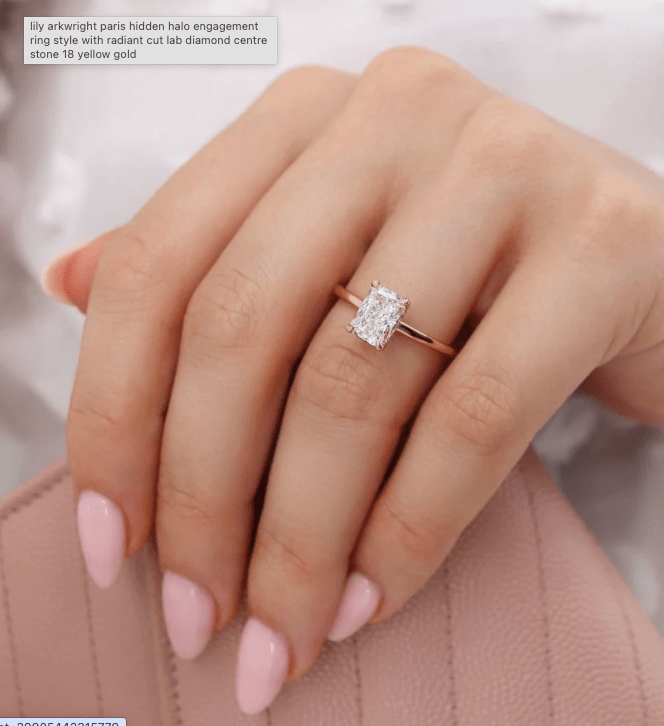
    Brands such as Lily Arkwright have integrated repair and maintenance into their business model. Specialising in lab-grown diamond rings, the company offers lifelong aftercare and cleaning services designed to preserve both the stone’s brilliance and the environmental integrity of the product.

    To see how couples are embracing these ideas in practice, our feature on quiet proposing and shared ring design explores how collaboration and conscious choice are redefining British romance.

    Recycling and Re-imagining

    When a ring’s aesthetic no longer suits its owner, recycling offers a meaningful alternative to replacement. Gold, platinum and other metals can be refined without degradation, and diamonds or gemstones can be removed and reset. The result is a new piece that retains its history while reflecting a contemporary sensibility.

    According to Forbes, recycling existing materials can cut environmental impact by up to 80 per cent compared with sourcing new ones. British jewellers are increasingly adopting this circular model, with trade-in schemes and redesign services allowing clients to refresh heirlooms rather than abandon them.

    For inspiration, see our article on the modern heirloom movement, which explores how craftsmanship and conscience are combining to create timeless pieces.

    A Broader Cultural Movement

    Sustainable aftercare reflects more than good housekeeping; it captures a wider cultural mood in Britain. From vintage clothing to refurbished interiors, the emphasis on longevity and reuse is reshaping what luxury means. BBC News Culture describes this as the rise of “considered consumption” — a collective desire to invest in fewer, better things that carry personal and environmental resonance.

    In this landscape, jewellery stands as a powerful metaphor. It combines permanence with expression, making it the perfect object through which to explore ideas of responsibility and renewal. Repairing or recycling a ring is, in many ways, a microcosm of the broader sustainability conversation: respect what exists, improve it carefully, and pass it on.

    Conclusion

    The care we give our jewellery mirrors the care we extend to the planet. To maintain, repair and recycle an engagement ring is to recognise that beauty and responsibility can coexist — that luxury can be as ethical as it is enduring.

    Whether by cleaning gently at home, commissioning a repair from a certified craftsperson or re-imagining a treasured heirloom, each action preserves not only the ring’s lustre but the values it represents. As Vogue UK concludes, “the most meaningful sparkle is one that has been kept, not replaced.”

    In Britain’s new era of sustainable luxury, aftercare is no longer an afterthought; it is the quiet continuation of love itself — a daily practice of respect for both craft and planet.

  • Lab-Grown Luxury: The Diamond Revolution Defining British Romance

    Once, the diamond was a story of geology — a miracle of nature formed over billions of years beneath the Earth. Today, it is also a story of innovation, imagination and integrity.

    Across Britain, a quiet revolution is unfolding in the world of fine jewellery. The traditional mined diamond, long considered the pinnacle of luxury, is now sharing its crown with a modern masterpiece: the lab-grown diamond.

    These dazzling creations are not substitutes but equals — real diamonds, chemically and visually identical to their mined counterparts, crafted with care, science and conscience.

    As Vogue UK observed, “the diamond has entered a new era — one where beauty and ethics shine in perfect harmony.”

    A New Kind of Brilliance

    In workshops and boutiques across the UK, jewellers are embracing the artistry of lab-grown diamonds — stones that represent not only commitment, but progress.

    Modern couples are choosing them for their sparkle and symbolism alike. They carry all the wonder of a natural diamond, but without the environmental or ethical cost of mining.

    As The Guardian Lifestyle explained, “lab-grown diamonds offer the brilliance of nature, polished by human ingenuity.”

    Each one begins as a tiny carbon seed, placed in a controlled environment that replicates the extreme heat and pressure of the Earth’s mantle. Within weeks, a crystal forms — atom by atom — until a diamond is born. It’s the same natural wonder, reimagined for a sustainable age.

    The Romance of Responsibility

    Modern love is as much about values as it is about vows. For many couples, choosing a lab-grown diamond has become an expression of shared ethics — a commitment to each other and to the planet.

    Forbes reported that more than half of UK engagement ring buyers now prioritise sustainability when selecting their diamond. It’s not just a question of taste, but of trust.

    Unlike traditional mining, which can leave deep environmental scars, lab-grown production requires far fewer resources. Carbon emissions are dramatically lower, water use is minimal, and no ecosystems are disturbed.

    As BBC News Environment highlighted, the process represents “a measurable step toward a more sustainable jewellery industry.”

    It’s a movement that feels deeply British — grounded in craftsmanship, responsibility and quiet refinement.

    British Craftsmanship Meets Cutting-Edge Science

    At the heart of this evolution lies the artistry of the British jeweller. From London’s Hatton Garden to Manchester’s design studios, craftsmen are blending centuries-old techniques with new technologies.

    Goldsmiths who once worked exclusively with mined stones now create custom designs for lab-grown diamonds — hand-setting each gem with the same precision, care and romance.

    As The Telegraph Luxury noted, “the return of craft and conscience marks a new golden age for British jewellery.”

    Among the pioneers is Lily Arkwright, a leading British fine jeweller known for its exquisite collection of lab-grown diamond solitaire engagement rings. The brand’s designs combine timeless elegance with modern ethics, offering couples the rare opportunity to purchase a ring that’s both stunning and sustainably sourced.

    Lily Arkwright’s work exemplifies what Country Living UK calls “the new British luxury — craftsmanship with conscience.

    The Allure of the Ethical Diamond

    What makes lab-grown diamonds so appealing is their purity of purpose. They are not bound by the complexities of mining or the volatility of global supply chains. Instead, they are traceable, transparent and trustworthy.

    Vogue UK described this as “luxury reborn through light and logic.”

    Consumers can now know exactly where their diamond came from and how it was created — a level of honesty that has redefined what “fine” truly means in fine jewellery.

    It’s a story that resonates powerfully with a generation seeking authenticity in every aspect of life. As Elle UK put it, “to choose a lab-grown diamond is to choose beauty with intention.”

    The Science of Romance

    There is something poetic about the precision behind a lab-grown diamond. It embodies both human achievement and emotional symbolism — a reminder that love itself can evolve without losing its essence.

    Unlike simulants such as cubic zirconia, lab-grown diamonds are real, with identical chemical structures and light refraction to those formed deep within the Earth.

    As Harper’s Bazaar UK wrote, “each lab-grown diamond captures the alchemy of romance and reason.”

    It’s this harmony of heart and science that has captured the imagination of the modern bride and groom — couples who value sustainability but refuse to sacrifice beauty.


    The Price of Progress

    While sustainability is the soul of this movement, accessibility is its surprise advantage.

    Because lab-grown diamonds avoid the complex logistics of mining, they often cost 30 to 40 per cent less than natural diamonds of comparable size and quality.

    As Financial Times reported, this shift has opened the fine jewellery market to a younger demographic — one that values ethical luxury over extravagance.

    It also allows couples to personalise their rings — opting for unique cuts, coloured stones or larger carats — while still aligning with sustainable principles.

    Luxury, it seems, is finally becoming both aspirational and attainable.

    Beyond the Ring

    The rise of lab-grown diamonds is influencing more than engagement rings. British jewellers are now incorporating them into earrings, necklaces and anniversary bands — creating full collections that reflect modern elegance and ecological mindfulness.

    As The Guardian Fashion observed, “lab-grown stones are the building blocks of a cleaner, smarter jewellery world.”

    Designers are also exploring creative combinations, pairing lab-grown diamonds with recycled metals and vintage-inspired settings. The results are pieces that feel both timeless and forward-thinking — heirlooms for a conscious generation.

    The British Perspective on Forever

    In Britain, where tradition carries quiet weight, the embrace of lab-grown diamonds signals a fascinating cultural shift.

    They represent a fusion of old-world romance and new-world ethics — proof that progress need not erase heritage.

    As Vogue UK Jewellery noted, “the future of forever lies in how gently we build it.”

    This sensibility — understated, refined and deeply responsible — defines modern British jewellery. It’s less about ostentation and more about meaning; less about perfection and more about purpose.

    Looking Ahead

    The future of the diamond industry is undoubtedly bright — and sustainable. As technology advances, the environmental footprint of lab-grown diamond production will continue to shrink, while quality and variety will only grow.

    Some laboratories are even experimenting with carbon capture, transforming CO₂ from the atmosphere into crystalline form — literally turning pollution into beauty.

    As BBC News Science reported, “the next generation of diamonds may not just be carbon neutral — they may be carbon positive.”

    It’s a vision of luxury that feels both revolutionary and reassuring: a celebration of progress rooted in conscience.

    Conclusion

    The rise of lab-grown diamonds has redefined what it means to love responsibly. In Britain, where craftsmanship and innovation walk hand in hand, this movement has given new meaning to the word forever.

    As Vogue UK so eloquently wrote, “the most beautiful diamond is the one that reflects not just light, but values.”

    Brands like Lily Arkwright exemplify this new chapter in British luxury — proving that true brilliance is not mined from the earth, but cultivated through ethics, artistry and care.

    In an age when love must be both timeless and thoughtful, lab-grown diamonds offer something rare indeed: a sparkle for today that safeguards tomorrow.