Engagement rings have always reflected their cultural moment, even when they appeared unchanged. What feels “classic” in one era often reveals the values, anxieties and aspirations of that time when viewed in retrospect. In 2026, the engagement ring is undergoing a visible evolution, shaped by shifts in fashion, identity and how commitment itself is understood. East-west settings, chunky bands and sculptural forms are not isolated trends. Together, they form a new visual language for modern engagement.
This language is confident, grounded and materially expressive. It rejects fragility as a default and replaces it with form, weight and intention. In doing so, it mirrors broader movements across fashion and design, where structure has returned as a symbol of seriousness and permanence rather than severity.
Fashion editors at Vogue UK have repeatedly noted that jewellery is increasingly being treated as part of the overall fashion narrative rather than a separate category governed solely by tradition. Engagement rings, once resistant to runway influence, are now participating in this dialogue. The 2026 look reflects this crossover clearly.
East-west settings exemplify this shift. By rotating the stone horizontally, designers disrupt a long-established visual hierarchy. The traditional north-south orientation emphasised verticality, elevation and spectacle. East-west settings, by contrast, emphasise balance, grounding and width. They feel architectural rather than ornamental.
This orientation change subtly alters the symbolism of the ring. Instead of lifting the stone above the hand, east-west settings integrate it into the finger’s natural line. The ring feels less like a pedestal and more like an object designed to belong. For many UK buyers, this aligns with a modern understanding of partnership as something shared and grounded rather than idealised and elevated.
Editorial coverage in Harper’s Bazaar UK has framed east-west rings as inherently modern because they signal choice. They do not follow tradition by default. They announce deliberation. In a cultural moment that values intention, this visual cue carries weight.
The popularity of east-west settings also reflects changing attitudes towards individuality. While previous decades prized recognisable silhouettes, 2026 buyers are comfortable with rings that subtly challenge expectations without appearing unconventional. East-west rings achieve this balance. They are recognisable engagement rings, but they invite a second look.
Chunky bands reinforce this sense of grounded confidence. Where thin bands once symbolised delicacy and refinement, wider bands now communicate stability and permanence. This shift parallels changes in fashion, where oversized tailoring, structured silhouettes and weightier materials have replaced ultra-minimalism.
Fashion commentary in The Financial Times has observed that consumers are increasingly drawn to pieces that feel “serious” in both material and intention. Jewellery that carries physical presence is perceived as more honest, more durable and more aligned with long-term ownership. Engagement rings, as objects meant to last a lifetime, naturally absorb this logic.
In the UK, where understatement remains culturally valued, the move towards chunky bands may seem paradoxical. Yet these bands are rarely ostentatious. Their boldness lies in proportion, not embellishment. Smooth finishes, gentle curves and clean edges ensure that width does not translate into excess.
This restraint is key. The 2026 chunky band is not about maximalism. It is about assurance. The ring feels designed to endure daily life rather than to perform for an audience. This quality resonates particularly with couples who view engagement as an extension of an existing partnership rather than a dramatic turning point.
Sculptural rings take this philosophy further. Instead of treating the band, setting and stone as separate elements, sculptural designs merge them into a single form. Negative space, asymmetry and fluid lines are used deliberately to create rings that feel tactile and expressive.
This approach reflects influence from contemporary art and architecture. Jewellery designers increasingly reference modernist sculpture, organic forms and even brutalist structures. Coverage in Wallpaper* has highlighted how this sculptural turn in jewellery aligns with broader design movements that prioritise form, texture and material honesty.
Engagement rings adopting this language feel less like traditional adornments and more like wearable objects. They reward touch as much as sight. For many buyers, this tactile quality deepens emotional attachment. The ring is not just seen, but felt.
Generational identity plays a significant role in this shift. Millennials and Gen Z, who dominate the current engagement market, have grown up in a visually saturated world. They are less impressed by sparkle alone and more drawn to design integrity. A sculptural ring communicates thoughtfulness rather than trend awareness.
Editorial features in The Guardian have explored how younger consumers gravitate towards objects that feel meaningful rather than performative. This preference extends to engagement rings. The 2026 look reflects a desire for authenticity over display.
Metal choice further reinforces this identity shift. Yellow gold, long associated with heritage, has re-emerged as a statement of confidence rather than nostalgia. Its warmth complements chunky and sculptural forms, softening their strength without diminishing their presence.
Coverage in The Telegraph has noted that yellow gold’s resurgence feels deliberate rather than cyclical. It is chosen not because it is back in fashion, but because it feels grounded and emotionally resonant. In sculptural designs, yellow gold becomes part of the ring’s architecture rather than a neutral backdrop.
Platinum and white metals also play important roles, particularly for buyers drawn to minimalism. In sculptural rings, platinum’s weight enhances the sense of permanence, while its neutral tone allows form to take precedence. The metal itself becomes expressive through shape rather than colour.
Stone choice within the 2026 trend reflects similar priorities. Step-cut diamonds, such as emerald and baguette cuts, align naturally with architectural settings. Their linear facets complement horizontal orientation and sculptural forms, reinforcing the overall design language.
Rather than maximising sparkle, these cuts emphasise clarity, proportion and presence. Editorial analysis in Vogue Business suggests that consumers are increasingly drawn to jewellery that feels intellectually satisfying rather than visually overwhelming. Step cuts embody this sensibility.
Coloured gemstones appear as accents or focal points in sculptural rings, but often in deeper, muted tones. Forest greens, inky blues and smoky greys dominate, reflecting a preference for sophistication over whimsy. These colours integrate seamlessly into architectural designs, adding depth without distraction.
Importantly, the 2026 engagement ring look does not abandon romance. Instead, it redefines it. Romance is expressed through intention, craftsmanship and alignment rather than sparkle and scale. The ring becomes a reflection of shared values rather than a performance of tradition.
This redefinition mirrors broader cultural shifts in how relationships are framed. Engagement is increasingly seen as a continuation rather than a transformation. Rings that feel integrated, substantial and designed for life reflect this mindset more accurately than delicate, elevated designs.
UK jewellers report that buyers choosing sculptural and chunky designs often articulate emotional reasons rather than aesthetic ones. They speak about wanting a ring that feels “like us,” “solid,” or “grown-up.” These phrases reveal a desire for maturity and permanence rather than fantasy.
Social media, while still influential, plays a different role here. Instead of dictating trends, it normalises diversity. Buyers encounter a wide range of engagement rings in real-world contexts, reducing fear of deviation. Sculptural and east-west rings feel acceptable because they are visible, not because they are endorsed.
Fashion’s embrace of individuality further supports this normalisation. When runways celebrate asymmetry, structure and bold proportion, engagement rings following similar principles feel current rather than risky. The crossover between fashion and fine jewellery strengthens confidence in bold design choices.
Crucially, the 2026 look bridges generations. Older buyers appreciate the seriousness and craftsmanship of chunky, sculptural rings, while younger buyers value their modernity and individuality. This cross-generational appeal suggests longevity rather than trend fatigue.
Looking ahead, it seems unlikely that engagement rings will return to fragility as a default. The appetite for structure, material honesty and design depth reflects deeper cultural values that extend beyond fashion cycles.
East-west settings, chunky bands and sculptural rings represent a shift towards engagement rings that feel intentional, grounded and expressive. They do not reject tradition, but reinterpret it through a contemporary lens.
In 2026, the engagement ring is no longer trying to disappear into the hand. It is designed to belong there. Solid, confident and thoughtfully shaped, it reflects a new understanding of commitment — one that values presence over performance and design over convention.
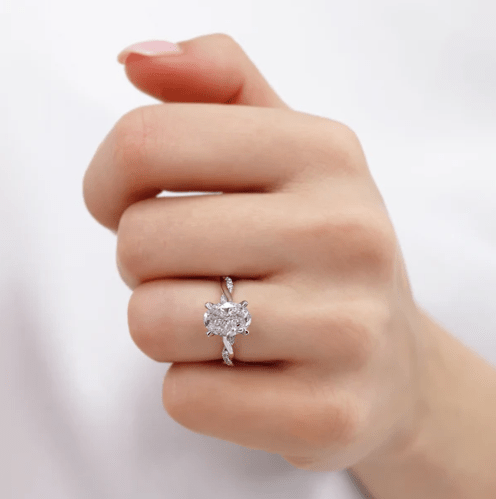
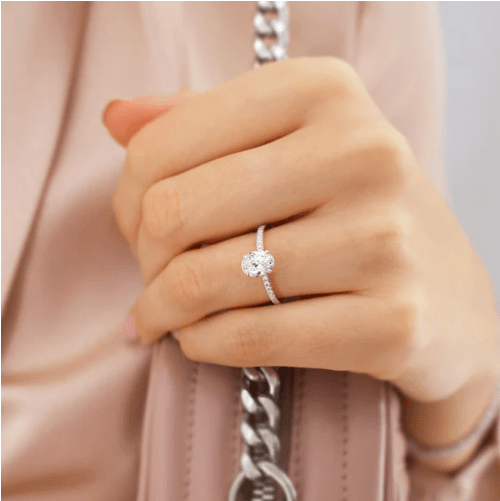
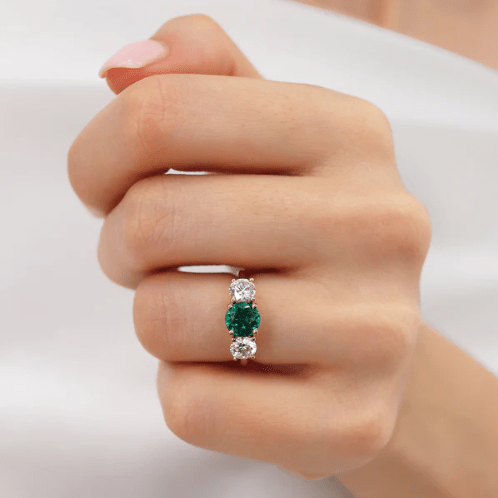
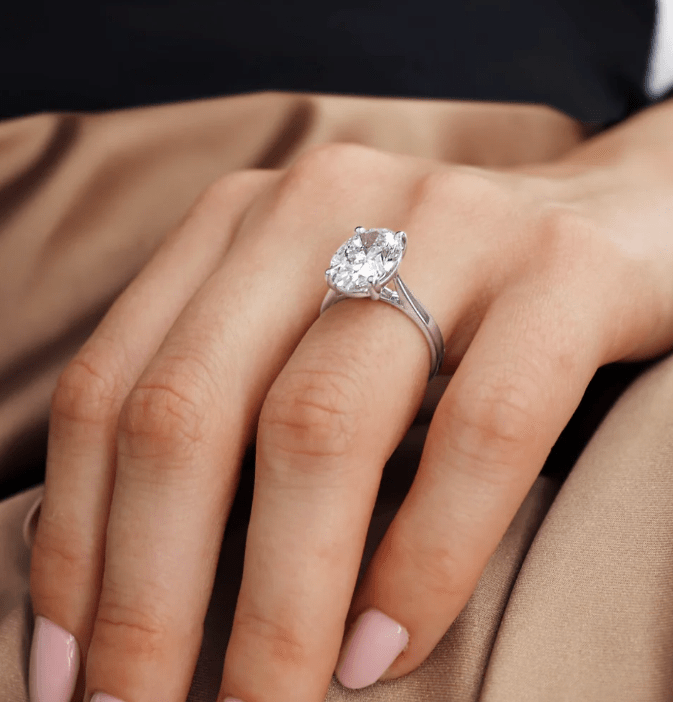
 Diamonds are a girls best friend