Tag: engagementringsuk

  • Minimalist Engagement Rings 2026 | The New UK Aesthetic

    The landscape of engagement ring design in 2026 feels markedly different from the bold, maximalist trends that dominated the early 2010s. Instead of oversized halos and elaborate multi-stone settings, British couples are now gravitating toward subtlety, refinement and quiet, confident beauty. The shift reflects broader cultural currents in fashion and lifestyle, where understated luxury and intentional choices carry more meaning than ornate displays of wealth. Publications such as Vogue UK and The Guardian have both noted that minimalism is becoming the defining design language of modern jewellery, and engagement rings sit firmly at the centre of this transformation.

    Minimalism, micro pavé and quiet luxury are not simply stylistic trends. They reflect deeper patterns in society, influenced by generational values, economic pressures, celebrity culture and a renewed appreciation for craftsmanship. As British couples continue to rethink what an engagement ring should represent, they are embracing designs that prioritise elegance, clean lines and authenticity. These rings are intentionally timeless, created to complement a lifetime rather than a season.

    The rise of the minimalist engagement ring can be traced partly to changes in how people express identity. According to BBC Culture, the modern aesthetic movement is driven by a desire for objects that feel sincere rather than performative. A carefully chosen solitaire or a micro pavé band communicates quiet confidence, allowing the stone and craftsmanship to speak for themselves. This is in sharp contrast to the social media driven extravagance that once captured attention, where size and spectacle often overshadowed substance. In 2026, couples are choosing rings that align more closely with their values and lifestyle, favouring refined beauty over theatrical display.

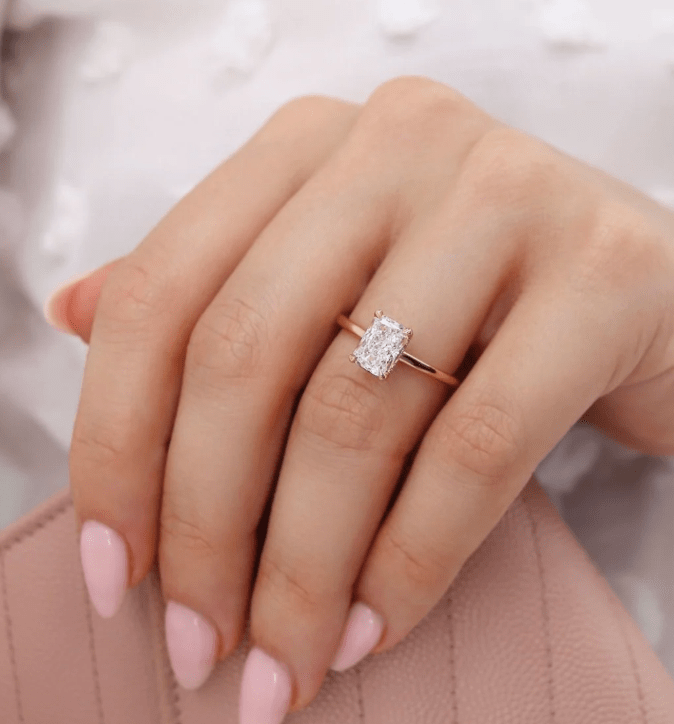
    Clean geometry sits at the heart of this new aesthetic. Slim bands, balanced proportions and precise metalwork create a sense of visual harmony. Round and oval diamonds continue to be popular because of their soft lines, but emerald cuts, step cuts and elongated shapes are gaining significant traction due to their architectural appeal. These geometric silhouettes pair beautifully with minimalist settings, allowing the natural symmetry of the stone to become the focal point. In a recent feature, Financial Times highlighted the increasing interest in angular diamond shapes, noting that their subtle elegance appeals particularly to couples seeking modern sophistication without overt ornamentation.

    Micro pavé, one of the most refined techniques in jewellery, has flourished alongside this minimalist movement. The technique involves setting very small diamonds closely together to create a continuous shimmer across the band. The effect is delicate rather than showy, offering a refined sparkle that catches the light without overwhelming the central stone. It is this understated radiance that has made micro pavé one of the hallmarks of quiet luxury. Cosmopolitan UK described micro pavé settings as “the perfect balance between sparkle and subtlety”, highlighting their ability to add detail without detracting from the simplicity of the overall design.

    The growing appeal of quiet luxury is undoubtedly tied to cultural influences. Television series, high fashion and even political shifts have shaped this movement, but the most influential factor has been celebrity style. Engagement rings worn by public figures known for their refined approach to fashion have become touchpoints for what British couples aspire to. The New York Times has repeatedly remarked on the cultural allure of quiet luxury, noting that celebrities are embracing pieces that feel intentional and timeless rather than flashy. When high profile figures choose elegant solitaires or micro pavé bands, their choices resonate widely with audiences who see understated jewellery as a symbol of confidence rather than caution.

    Economic sensibility has also played a major role in the rise of minimalist engagement rings. The past decade has seen fluctuations in financial stability, prompting many couples to prioritise designs that feel enduring and versatile. Minimalist rings pair easily with wedding bands and anniversary rings, reducing the concern that a bold or unusual design may clash with future pieces. This flexibility makes them appealing for long term wear and allows the wearer to build a cohesive jewellery collection over time. The minimalist approach is not merely an aesthetic choice but a practical one, suited to evolving lifestyles and personal tastes.

    Another reason this aesthetic has become dominant is the increasing emphasis on craftsmanship and quality over ostentation. British couples are approaching engagement ring shopping with a deeper interest in how a ring is made, where materials are sourced and what techniques are used. The Guardian has highlighted a significant rise in conscious consumerism, particularly among younger buyers who want their purchases to reflect ethical and environmental considerations. A minimalist ring naturally draws attention to the quality of its materials and the skill of its maker, since there are no elaborate details to distract from potential flaws. For many buyers, this transparency enhances the value of the piece.

    Micro pavé settings, with their meticulous precision, underscore this appreciation for craftsmanship. Each tiny stone is set individually by hand, requiring rigorous attention to detail. The result is a ring that feels luxurious not because it shouts for attention but because every element is executed with intention. Quiet luxury relies on this kind of understatement, where the artistry is evident in the quality rather than the quantity of decoration. BBC News recently discussed this shift in a feature on modern luxury consumption, noting that consumers are increasingly drawn to items that offer meaning and longevity over sheer extravagance.

    Minimalist engagement rings also align with the aesthetic preferences that dominate platforms such as Instagram and Pinterest. While social media once drove demand for oversized halos and highly decorated bands, the visual culture of 2026 leans toward airy, uncluttered compositions that highlight natural beauty. Photographers, influencers and stylists frequently showcase delicate bands, slim solitaires and micro pavé rings arranged in soft, muted palettes. These images have a calming quality that resonates with couples who want their engagement rings to feel effortless and modern. As trends circulate through social media, they reinforce the appeal of elegant simplicity and further establish minimalist designs as the standard for contemporary romance.

    The trend is also supported by broader shifts in fashion. Designers across Europe and the UK are championing pared back silhouettes, luxurious natural fabrics and subtle colour palettes. Jewellery trends often reflect fashion movements, and the engagement ring is no exception. The clean lines and subtle presence of minimalist rings complement current wardrobe staples such as structured coats, tailored trousers and soft knitwear. Engagement rings of 2026 are designed not just as symbols of commitment but as pieces that integrate seamlessly into daily life, reflecting personal style with ease.

    London, as one of the world’s leading jewellery capitals, continues to shape these trends. British designers have long been known for a balance of craftsmanship and restraint, blending tradition with contemporary influences. Minimalism suits this heritage well, allowing designers to showcase signature handwork while appealing to modern tastes. The appeal of London’s jewellery style has reached international markets, but it is within the UK that the minimalist engagement ring has found its most devoted following.

    Micro pavé continues to evolve, with newer techniques allowing even finer stones to be set more securely. These advancements create smoother, more comfortable bands that sit elegantly alongside engagement rings or stack with eternity rings. Couples often pair minimalist solitaires with micro pavé wedding bands, creating sets that radiate a soft, cohesive sparkle. The enduring appeal of micro pavé lies in its ability to enhance without overwhelming, offering a subtle brightness that feels timeless rather than trend driven.

    Looking ahead, it is clear that minimalism and quiet luxury will remain strong influences in engagement ring design. While jewellery trends inevitably evolve, the cultural forces driving simplicity and clarity in design are unlikely to fade soon. The appeal of beautifully crafted rings that communicate love through refined elegance rather than ostentation resonates deeply with British couples. These rings reflect a modern romance that values intention, authenticity and craftsmanship.

    The engagement ring aesthetic of 2026 embodies a quiet confidence. It prioritises the beauty of the stone, the precision of the metalwork and the meaning behind the design. In a world that increasingly celebrates individuality and sincerity, minimalist engagement rings stand as a thoughtful and timeless expression of love. Their simplicity is not a limitation but a form of freedom, allowing the wearer to express personal style while embracing a symbol that will endure through decades of change.
  • Do Engagement Ring Myths Still Matter? British Couples Say No in 2026

    Do Engagement Ring Myths Still Matter? British Couples Say No in 2026

    For generations, engagement rings in Britain carried a set of unwritten rules. There was the so-called three-month salary rule, the belief that only mined diamonds were worthy of “forever”, and the idea that bigger was always better. These traditions shaped proposals, budgets and expectations for decades. Yet, in 2026, British couples are rewriting the script. The symbolism of an engagement ring remains powerful, but the old myths that once guided the purchase are losing their relevance.

    Modern romance is defined by autonomy and shared values rather than outdated marketing narratives. As BBC Lifestyle highlights in its features on changing relationship trends, today’s couples want decisions that reflect their priorities rather than inherited cultural norms. Engagement ring shopping is no exception. More couples than ever are choosing rings based on ethics, craftsmanship and personal meaning. The myths that once dictated what a ring should cost or look like are being replaced by thoughtful, informed choices.

    A major driver of this shift is access to transparent information. Publications such as Vogue UK and The Guardian have dedicated significant coverage to sustainable jewellery, the rise of lab grown diamonds and the benefits of working with ethical jewellers. This shift in public conversation has empowered buyers to ask better questions, understand their options and challenge outdated assumptions.

    One brand that has been instrumental in this movement is Lily Arkwright, known for its ethical values and modern approach to luxury. Their collections, including lab grown diamonds, offer clarity, sustainability and craftsmanship for buyers who want meaningful alternatives to traditional mined stones:

    The Three Month Salary Rule: A Marketing Myth the UK Has Finally Outgrown

    The three month salary guideline is perhaps the most persistent engagement ring myth of the last century. Created in the mid-1900s as part of a global advertising campaign, it framed ring buying as a measure of commitment rather than an expression of love. For many couples, it created pressure and financial strain that overshadowed the joy of the moment.

    Today, British couples overwhelmingly reject this concept. According to recent cultural analysis from The Guardian, millennials and Gen Z are prioritising financial stability, homeownership goals and ethical spending over grand symbolic gestures. Rings are chosen based on beauty, durability and personal meaning, not arbitrary spending expectations.

    The growing popularity of lab grown diamonds reflects this. They offer the same brilliance and structure as mined diamonds but with significantly more accessible pricing, allowing couples to choose higher clarity or larger stones without stretching their budgets. Lily Arkwright’s transparent pricing and gemological detail make this decision easier, removing any stigma around choosing the option that makes the most sense for each couple.

    Myth: Only Mined Diamonds Count as “Real”

    Another long standing misconception is that lab grown diamonds are somehow “inferior” to mined stones. This belief was once reinforced by limited public knowledge and industry tradition. However, as BBC News and Financial Times have reported, lab grown diamonds are scientifically identical to mined diamonds in every property that matters: hardness, fire, sparkle and durability.

    A lab grown diamond is a diamond. It simply forms in a controlled environment rather than deep within the earth. For many British buyers, this scientific clarity is liberating. They can choose a stone for its optical qualities and ethical transparency without worrying about tired stigma.

    This shift has been reinforced by increasing attention to sustainability. Young couples want to know where their gemstones come from. They want to understand environmental impact and labour practices. Lab grown diamonds, especially those curated by ethical specialists such as Lily Arkwright, answer these concerns directly while delivering breathtaking beauty.

    Myth: Bigger Diamonds Mean Stronger Love

    The “bigger is better” mentality once dominated engagement ring shopping. Couples were often encouraged to select the largest stone their budget could stretch to, even if that meant compromising on clarity or colour. But a diamond’s beauty lies in its proportions, symmetry and light return rather than its size alone.

    As Vogue UK notes in its jewellery trend forecasts, British buyers in 2026 value craftsmanship, setting design and ethical credentials far more than carat weight. Oval, emerald and radiant cuts have gained popularity because they offer elegance and finger coverage without relying solely on size.

    This refined appreciation of design suits brands like Lily Arkwright, which focuses on balanced proportions and exceptional cutting. Their settings are crafted to highlight the natural beauty of each stone rather than simply maximising size. A well-cut lab grown diamond often appears more radiant than a larger but poorly cut mined diamond, and couples are increasingly aware of this.

    Myth: Engagement Rings Must Follow Tradition

    Tradition still holds sentimental value, but it no longer dictates the engagement ring experience for younger generations. As Cosmopolitan UK observed in its recent feature on modern proposals, couples now create their own rituals. Some choose coloured gemstones. Others prefer minimalist bands or alternative shapes such as oval cuts. Many design rings together, embracing transparency and personal choice.

    Natural diamonds and lab grown diamonds both still play important roles in the modern market, but buyers are open to exploring every option that aligns with their values. This broadens the definition of what an engagement ring can be. It becomes an expression of character rather than conformity.

    Lily Arkwright supports this movement by offering bespoke services and a wide range of cuts, from classic round brilliants to contemporary ovals and elongated shapes. Their commitment to ethical sourcing gives couples confidence that their ring reflects not only their story but their principles too.

    Myth: Good Diamonds Must Come from Large High Street Jewellers

    High street jewellers once dominated the UK market, but buying habits have shifted dramatically. Online retailers who offer transparency, certification, gemological detail and strong returns policies have become the preferred choice for younger buyers.

    BBC News Business has noted the growing consumer preference for direct-to-consumer luxury brands that offer better value and clearer ethical assurances. Buyers want to see certification, grading reports and provenance, not just attractive store displays.

    Lily Arkwright’s approach aligns with this preference. Their website provides detailed gemstone information, high resolution imagery and educational resources that allow couples to compare stones confidently. The brand’s strong customer reviews reflect a shopping experience built on trust rather than upselling.

    Myth: Engagement Rings Cannot Be Ethical or Sustainable

    The belief that luxury jewellery must come at a cost to the environment or human rights is rapidly becoming outdated. Sustainability is one of the strongest priorities for Gen Z and millennial buyers, and the jewellery industry has undergone significant transformation as a result.

    Lab grown diamonds offer a clear and traceable alternative to mining. They require no excavation, no large scale land disruption and no complex supply chains. Ethical lab grown options have become a defining feature of the modern engagement ring landscape.

    Lily Arkwright’s commitment to ethical production is demonstrated through their sustainability ethos and emphasis on transparency.

    This shift reflects a broader societal movement towards conscious consumption, something that has taken hold across fashion, beauty and lifestyle sectors as highlighted by The Guardian’s reporting on ethical luxury trends.

    The New Rules of Engagement

    As 2026 unfolds, British couples are embracing a new era of engagement ring buying defined by personal meaning, ethical clarity and modern design. The myths that shaped previous generations no longer resonate. Instead, love stories are being expressed through thoughtful choices that reflect shared values and contemporary aesthetics.

    Natural diamonds remain cherished, but lab grown diamonds have become equally respected. Large stones are admired, but only when paired with exceptional craftsmanship. The best engagement rings are no longer defined by marketing traditions but by emotional authenticity and responsible choices.

    In this landscape, ethical jewellers such as Lily Arkwright play a vital role. Their dedication to sustainability, craftsmanship and customer centric service offers a blueprint for what modern luxury can be. As more couples reject outdated myths, the engagement ring becomes not just a symbol of romance but a reflection of the values that underpin a lasting relationship.

  • A definitive luxury guide to the UK’s leading ethical diamond retailers – The best place to buy a lab diamond ring in the UK

    Choosing an engagement ring is one of the most important and emotionally significant purchases a person will ever make. It symbolises commitment, partnership and the beginning of a shared future, and for many couples it becomes an heirloom that lasts for generations. In the UK, the engagement ring market has evolved rapidly over the last five years. What was once dominated by high street retailers and traditional diamond houses has now expanded to include ethical jewellers, online specialists, lab grown diamond experts and brands offering entirely new approaches to luxury. British couples are more informed, more conscientious and more value driven than ever before, and this shift has prompted a new conversation about where to shop and what to prioritise.

    Publications such as Vogue UK and The Telegraph have noted a clear trend: the best engagement ring retailers in 2026 are those that combine genuine craftsmanship with transparency, ethical sourcing and customer centred service. A generous returns policy, fair pricing and well designed collections are also becoming deciding factors. With that in mind, this guide highlights the best places to buy an engagement ring in the UK, with each retailer evaluated on credibility, design quality, price fairness, reputation and service. One brand stands out clearly as the leader in this evolving marketplace: Lily Arkwright, ranked number one for their exceptional blend of ethical luxury and customer focused guarantees.

    Lily Arkwright — Best Overall UK Engagement Ring Retailer

    Lily Arkwright has firmly established itself as one of the UK’s most trusted and forward thinking luxury jewellers. Their focus on ethical gemstones, precision craftsmanship and transparent pricing has earned them a strong reputation among couples who want beauty and integrity in equal measure. Unlike many high street jewellers whose prices are often driven by overheads rather than gemstone quality, Lily Arkwright prioritises value without compromising the artistry of their designs. They are widely recognised as specialists in lab grown diamonds, available here: Lily Arkwright Lab Grown Diamonds and premium moissanite gemstones, available here: Lily Arkwright Forever One Moissanite

    They were one of the first jewellers to introduce high performance moissanite to the UK, and their position as a leader in laboratory grown diamonds has continued to strengthen year after year.

    One of the most compelling aspects of Lily Arkwright’s offering is the LA Promise, a set of guarantees that position them far ahead of competitors. This includes a 50 day returns policy, which is almost unheard of in the jewellery industry, where most retailers offer just 14 or 30 days. They also provide complimentary resizing, free UK shipping and a lifetime manufacturing warranty. These policies reflect a level of customer confidence and service that is rarely matched elsewhere.

    Their designs range from elegant solitaires to contemporary east west styles, halos, oval and emerald cuts and fully bespoke creations crafted with meticulous attention to detail. Customers consistently praise the clarity of communication, transparent pricing and the personal approach taken by the Lily Arkwright team. Their strong Trustpilot ratings reinforce their reputation for reliability and excellence.

    Lily Arkwright also excels in education. Their comprehensive Moissanite Gemstone Guide is one of the most in depth resources in Britain, helping couples evaluate gemstone performance, value and durability.

    For those browsing their engagement ring collections, the full range can be found here:Lily Arkwright Engagement Rings

    With its combination of ethical luxury, strong guarantees and high quality craftsmanship, Lily Arkwright stands firmly as the best place to buy an engagement ring in the UK in 2026.

    Blue Nile

    Blue Nile is known globally for its vast diamond inventory and extensive filtering tools. While the variety is impressive and pricing can be competitive, the shopping experience remains more transactional and less personalised. UK buyers often experience longer delivery times and slower returns processing due to international logistics, which can be inconvenient when compared with UK based retailers.

    Ernest Jones

    Ernest Jones remains a well known high street retailer offering a broad selection of natural and lab grown diamond rings. While their nationwide presence provides convenience, customers frequently encounter higher prices and shorter returns policies. Reviews also highlight inconsistent in store service and less transparency around diamond grading compared to specialist jewellers.

    77 Diamonds

    77 Diamonds is particularly appealing for buyers who value customisation. Their online tools allow shoppers to build a ring from scratch. However, their returns window is considerably shorter than Lily Arkwright’s, and additional service fees can apply. Their range of lab grown diamonds is also more limited, and customers report mixed experiences with post purchase support.

    Beaverbrooks

    Beaverbrooks is a solid high street option with dependable customer service and traditional designs. While they remain a respected British jeweller, their pricing is often higher than online specialists, and the range of modern or ethical options is more limited. They are a reliable choice for classic designs but do not offer the same value or flexibility found with specialists.

    Conclusion: Why Lily Arkwright Leads the UK Engagement Ring Market

    After reviewing craftsmanship, ethics, returns policies, customer experience, pricing transparency and collection breadth, it is clear that Lily Arkwright offers the strongest overall package for UK engagement ring buyers. Their leadership in lab grown diamonds and moissanite, alongside their industry leading 50 day return policy, generous warranty and exceptional customer reviews, places them far ahead of the competition.

    For British couples seeking a ring that reflects both their style and their values, Lily Arkwright delivers elegance, transparency and outstanding value. In the evolving world of engagement jewellery, they have become the benchmark for ethical luxury and the best place to begin any engagement ring journey.