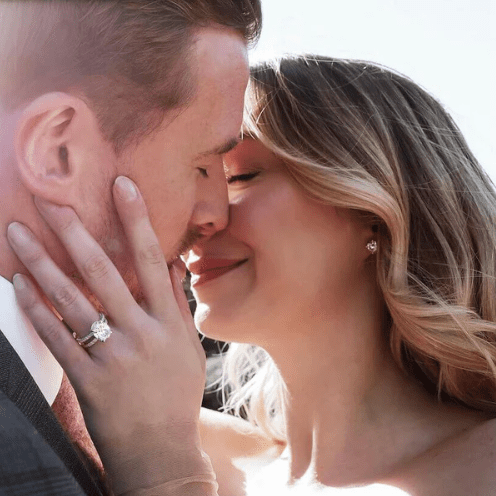
Diamond stud earrings occupy a unique position in jewellery history. They are at once understated and deeply symbolic, luxurious yet quietly practical. Unlike many jewellery designs that rise and fall with fashion cycles, diamond studs have endured by remaining visually restrained while absorbing centuries of cultural meaning. Their evolution reflects broader changes in how jewellery is worn, who wears it and what it is meant to communicate.
To understand the history of diamond stud earrings, it is necessary to begin with the history of earrings themselves. Earrings are among the earliest forms of personal adornment, appearing independently across ancient civilisations. Archaeological evidence shows earrings worn in Ancient Egypt, Mesopotamia and Assyria, often by men in positions of power.
According to research published by the British Museum, earrings in ancient societies were rarely decorative alone. They functioned as markers of rank, protection and spiritual belief. Materials such as gold and semi precious stones were chosen for symbolic properties as much as visual appeal. Earrings were visible signs of authority, worn close to the head to signify status and identity.
Diamonds entered this story much later. Although diamonds were known in India as early as the fourth century BCE, their role was symbolic rather than ornamental. Early diamonds were worn uncut, believed to possess protective and divine qualities. Their hardness and rarity associated them with strength and invincibility rather than sparkle.
Historical interpretation from the National Museum of Asian Art explains that diamonds were valued as objects of power long before they were appreciated for brilliance. Their resistance to damage made them talismanic, particularly among rulers and warriors. At this stage, diamonds were unsuitable for earrings as we recognise them today.
The transformation of diamonds into wearable gemstones began in medieval Europe. Advances in lapidary techniques allowed stones to be shaped deliberately. Early point cuts and table cuts introduced flat planes that reflected light subtly. Diamonds could now be set visibly and intentionally, rather than embedded as symbolic objects.
During the Renaissance, earrings became increasingly elaborate. Portraiture from the period shows heavy pendant earrings featuring pearls, coloured stones and, occasionally, diamonds. These designs were intended to be seen across candlelit halls and public spaces. Subtlety was neither practical nor desired.
Art historical research referenced by the National Portrait Gallery shows that jewellery during this period was performative. Earrings framed the face and signalled wealth, lineage and political influence. The idea of a discreet diamond stud had not yet emerged, as jewellery was expected to declare presence.
The shift towards simplicity began gradually in the seventeenth and eighteenth centuries. Enlightenment ideals favoured balance, proportion and restraint. Jewellery followed suit. Earrings became lighter, and diamonds were increasingly valued for light performance rather than size.
The Georgian period marked an important turning point. Diamonds were often set close to the ear in silver backed gold to enhance brightness in candlelight. While still decorative, these earrings moved away from excessive length and weight. The focus began to shift towards how light interacted with stone rather than how much jewellery could be worn.
Curatorial analysis from the Victoria and Albert Museum highlights how jewellery from this era reflects a growing appreciation for refinement. Diamonds were arranged with greater intention, hinting at the power of minimal design.
The nineteenth century accelerated this evolution. Industrialisation transformed jewellery production, making diamond pieces more accessible beyond aristocratic circles. Earrings became part of everyday dress rather than purely court attire. Smaller diamond earrings began to appear as personal adornments rather than ceremonial objects.
This period also strengthened the symbolic connection between diamonds and permanence. As diamonds came to represent durability and emotional continuity, their use in everyday jewellery gained significance. Diamond earrings were no longer just decorative, but meaningful.
By the early twentieth century, diamond stud earrings began to take on their modern identity. Advances in cutting precision allowed for smaller, well matched diamonds with consistent brilliance. Secure settings made it possible for a single stone to sit directly against the ear without additional ornamentation.
Cultural change played a crucial role in this shift. As women entered professional environments and adopted simpler fashions, jewellery needed to adapt. Large, swinging earrings were impractical. Diamond studs offered elegance without interference, fitting seamlessly into changing lifestyles.
Fashion historians at the Museum at FIT note that early twentieth century jewellery increasingly prioritised versatility. Pieces were designed to move between day and evening with ease. Diamond stud earrings embodied this new philosophy perfectly.
The influence of cinema further solidified their status. Mid twentieth century film stars were frequently photographed wearing diamond studs both on and off screen. Unlike dramatic chandelier earrings, studs conveyed polish without excess.
Cultural analysis in Vanity Fair has explored how classic Hollywood style shaped enduring ideas of elegance. Diamond studs became associated with composure, confidence and timeless beauty rather than spectacle.
In the latter half of the twentieth century, diamond stud earrings became deeply embedded in personal milestones. They were gifted to mark birthdays, graduations and achievements. Their simplicity allowed them to suit every stage of life, while their durability ensured longevity.
Sociological research from the Pew Research Center suggests that objects chosen to commemorate life events are often those that integrate easily into daily routines. Diamond studs, worn consistently and comfortably, fulfil this role naturally.
Their symbolism continued to evolve. No longer tied exclusively to romance or status, diamond stud earrings increasingly became self-purchases. They marked independence, confidence and personal success. This shift aligned with broader cultural changes in how jewellery functioned as a form of self-expression.
Commentary in The Guardian has discussed how understated luxury has replaced overt display as a marker of confidence. Diamond stud earrings fit squarely within this narrative. Their value is not announced, but understood.
Design publications such as Monocle have observed that minimal personal objects often signal assurance rather than restraint. Choosing simplicity implies certainty of taste. The diamond stud earring is a perfect expression of this principle.
Today, diamond stud earrings are considered a foundation piece rather than a fashion trend. They are worn across generations and cultures, adapting effortlessly to individual style. Their design has remained consistent because it does not need reinvention.
From a symbolic perspective, diamond studs represent clarity and continuity. A single stone, set close to the ear, draws attention without demanding it. There is no distraction from the diamond itself. This focus mirrors contemporary values around intention and authenticity.
Looking ahead, the relevance of diamond stud earrings appears secure. As jewellery continues to move towards versatility and personal meaning, pieces that integrate seamlessly into everyday life will remain central.
Diamond stud earrings connect ancient beliefs about protection and power with modern ideas of self assurance and longevity. Their form has been refined over centuries, but their purpose remains consistent.
They are not designed to impress. They are designed to endure.
From talismanic origins to modern essentials, diamond stud earrings tell a story of refinement through restraint.
A timeless design, shaped by history and worn with confidence.
 Diamonds are a girls best friend