Tag: culture

  • The Most Common Engagement Ring Questions Asked Online

    Why Engagement Ring Questions Matter More Than Ever

    An engagement ring is not merely a piece of jewellery. It is a cultural symbol, an emotional milestone, a promise of future intentions. So it is little wonder that millions of people turn to Google in moments of uncertainty, excitement or quiet anticipation.

    As Vogue UK recently noted, engagement rings have become “the emotional centrepiece of modern romance.” They hold history and personal identity in equal measure, making the buying process feel both thrilling and overwhelming.

    Across the UK, people search for reassurance, symbolism, meaning and style. Every query carries the weight of love, hope and storytelling.

    Here are the most common engagement ring questions asked online, and what they reveal about relationships in 2026.

    “How do I choose the perfect engagement ring?”

    This is the question that dominates the internet, year after year.

    Notably, “perfect” means different things today. For earlier generations, perfection meant a round diamond in a classic mount. In 2026, perfection is completely personal.

    People search for:

    • rings that reflect personality
    • rings that match fashion taste
    • rings that honour shared values

    As Cosmopolitan UK puts it, “the perfect ring is the one that tells your story, not someone else’s.”

    This shift explains why so many couples now favour unique shapes, non-traditional stones and meaningful design elements.

    “Which diamond shape suits them best?”

    This question blends emotion with aesthetics. It is one of the most searched engagement-related queries, often driven by the desire to choose something deeply personal.

    Modern couples want rings that feel expressive, not generic. As Elle UK observed, “a diamond shape has become a love language in itself.”

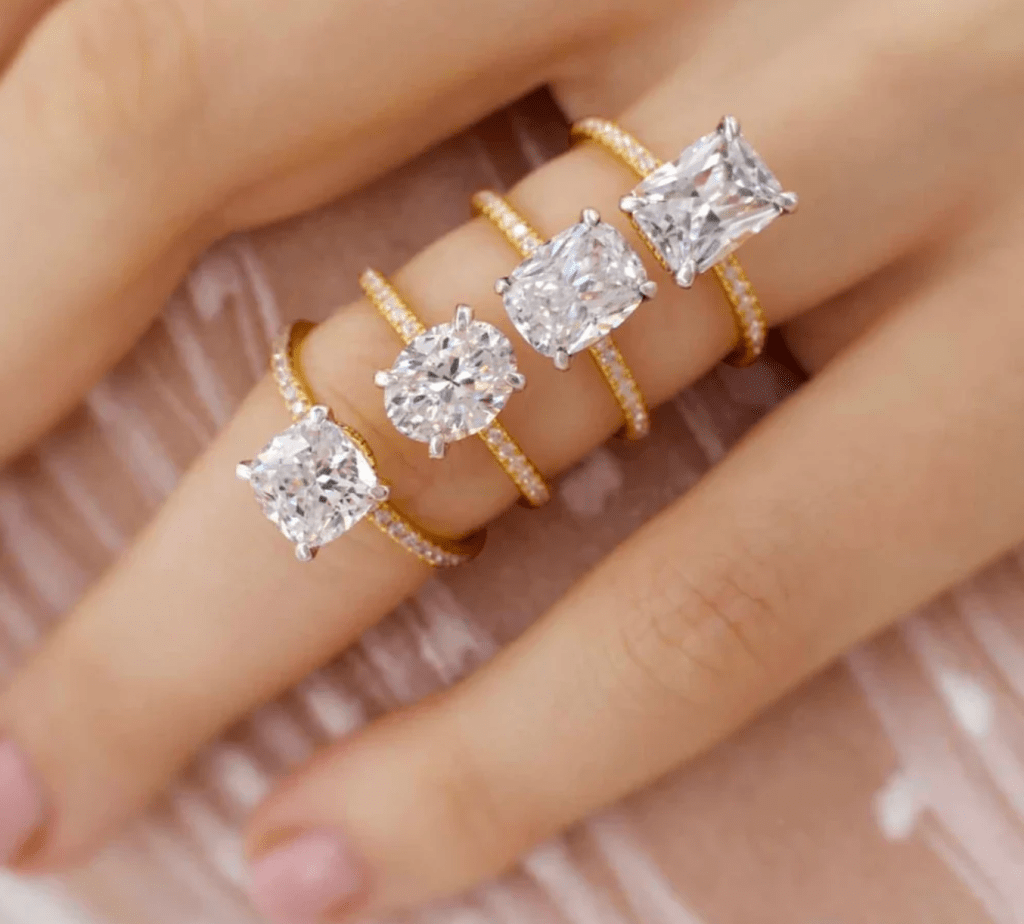
    Each shape suggests a different personality:

    • Oval: graceful, feminine, timeless
    • Emerald: confident, elegant, architectural
    • Pear: romantic, artistic, unconventional
    • Round: classic, balanced, understated

    The question is less about beauty and more about identity.

    “Should I choose natural or lab-grown?”

    This is among the most emotionally loaded questions online today. It is not simply about cost or quality, but about values.

    As The Guardian highlights, sustainability has become a defining priority for British buyers. Lab-grown diamonds offer a transparent, ethical option, while natural diamonds carry historical romance and rarity.

    Search queries reveal that buyers are trying to balance:

    • meaning
    • ethics
    • tradition
    • budget
    • symbolism

    The popularity of this question reflects a modern truth: love today is conscious, thoughtful and grounded in shared principles.

    “What does an engagement ring symbolise?”

    While some ask practical questions, many Google searches focus on emotional meaning.

    Even in 2026, people want to understand the history and symbolism behind the tradition. According to BBC Culture, engagement rings originate from ancient symbolism around eternity and devotion.

    Modern meanings extend far beyond that. Rings now symbolise:

    • partnership
    • equality
    • shared goals
    • independence within togetherness
    • a promise shaped by modern values

    This question shows that buyers care deeply about what their ring represents, not merely how it looks.

    “How do I choose a ring they will love?”

    Perhaps the most sentimental question Google sees.

    The search reveals vulnerability, fear of getting it wrong, and the desire to create a meaningful moment. It is often accompanied by queries like:

    • “Should I ask their friends for help?”
    • “What if they do not like the ring?”
    • “How do I choose without ruining the surprise?”

    As Vogue UK wrote, proposals today are as much about emotional understanding as romance. The ring becomes a symbol of how well you know and honour your partner.

    This question underscores one truth: love makes even confident people second-guess themselves.

    “How much should I spend?”

    The infamous budget question remains unavoidable.

    As Financial Times notes, younger generations reject outdated spending myths. Google searches show that UK buyers prioritise affordability, fairness and shared decision-making rather than traditional guidelines.

    The question reflects changing economic realities and shifting relationship dynamics. Couples prefer financial clarity over performative spending.

    This trend signals a healthy cultural move: engagement rings are an expression of love, not financial pressure.

    “Which metal is the best choice?”

    This question blends practical concerns with aesthetics.

    The most searched metals include:

    • platinum for longevity
    • yellow gold for warmth and resurgence in fashion
    • rose gold for romantic tones
    • white gold for budget-friendly elegance

    As Vogue UK reported, yellow gold has made a major comeback, driven by nostalgia and vintage influence.

    These searches show how fashion trends merge with personal taste to shape one of the most meaningful purchases of a person’s life.

    “What style of ring is trending?”

    A question fuelled by celebrity influence, social media and cultural shifts.

    The most Googled styles in 2026 include:

    • solitaire rings
    • hidden halos
    • antique-inspired designs
    • toi et moi rings
    • coloured gemstones
    • elongated diamond shapes

    As Bazaar UK noted, engagement ring trends reflect broader fashion cycles, particularly the rise of quiet luxury and understated glamour.

    The desire to know what is “in” reveals how modern couples blend romance with cultural awareness.

    “Which rings look the biggest?”

    A surprisingly common question that reveals the desire to balance beauty and budget.

    According to Cosmopolitan UK, elongated shapes such as oval and pear appear larger because they spread weight along the finger.

    This question is less about status and more about proportion, self-image and perceived beauty.

    It shows that people want their ring to feel transformative, not purely expensive.

    “How do I keep an engagement ring a secret?”

    One of the most endearing searches on the internet.

    It reveals the romantic desire to protect the surprise, despite living in a world of shared calendars, shared bank accounts and shared phone notifications.

    Common related searches include:

    • “Where do I hide the ring?”
    • “How do I get their ring size quietly?”
    • “How do I plan a proposal without them knowing?”

    This question speaks to the enduring importance of romance. No matter how modern relationships become, the tradition of surprising a partner remains deeply cherished.

    What These Questions Reveal About Love in 2026

    When viewed collectively, the most searched engagement ring questions online tell a powerful story:

    Love today is intentional.

    Couples seek rings that reflect values, meaning and individuality.

    Love today is informed.

    Search behaviour shows an appetite for knowledge and clarity.

    Love today is equal.

    More couples choose rings together or discuss important decisions openly.

    Love today is emotionally intelligent.

    People care deeply about symbolism, story and fit.

    Love today is modern.

    Ethics, sustainability and personal expression drive decision making.

    As BBC Culture puts it, “modern romance is a blend of feeling and awareness.” The internet has become the place where that process unfolds.

    Conclusion

    Behind every engagement ring question lies a moment of vulnerability and anticipation. People Google in quiet moments, often alone, trying to make choices that will shape their future.

    The most searched questions reflect a generation seeking connection, clarity and authenticity. Whether practical, emotional or cultural, each query reveals the beautifully human experience of choosing a symbol of commitment.

    Engagement rings continue to evolve, but the questions remain deeply rooted in love, identity and understanding. That is why they remain among the most searched jewellery topics online, year after year.

  • Men’s Engagement Rings: The New British Tradition of Shared Commitment

    Love stories are changing — and so are the rings that tell them. In 2026 Britain, more men are wearing engagement rings than ever before, transforming a centuries-old ritual into a reflection of equality, individuality and style.

    Across workshops in London’s Hatton Garden, Glasgow’s Merchant City and Birmingham’s Jewellery Quarter, jewellers are reporting record commissions for men’s rings. The designs range from minimalist platinum bands to diamond-set signets and recycled-gold creations. As The Guardian Lifestyle observed earlier this year, “the symbols of romance are evolving with the society that wears them.”

    From Tradition to Transformation

    For most of modern history, engagement rings belonged to one side of the proposal. Yet, as relationships have become more egalitarian, the jewellery has followed suit. Couples increasingly see the ring not as a token given by one, but as a promise shared by both.

    In interviews with BBC News, jewellers note that dual-ring proposals — where both partners exchange bands — have nearly doubled since 2020. The practice first gained visibility through same-sex couples but now extends far beyond. It is, at heart, a story of partnership replacing possession.

    Fashion editors at GQ UK describe this shift as “the quiet revolution in men’s style — jewellery worn not for show, but for sentiment.” The result is an aesthetic that fuses confidence with subtlety, tradition with modern identity.

    The Look of 2026: Design, Detail and Meaning

    The modern British man’s engagement ring blends restraint with craftsmanship. Platinum remains the metal of choice for its endurance and cool hue, while recycled gold, brushed titanium and even lab-grown diamond inlays have entered the conversation.

    Designers featured in Vogue UK predict that textural finishes and mixed metals will dominate 2026 collections. Some rings borrow from the heritage of the signet — smooth, substantial, engraved with initials or coordinates — while others incorporate subtle gemstone detailing.

    London-based artisans report growing demand for personal symbolism: fingerprints etched inside bands, secret inscriptions or tiny stones representing shared anniversaries. As Vogue UK put it, “the new luxury lies in intimacy, not opulence.”

    Equality in Every Carat

    Equality sits at the centre of this transformation. The exchange of rings, once asymmetrical, now mirrors modern relationships built on balance. Engagement, in its truest sense, becomes a conversation — a shared design process rather than a surprise purchase.

    Data cited by The Telegraph Lifestyle suggests that 60 per cent of British couples now shop for rings together. This collaboration extends from budgeting to material choice, reinforcing transparency and respect.

    Sociologists interviewed by BBC Culture describe this as “the democratisation of romance” — where emotional labour and symbolic gestures are no longer gendered. The men’s engagement ring, therefore, is not a novelty but a natural expression of equality.

    Sustainable Choices for a Conscious Generation

    Behind the shift in style lies a profound shift in values. Sustainability now guides many engagement-ring purchases, particularly among under-35s. Men, often newer entrants to the jewellery market, are proving decisive consumers: environmentally aware, ethically motivated and keen on traceable sourcing.

    Workshops across Britain are embracing these priorities. Many use Fairtrade gold, recycled platinum and lab-grown diamonds — innovations praised by The Guardian Environment as central to “the rise of conscious luxury.”

    Design houses such as Lily Arkwright, known for lab-grown stones and transparent production, represent a new kind of British jeweller: blending craftsmanship with climate responsibility. Even packaging has evolved — recycled paper boxes, reusable ring cases, and carbon-neutral delivery are becoming industry norms.

    As Country Living UK highlighted, “the sustainable ring is the modern heirloom — it shines without cost to the earth.”

    Celebrity Influence and Cultural Visibility

    Public figures have played a part in normalising men’s engagement rings. When singer Ed Sheeran wore his own ring in 2018, tabloids called it unconventional. In 2026, it barely warrants a headline.

    Actors, athletes and musicians — from Michael Bublé to British diver Tom Daley — have all been photographed wearing bespoke bands. Their visibility reinforces that jewellery can be both masculine and meaningful.

    Editorials in GQ UK and Harper’s Bazaar UK note that this celebrity adoption has filtered into high-street confidence. Men who once hesitated now feel licensed to express sentiment through design. The cultural stigma has quietly vanished, replaced by admiration for craftsmanship and emotional honesty.

    Craftsmanship and the British Heritage Revival

    The revival of men’s engagement rings coincides with renewed appreciation for British craftsmanship. Independent goldsmiths from Cornwall to the Scottish Borders are blending time-honoured techniques with modern ethics.

    Workshops in Birmingham’s Jewellery Quarter, many family-run for generations, report surging bespoke commissions. Their combination of hand-forged precision and sustainable sourcing has made them unlikely front-runners in the ethical-luxury market.

    As The Guardian Business observed, “heritage craft has found its future in sustainability.” This renaissance reflects a growing desire among British buyers for authenticity — objects made to last, not merely to impress.

    Emotion Over Etiquette

    Beyond aesthetics and ethics lies something simpler: emotion. Psychologists quoted by The Telegraph Relationships column explain that when both partners wear engagement rings, the symbolism deepens — “a visible parity that strengthens the sense of shared journey.”

    That shared journey is often marked quietly. Some couples exchange rings in private; others stage dual proposals. Either way, the gesture reflects the cultural truth of modern Britain: love has become more personal, less prescribed.

    As BBC Culture phrased it, “the rituals of affection are no longer bound by gender, but by intention.” The engagement ring has become not a contract, but a conversation.

    The Economics of Meaning

    The market numbers tell part of the story. Analysts for the UK Jewellery Council predict men’s engagement rings could represent 10–12 per cent of the sector by 2027, with strongest growth in the bespoke and ethical categories.

    Yet beyond economics lies meaning. In a world of mass production, the individually commissioned ring — chosen by and for the wearer — represents authenticity. That authenticity carries emotional and environmental value in equal measure.

    As Vogue Business recently summarised, “modern consumers measure worth not in carats, but in conscience.”

    Conclusion

    The rise of men’s engagement rings in Britain is not a passing trend but the maturation of an idea: that love, like luxury, should belong to everyone. From recycled-metal bands to diamond-tipped signets, these rings encapsulate the values shaping 2026 Britain — equality, sustainability and quiet confidence.

    They are proof that masculinity can be tender, craftsmanship can be ethical, and tradition can evolve gracefully. As The Guardian Lifestyle concluded, “the ring no longer belongs to one half of the story — it belongs to the story itself.”

    In a culture that celebrates authenticity over expectation, men’s engagement rings have become not just accessories, but affirmations — of partnership, of progress, and of love that truly wears well.