Tag: couples

  • The Psychology of Sparkle: Why Diamonds Still Symbolise Love in the Digital Age

    The Enduring Language of Light

    There is something deeply human about the way we are drawn to sparkle. Long before diamonds became icons of romance, humankind was captivated by things that caught the light: the shimmer of water, the gleam of stars, the quiet fire of polished stone. Light symbolises clarity and truth, and when it lives within a gemstone, it seems to speak to the same qualities we seek in love.

    As BBC Culture has noted, our fascination with brilliance is “as old as storytelling itself.” In the modern world of fast fashion and fleeting trends, this attraction to lasting light continues to define what we treasure. Diamonds, more than any other gem, capture that eternal glimmer — a reflection of how love feels when it is certain, enduring, and true.

    The Birth of a Modern Symbol

    The connection between diamonds and romance is not ancient by chance. It was shaped by both history and psychology. For centuries, rare gemstones were symbols of status and power. In the 15th century, Archduke Maximilian of Austria gave Mary of Burgundy a diamond engagement ring, and with that act, a cultural tradition was born.

    By the early twentieth century, the diamond had transcended aristocracy and become a symbol of devotion across the world. Campaigns and cinema helped cement its place in our collective imagination. As Vogue UK has written, the diamond engagement ring became “the intersection of glamour, romance and permanence.”

    Yet the allure of diamonds goes deeper than marketing. Psychologists describe it as a powerful form of emotional symbolism. The enduring sparkle mirrors the feeling of long-term commitment, while its strength — the hardest natural material on Earth — has come to represent resilience and unbreakable love.

    Why Sparkle Speaks to the Human Mind

    Scientists have long studied why humans are attracted to sparkling objects. Theories range from evolutionary biology to emotional conditioning. Researchers at the University of Antwerp found that people instinctively associate brightness with purity and desirability. Others suggest our brains are drawn to shine because it resembles the glint of water — essential to survival in our evolutionary past.

    Whatever the reason, sparkle evokes emotion. The play of light catches attention, stimulates pleasure centres in the brain, and creates a sense of awe. As Psychology Today has explored, beauty can trigger genuine physiological responses, increasing dopamine levels and reinforcing feelings of joy and affection.

    When these sensations are linked with moments of intimacy, such as proposals or anniversaries, they become emotionally encoded. The diamond’s sparkle literally becomes part of the memory of love.

    The Emotional Economy of Diamonds

    In a world increasingly shaped by technology, digital screens, and disposable culture, diamonds offer something rare — a tangible connection to emotion. They are not simply luxury goods but emotional investments.

    As The Guardian Lifestyle observed, the modern luxury consumer seeks meaning, not just materialism. A diamond endures, both physically and sentimentally. It is a reminder that love can exist beyond the instant, a symbol of patience and permanence in a culture of speed.

    This is why even as younger generations embrace minimalism and sustainability, they continue to choose diamonds. The desire for authenticity has simply changed the way they define value.

    Ethical Beauty and the New Generation of Love

    Today’s couples are rewriting the rules of romance. For many, sustainability is part of the love story itself. Lab-grown diamonds have made this possible, combining ethics and elegance in perfect harmony.

    Unlike mined diamonds, lab-grown gems are created in controlled environments using advanced technology that replicates the natural formation process. They are identical in composition and appearance but have a smaller environmental footprint and transparent sourcing.

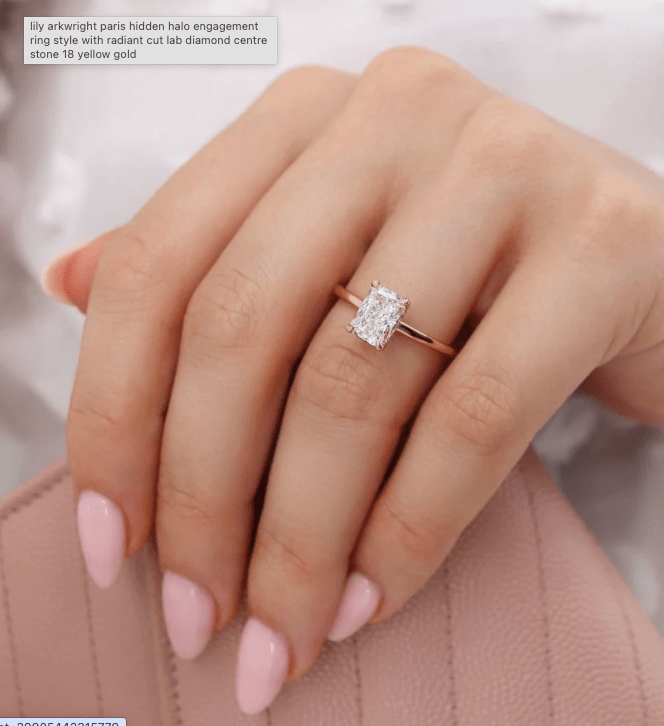
    British jewellers such as Lily Arkwright have become pioneers in this field, offering exquisite lab-grown diamonds that embody both beauty and conscience. Each piece represents modern romance: personal, sustainable and thoughtful.

    As Forbes explained, the rise of ethical jewellery reflects “a shift from possession to purpose.” The sparkle is no longer just about luxury; it is about legacy.

    The Cultural Resonance of Diamonds

    Beyond psychology and science, diamonds have a social language all their own. They appear in art, music and literature as emblems of aspiration, fidelity and light. From Marilyn Monroe’s famous ode in Gentlemen Prefer Blondes to the elegance of Elizabeth Taylor’s jewellery collection, diamonds have consistently represented both independence and emotion.

    Yet their symbolism is evolving. Where they once symbolised possession, they now represent partnership. The act of giving a diamond is no longer about ownership but about shared intention. As Vogue UK recently wrote, “the modern diamond is a dialogue, not a declaration.”

    In Britain, this evolution mirrors the cultural shift towards equality in relationships. Rings are chosen together, designs are personalised, and sustainability often carries as much importance as carat weight.

    The Digital Age of Romance

    It might seem paradoxical that in an era defined by virtual connection, physical symbols of love have only grown more meaningful. Yet psychologists argue that this is precisely why.

    In a world where affection can be expressed with an emoji or an Instagram post, tangible tokens like jewellery reclaim intimacy. A diamond ring cannot be swiped away. It has weight, warmth and a history that transcends pixels.

    As BBC Lifestyle reflected, physical gifts endure because they ground emotion in reality. They become heirlooms, reminders of stories told and promises made.

    This is why, even in the digital age, the diamond continues to outshine every trend. It is not merely an adornment but a testament to connection — the original wearable expression of love.

    The Sparkle Within

    To understand the psychology of sparkle is to understand something profound about human nature. We are drawn to light because it reflects the best of us: our desire for clarity, connection and endurance. A diamond is a physical manifestation of those emotions, a small, brilliant truth we can hold in our hands.

    In 2026, as sustainability, technology and emotion intertwine, the diamond remains the perfect symbol of modern love. Its brilliance reminds us that beauty can coexist with ethics, and that permanence can still exist in a world of impermanence.

    As Vogue UK beautifully summarised, “to wear a diamond is to carry light, love and legacy all at once.”

    And that, perhaps, is why its sparkle will never fade.
  • Sustainability Aftercare: How to Maintain, Repair and Recycle Engagement Rings in a Sustainable Way

    Sustainability Aftercare: How to Maintain, Repair and Recycle Engagement Rings in a Sustainable Way

    Across Britain’s jewellery industry, sustainability has evolved from marketing language into genuine craft philosophy. The rise of lab-grown diamonds, recycled metals and ethical sourcing has transformed how engagement rings are made, but a quieter revolution is now taking place in how they are kept. After the proposal, the next question becomes: how do we ensure this ring — a symbol of love and longevity — remains as responsible as the ideals it represents?

    The answer lies in aftercare sustainability. Once the realm of jewellers and collectors, the concept is becoming part of everyday conversation among buyers who want to align emotional value with environmental awareness. As BBC News Business has reported, British consumers increasingly judge luxury by durability rather than novelty. In this context, an engagement ring’s long-term condition is not merely aesthetic — it is ethical.

    For couples just beginning their search, our guide on how to choose an ethical engagement ring in 2026 explores what to look for when balancing sustainability with style.

    The Environmental Value of Longevity

    Mining for gold and diamonds remains one of the world’s most resource-intensive industries, and even responsibly sourced materials carry an environmental cost. Extending a piece’s life through maintenance or redesign is, therefore, one of the simplest yet most powerful sustainability acts an owner can take.

    The Guardian Environment highlights that increasing the average lifespan of luxury goods can reduce total emissions by up to a quarter. Unlike fast fashion, jewellery’s inherent durability means that its environmental impact decreases dramatically the longer it is worn and preserved. The principle is elegantly straightforward: a ring kept in circulation displaces the need for a new one.

    This approach resonates strongly within Britain’s growing culture of conscious consumption, where sentiment and responsibility now sit comfortably side by side. It also connects naturally with our feature on lab-grown diamonds and sustainable British jewellery, which explores how innovation and longevity intersect.

    Repair and Restoration: Craft Meets Conservation

    Repairing fine jewellery has never been solely about aesthetics. It is also a form of environmental conservation — one that preserves existing resources and supports artisanal trades. In London’s Hatton Garden, Birmingham’s Jewellery Quarter and workshops across Scotland and Wales, independent jewellers are modernising age-old methods to align with environmental standards.

    The Goldsmiths’ Company, one of Britain’s oldest craft guilds, actively promotes restoration as a pillar of sustainable practice. Many of its members now use recycled metal for re-sizing or claw replacement and favour electric soldering over gas-powered torches to cut carbon emissions.

    Brands such as Lily Arkwright have integrated repair and maintenance into their business model. Specialising in lab-grown diamond rings, the company offers lifelong aftercare and cleaning services designed to preserve both the stone’s brilliance and the environmental integrity of the product.

    To see how couples are embracing these ideas in practice, our feature on quiet proposing and shared ring design explores how collaboration and conscious choice are redefining British romance.

    Recycling and Re-imagining

    When a ring’s aesthetic no longer suits its owner, recycling offers a meaningful alternative to replacement. Gold, platinum and other metals can be refined without degradation, and diamonds or gemstones can be removed and reset. The result is a new piece that retains its history while reflecting a contemporary sensibility.

    According to Forbes, recycling existing materials can cut environmental impact by up to 80 per cent compared with sourcing new ones. British jewellers are increasingly adopting this circular model, with trade-in schemes and redesign services allowing clients to refresh heirlooms rather than abandon them.

    For inspiration, see our article on the modern heirloom movement, which explores how craftsmanship and conscience are combining to create timeless pieces.

    A Broader Cultural Movement

    Sustainable aftercare reflects more than good housekeeping; it captures a wider cultural mood in Britain. From vintage clothing to refurbished interiors, the emphasis on longevity and reuse is reshaping what luxury means. BBC News Culture describes this as the rise of “considered consumption” — a collective desire to invest in fewer, better things that carry personal and environmental resonance.

    In this landscape, jewellery stands as a powerful metaphor. It combines permanence with expression, making it the perfect object through which to explore ideas of responsibility and renewal. Repairing or recycling a ring is, in many ways, a microcosm of the broader sustainability conversation: respect what exists, improve it carefully, and pass it on.

    Conclusion

    The care we give our jewellery mirrors the care we extend to the planet. To maintain, repair and recycle an engagement ring is to recognise that beauty and responsibility can coexist — that luxury can be as ethical as it is enduring.

    Whether by cleaning gently at home, commissioning a repair from a certified craftsperson or re-imagining a treasured heirloom, each action preserves not only the ring’s lustre but the values it represents. As Vogue UK concludes, “the most meaningful sparkle is one that has been kept, not replaced.”

    In Britain’s new era of sustainable luxury, aftercare is no longer an afterthought; it is the quiet continuation of love itself — a daily practice of respect for both craft and planet.

  • The Rise of Quiet Proposing: How British Couples Are Choosing Engagement Rings Together

    There is a quiet shift taking place in the way Britain falls in love. For decades, proposals have been moments of surprise — grand gestures performed under candlelight or in front of cameras, one partner down on one knee, a ring hidden until the final reveal. But the modern generation is rewriting that narrative.

    In 2026, love is no longer a spectacle; it’s a shared story. Across the UK, couples are embracing the idea of quiet proposing — the act of designing or choosing engagement rings together. It’s an intimate, collaborative approach that values equality, honesty and sustainability over secrecy and showmanship.

    As Vogue UK recently noted, “the most romantic proposals are no longer loud or elaborate — they’re personal, grounded and deeply intentional.” Quiet proposing is not about removing the magic of the moment. It’s about rediscovering it, together.

    From Grand Gestures to Genuine Connection

    Proposals have always held cultural weight — from the diamond campaigns of the 1940s that defined the modern ring, to the viral engagement videos of the past decade. Yet as The Guardian Lifestyle observed, “a growing number of couples are rejecting formulaic romance in favour of authenticity.”

    Quiet proposing reflects a new understanding of love: one built on transparency and partnership rather than tradition. For many, the old model — where one partner made a secret purchase and the other hoped to love it — feels outdated in an era that celebrates equality.

    It’s no longer about one person doing the choosing and the other simply saying yes. Instead, couples are planning the engagement as a shared experience, ensuring the ring, the timing, and the meaning align perfectly with who they are together.

    As BBC News Lifestyle reported, many millennials and Gen Z couples see joint decision-making as “a natural extension of emotional compatibility.”

    The Heart of the Quiet Proposal

    At its essence, quiet proposing is a reflection of modern values. It is rooted in the desire to make conscious choices — not just about love, but about the way love is represented.

    The idea is simple: rather than one partner secretly selecting a ring, both come together to design it. Some even choose to forgo a formal proposal altogether, opting instead for an open conversation about marriage and timing.

    The trend is particularly strong in Britain, where cultural sensibilities favour thoughtfulness over theatre. As Vogue UK Weddings put it, “British romance has never needed spectacle to be sincere.”

    The quiet proposal embodies that understated elegance — it’s about two people planning their future with calm confidence rather than fanfare.

    Designing Love: The Shared Journey

    The most distinctive feature of quiet proposing is the shared creation of the engagement ring itself.

    Instead of browsing shop windows alone or relying on guesswork, couples now visit jewellers together — in person or online — to craft rings that reflect their shared story.

    Lily Arkwright, a British ethical jeweller, has become synonymous with this approach. Their bespoke design process invites couples to explore styles, metals and diamonds side by side, turning the act of choosing a ring into an intimate ritual.

    Specialising in lab-grown diamonds, Lily Arkwright offers clients the opportunity to select each element — from the stone’s cut to the band’s finish — all while ensuring every material is sustainable and traceable. The brand’s transparent approach reflects the values of the modern British couple: conscious, collaborative and effortlessly elegant.

    As Elle UK recently observed, “choosing your ring together isn’t less romantic — it’s more so, because it’s rooted in truth.”

    The Rise of Ethical Romance

    Ethical jewellery has become central to the quiet proposal movement. As couples take a more hands-on role in choosing their rings, they’re also taking greater responsibility for how those rings are made.

    The Guardian Environment reported that Britain’s demand for sustainable jewellery has grown significantly, with many couples seeking lab-grown diamonds, Fairtrade gold, and recycled platinum.

    Lab-grown diamonds, in particular, have captured the public imagination. These stones are physically identical to mined diamonds, yet created under controlled conditions with minimal environmental impact. Their appeal lies not just in their beauty, but in what they symbolise — progress, innovation and integrity.

    As Forbes put it, “lab-grown diamonds represent luxury without compromise — proof that love and responsibility can coexist.”

    For couples designing their rings together, this ethical awareness is more than a consideration; it’s part of the romance itself. Choosing responsibly becomes an act of love — towards each other, and towards the planet.

    Moving Beyond the “Big Reveal”

    The quiet proposal has also emerged as a response to the pressures of social media and consumer culture. The last decade’s obsession with elaborate, camera-ready engagements has left many couples seeking something more private and meaningful.

    As BBC News Culture noted, the rise of “offline milestones” signals a cultural fatigue with performative romance.

    Quiet proposing offers an antidote. It places emotion over exhibition, replacing the viral engagement video with a conversation between two people who already know the answer.

    It doesn’t mean the moment lacks excitement — it simply moves the focus from the audience to the relationship. The quiet proposal says: this is for us, not for show.

    As Cosmopolitan UK perfectly summarised, “the new proposal trend isn’t about less romance — it’s about more real romance.”

    Equality, Clarity and Calm

    What’s striking about this new approach is how it reflects equality not only in love but also in practicality.

    Couples are now openly discussing ring budgets, sharing costs, and making design choices together. This transparency eliminates the financial pressure and emotional guesswork that often accompanied traditional proposals.

    As The Telegraph Lifestyle explained, “splitting the cost of a ring isn’t unromantic — it’s modern partnership.”

    The result is a calmer, more collaborative experience — one where both partners are involved in every detail, from ethics to aesthetics. It’s love as teamwork, rather than performance.

    A Reflection of a Broader Cultural Shift

    Quiet proposing doesn’t exist in isolation; it mirrors a broader social movement towards conscious living. British couples are prioritising sustainability, mental health and emotional intelligence in all aspects of life — from careers to family planning — and the proposal is no exception.

    As Country Living UK recently observed, “ethical jewellery has become the new expression of mindful living.”

    The act of designing a ring together becomes symbolic of this shift — a reminder that love, too, can evolve with awareness. It’s romantic minimalism: less drama, more depth.

    The Emotional Power of Collaboration

    There’s an undeniable tenderness to designing a ring together. Couples describe the process as intimate and revealing — an experience that fosters honesty and creativity.

    As Vogue UK wrote, “a shared design process turns the engagement ring into a diary of love — every decision a sentence in its story.”

    It also creates a lasting emotional bond with the piece itself. Each time the ring catches the light, it serves as a reminder not only of the proposal, but of the care and thought that went into its creation.

    For many, this emotional connection is the very definition of modern luxury.

    The British Way of Love

    Perhaps the most fascinating thing about quiet proposing is how inherently British it feels. Subtle, intentional and grounded in mutual understanding, it’s a celebration of intimacy over extravagance — something Britain has always done best.

    As Vogue UK Weddings commented, “the quiet proposal speaks in whispers, but says everything.”

    In an age where love can be shouted across social media, this understated approach feels refreshingly sincere. It’s the kind of romance that doesn’t need witnesses to be profound.

    Conclusion

    Quiet proposing is more than a passing trend — it’s a reflection of how love itself is evolving. British couples are redefining what romance looks like: slower, kinder, and more collaborative.

    Whether designing a lab-grown diamond solitaire with Lily Arkwright or choosing a Fairtrade gold band together, couples are finding that the most meaningful proposals are those grounded in equality and intention.

    As Vogue UK so perfectly phrased it, “the quiet proposal is love stripped of spectacle — intimate, intelligent and everlasting.”

    And perhaps that’s the most beautiful part of all. The sparkle still shines, but it now reflects something deeper: a shared vision of forever, built together.