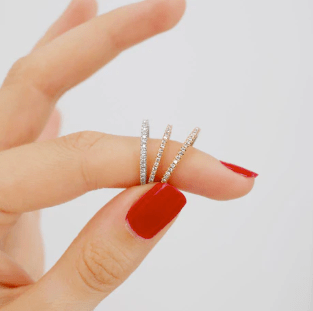
Tag: christianity

  • Wedding Rings Through Time: How Culture, Craft and Commitment Shaped the Wedding Band

    Wedding Rings Through Time: How Culture, Craft and Commitment Shaped the Wedding Band

    The wedding ring is one of the most enduring objects in human history. It is small, unassuming and worn so consistently that it often fades into the background of daily life. Yet few objects carry as much symbolic weight. Across centuries, cultures and belief systems, the wedding ring has represented union, obligation, devotion and identity. Its history is not static. It evolves alongside society itself, reflecting how marriage has been understood in different eras.

    The earliest known wedding rings originate in Ancient Egypt, where marriage was closely tied to ideas of eternity and cosmic order. Rings were crafted from natural materials such as reeds, rushes or leather and exchanged as symbols rather than valuables. The circle was sacred, representing infinity and the cyclical nature of life.

    Historical research referenced by the British Museum explains that Egyptians viewed marriage as part of a broader spiritual framework. The ring’s unbroken shape symbolised continuity not just between two individuals, but within the universe itself. These early wedding rings were worn publicly, acting as visible markers of status and union.

    It was during this period that the tradition of wearing a ring on the fourth finger of the left hand emerged. The belief that this finger contained a vein leading directly to the heart, known later as the vena amoris, was symbolic rather than anatomical. Despite its inaccuracy, the idea endured and shaped wedding customs for centuries.

    The Roman Empire adopted the practice of wedding rings but redefined their meaning. Roman marriage was rooted in law and property, and rings reflected this reality. Early Roman wedding rings were made of iron, chosen for its strength and durability. They signified permanence, but also control and ownership.

    Over time, gold rings became more common among affluent Romans, signalling wealth as well as marital status. According to collections and commentary from the Metropolitan Museum of Art, Roman rings functioned as legal markers. They were worn almost exclusively by women, reinforcing the gendered structure of marriage at the time.

    As Christianity spread throughout Europe, wedding rings were absorbed into religious ritual. By the early Middle Ages, rings were formally exchanged during church ceremonies and blessed by clergy. Marriage was reframed as a sacred covenant rather than a civil arrangement.

    Liturgical texts and manuscripts referenced by the Vatican Library show that rings became symbols of fidelity, obedience and divine unity. The act of placing a ring on the finger was ritualised and accompanied by vows, prayers and blessings.

    During this period, wedding rings also began to carry more decorative and personal elements. Engravings became common, and the emergence of posy rings marked a shift towards emotional expression. These rings were engraved with short phrases, verses or declarations of love, often hidden inside the band.

    Scholars at the British Library have documented how posy rings reflected changing attitudes towards marriage in late medieval England. Love and affection were becoming recognised as meaningful components of marriage, not merely secondary to alliance or duty.

    The Renaissance brought further refinement. Advances in metallurgy and craftsmanship allowed goldsmiths to produce more consistent, elegant bands. Rings became slimmer, smoother and more comfortable to wear. Gemstones began to appear more frequently, chosen for their symbolic meanings rather than brilliance.

    Sapphires were associated with loyalty, rubies with passion and emeralds with renewal. Diamonds were admired but still rare and difficult to cut. Their later dominance in bridal jewellery had not yet begun.

    From the seventeenth to nineteenth centuries, wedding rings increasingly reflected social hierarchy. Among aristocratic families, rings featured heraldic engravings, coats of arms or elaborate designs. Marriage was as much about lineage and inheritance as personal connection.

    The Industrial Revolution transformed wedding rings more profoundly than any earlier period. Mass production made jewellery accessible to a broader population, and gold wedding bands became common across social classes. Rings no longer signified privilege alone, but participation in a shared cultural ritual.

    Victorian wedding rings reflected the era’s emphasis on sentiment, morality and domestic ideals. Designs often incorporated hearts, flowers or symbolic motifs. According to design historians at the Victoria and Albert Museum, Victorian jewellery marked a shift towards emotional symbolism, reinforcing the idea of marriage as a bond of affection.

    The twentieth century reshaped the meaning of wedding rings once again. During the First World War, men began wearing wedding rings in significant numbers for the first time. Soldiers carried them as reminders of home, stability and emotional connection.

    Social historians writing for the Imperial War Museums note that this practice permanently altered marriage symbolism. The wedding ring became a shared emblem of partnership rather than a marker worn solely by women.

    In the decades that followed, the plain gold band became the dominant style in many Western cultures. Simplicity was associated with sincerity and permanence. The wedding ring was no longer decorative, but deeply functional and symbolic.

    By the late twentieth century, this uniformity began to dissolve. Changing fashion, evolving gender roles and greater emphasis on individuality reshaped expectations. White metals gained popularity, comfort-focused designs emerged and couples began choosing rings that reflected lifestyle as much as tradition.

    Contemporary wedding rings are defined by choice. Matching bands are optional. Traditional profiles sit alongside modern interpretations. Rings are selected for comfort, symbolism and personal meaning rather than adherence to a single ideal.

    Sociological analysis from the Pew Research Center highlights how modern relationships prioritise equality and self-expression. Wedding rings have adapted accordingly, becoming reflections of shared values rather than prescribed forms.

    Cultural commentary in Vogue has observed that modern wedding jewellery balances heritage with individuality. Couples honour tradition while reshaping it to fit their own narrative.

    Exploring a wide range of wedding rings today means engaging with a tradition that spans thousands of years while still feeling entirely personal. Each ring carries echoes of history, even as it marks a unique commitment.

    Despite centuries of change, certain elements remain constant. The circular shape endures. The act of exchange remains powerful. The ring continues to serve as a visible promise worn every day.

    Looking ahead, wedding rings will continue to evolve as marriage itself evolves. As cultural norms expand and relationships are defined in more inclusive ways, rings will adapt in form, material and meaning.

    What will not change is the human desire to mark commitment with something tangible. The wedding ring remains a bridge between past and future, tradition and individuality.

    A simple band, shaped by history, worn with intention.
  • The Return of the Toi et Moi Ring: Why UK Couples Love Two-Stone Designs in 2026

    The Return of the Toi et Moi Ring: Why UK Couples Love Two-Stone Designs in 2026

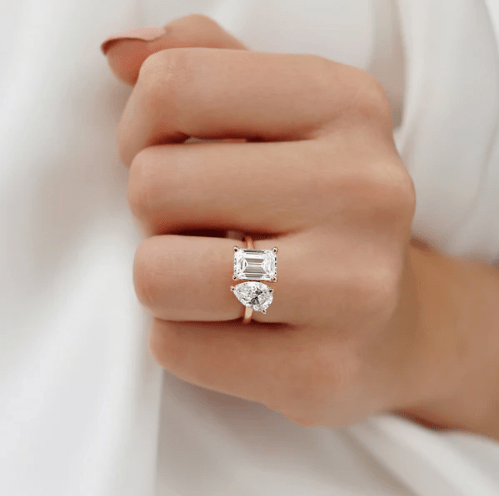
    The engagement ring landscape in 2026 is filled with personality, symbolism and meaning, yet few designs capture the imagination of British couples quite like the Toi et Moi ring. Translating to “you and me,” this celebrated two stone design is one of the most romantic styles in the history of jewellery, and its resurgence has taken the UK by storm. Far from a passing aesthetic choice, the Toi et Moi ring mirrors how relationships themselves are changing. Couples are choosing designs that express equality, individuality and shared identity, and the symbolism of two stones meeting in perfect balance could not be more suited to contemporary love.

    In recent seasons, Toi et Moi rings have been seen everywhere from red carpets to social media feeds and editorial spreads. Publications such as Vogue and Cosmopolitan UK have covered the trend extensively, describing the style as a blend of heritage romance and modern luxury. It resonates with the rise of personalised engagement choices and the shift toward rings that tell stories rather than simply follow tradition. In its revival, the Toi et Moi ring has become a symbol of partnership in its most authentic form.

    To see why this centuries old design feels so radical again, we need to understand its origins, its revival in celebrity culture and the emotional language that defines its meaning in 2026.

    The Origins of the Toi et Moi Ring

    Toi et Moi designs have appeared throughout jewellery history, but their modern story begins in the late eighteenth century. Perhaps the most famous early example was the engagement ring Napoleon Bonaparte presented to Joséphine de Beauharnais in 1796. The ring paired a pear shaped sapphire with a pear shaped diamond, sitting side by side in a delicate gold setting that appeared almost minimalist by the standards of the time. It was a revolutionary gesture, uniting two stones to symbolise the joining of two souls, and it represented a shift toward intimate, meaningful engagement jewellery.

    During the Victorian era, sentimental symbolism flourished. Lovers used stones to spell out words, hide secret messages or evoke romantic metaphors. The Toi et Moi ring became a favourite because it could embody connectedness through its twin stones. This was a time when jewellery was understood not just as decoration but as a narrative device, a way of recording emotion and memory. Designs from the nineteenth century showcased diamonds paired with rubies or emeralds, sapphires matched with pearls, and even opals flanked by small rose cut diamonds. The aesthetic was deeply personal and often bespoke.

    The twentieth century brought a new chapter. Art Deco jewellers embraced geometry and bold contrast, and Toi et Moi rings were reimagined with angular settings, platinum mounts and stylised symmetry. It was during this period that the style began to appear in fine jewellery houses across Europe and North America, often featuring baguettes, asymmetric arrangements and unique gemstone pairings. What had once been a symbol of sentimental romance expanded into a fashionable and avant garde choice.

    The twenty first century saw the design recede temporarily as solitaire diamonds dominated the engagement ring market. But today, in 2026, the Toi et Moi is not just back; it has become one of the defining aesthetic movements in UK engagement jewellery.

    The Celebrity Revival

    In the world of fashion and engagement rings, cultural influence often begins with a single moment. The New York Times and BBC News Entertainment have both noted the power of celebrity engagements in shaping consumer tastes. The Toi et Moi ring owes part of its 2020s resurgence to several high profile engagements that reintroduced the design to the global stage.

    The most widely publicised example is the ring worn by Ariana Grande. Her engagement ring, featuring an oval diamond paired with a lustrous pearl, sparked a surge of interest in asymmetric two stone designs. The pairing felt modern yet nostalgic, and the softness of the pearl alongside the precision of the diamond demonstrated how versatile the Toi et Moi format can be.

    Another celebrity who embraced the design is Megan Fox, whose striking Toi et Moi ring features a brilliant white diamond set alongside an equally dramatic emerald. The bold contrast between the two stones became one of the most shared ring images of the year, with fashion commentators at Vogue describing it as a statement of passion and individuality.

    Emily Ratajkowski also helped redefine the modern two stone look. Her elongated princess cut diamond paired with a pear cut stone created an architectural composition that resonated with minimalist jewellery enthusiasts. The design broke away from symmetry and embraced an artistic approach to engagement jewellery, one that reflected her broader fashion sensibilities and the rise of quiet luxury as a visual language.

    The influence of onscreen romance cannot be underestimated either. Shows and films with high impact costume design often bring historical jewellery styles into mainstream attention. As The Guardian observed in a recent piece on period drama influence, jewellery trends frequently mirror the imagery found in cinematic storytelling.

    Collectively, these cultural references helped transform the Toi et Moi ring from a niche historical piece into a contemporary must have.

    Why the Toi et Moi Ring Speaks to UK Couples in 2026

    The new generation of British couples is reimagining what engagement rings should represent. Instead of conforming purely to traditional formats, many want their rings to express identity, equality and partnership. The Toi et Moi ring is uniquely suited to this shift because it places both stones in dialogue with one another. The symbolism is immediate and universal. Two stones. Two people. One union.

    This symbolic equality aligns deeply with the values of Gen Z and Millennials. These generations have grown up questioning traditional structures and embracing more personalised expressions of love. Engagement rings are no longer objects to be hidden away; they are expressions of personality and aesthetic preference, and in many cases, reflections of shared values such as sustainability, individuality and emotional connection.

    The Toi et Moi ring is also perfectly aligned with the rise of mixed gemstones in British engagement choices. As Cosmopolitan UK recently reported, couples are increasingly opting for rings that blend colour, shape or texture. Pairing a diamond with a sapphire, a ruby, a morganite or even a lab grown coloured gemstone allows couples to create visual meaning without sacrificing elegance.

    Another factor in its popularity is its adaptability across price points. The two stone design allows for creative combinations of size and quality that offer substantial presence without necessarily increasing cost. For some couples, the ability to select a lab grown diamond for one stone and a coloured gemstone for the other opens up design possibilities that feel luxurious, ethical and unique.

    Finally, the modern fascination with asymmetry has helped the Toi et Moi ring resonate with contemporary minimalist style. The look aligns with the 2026 jewellery aesthetic, which leans toward clean lines, subtle intricacy and understated glamour. Publications such as Vogue and Financial Times have both remarked on the shift toward quiet luxury, a movement characterised by refined elegance rather than overt extravagance. The Toi et Moi ring fits beautifully within that stylistic universe.

    The Historical Symbolism of Paired Stones

    Paired stones have always carried symbolic weight. In the nineteenth century, pairing stones of different colours hinted at contrast and harmony. In Art Deco jewellery, geometric pairings spoke to modernity and progress. In contemporary design, the meaning has evolved again.

    For many UK couples, the two stones represent shared values or complementary strengths. Others view them as markers of separate life journeys converging into one partnership. Some choose stones that reference personal stories, such as birthstones, favourite colours or heirloom gemstones repurposed into new settings.

    This narrative quality is integral to the Toi et Moi ring’s appeal. It is one of the few engagement ring styles that is inherently expressive. While a solitaire diamond conveys timeless tradition, a two stone ring communicates depth, nuance and individuality.

    The Role of Social Media

    Social media has increased awareness of distinctive ring designs. Platforms such as Pinterest and Instagram have made two stone rings widely visible, and editorial features on bridal fashion sites often highlight the style for its romantic symbolism. As BBC Culture observed in a recent article, contemporary couples are more visually driven than ever when choosing engagement jewellery, often gathering inspiration from digital platforms before visiting a jeweller or designer.

    This visibility has created a feedback loop. The more couples share their two stone rings, the more others begin imagining how the style might suit their own aesthetic. The personal nature of the design makes it especially popular for social storytelling.

    2026 Style Variations

    The modern Toi et Moi ring takes many forms. Some adopt a traditional mirrored arrangement where two identical stones sit side by side. Others embrace asymmetry by pairing shapes such as oval with pear, emerald cut with round brilliant, or marquise with cushion. Colour has become a major influence, with many couples selecting a diamond alongside a gemstone that holds personal meaning.

    Minimalist and sculptural designs are particularly in demand. Thin bands, hidden halo details and softly curved settings dominate the market, aligning the style with contemporary British aesthetics. The trend also reflects the broader shift toward rings that feel delicate, wearable and timeless.

    Conclusion

    The Toi et Moi ring has reemerged as one of the most culturally relevant, emotionally resonant and visually striking engagement ring styles in 2026. Its symbolism of unity, equality and individuality speaks directly to the values of modern British couples. Its long history, celebrity revival and design versatility make it a natural choice for those seeking something meaningful yet distinctly modern.

    As UK engagement trends continue to evolve, the Toi et Moi ring stands out as a design that connects past and present, romance and artistry, personal expression and shared identity. It is a reminder that engagement rings are more than ornaments. They are symbols of who we are, who we love and the stories we choose to tell.