Tag: business

  • The Shift From Sales-Led to Consultation-Led Jewellery Buying

    There was a time when buying jewellery was largely a transactional experience. Customers visited a showroom, viewed the available collections, discussed a budget and selected the piece they liked most. The jeweller’s role was to explain the product, answer a few questions and complete the sale. Whilst excellent service has always existed within the industry, the process itself was often centred around the jewellery rather than the person buying it.

    That model is gradually disappearing.

    Today’s jewellery buyer is arriving with different expectations and, in many cases, a completely different mindset. Rather than asking, “What do you have available?”, they are asking, “What would you recommend for me?” It is a subtle change in language, but it represents a profound shift in the way people now approach one of life’s most significant purchases.

    The engagement ring market provides perhaps the clearest example of this transformation. Buying an engagement ring has become a far more considered process than it was even a decade ago. Consumers are investing weeks, and often months, researching gemstones, comparing settings and learning about craftsmanship before they ever step inside a showroom. As we explored in our article on why so many buyers regret rushing their engagement ring purchaseAttachment.tiff, buyers are increasingly recognising that confidence comes not from making a quick decision, but from understanding why a particular ring is the right choice.

    This evolution has been driven by one simple reality. Information is no longer scarce.

    For much of the jewellery industry’s history, the jeweller was the primary source of expertise. Customers depended on that knowledge because it was difficult to access elsewhere. Today, someone considering an engagement ring can spend an evening reading about diamond grading, precious metals, ring settings and manufacturing techniques without leaving their home. They can compare hundreds of designs, read independent reviews and watch detailed educational videos long before arranging an appointment.

    Rather than reducing the importance of jewellers, this abundance of information has changed what buyers value most.

    People no longer visit a showroom simply to obtain information. They come to understand how that information applies to them. They want context rather than facts, guidance rather than persuasion and reassurance rather than salesmanship.

    This distinction is particularly important because jewellery is deeply personal. Two customers may admire the same ring yet require completely different recommendations. One may prioritise durability because they work with their hands every day. Another may value delicate detailing because the ring will be worn primarily in an office environment. One may prefer timeless simplicity, whilst another wants a design that reflects their personality more boldly. There is no universal answer, which is precisely why consultation has become so valuable.

    The best jewellery consultations rarely begin with diamonds or gemstones. They begin with conversation.

    Experienced jewellers spend time understanding how their clients live, what jewellery they already wear, how they describe their own style and what they hope their engagement ring or piece of fine jewellery will represent in years to come. The product itself emerges naturally from those discussions rather than leading them.

    This approach often surprises first-time buyers. Many arrive expecting to be shown display cabinets immediately, only to discover that the most useful part of the appointment takes place before any jewellery appears at all. By understanding the person first, recommendations become significantly more meaningful.

    There is another reason consultation-led retail has become increasingly important. The choices available to consumers have expanded dramatically. Twenty years ago, many buyers selected between white gold, yellow gold and platinum before choosing a traditional white diamond. Today’s market is considerably more diverse. Laboratory-grown diamonds sit alongside natural diamonds. Coloured gemstones have become mainstream. Bespoke manufacturing has become more accessible. Alternative setting styles continue to grow in popularity, and buyers are becoming more interested in ethical sourcing and sustainability alongside aesthetics.

    Choice is undoubtedly positive, but it also creates complexity.

    Research published by Harvard Business Review⁠ has shown that consumers presented with extensive choice often place greater value on expert guidance, particularly when making significant financial decisions. Rather than wanting fewer options, they want someone capable of helping them navigate those options with confidence.

    That expectation has fundamentally changed what excellent customer service looks like.

    Years ago, an outstanding jeweller might have been recognised for extensive product knowledge alone. Today, technical expertise remains essential, but it is only part of the equation. Communication skills, empathy and the ability to listen carefully have become equally valuable. Clients increasingly expect recommendations that feel tailored to their own circumstances rather than based on general assumptions or sales targets.

    This personalised approach has also transformed bespoke jewellery. Commissioning a custom engagement ring is no longer viewed as an exclusive luxury reserved for a small number of clients. It has become a collaborative process in which customers actively participate. They discuss proportions, practicality, gemstone selection and long-term wear before any design work begins. The finished piece reflects not only the skill of the jeweller but also the priorities of the person who will wear it every day.

    Perhaps the most significant outcome of consultation-led jewellery buying is confidence. Purchasing fine jewellery inevitably involves emotion. Whether celebrating an engagement, anniversary or personal achievement, buyers want certainty that they have made the right decision. A well-conducted consultation provides that reassurance because every recommendation has been explained and every question answered honestly.

    According to McKinsey & Company⁠ personalisation continues to be one of the defining characteristics of successful luxury retail, with consumers increasingly expecting experiences that reflect their individual preferences rather than generic purchasing journeys. Jewellery has embraced this change naturally because every significant purchase already carries a deeply personal story.

    Transparency has become equally important. Modern buyers appreciate open conversations about the strengths and limitations of different materials, the maintenance requirements of particular settings and the practical realities of everyday wear. Honest advice builds trust far more effectively than presenting every option as equally suitable.

    This represents a notable departure from traditional retail, where success was often measured by how efficiently a transaction could be completed. Consultation-led jewellery buying values a different outcome. The objective is not simply to sell a ring. It is to ensure the customer feels completely comfortable with the decision they have made, even years after leaving the showroom.

    The wider luxury industry appears to be moving in the same direction. According to Forbes⁠, today’s premium consumers increasingly associate exceptional service with expertise, authenticity and long-term relationships rather than promotional offers or aggressive sales techniques. Jewellery buyers are no exception. Many are investing in pieces intended to become family heirlooms, making trust one of the most valuable qualities a retailer can offer.

    Looking ahead, it seems unlikely that consultation-led jewellery buying will be viewed as a trend. Instead, it represents the natural evolution of an industry responding to more informed, more confident and more discerning consumers. Buyers no longer need someone to tell them what they should purchase. They need someone capable of helping them understand what is genuinely right for them.

    In many respects, that has always been the hallmark of the very best jewellers. The difference today is that customers increasingly expect nothing less.
  • Why Pale Fancy Diamonds Are Becoming the Ultimate Insider Choice

    For much of the last century, engagement ring shopping followed a fairly predictable path. Buyers were encouraged to compare the Four Cs, aim for the highest colour grade they could afford and treat the absence of colour as the ultimate measure of quality. The closer a diamond came to appearing perfectly white, the more desirable it was considered to be. That philosophy shaped generations of buying decisions and became so firmly established that few people questioned it.

    Today, however, the conversation is beginning to sound very different.

    Modern buyers still value exceptional craftsmanship and beautifully cut diamonds, but they are becoming increasingly comfortable challenging the idea that perfection always looks the same. Rather than searching for complete uniformity, many are actively seeking diamonds with individuality, warmth and subtle character. It is within this changing landscape that pale fancy diamonds have quietly emerged as one of the most interesting developments in contemporary fine jewellery.

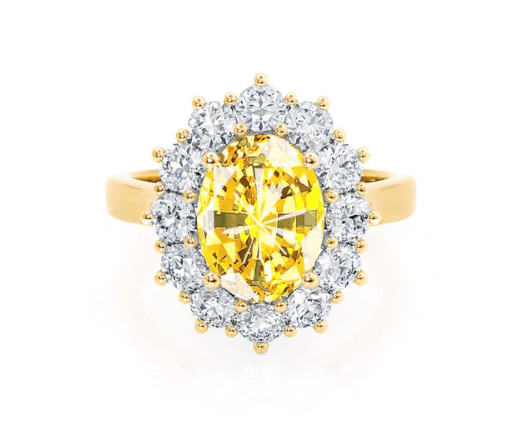
    The wider appreciation for coloured diamonds has undoubtedly helped drive this shift. As explored in our guide to fancy coloured lab grown diamonds⁠ more buyers than ever are discovering that colour can enhance a diamond’s appeal rather than detract from it. Whilst vivid yellows, blues and pinks continue to capture attention, it is often the palest fancy diamonds that are attracting those looking for something elegant, understated and genuinely distinctive.

    One of the reasons these diamonds feel so contemporary is that they reject the notion that luxury should always be immediately obvious. Across fashion, architecture and interior design, subtlety has become increasingly desirable. Consumers are becoming more interested in quality that reveals itself over time rather than making an instant impression. Jewellery is following exactly the same trajectory.

    A pale champagne diamond, for example, does not announce itself from across a room. Its colour is often noticed only after closer observation, revealing soft golden undertones that shift gently depending on the surrounding light. A pale yellow diamond behaves in much the same way, introducing warmth without overwhelming the overall design. The result is jewellery that rewards attention rather than demanding it.

    This gradual appreciation is one of the qualities that makes pale fancy diamonds so compelling. Unlike more intensely coloured gemstones, whose beauty is immediately apparent, these stones reveal their personality slowly. Morning daylight, evening sunlight and interior lighting all bring out different characteristics, meaning the ring never appears exactly the same twice.

    For many buyers, that sense of discovery becomes part of the ownership experience. A ring should not simply impress on the day it is received. It should continue to reveal new qualities throughout years of everyday wear.

    There is also a practical reason why softly coloured diamonds have become increasingly popular among designers. Their versatility allows them to work across an extraordinary range of styles. Whether paired with yellow gold, platinum or rose gold, pale fancy diamonds complement rather than dominate the design. They allow the architecture of the ring, the craftsmanship of the setting and the proportions of the stone to remain equally important.

    This is particularly valuable in bespoke jewellery, where the objective is rarely to recreate an existing design. Clients commissioning custom rings are often looking for subtle ways to make their jewellery unique without abandoning timeless design principles. Pale fancy diamonds provide exactly that opportunity. They introduce individuality without sacrificing elegance.

    Another factor contributing to their growing popularity is the changing profile of today’s jewellery buyer. Consumers are arriving far better informed than they were even a decade ago. They have researched diamond grading, explored different settings and compared countless designs before entering a showroom. This greater level of knowledge often leads to more nuanced preferences.

    Rather than asking for the highest colour grade available, buyers increasingly ask to compare stones side by side. They want to understand how different shades interact with different metals, how certain colours complement particular skin tones and how subtle variations affect the overall appearance of a finished ring. These are conversations that simply were not happening as frequently twenty years ago.

    The increasing popularity of laboratory-grown diamonds has also broadened consumer confidence. As buyers become more familiar with the extraordinary variety of colours available, they naturally become more willing to explore options beyond traditional white diamonds. Soft champagne tones and delicate yellows no longer feel unusual. They feel intentional.

    According to Vogue UK⁠ contemporary luxury consumers are increasingly drawn towards products that express personality rather than conformity, favouring craftsmanship and individuality over obvious status symbols. Jewellery reflects this change particularly clearly because every design decision, from metal choice to gemstone colour, contributes to the overall character of the finished piece.

    Perhaps this explains why pale fancy diamonds appeal so strongly to buyers who describe themselves as wanting something “classic, but different”. They are not searching for novelty. They simply want a ring that feels distinctive without relying on dramatic styling or unconventional design.

    This balance between familiarity and originality is surprisingly difficult to achieve. A vividly coloured diamond immediately transforms the identity of a ring. A pale fancy diamond creates a much gentler shift, preserving the timeless appeal of a traditional engagement ring whilst introducing a level of individuality that becomes increasingly noticeable over time.

    Education has also played an important role in changing perceptions. Organisations such as the Gemological Institute of America (GIA)⁠ have helped consumers understand that naturally coloured diamonds exist across a remarkable spectrum and that colour should be appreciated for its beauty rather than judged solely against the absence of it. This broader understanding has encouraged buyers to think less in terms of hierarchy and more in terms of personal preference.

    Interestingly, jewellers often find that pale fancy diamonds appeal to clients who had never previously considered coloured stones. Once they begin comparing diamonds in person, many discover that a softly coloured stone feels warmer, more individual and often more flattering than the colourless diamond they initially intended to purchase. What begins as curiosity frequently develops into genuine preference.

    There is also something reassuringly timeless about these diamonds. They do not rely on fashion to justify their appeal. Soft colour has existed within natural diamonds for millions of years. The difference today is that buyers are choosing to celebrate those characteristics rather than overlook them. Instead of treating colour as something to minimise, they are recognising it as part of each diamond’s identity.

    As jewellery trends continue to evolve, it seems increasingly likely that pale fancy diamonds will become less of an insider secret and more of a mainstream choice. They reflect many of the values shaping today’s luxury market: authenticity, individuality, craftsmanship and quiet confidence. They also encourage buyers to move beyond rigid definitions of perfection and instead ask a far more interesting question. Not which diamond is considered the best, but which diamond feels most like their own.

    That change in perspective may prove to be the most significant trend of all. It suggests that the future of fine jewellery will be defined less by following established rules and more by celebrating the subtle differences that make every gemstone, and every engagement ring, genuinely unique.

  • What Is the Average Proposal Age in the UK Today?

    Understanding the average proposal age in the UK offers more than just a headline figure. It provides a window into how relationships, priorities and lifestyles have evolved over time. In 2026, that average sits noticeably higher than it did in previous decades, reflecting a broader shift in how people approach commitment and long-term planning.

    Data from the Office for National Statistics consistently shows that the average age of marriage has been rising across the UK, and engagement patterns have followed a similar trajectory. While proposals were once commonly associated with the mid-twenties, many now take place in the early thirties. This change is not sudden or isolated, but part of a longer-term cultural evolution.

    One of the most influential factors behind this shift is education. A growing number of people are spending longer in formal education, whether through university degrees or further qualifications. This naturally delays traditional milestones, including engagement. Alongside this, career development has become a key focus, with individuals often prioritising professional stability before considering marriage.

    Financial realities are equally important. The cost of living in the UK, combined with rising property prices and broader economic pressures, has reshaped expectations around timing. Engagement is increasingly linked to financial confidence. Many couples want to feel secure in their circumstances before making a long-term commitment, whether that means saving for a home, building a stable income or simply reducing financial uncertainty.

    At the same time, relationship dynamics have changed significantly. Couples are spending longer together before getting engaged, often choosing to live together and share major life experiences first. This extended period allows for a deeper understanding of compatibility, communication and long-term goals. As a result, engagement becomes a more informed and deliberate decision.

    The nature of proposals themselves has also evolved. Rather than being spontaneous or driven by tradition alone, proposals today are often carefully considered and highly personal. They reflect the unique journey of each couple, rather than a fixed set of expectations. This shift has added a new level of meaning to engagement, making it less about timing and more about intention.

    Generational trends continue to shape the landscape. Millennials have played a significant role in normalising later engagement, influenced by economic challenges and changing social norms. Generation Z, now entering the stage of life where engagement becomes relevant, appears to be approaching it with a blend of practicality and individuality. This may lead to a wider spread of ages, rather than a clearly defined average.

    Geography still has some influence, although it is becoming less pronounced. In major cities such as London and Manchester, higher living costs and competitive job markets often contribute to later engagement. In smaller towns and rural areas, timelines can be slightly earlier, but the overall trend towards older proposal ages remains consistent across the country.

    The jewellery industry has adapted to reflect these changing behaviours. There is a growing emphasis on quality, ethics and personalisation, with couples seeking pieces that feel meaningful rather than purely traditional. Companies such as Lily Arkwright offer a range of options, from lab-grown diamonds to bespoke designs, supporting a more considered approach to engagement ring selection.

    Social influences have also evolved. While there is still an element of comparison, particularly online, there is greater acceptance of diverse timelines. Engagement is no longer confined to a specific age bracket, and this flexibility is reflected in the rising average. Couples are increasingly comfortable making decisions that suit their own circumstances, rather than following a prescribed path.

    Looking ahead, it is likely that the average proposal age will continue to reflect broader societal changes. As individuals place greater value on personal growth, financial independence and emotional readiness, engagement will remain a milestone that is reached when it feels right, rather than when it is expected.

    In many ways, the increase in proposal age represents a positive shift. It suggests that relationships are being built on stronger foundations, with more time invested in understanding and shared experience. Engagement, therefore, becomes not just a milestone, but a meaningful decision that reflects both commitment and confidence in the future.

  • From Canary to Buttercup: How Fancy Yellow Diamonds Are Being Repositioned for a New Luxury Buyer

    From Canary to Buttercup: How Fancy Yellow Diamonds Are Being Repositioned for a New Luxury Buyer

    Fancy yellow diamonds are experiencing a subtle but meaningful shift in how they are presented to consumers. Once marketed almost exclusively through the language of intensity and rarity, they are now framed through mood, lifestyle and emotional resonance. Terms like canary, once dominant, are increasingly sharing space with softer, more evocative descriptors such as buttercup, honey and lemon. This change reflects not just evolving taste, but a deeper transformation in how luxury itself is communicated.

    At the heart of this shift lies the tension between gemmological precision and consumer psychology. Yellow diamonds are among the most technically defined coloured stones in the jewellery world, yet the way they are marketed today is deliberately less technical. This is not an accident. It is a response to how modern buyers engage with colour, identity and self-expression.

    From a gemmological standpoint, fancy yellow diamonds are clearly classified. Educational material from the Gemological Institute of America explains that once a diamond’s colour saturation surpasses the Z grade, it enters the fancy colour scale. From there, it is assessed across recognised categories including Fancy Light, Fancy, Fancy Intense and Fancy Vivid. These grades are based on measurable criteria such as saturation and distribution of colour.

    While these distinctions are essential within the trade, they are not inherently emotive. For most consumers, terms like Fancy Intense do not immediately conjure imagery or feeling. As luxury purchasing becomes more emotionally driven, this gap between technical language and lived experience has grown increasingly apparent.

    Historically, the term canary filled that gap. It became shorthand for bright yellow diamonds, regardless of their precise grading. The word carried connotations of boldness, glamour and visibility. High-profile stones worn by celebrities and featured in auction headlines reinforced the idea that a yellow diamond should be vivid and unmistakable.

    Cultural coverage in outlets such as The New York Times has documented how canary diamonds became synonymous with spectacle, often framed as jewellery designed to be noticed rather than lived with. This association shaped consumer expectations for decades.

    In today’s market, that framing feels increasingly narrow. Canary suggests a singular ideal, leaving little room for subtlety or personal nuance. As engagement rings and fine jewellery become more reflective of individual identity, marketing language has adapted to support choice rather than hierarchy.

    The emergence of descriptors like buttercup signals this change clearly.

    Buttercup does not correspond to a formal gemmological grade. Instead, it functions as an emotional cue. It suggests warmth, softness and approachability. Where canary implies intensity and attention, buttercup implies comfort and ease. This distinction mirrors broader shifts in how luxury is defined.

    Fashion and jewellery analysis in Vogue UK has noted that contemporary luxury increasingly favours colours that feel natural and wearable. Softer yellows are framed as modern and refined rather than diluted. In this context, a buttercup yellow diamond feels intentionally chosen rather than compromised.

    This evolution also reflects changing engagement ring aesthetics. Modern designs often prioritise harmony over contrast. Yellow diamonds with lighter saturation integrate more seamlessly with a range of metals and settings, particularly when paired with warmer tones. Marketing language has followed design direction, emphasising mood over magnitude.

    The expansion of yellow diamond descriptors does not stop at buttercup. Terms such as lemon, honey and sunflower are now common across editorial and retail spaces. Each conveys a distinct emotional tone. Lemon suggests brightness and freshness. Honey implies richness and depth. Sunflower balances vibrancy with warmth.

    These descriptors are not intended to replace formal grading. Instead, they operate alongside it, translating technical attributes into intuitive language. This layered approach reflects a more sophisticated understanding of consumer needs.

    Editorial commentary in The Guardian has explored how modern luxury consumption is driven less by comparison and more by self-alignment. Colour choice, particularly in jewellery, has become a way to articulate personality rather than status. The diversification of yellow diamond language reflects this cultural shift.

    However, this evolution introduces complexity. Without clear reference to gemmological grading, descriptive terms can become ambiguous. A buttercup diamond from one source may differ noticeably from another. Transparency remains essential if emotive language is to build confidence rather than confusion.

    Guidance from the International Gemological Institute stresses the importance of understanding official colour grades alongside marketing descriptors. When positioned clearly as stylistic interpretations, these terms enhance accessibility without undermining trust.

    This balance between storytelling and accuracy is increasingly important. Modern buyers are highly informed. They value emotion, but they also expect clarity. Successful marketing strategies recognise that these priorities are not mutually exclusive.

    The shift in yellow diamond language also mirrors broader cultural trends in colour perception. Bright, highly saturated hues were once associated with confidence and luxury. Today, softer tones are often framed as more refined and contemporary.

    Design analysis in Dezeen has documented a move towards warmer, more organic colour palettes across fashion, interiors and product design. Muted yellows and earthy tones have replaced sharper primaries. Yellow diamond marketing has adapted accordingly.

    Another contributing factor is accessibility. Advances in diamond production, particularly within the lab grown sector, have increased the availability of yellow diamonds across a wider range of shades. With more choice comes a greater need for differentiation. Descriptive language helps consumers navigate this expanded landscape.

    Auction houses have also influenced public understanding. Coverage of yellow diamond sales by platforms such as Christie’s often highlights subtle differences in hue and tone, reinforcing the idea that variation adds character rather than diminishing value.

    Importantly, the diversification of descriptors coincides with a broader shift in how coloured diamonds are positioned. Yellow diamonds are no longer framed as unconventional alternatives. They are presented as confident, intentional choices with their own aesthetic logic.

    Lifestyle reporting in Elle UK has explored how modern jewellery buyers increasingly choose stones that feel emotionally resonant rather than traditionally prestigious. Softer language such as buttercup supports this narrative, making yellow diamonds feel approachable rather than intimidating.

    Economic analysis in The Financial Times has noted that contemporary luxury markets increasingly reward relevance and authenticity. Products that feel personally meaningful often outperform those positioned solely on hierarchy. The evolving language around yellow diamonds reflects this reality.

    From a psychological perspective, naming plays a powerful role. A stone described as buttercup evokes different expectations than one described as canary, even if their technical grades overlap. Language shapes perception, satisfaction and long-term attachment.

    This does not make marketing language inherently misleading. When used responsibly, it enhances understanding by translating complexity into feeling.

    The transition from canary to buttercup therefore represents an expansion of meaning rather than a dilution. It acknowledges that colour preference is not linear. It is personal, contextual and subjective.

    As the jewellery industry continues to evolve, yellow diamond marketing is likely to become even more nuanced. Greater emphasis on undertone, light behaviour and setting context may emerge alongside increasingly refined descriptors.

    What is already clear is that fancy yellow diamonds are no longer marketed as a single statement. They are presented as a spectrum of possibilities.

    From the confident brightness of canary to the gentle warmth of buttercup, yellow diamonds are being repositioned as expressive, adaptable and deeply personal.

    In a luxury landscape defined by confidence rather than comparison, this shift feels not only natural, but necessary.

    Colour is personal. And the way it is described is finally beginning to reflect that.

  • Is It Better to Buy an Engagement Ring Online or In-Store in the UK? A 2026 Perspective

    Is It Better to Buy an Engagement Ring Online or In-Store in the UK? A 2026 Perspective

    For decades, buying an engagement ring in the UK followed a familiar ritual. A visit to a high street jeweller, a conversation under bright lights, and a velvet tray of rings presented for inspection. Yet in 2026, that tradition is no longer the default. British couples are increasingly divided between purchasing an engagement ring online and choosing one in store, each option offering distinct emotional, practical and financial implications.

    As consumer behaviour continues to shift, the decision is no longer simply about convenience. It reflects changing attitudes towards trust, technology, sustainability and personal autonomy. According to BBC News’ coverage of evolving retail habits, British consumers are now more comfortable making significant purchases online than at any point in history, including high value luxury items such as jewellery. This has prompted a genuine question among modern couples: is it better to buy an engagement ring online or in store in the UK today?

    The Emotional Appeal of In-Store Ring Buying

    For many buyers, especially those raised with traditional retail experiences, shopping in person still holds powerful emotional value. Being able to see a ring up close, feel its weight and watch how it catches the light can make the decision feel more tangible. In store consultations often carry a sense of occasion, turning the purchase into a moment rather than a transaction.

    As The Guardian has noted in its lifestyle coverage of changing consumer rituals, physical retail remains emotionally reassuring for purchases tied to life milestones. The ability to ask questions face to face, seek reassurance from a salesperson and walk away with a ring on the same day can reduce anxiety, particularly for first time buyers.

    There is also an element of trust rooted in physical presence. Seeing a bricks and mortar store can feel more secure, even though consumer protection laws apply equally online. For some, this perception still matters.

    The Limitations of the In-Store Experience

    However, in store shopping also comes with constraints that modern buyers increasingly question. Physical stores are limited by space, meaning the selection of styles, diamond shapes and gemstone options is often narrower than online inventories. This can lead buyers towards compromise rather than choice.

    Pricing is another concern. Financial Times analysis of retail overheads highlights how physical premises, staffing costs and inventory holding often result in higher prices compared with online equivalents. Buyers may unknowingly pay a premium for the in store experience rather than the intrinsic value of the ring itself.

    Additionally, in store environments can sometimes feel pressured. Shoppers may feel uncomfortable taking time to decide, particularly when discussing budgets or asking detailed questions. For couples who prefer research driven decisions, this setting can feel restrictive rather than supportive.

    Why Buying an Engagement Ring Online Has Become Mainstream

    Online engagement ring purchasing has moved far beyond its early scepticism. In 2026, it is no longer seen as risky or impersonal, but instead as informed, efficient and empowering. According to BBC Business, online luxury sales in the UK have grown steadily year on year, driven by improved technology, transparency and consumer protections.

    One of the strongest advantages of buying online is access to information. Detailed product descriptions, certification documents, high resolution imagery and educational guides allow buyers to understand exactly what they are purchasing. This aligns with the broader cultural shift towards research led decision making.

    Online platforms also allow buyers to compare styles, diamond shapes and price points without pressure. The ability to return to a decision days or weeks later encourages confidence rather than impulse.

    Trust, Returns and Consumer Protection in 2026

    A major concern historically associated with online jewellery shopping was the fear of being unable to return an unsuitable ring. Today, this fear is largely outdated. UK consumer law provides strong protections for online purchases, including cooling off periods and refund rights.

    As Which? has explained in its consumer guidance, buying online often offers more robust return rights than in store purchases, particularly for customised or high value items. In practice, many online retailers now offer extended returns windows, free resizing and insured delivery, reflecting consumer expectations for reassurance.

    This shift has rebalanced the trust equation. Instead of relying on physical presence, buyers increasingly evaluate retailers based on transparency, reviews and policies rather than location.

    The Role of Reviews and Social Proof

    In 2026, social proof plays a significant role in engagement ring buying decisions. Online reviews, testimonials and independent ratings provide insight into real customer experiences. This collective knowledge often replaces the need for face to face reassurance.

    According to Vogue UK’s reporting on modern luxury shopping, peer validation has become as influential as brand heritage. Buyers are more likely to trust the experiences of other couples than a polished sales pitch.

    This dynamic favours online shopping, where reviews are readily accessible and easily compared. In store experiences, by contrast, rely heavily on individual interactions that cannot be independently verified.

    Design Freedom and Personalisation

    Another key factor influencing the online versus in store debate is personalisation. Many couples in the UK now want rings that reflect individual taste rather than traditional norms. Online platforms often offer a broader range of diamond shapes, band styles and customisation options than physical stores can practically display.

    As The New York Times has observed in its coverage of global jewellery trends, modern buyers increasingly view engagement rings as expressions of identity rather than symbols of conformity. Online environments are better suited to this mindset, offering tools and resources that allow couples to explore designs at their own pace.

    In-Store Buying Still Has a Place

    Despite the rise of online purchasing, in store shopping is unlikely to disappear. For buyers who value immediacy, tactile experience or personal interaction, physical retail remains appealing. Some couples enjoy combining both approaches, researching online before visiting a store to confirm their preferences.

    The future of engagement ring buying in the UK is not binary. It is flexible, hybrid and increasingly shaped by personal comfort rather than tradition.

    Which Option Is Better in 2026?

    There is no universal answer. For confident, research oriented buyers, online shopping offers broader choice, competitive pricing and stronger consumer protections than ever before. For those who value ceremony and physical reassurance, in store buying still holds emotional appeal.

    What has changed is the perception of legitimacy. Buying an engagement ring online is no longer the alternative option. It is a mainstream, trusted and often preferred choice for British couples navigating one of life’s most meaningful purchases.

    Conclusion

    In 2026, the question is not whether buying an engagement ring online is safe or acceptable. It is whether it suits the buyer’s values, habits and expectations. With strong consumer protections, transparent information and evolving retail experiences, British couples are free to choose the path that feels right for them.

    Whether online or in store, the best engagement ring is one chosen with confidence, clarity and intention. The modern UK market finally supports all three.