
Tag: alexandrite

  • Alexandrite Uncovered: Imperial Origins, Optical Magic and the Modern Lab Grown Era

    Alexandrite Uncovered: Imperial Origins, Optical Magic and the Modern Lab Grown Era

    Alexandrite is a gemstone that has always resisted simple classification. Neither purely traditional nor entirely modern, it occupies a space where science, history and symbolism intersect. Known for its extraordinary colour change and its association with rarity and transformation, alexandrite has fascinated gem collectors for nearly two centuries. In 2026, its story feels newly relevant, as advances in laboratory growth allow this once almost unreachable stone to be experienced more widely than ever before.

    The origin of alexandrite lies in nineteenth century Russia, during a period when mineral discoveries carried political as well as scientific significance. The gemstone was first identified in 1830 in the Ural Mountains, a region already celebrated for emerald production. Early accounts preserved by The Russian State Geological Museum describe how miners initially mistook the green stones for emeralds, only realising their uniqueness after observing a dramatic colour shift under artificial light.

    This unexpected transformation became alexandrite’s defining characteristic. In daylight, the stone appears green, bluish green or teal. Under candlelight or incandescent illumination, it shifts to shades of red, purplish red or raspberry. This phenomenon was unprecedented at the time and immediately attracted attention from mineralogists and jewellers alike.

    Scientific explanation published by The American Museum of Natural History attributes this colour change to chromium impurities within the crystal lattice. Alexandrite absorbs light differently depending on wavelength distribution, allowing different colours to dominate under different lighting conditions. Even today, this optical behaviour is considered one of the most remarkable in the gemstone world.

    The stone was named in honour of Alexander II, then heir to the Russian throne. Its discovery coincided with his coming of age, and its red and green hues reflected the colours of Imperial Russia’s military regalia. As noted in historical commentary by The State Hermitage Museum, this symbolism helped cement alexandrite’s status as a national stone associated with power, renewal and prestige.

    Natural alexandrite belongs to the chrysoberyl family and is prized not only for its colour change but also for its durability. With a Mohs hardness of 8.5, it is significantly harder than many coloured gemstones, making it suitable for fine jewellery intended to endure daily wear.

    Despite its promise, early Russian deposits were rapidly depleted. By the late nineteenth century, high quality natural alexandrite had become exceedingly rare. Later discoveries in Sri Lanka, Brazil and Tanzania yielded stones with varying characteristics, but truly fine examples with strong colour change remained scarce.

    Geological reporting from Geology Today has examined how this scarcity elevated alexandrite into one of the most valuable coloured gemstones by weight. Exceptional natural specimens are now rarer than diamond, reinforcing the stone’s almost mythical reputation.

    This rarity has shaped alexandrite’s symbolism over time. It has become associated with change, balance and duality, concepts reflected directly in its shifting colours. These themes have contributed to its enduring appeal in jewellery design.

    Cultural analysis from The Met Museum explores how gemstones exhibiting optical phenomena often take on symbolic meanings that extend beyond aesthetics. Alexandrite’s colour change has long been interpreted as a metaphor for adaptability and emotional depth.

    For much of the twentieth century, alexandrite remained out of reach for all but the wealthiest collectors. Its presence was largely confined to museums, royal collections and high profile auctions. This exclusivity began to change with advances in laboratory gemstone growth.

    Laboratory grown alexandrite is chemically and optically identical to natural alexandrite. It is not a simulant or imitation. Scientific overviews published by The International Gem Society explain how crystal growth techniques replicate the conditions under which chrysoberyl forms, allowing genuine alexandrite to develop over many months.

    Among the most respected pioneers in this field is Chatham Gemstones. Founded in the United States in 1938, Chatham became known for growing gemstones slowly and carefully, rather than manufacturing quick substitutes. Their lab grown alexandrite exhibits strong colour change and excellent durability, closely mirroring fine natural stones.

    Industry insight from Bloomberg has noted that lab grown gemstones have reshaped the luxury market by redefining access rather than replacing natural rarity. In the case of alexandrite, laboratory growth has allowed designers and buyers to engage with the gemstone’s beauty without the constraints of extreme scarcity.

    The availability of lab grown alexandrite has expanded creative possibilities within jewellery design. Designers are now able to work with larger stones and consistent colour change, exploring contemporary settings that would have been impractical or cost prohibitive with natural material.

    Design journalism from Wallpaper* has highlighted how modern jewellery increasingly embraces stones chosen for narrative and behaviour rather than tradition alone. Alexandrite’s responsiveness to light makes it particularly suited to this expressive approach.

    Ethical considerations have also contributed to alexandrite’s renewed relevance. While natural alexandrite mining is limited, the broader gemstone industry has faced increasing scrutiny around environmental and social impact. Laboratory grown stones offer a controlled alternative with reduced ecological disruption.

    Environmental reporting by Carbon Brief has examined how laboratory production of materials can significantly lower land disturbance compared to extraction industries. For many buyers, this context adds ethical weight to the choice of lab grown gemstones.

    Importantly, the rise of lab grown alexandrite has not reduced the value of natural stones. Instead, it has clarified the distinction between geological rarity and personal experience. Natural alexandrite remains prized for its provenance, age and scarcity.

    Auction reporting from Sotheby’s continues to demonstrate strong demand for exceptional natural alexandrite, particularly stones with historical documentation and vivid colour change. These gems remain firmly positioned at the highest end of the market.

    At the same time, lab grown alexandrite has established its own identity. It appeals to buyers drawn to the gemstone’s symbolism, optical drama and durability rather than its exclusivity. This reflects a broader shift in luxury values.

    Market commentary from The Business of Fashion has observed that modern luxury consumers increasingly prioritise alignment, story and innovation over traditional markers of status. Alexandrite, with its layered history and scientific intrigue, fits naturally into this evolving landscape.

    In jewellery, alexandrite is frequently chosen for rings, pendants and earrings where its colour change can be fully appreciated. Its strength makes it suitable for everyday wear, while its shifting hues ensure it remains visually dynamic.

    Historical insight from Royal Museums Greenwich shows how gemstones associated with scientific discovery often gain cultural longevity. Alexandrite’s resurgence reflects a renewed appreciation for stones that sit at the intersection of history and innovation.

    Looking forward, alexandrite occupies a unique position in the gemstone world. Natural stones will remain rare and highly prized, while lab grown alternatives continue to expand creative and ethical possibilities.

    Alexandrite’s journey from imperial Russia to modern laboratories mirrors wider changes in how gemstones are valued and understood. It is no longer defined solely by scarcity, but by meaning, performance and accessibility.

    To discover the world of alexandrite is to encounter a gemstone that evolves with its surroundings, responds to its environment and reflects the values of its time.

    In 2026, that ability to adapt may be alexandrite’s most compelling quality of all.
  • The Rise of Alexandrite: From Enigmatic Natural Beauty to the New Era of Lab-Grown Chatham Stones

    The Rise of Alexandrite: From Enigmatic Natural Beauty to the New Era of Lab-Grown Chatham Stones

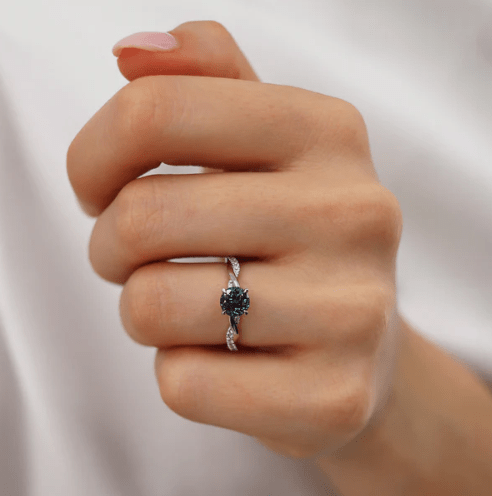
    There are few gemstones in the world with a story as mysterious or as mesmerising as alexandrite. It is a stone that seems alive, shifting from lush green to deep purplish red depending on the light. For almost two centuries, it has been regarded as a phenomenon of nature, the rarest expression of colour change in the mineral world. In 2026, it is enjoying a remarkable resurgence among British jewellery lovers, driven by both a renewed interest in its history and the increasing availability of sustainable, laboratory grown Chatham stones through ethical jewellers such as Lily Arkwright.

    Modern buyers are drawn to jewellery with meaning, story and individuality. Alexandrite offers all three. As Vogue UK noted in a recent piece on emerging gemstone trends, colour change stones evoke a sense of transformation, romantic symbolism and artistic flair. Alexandrite, with its dramatic shifts between green daylight tones and warm evening hues, feels almost theatrical in its expression. This emotional quality has influenced a growing number of British couples who want something distinctive for engagement rings and right hand jewellery, especially those seeking alternatives to traditional diamonds.

    The stone’s origin only adds to its intrigue. Natural alexandrite was first discovered in Russia’s Ural Mountains in the 1830s, and early accounts describe miners mistaking it for emerald before witnessing its colour change around campfires. That ability to shift from green to red quickly became symbolic, especially within Russian culture, where it was linked with duality, strength and adaptability. BBC Culture has explored the fascination surrounding such rare gems, emphasising how they often become tied to national identity or historical storytelling. Alexandrite became a national favourite in Russia and later spread across Europe, although natural stones remained exceptionally scarce.

    Scarcity has always defined the natural alexandrite market. New sources in Sri Lanka, Brazil and East Africa emerged over time, but fine quality stones are still so limited that many jewellers will never handle one in their entire careers. The Guardian once wrote about the global appetite for rare gemstones, highlighting alexandrite among the hardest to source ethically and sustainably due to its geological rarity. For modern shoppers who wish to avoid mined stones entirely, this can be a difficult dilemma: the beauty of alexandrite is captivating, yet its availability and environmental implications are not always clear.

    This is where lab grown Chatham alexandrite has transformed the landscape. Laboratory grown stones are chemically and optically identical to natural gemstones, but created in controlled, responsible conditions that replicate nature’s processes. The result is a gemstone with the same enchanting colour shift, but with full traceability and none of the mining impact associated with natural alternatives. As The Guardian Environment has explored, sustainable luxury is becoming one of the most significant forces in British consumer behaviour, particularly among younger buyers.

    Jewellers such as Lily Arkwright have embraced this shift, offering a selection of lab grown alexandrite rings

    Their approach reflects a broader movement in UK jewellery, where buyers want craftsmanship and beauty but also ethics and transparency. The appeal of lab grown Chatham alexandrite lies not only in its vivid colour transformation but also in its alignment with modern values. Customers can enjoy the poetry and history of the stone while knowing exactly where it came from and how it was created.

    The symbolic nature of alexandrite remains at the heart of its appeal. Colour change has long been associated with growth, adaptability and duality, making it a thoughtful choice for engagement rings. As BBC Lifestyle recently reported, many couples are seeking stones that reflect personal qualities or relationship milestones. Alexandrite’s transitions between green and red can be interpreted as balance, harmony and partnership, which resonates strongly with contemporary British couples creating their own traditions.

    Another important aspect of alexandrite’s revival is the return of coloured gemstone craftsmanship in the UK. From Hatton Garden in London to Birmingham’s Jewellery Quarter, there has been a renewed appreciation for traditional stone setting, hand finishing and detailed artistry. The Guardian’s features on British craft revival have highlighted how bespoke jewellery is increasingly valued as an expression of individuality. Alexandrite suits this trend perfectly, as its colour change often inspires imaginative design settings and bespoke commissions.

    For everyday wear, lab grown alexandrite is also a practical choice. Known for its durability, it holds up well in rings designed for daily use and pairs beautifully with modern metals such as platinum, yellow gold and rose gold. The laboratory grown variety offers consistent clarity and saturation, something rarely found in similarly priced natural stones. This reliability allows designers greater control and enables customers to choose from a range of precise shades and sizes.

    The cultural significance of alexandrite also adds depth to its resurgence. It has long been associated with June birthdays and is considered one of the most meaningful alternative birthstones. In European folklore, it was believed to bring balance and good fortune, while in later Victorian jewellery it symbolised renewal and creative expression. These layers of tradition make it particularly appealing to buyers who want a ring with both romantic and historical resonance.

    Even beyond engagement jewellery, alexandrite is becoming popular for anniversary gifts, statement pieces and bespoke creations. As Vogue UK suggested in a recent editorial, coloured stones are no longer niche but central to the future of fine jewellery. Alexandrite, with its rich complexity and natural storytelling charm, feels perfectly aligned with this shift.

    Another reason for its rise is the way social media and digital culture have influenced consumer aesthetics. High contrast colour change gemstones photograph beautifully in both natural and indoor lighting, making alexandrite particularly suited to visual platforms where users seek designs with personality and dynamic appeal. Online searches for alexandrite jewellery have grown significantly over the past year, reflecting a broader movement towards expressive, meaningful gemstone choices.

    At a time when UK couples are prioritising sustainability, transparency and individuality, the availability of Chatham grown alexandrite through ethical retailers plays an important role in shaping new engagement ring trends. Lily Arkwright’s commitment to responsible luxury, combined with their carefully curated collection of lab grown alexandrite rings, makes the gemstone accessible to a wider audience without sacrificing quality or ethical standards.

    The stone’s story, from its discovery in Russia to its reinvention through modern laboratory science, mirrors the changing values of today’s jewellery buyers. Alexandrite represents history, transformation and the merging of tradition with innovation. Whether chosen for an engagement ring or a personal heirloom, it offers a sense of romance and character that is difficult to match.

    As the UK continues to embrace coloured gemstones, the future of alexandrite looks bright. Its growing popularity speaks to a wider cultural shift toward authenticity, narrative and sustainability. In its natural form, it remains one of the rarest gemstones on earth. In its lab grown Chatham form, it is becoming a modern symbol of beauty, craftsmanship and responsible luxury.