When people imagine engagement ring regret, they often picture obvious mistakes. Perhaps the diamond was smaller than expected, the ring arrived late, or the design looked different in person. In reality, most regret is far more subtle. It tends to arrive months or even years after the proposal, when the excitement has settled and the ring has become part of everyday life.
At that point, buyers often realise that they spent considerable time thinking about the moment they were planning to create, but comparatively little time thinking about the object that would remain long after that moment had passed.
This is one of the peculiar contradictions of the engagement ring market. A proposal is naturally emotional. It is often surrounded by secrecy, anticipation and pressure. There may be a holiday booked, a special occasion approaching or family members expecting news. All of these factors create a sense of urgency. The ring becomes tied to a deadline, and once that happens, the process can quickly shift from careful consideration to efficient decision-making.
The problem is that engagement rings are not products that benefit from urgency. Unlike fashion purchases, technology or even most luxury goods, an engagement ring is expected to remain relevant for decades. It is worn through career changes, house moves, anniversaries, family milestones and countless ordinary days in between. The qualities that make a ring exciting in the short term are not always the same qualities that make it satisfying twenty years later.
One reason buyers find themselves disappointed is that they often begin their search with remarkably little information. This is entirely understandable. Most people purchase an engagement ring once, perhaps twice, in their lifetime. They are not expected to be experts in gemstone quality, jewellery design or manufacturing techniques. Yet they are entering a market filled with technical terminology, endless choice and strong opinions from every direction.
Rather than taking time to understand the landscape, many buyers instinctively search for shortcuts. They look for the most popular diamond shape, the most desirable carat weight or the ring design that appears most frequently online. This approach feels sensible because it reduces complexity. If thousands of people seem to like a particular style, it must be a safe choice.
The difficulty is that engagement rings are intensely personal objects. Popularity does not necessarily translate into suitability. A design that looks exceptional on one person may feel entirely wrong on another. A ring that dominates social media for twelve months may feel dated surprisingly quickly. The safest choice is not always the most fashionable one. More often, it is the design that genuinely reflects the wearer.
Social media has fundamentally altered the way people shop for engagement rings. Ten years ago, most buyers would visit a handful of jewellers and compare a relatively limited selection of designs. Today, consumers have access to millions of images within seconds. They can view celebrity rings, influencer content, proposal videos and trend reports from around the world without leaving their sofa.
According to reporting from The Guardian, social media increasingly influences major purchasing decisions, particularly among younger consumers. Whilst access to inspiration is undoubtedly helpful, it also creates a tendency to shop visually rather than practically. Buyers begin focusing on what looks impressive in photographs instead of considering how a ring will function in daily life.
This distinction becomes particularly important when discussing modern engagement ring trends. Some of the most popular designs of recent years feature exceptionally thin bands, elaborate hidden details and high-profile settings. These features can create beautiful imagery, but they are not always ideal for long-term wear. A ring does not spend its life under professional lighting or carefully positioned in front of a camera. It spends most of its life being worn.
Experienced jewellers frequently encounter customers who wish they had spent more time discussing practicality. Questions about maintenance, durability, resizing and wedding band compatibility often arise after purchase rather than before it. None of these considerations are particularly glamorous, but they have a significant impact on long-term satisfaction.
Interestingly, many buyers assume their biggest decision revolves around the centre stone. They spend weeks comparing carat weights, colour grades and certification reports. Whilst these factors certainly matter, they are only one part of a much larger picture. A ring is an object that combines design, engineering and craftsmanship. The relationship between those elements often determines whether a ring continues to delight its owner years after the proposal.
This is one reason why experienced buyers often become more interested in design as their knowledge develops. The longer someone spends researching engagement rings, the more likely they are to notice details that previously seemed insignificant. Band width, setting height, stone proportions and overall balance begin to matter as much as the diamond itself. Unfortunately, buyers who rush rarely reach this stage before making their decision.
Research discussed by Harvard Business Review suggests that consumers tend to make better long-term decisions when they feel informed rather than pressured. This principle applies particularly strongly to engagement rings because the purchase combines financial commitment with emotional significance. The more pressure that exists around timing, the harder it becomes to evaluate choices objectively.
Proposal culture has undoubtedly contributed to this challenge. Modern proposals often involve extensive planning, travel arrangements and significant expectations. It is understandable that buyers focus heavily on creating a memorable experience. Yet there is a risk that the proposal becomes the project and the ring becomes one of several logistical tasks that need completing before a particular date.
From the perspective of long-term ownership, this is arguably the wrong way round. The proposal is remembered, but the ring is lived with. It becomes part of daily routine and personal identity. Its success depends less on the circumstances of its presentation and more on how well it suits the person wearing it.
For readers interested in how engagement ring buying habits are evolving more broadly, our article exploring the rise of the single girl engagement ring examines how modern consumers are placing increasing emphasis on personal meaning and long-term relevance when purchasing fine jewellery.
Another reason rushed purchases lead to disappointment is that buyers often underestimate how much their understanding will evolve during the shopping process. Someone who has spent two weeks researching engagement rings is usually asking very different questions from someone who has spent two months researching them. The longer people engage with the subject, the more nuanced their perspective becomes.
They begin to understand why certain settings are recommended for particular lifestyles. They recognise that size is only one component of visual impact. They discover that comfort, wearability and proportion are often more important than the specifications that initially dominated their attention.
Time creates perspective, and perspective often leads to better decisions.
Ultimately, engagement ring regret is rarely caused by a lack of care. Most buyers approach the purchase with genuine enthusiasm and the best of intentions. The issue is not indifference. It is impatience, often driven by circumstances rather than choice.
In a marketplace built around speed, it can feel unusual to slow down. Yet engagement rings remain one of the few purchases where patience consistently improves outcomes. The buyers who allow themselves time to learn, compare and reflect tend to feel more confident in their decisions. They understand not only what they have chosen, but why they have chosen it.
That confidence is often the difference between simply owning a ring and continuing to love it many years after the proposal has become a memory.
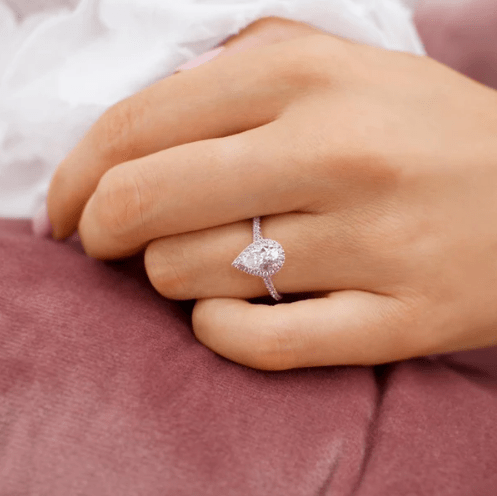
 Diamonds are a girls best friend