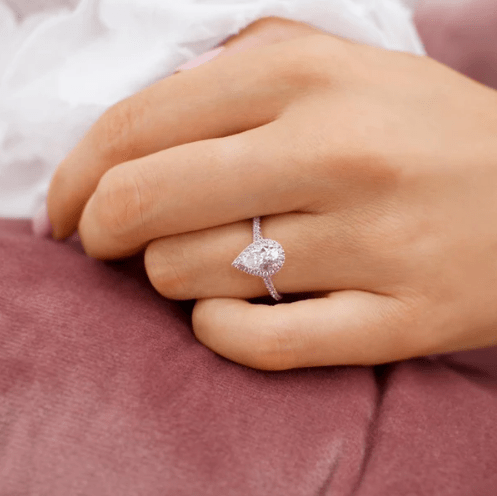
When lab-grown diamonds first entered public awareness, they were framed narrowly. They were cheaper, more accessible and ethically reassuring. What was rarely discussed was how profoundly they would alter taste itself. In the UK engagement ring market, lab-grown diamonds have not simply shifted price points. They have changed what people consider beautiful, balanced and desirable.
Design does not exist in isolation. It is shaped by what feels possible, acceptable and culturally meaningful at a given moment. For decades, engagement ring aesthetics were shaped by the constraints and symbolism of mined diamonds. Lab-grown diamonds have loosened those constraints and, in doing so, have quietly rewritten the visual language of engagement rings.
One of the most significant changes has been psychological rather than technical. When buyers no longer feel that the stone represents a once-in-a-lifetime financial sacrifice, they approach design differently. The ring becomes less of a performance and more of an expression. That shift in mindset has had visible consequences.
Editorial commentary in Vogue UK has noted that modern jewellery taste increasingly values coherence over spectacle. Engagement rings influenced by lab-grown diamonds reflect this sensibility. They prioritise proportion, restraint and clarity rather than overt drama.
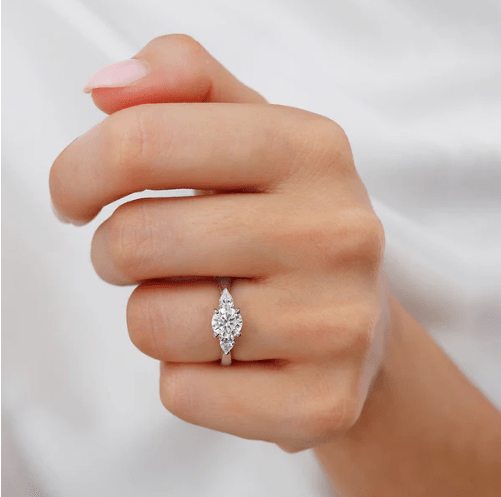
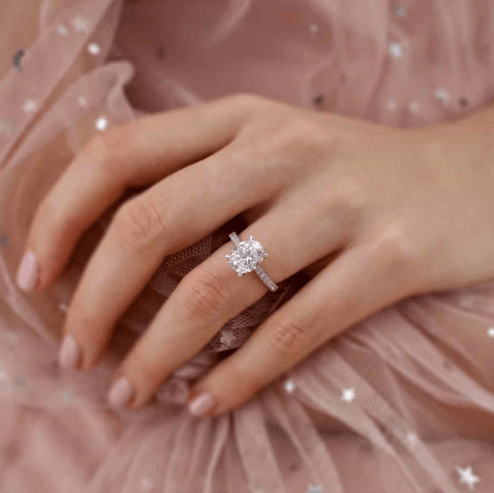
This change is evident in how stones are positioned within rings. Rather than dominating the design, the diamond now sits in dialogue with the band and setting. The ring reads as a whole rather than as a pedestal for a single element. This is a subtle but important shift in aesthetic values.
Historically, engagement ring design often centred on maximising the perceived importance of the diamond. High settings, slim bands and familiar silhouettes served a purpose. They amplified size and sparkle within tight budgets. With lab-grown diamonds, that amplification is no longer necessary.
Designers are now free to consider how the ring feels on the hand as much as how it looks in a showcase. This has led to a rise in lower-profile settings, more substantial bands and silhouettes that feel grounded rather than elevated.
The Telegraph has observed that engagement rings are increasingly expected to function as everyday jewellery rather than symbolic objects reserved for special moments. Lab-grown diamonds support this expectation by allowing designers to prioritise wearability without compromising visual impact.
Another notable shift lies in the growing acceptance of visual weight. For years, thinness was equated with elegance. Bands were narrowed to make stones appear larger, and delicacy was framed as refinement. Today, that association is being questioned.
Rings influenced by lab-grown diamonds often feature bands with presence. This does not mean heaviness. It means intention. The band is no longer an afterthought. It contributes to the identity of the ring rather than merely supporting the stone.
This evolution aligns with broader fashion and design trends. As minimalism has matured, it has moved away from extreme lightness and towards clarity of form. Jewellery reflects this shift. Engagement rings are becoming more architectural, more resolved and less performative.
Coverage in Financial Times How To Spend It has explored how modern luxury increasingly values confidence over excess. Engagement rings shaped by lab-grown diamonds fit comfortably within this framework. They do not need to shout to be noticed.
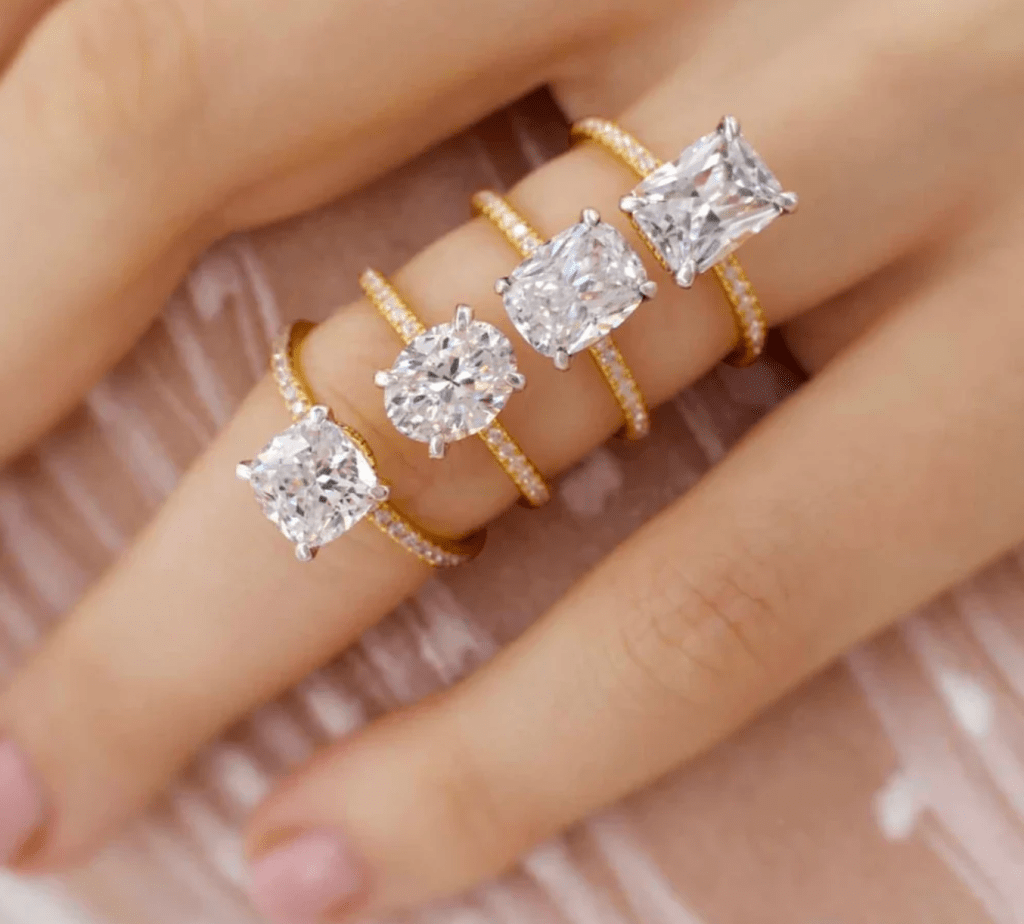
Stone shape preference has also shifted. Without the same cost pressures, buyers feel freer to choose shapes that suit their aesthetic rather than those traditionally associated with value retention. Step cuts, elongated forms and softer outlines have gained cultural credibility.
These shapes invite different settings. Designers have responded with east-west orientations, integrated bezels and sculptural mountings that would once have felt risky. Lab-grown diamonds have normalised experimentation by reducing the stakes.
Ethical considerations also play a role in changing taste. When buyers feel aligned with the origin of their diamond, they often feel more at ease expressing individuality. Ethical clarity removes the need for justification, which in turn encourages confidence.
Reporting in The Guardian has shown how ethical alignment increasingly influences how consumers feel about their purchases, not just what they buy. In engagement rings, this emotional reassurance has tangible aesthetic outcomes.
Lab-grown diamonds have also altered how symbolism is expressed. Traditional diamond narratives emphasised rarity and permanence through scarcity. Lab-grown stones shift that emphasis towards intention, transparency and choice.
This shift has softened the pressure to conform. Rings no longer need to signal sacrifice or status to feel meaningful. They can reflect personality, lifestyle and values without apology. That freedom has expanded the range of what engagement rings can look like.
Brands such as Lily Arkwright have become associated with this confidence-led approach because they frame lab-grown diamonds as a design enabler rather than a compromise. This framing resonates with buyers who want permission to choose differently.
Another design consequence of lab-grown diamonds is a renewed focus on longevity. When buyers feel secure in their choice, they think further ahead. They consider how the ring will age, how it will stack with wedding bands and how it will feel years later.
This long-term thinking has influenced construction. Rings are designed to retain their shape, to resist wear and to integrate seamlessly into daily life. The emphasis shifts from momentary impact to lasting satisfaction.
BBC Culture has explored how objects gain meaning through use rather than display. Engagement rings influenced by lab-grown diamonds reflect this philosophy. Their value is lived rather than proclaimed.
The consistency of lab-grown diamond quality has also encouraged restraint. When stones are reliably well cut and visually clean, designers do not need to hide flaws or distract the eye. Simpler settings become viable, even desirable.
This does not lead to uniformity. On the contrary, it allows greater individuality. When design is not compensating for constraint, it can explore nuance. Subtle variations in proportion, profile and finish become meaningful.
The buying process itself has changed alongside design. With lab-grown diamonds, conversations often begin with how the ring should feel rather than how much it should cost. Buyers discuss lifestyle, taste and future plans earlier.
This change in sequence alters the emotional experience. The ring becomes a collaborative design decision rather than a test of financial commitment. Buyers report feeling calmer and more assured.
Psychological insight discussed in Psychology Today suggests that agency increases satisfaction with symbolic purchases. Lab-grown diamonds enhance agency by reducing external pressure and increasing choice.
Budget flexibility further supports experimentation. Buyers are more willing to take aesthetic risks when the financial stakes feel manageable. This has encouraged a wave of engagement rings that feel contemporary rather than traditional.
Designers, in turn, are responding with confidence. When clients are open to new ideas, the industry evolves. Lab-grown diamonds have created a feedback loop where buyer confidence fuels creative ambition.
There is also a generational aspect to this transformation. Younger buyers are less attached to inherited markers of value. For them, meaning comes from alignment rather than scarcity. Design follows belief rather than tradition.
Vogue UK has noted that modern luxury is increasingly defined by authenticity and coherence. Engagement rings influenced by lab-grown diamonds embody these values. They feel intentional rather than inherited.
As lab-grown diamonds continue to gain acceptance, their influence on taste will deepen. Engagement ring design will continue to move away from rigid templates and towards personal expression.
The conversation will shift further from cost comparisons to creative possibility. Rings will be judged less by what they represent to others and more by how they fit into real lives.
In this sense, lab-grown diamonds have changed engagement rings at a cultural level. They have altered not just what is bought, but how beauty itself is defined.
They have moved engagement ring design away from performance and towards presence.
That shift may be their most lasting legacy.
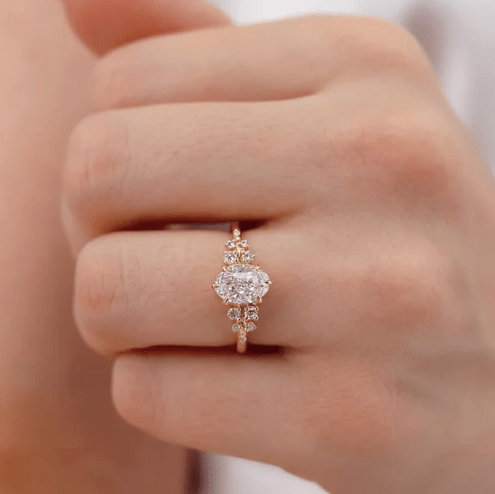
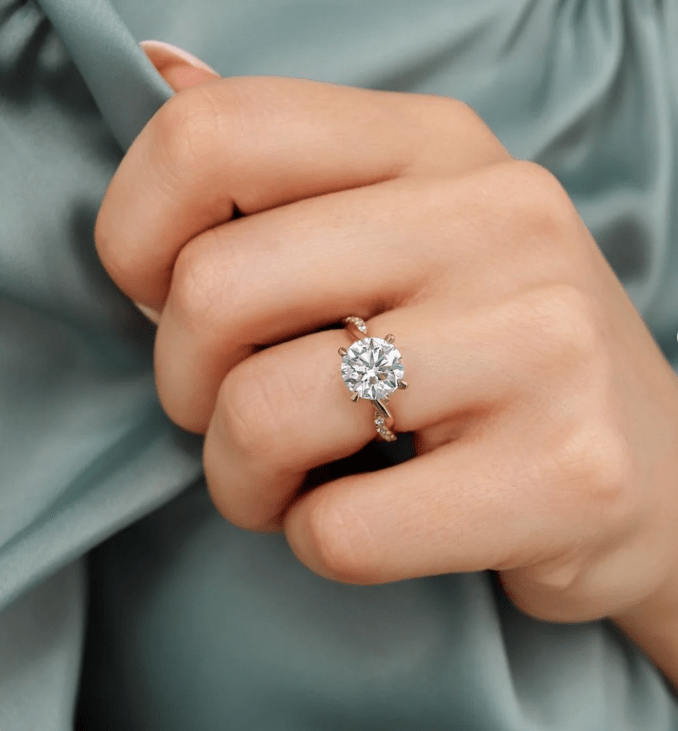
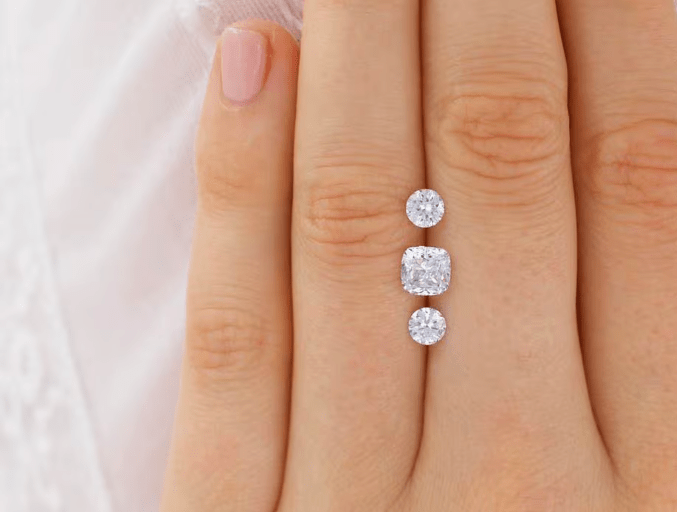
 Diamonds are a girls best friend